I. Recent measures 1
In December, the BCRA put into circulation the new $1 and $5 2 coins. This launch aims at the normalization of circulating money 3 and is in addition to other measures previously promoted by this institution such as the implementation of $200, $500 and $1,000 bills, the creation of the interbank exchange of banknotes through an electronic platform and the increase in the capacity to destroy deteriorated banknotes.
In line with what was adopted for non-financial credit providers, at the end of December the treatment of defaults by “Guarantee Companies” and “Public Guarantee Funds” was readjusted to the obligation to inform the “Central Bank of Debtors of the Financial System” 4.
Within the framework of operations channeled through Immediate Electronic Payments (PEI), as well as with the Immediate Debit Transfer Mechanism (DEBIN), it was recently provided that from January 2018 the debited financial institutions (origin of the funds) will be able to charge the accredited entities (recipients of the funds), in certain cases 5, an exchange fee of up to 0.3% on the total amount involved 6.
Following the recommendations of the Basel Committee on Banking Supervision, the BCRA established new guidelines for the management of interest rate risk in the investment portfolio (RTICI) as of July 2018 7. These modifications seek to improve the Pillar 2 approach based on a revision of existing principles. In addition, new disclosure requirements are introduced (Pillar 3) and the banking supervision process is updated and deepened.
II. Activity
Financial intermediation with the private sector continued to grow in November. In line with what has been evidenced in recent months, credit continued to increase relatively more than deposits (see Chart 1). Thus, as of November, the balance of loans to the private sector totaled 88% of deposits in the same sector.
Graph 1 | Loans in Deposit Terms – Balance Sheet Balances of the Financial System – Private Sector

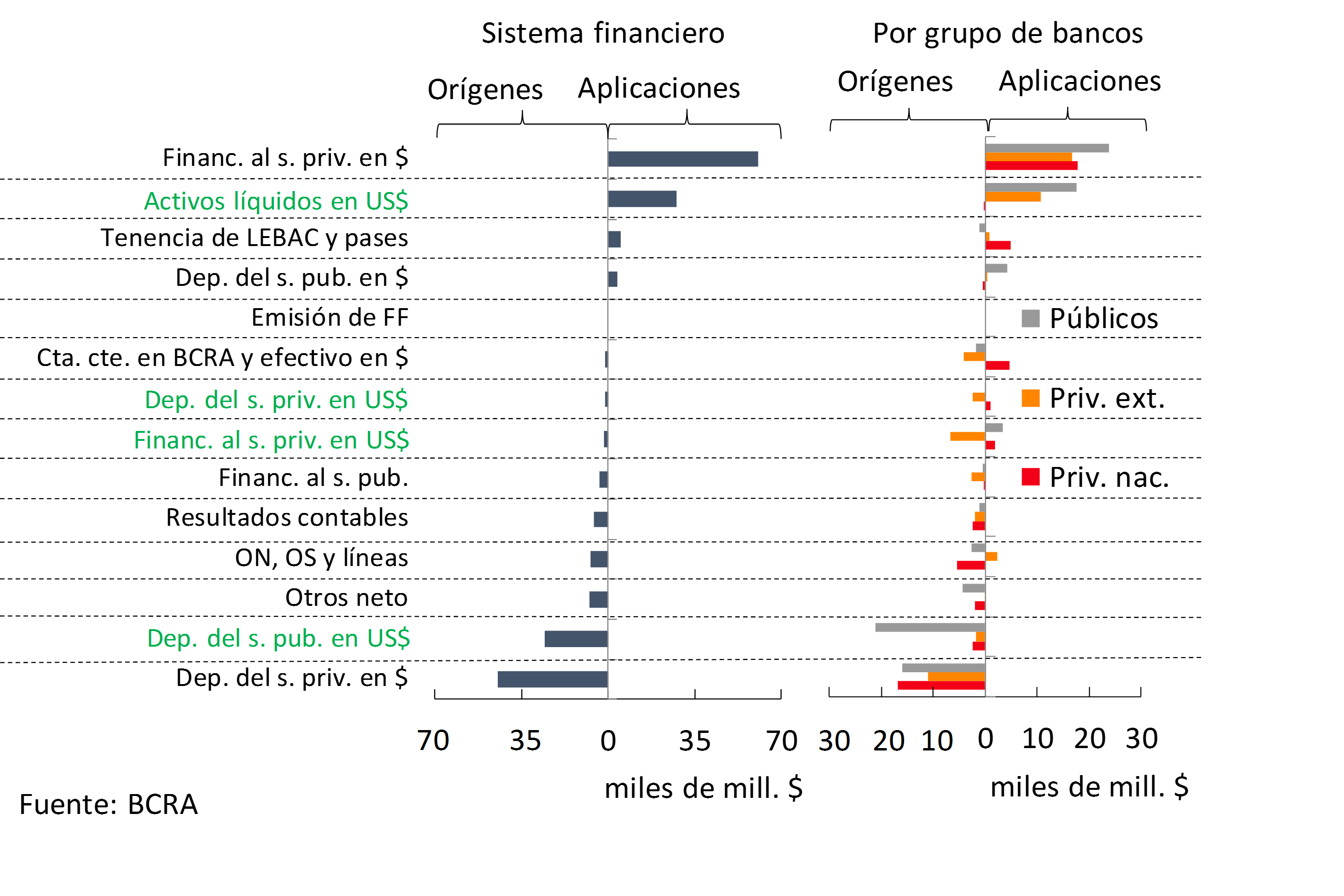
In relation to the estimate of the monthly cash flow 8 for the set of banks, the increase in financial intermediation in pesos with the private sector explained the main equity movements in November. The most prominent source of resources in the month came from the increase in private sector deposits in national currency ($44,000 million). Meanwhile, the growth of financing in pesos to the same sector was the largest application of funds in the period ($60,000 million, see Graph 2). This performance was reflected in all groups of banks. To a lesser extent, the components denominated in foreign currency were also relevant in November. Public sector deposits in foreign currency increased with a counterpart in liquid assets in that denomination 9.
Graph 2 | Monthly Cash Flow Estimate – Nov-17 – By Bank Group
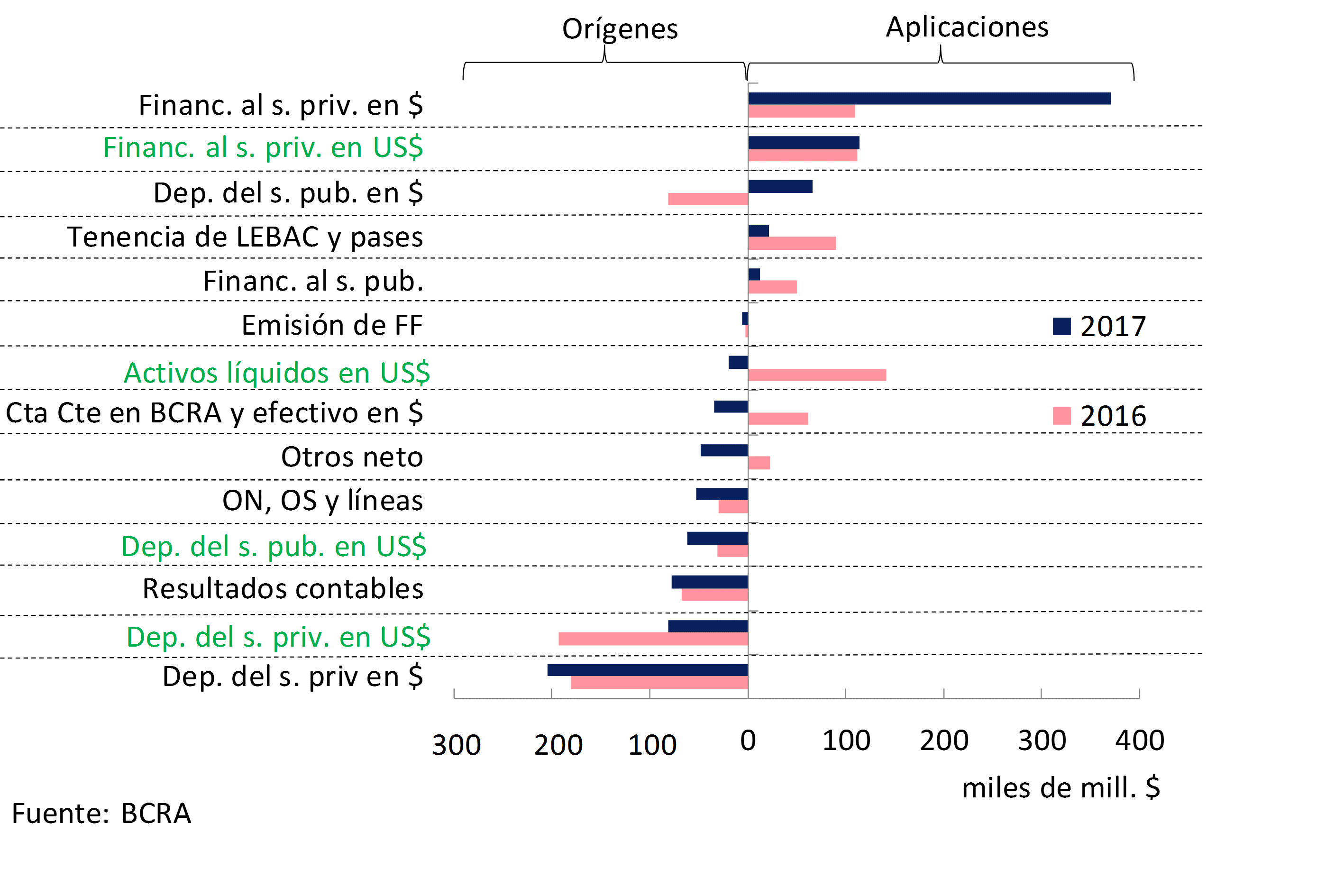
Considering the estimated flow of funds from banks for the accumulated in 11 months of the year, the growth of private sector deposits in national currency was the main source of resources ($204,000 million) (see Graph 3). In addition, bank profits were another source of funds. These resources were mainly channeled to expand financing to the private sector in pesos ($371,000 million). On the other hand, considering the foreign currency segment, the increase in deposits from the private sector and the public sector were the most relevant sources of funding for banks in the accumulated to November 2017. These resources were mainly applied to increase financing to the private sector.
Graph 3 | Estimated 11-Month Cumulative Cash Flow – Financial System
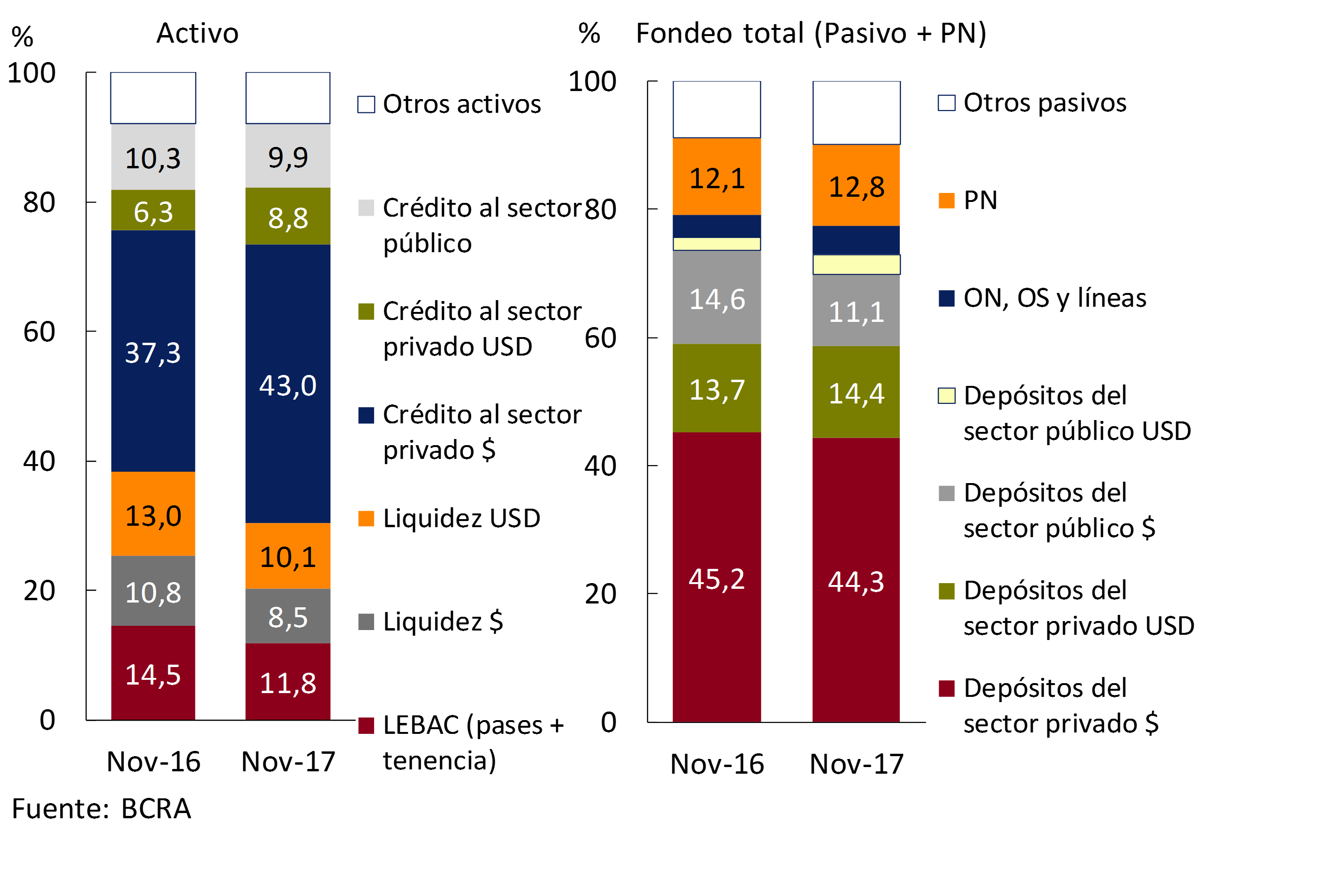
This dynamic of intermediation activity has been reflected in the equity items, with greater modifications on the asset side of the balance sheet. Compared to November 2016, credit to the private sector in domestic currency increased its weighting in total assets by 5.7 p.p. (to 43%) and loans to this sector in foreign currency increased its relevance by 2.5 p.p. (to 8.8%) (see Chart 4). On the other hand, the most liquid assets reduced their relative weight in assets year-on-year. On the side of total funding, deposits in foreign currency and the pre-existing funding of ON, OS and foreign lines increased their relative participation. While deposits in pesos in the public and private sector reduced their weight in the last year.
Figure 4 | Composition of Bank Assets and Funding – Financial System
In the year, the group of banks expanded its balance sheet. In 2017, financial intermediation with the private sector was not only implemented through operations in national currency, but also UVA operations became relevant – more in credit than in funding – and transactions in foreign currency continued to grow. In addition, the assets traded in recent months were agreed for a longer term than in the past – dynamism of mortgage credit. In this context, the financial system presents an incipient increase in certain imbalances in its balance sheet, the evolution of which is monitored by the BCRA.
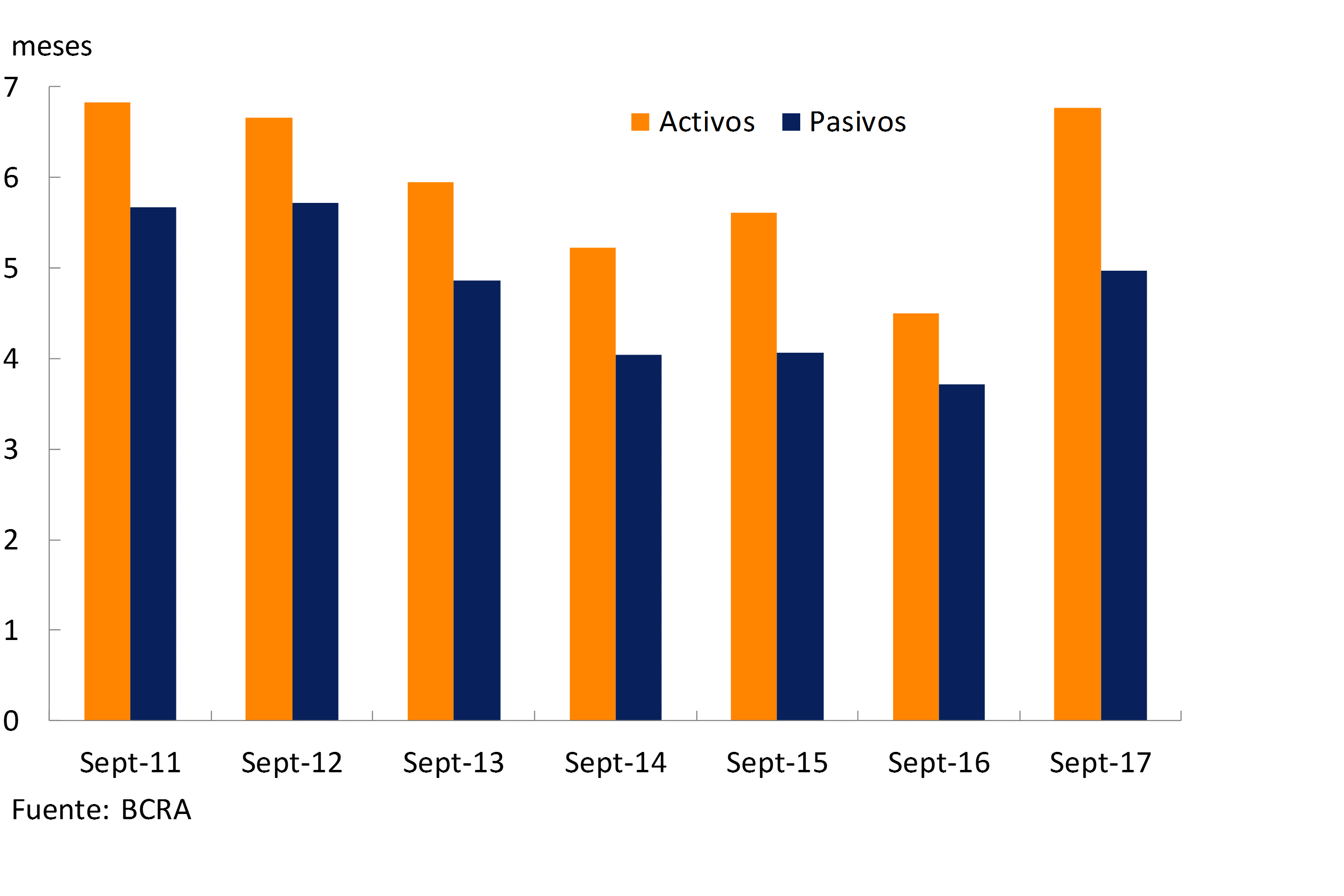
In November, the mismatch in foreign currency assets for the banks as a whole was around 13% of the Computable Patrimonial Liability (RPC), in line with the October record. In year-on-year terms, this indicator fell by 3 p.p. of the PRC, driven by public banks. In relation to the portfolio that is adjusted for inflation, the estimated asset mismatch for this segment was around 22% of the PRC, increasing compared to October and in a year-on-year comparison. In addition, mainly as a result of the expansion of mortgage loans in UVA, the average maturity of assets that do not have a market price increased from still moderate levels, widening the gap with the maturity of liabilities (see Chart 5).
Graph 5 | Duration of the Portfolio in Pesos that does not have a Market Quote – Financial System – Expressed in months
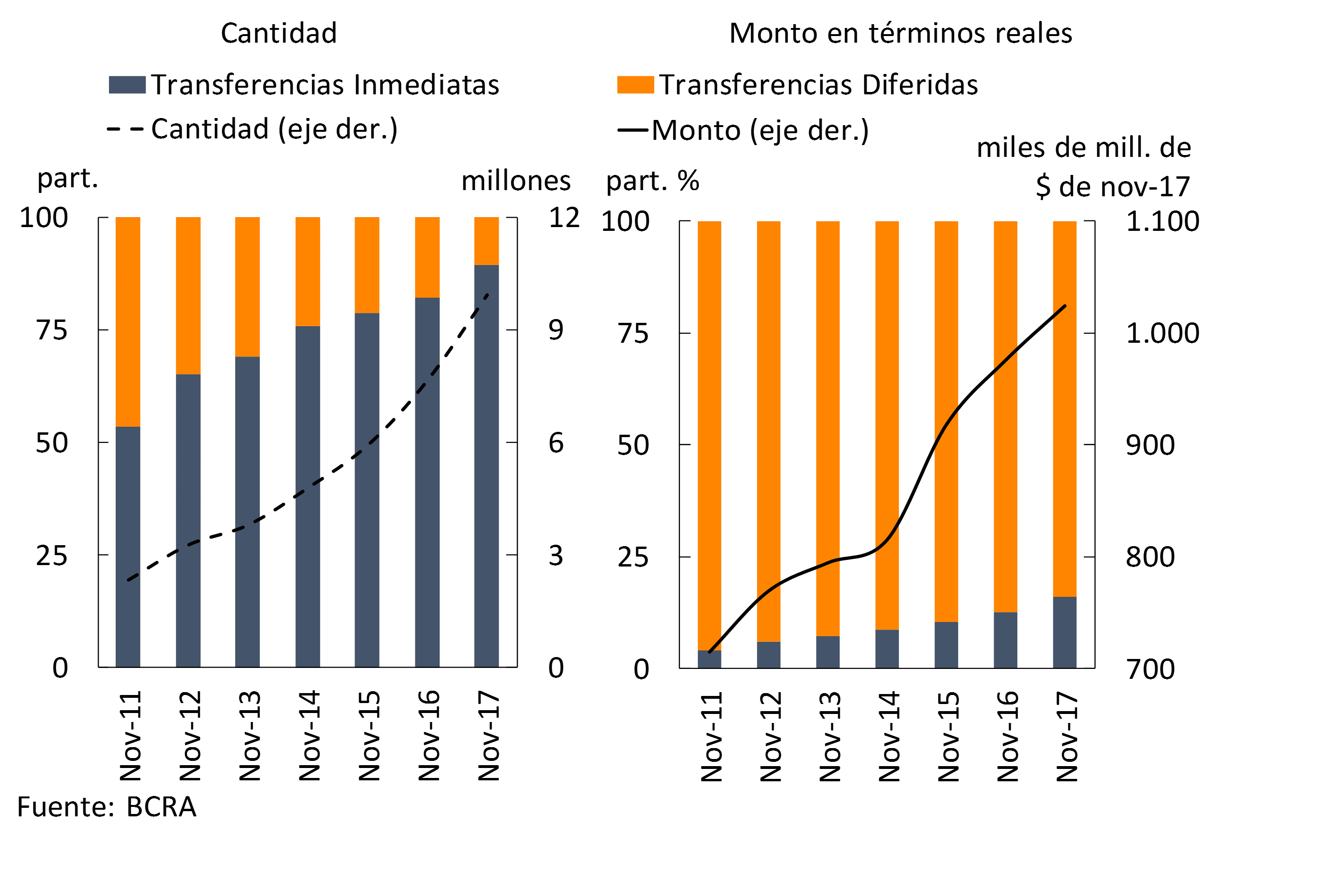
In relation to the operations of the National Payment System, the use of alternative means to cash is gradually gaining depth. In particular, immediate transfers observed an outstanding performance in the last year, growing by about 5 p.p. of GDP, reaching 17.6% in the fourth quarter (see Chart 6). This type of transfer gained share in the total (immediate and deferred transfers): as of November, they accounted for about 89.4% of transfers of funds to third parties, equivalent to 16.1% of the amounts remitted (see Graph 7). The positive performance of immediate transfers was accompanied, to a lesser extent, by direct debits and debit card purchases. For its part, check clearing slightly reduced its weight in the economy compared to the last quarter of last year.
Graph 6 | Alternative Means of Payment to Cash – Quarterly annualized – In % of GDP

Figure 7 | Transfers of Funds to Third Parties
III. Deposits and liquidity
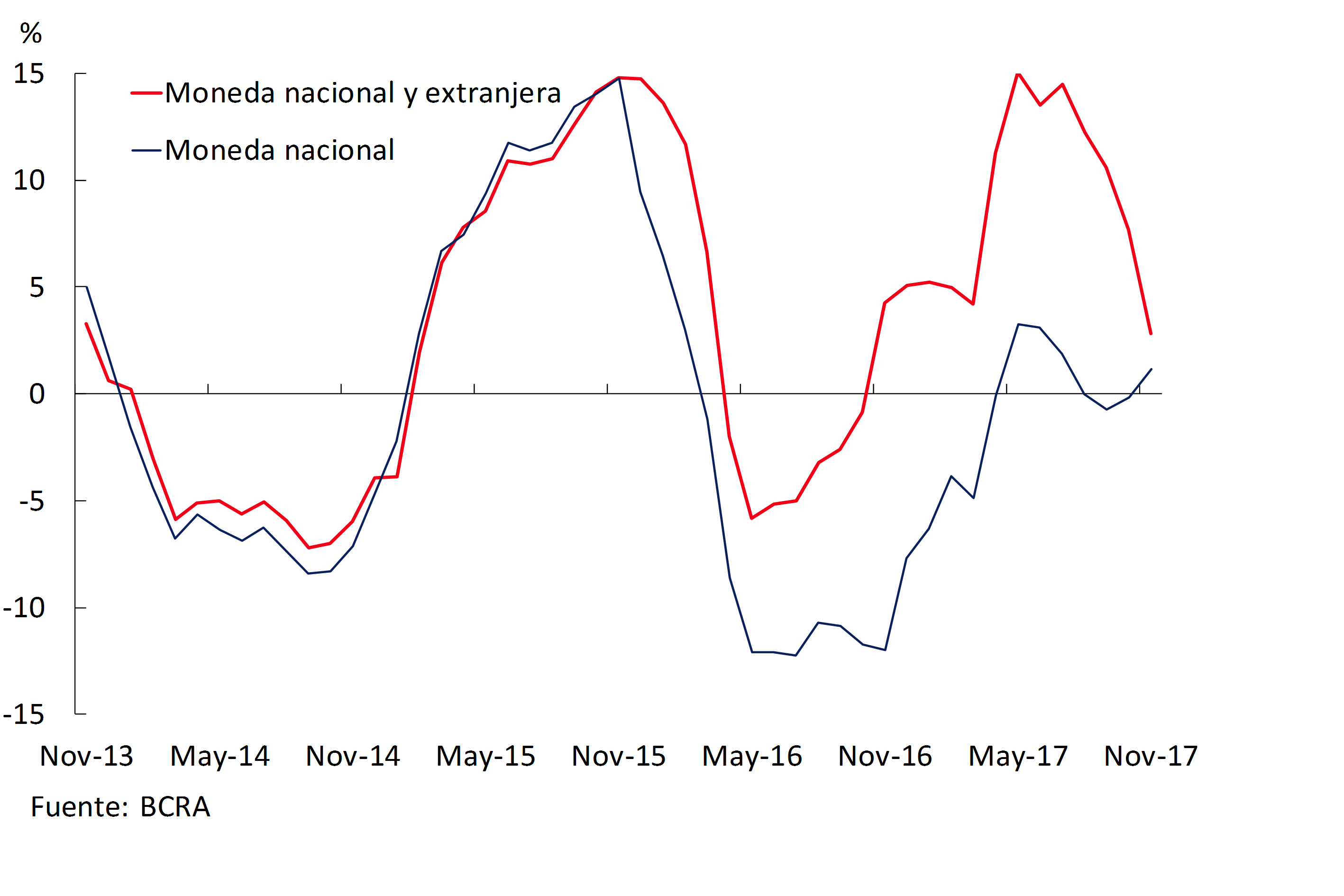
In November, the balance of total deposits in the financial system increased by 1.8% in real terms, due to the effect of the increase in public and private sector placements. In the month, total deposits in national currency grew (1.1% adjusted for inflation), driven by the private sector segment (2% real). Within the latter, the balance of demand accounts increased by 2.1% adjusted for inflation, while term deposits increased by 1.7% in real terms. Total foreign currency placements also increased in November, mainly due to those of the public sector and, to a lesser extent, those of the private sector.
Considering the last twelve months, total deposits in the financial system did not show significant changes in real terms (-0.6% YoY), while private sector deposits (in domestic and foreign currency) increased 2.8% YoY adjusting for inflation (see Chart 8). Private sector placements in pesos increased by 1.2% YoY in real terms (with an increase in demand accounts and a fall in time deposits), while those in foreign currency expanded by 21% YoY in the currency of origin.
Figure 8 | Total Private Sector Deposits – Var. A.I. of the balance in real terms
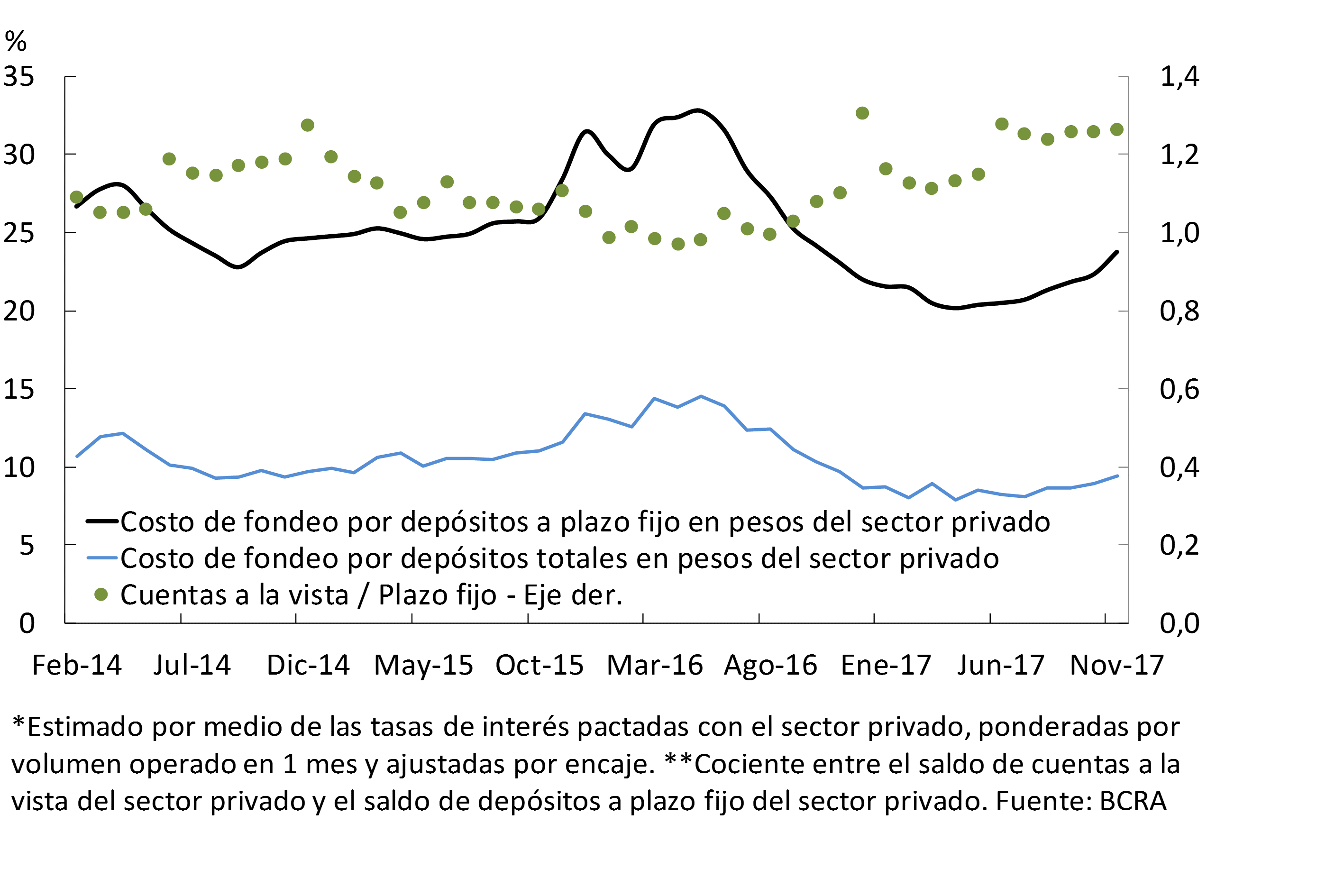
Within the framework of the gradual rise in interest rates, the nominal cost of funding for the fixed-term financial system of the private sector in pesos continued to increase in November. The relatively higher increase in the balance of demand accounts in relation to time deposits moderated the increase in the cost of funding deposits in national currency (see Graph 9).
Figure 9 | Funding Cost for Private Sector Deposits in Pesos* and Ratio between Demand and Time Deposits**
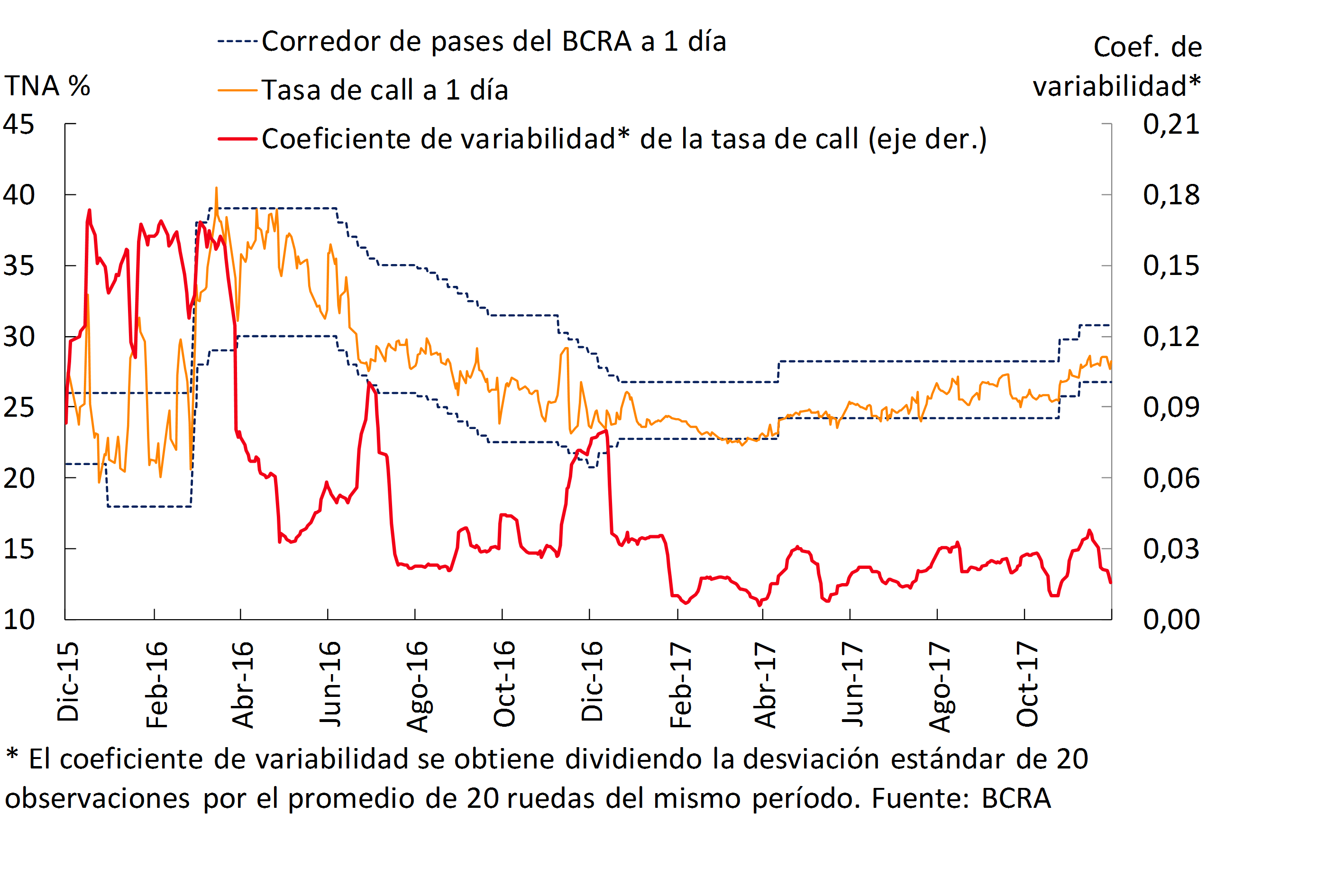
Interest rates in the call market increased in November, remaining within the pass corridor with the BCRA. This performance was in line with the variation of the monetary policy rate – the center of the 7-day pass corridor – in November (see Chart 10). The volatility of interest rates in the interfinancial markets remained limited.
Figure 10 | Interest Rates in Interfinancial Markets and Volatility
After seven months in which decreases in liquidity were evident, in November the indicators increased slightly. The broad liquidity ratio – including holdings of LEBAC and passes with the BCRA – for the aggregate financial system reached 41.4% of deposits in the month, 0.1 p.p. more than in October. This monthly increase for the aggregate was mainly due to the higher current account balance in foreign currency of the banks in the BCRA as a counterpart to the increase in public sector deposits in this denomination and a reduction in loans to residents abroad 10. In addition, in November the balance of passes with the BCRA grew. These movements were partially offset by a drop in LEBAC holdings. Despite this monthly increase, the broad liquidity indicator accumulated a year-on-year reduction of 8.8 p.p. in deposits (see Chart 11). For its part, the limited liquidity ratio – which excludes holdings of LEBACs and passes – stood at 25.3% of deposits in November, 0.4 p.p. more than in the previous month, although 5.9 p.p. below the level of the same period in 2016. The monthly increase in this indicator was mostly reflected in the group of public banks 11, and there were no changes in magnitude in private banks.
Figure 11 | Ample Liquidity by Group of Banks

IV. Financing
In November, the total credit balance to the private sector increased by 2.5% when adjusted for inflation, a performance mainly explained by public banks. Loans in national currency showed a real growth of 3.4% compared to October, with a greater relative dynamism in mortgage lines (8.4% real monthly). Meanwhile, foreign currency financing to the private sector increased 1.1% 12 in the month.
In a year-on-year comparison, the total credit balance to companies and households increased by 22.8% in November, adjusted for inflation (see Chart 12). All groups of financial institutions presented year-on-year increases in real credit balances, with non-bank financial institutions and public banks standing out. Distinguishing by line, loans with real collateral (mortgages and pledges) continued to gain momentum in the period (see Graph 13). Loans to the private sector in national currency accumulated a real year-on-year increase of 19.1%, 2.1 p.p. above last month’s level and 12.7 p.p. more than in mid-2017. On the other hand, foreign currency lines grew 61.6% YoY 13 in the period.
Figure 12 | Real Balance of Total Credit to the Private Sector
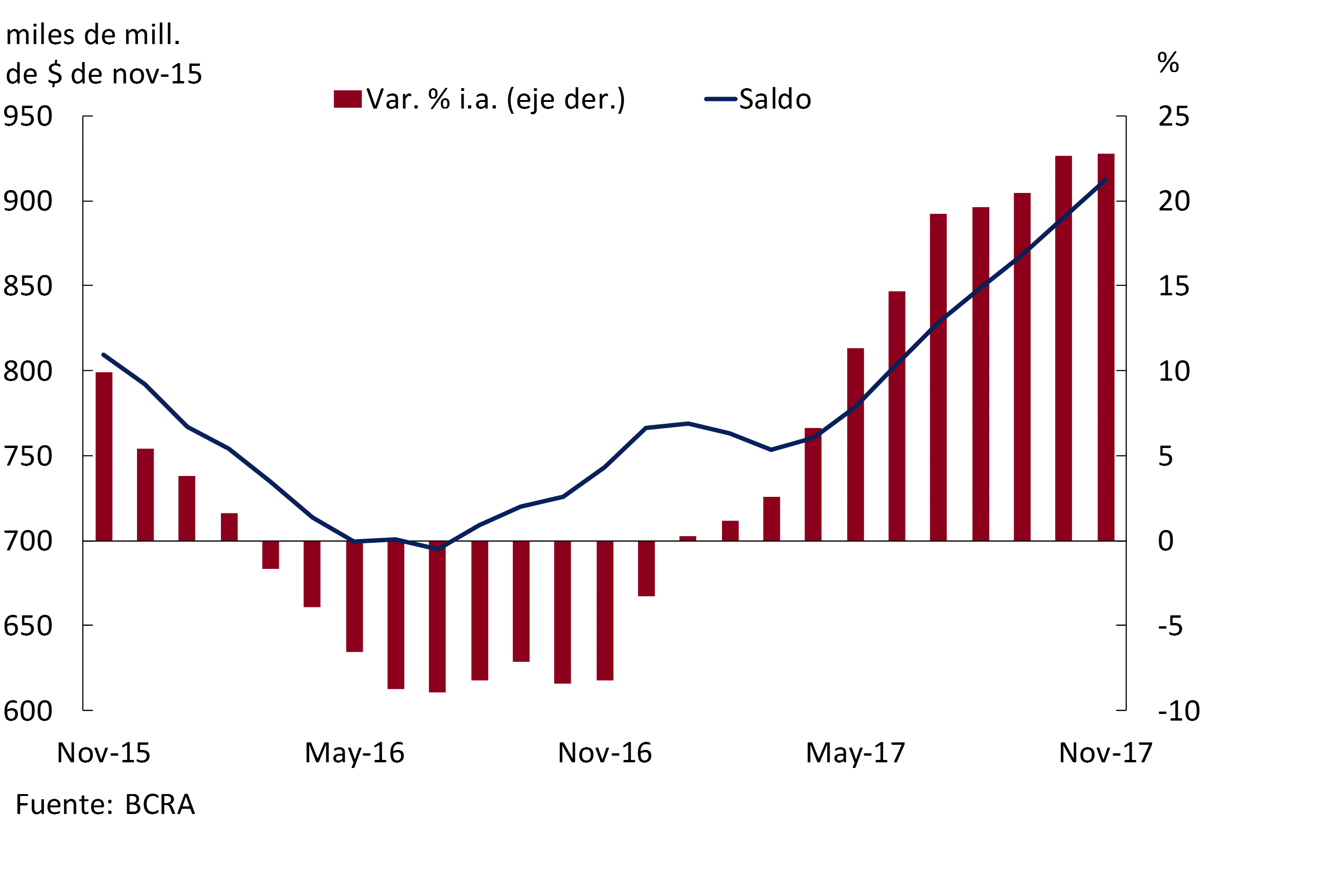
Figure 13 | Total Credit Balance to the Private Sector
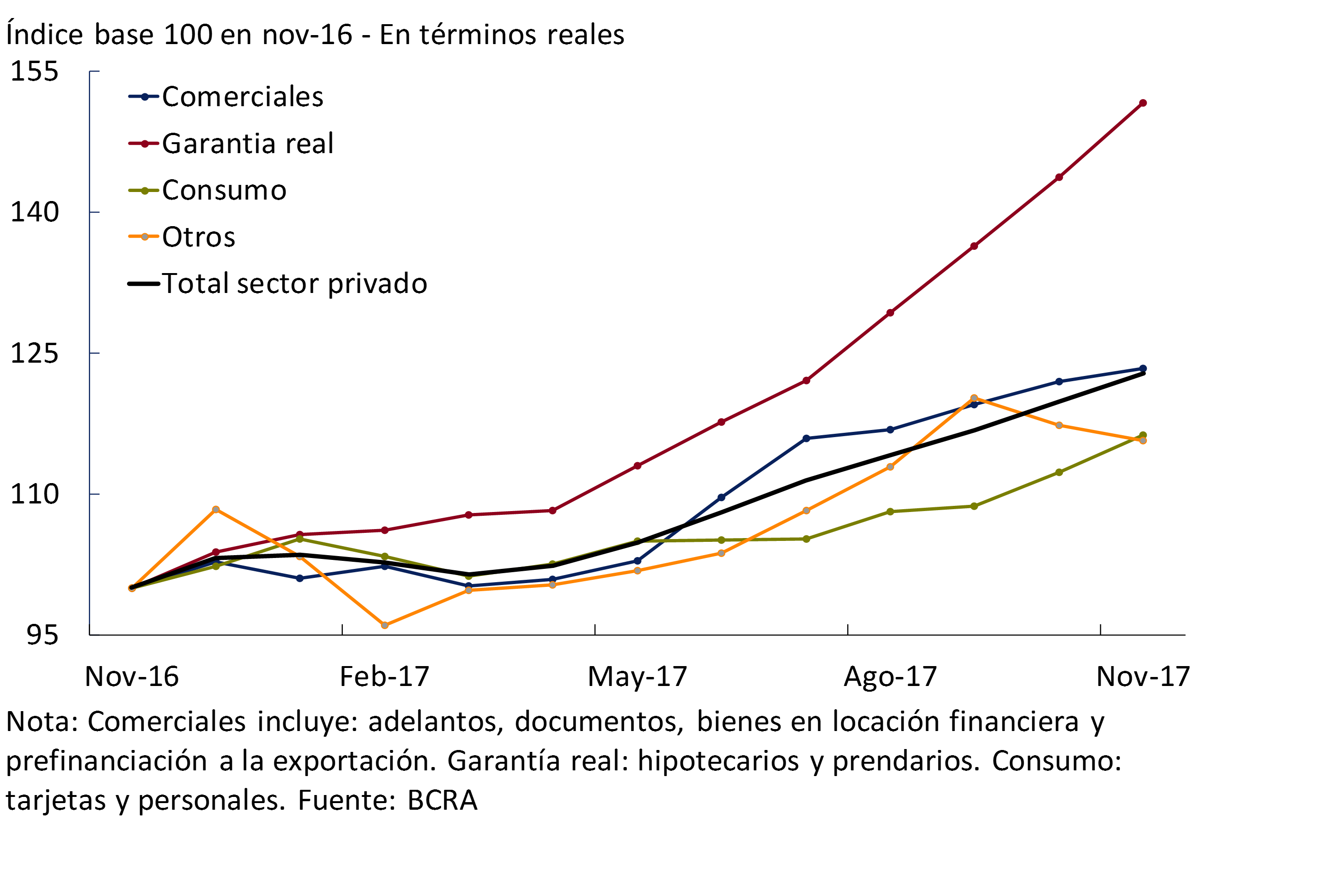
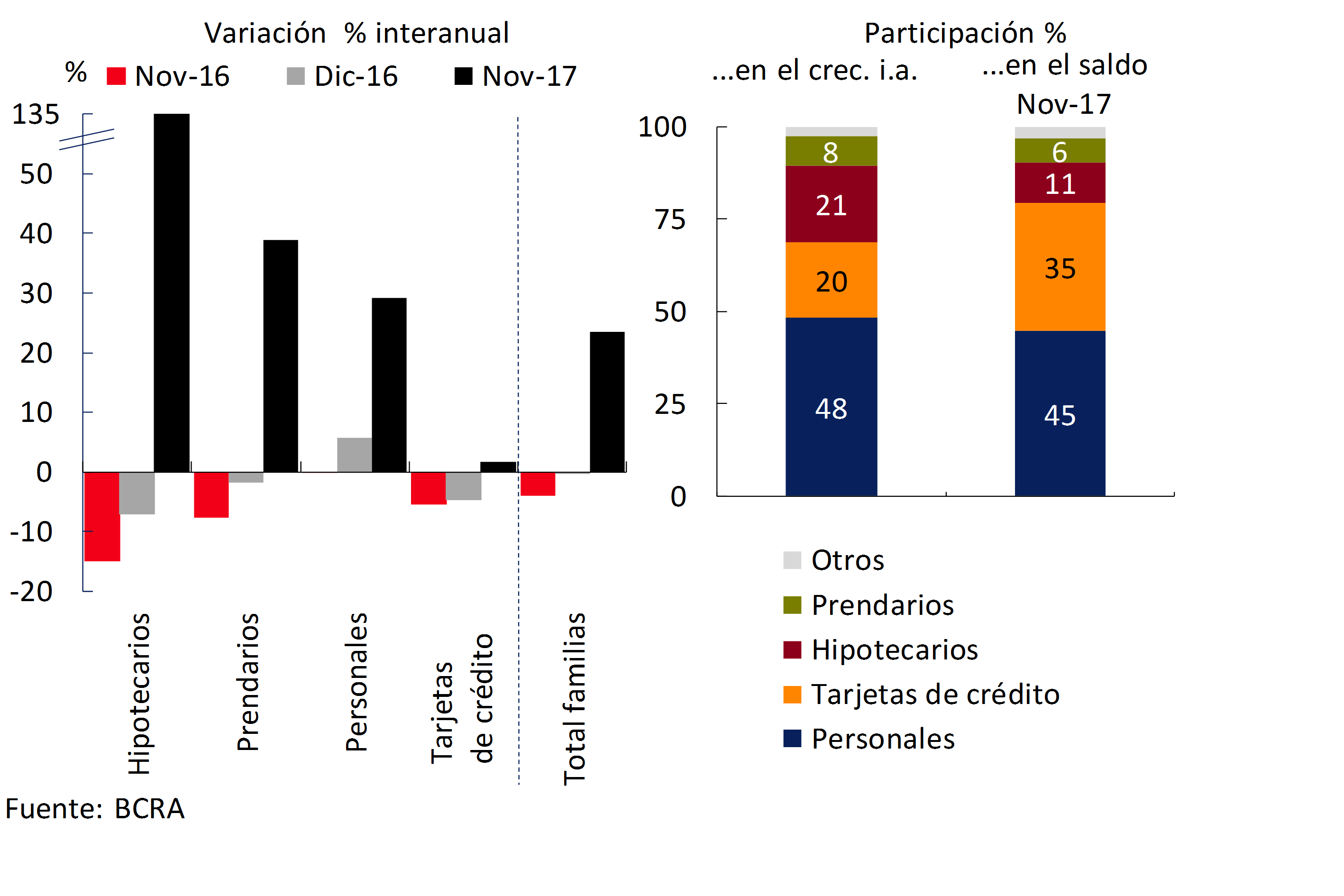
Financing to families 14 grew 3.7% in real terms compared to October, with greater relative dynamism of public and national private banks. In a year-on-year comparison, the balance of credit to households accumulated a 23.6% increase when adjusted for inflation (see Graph 14), highlighting mortgage lines (133% real y.o.y.). In November, almost 91% of the total amount of mortgage credit granted to individuals corresponded to UVA financing. The average term of these loans continued to increase to almost 25 years in November (being 17 years for mortgages that do not use UVA).
Figure 14 | Real Balance of Total Credit to Households
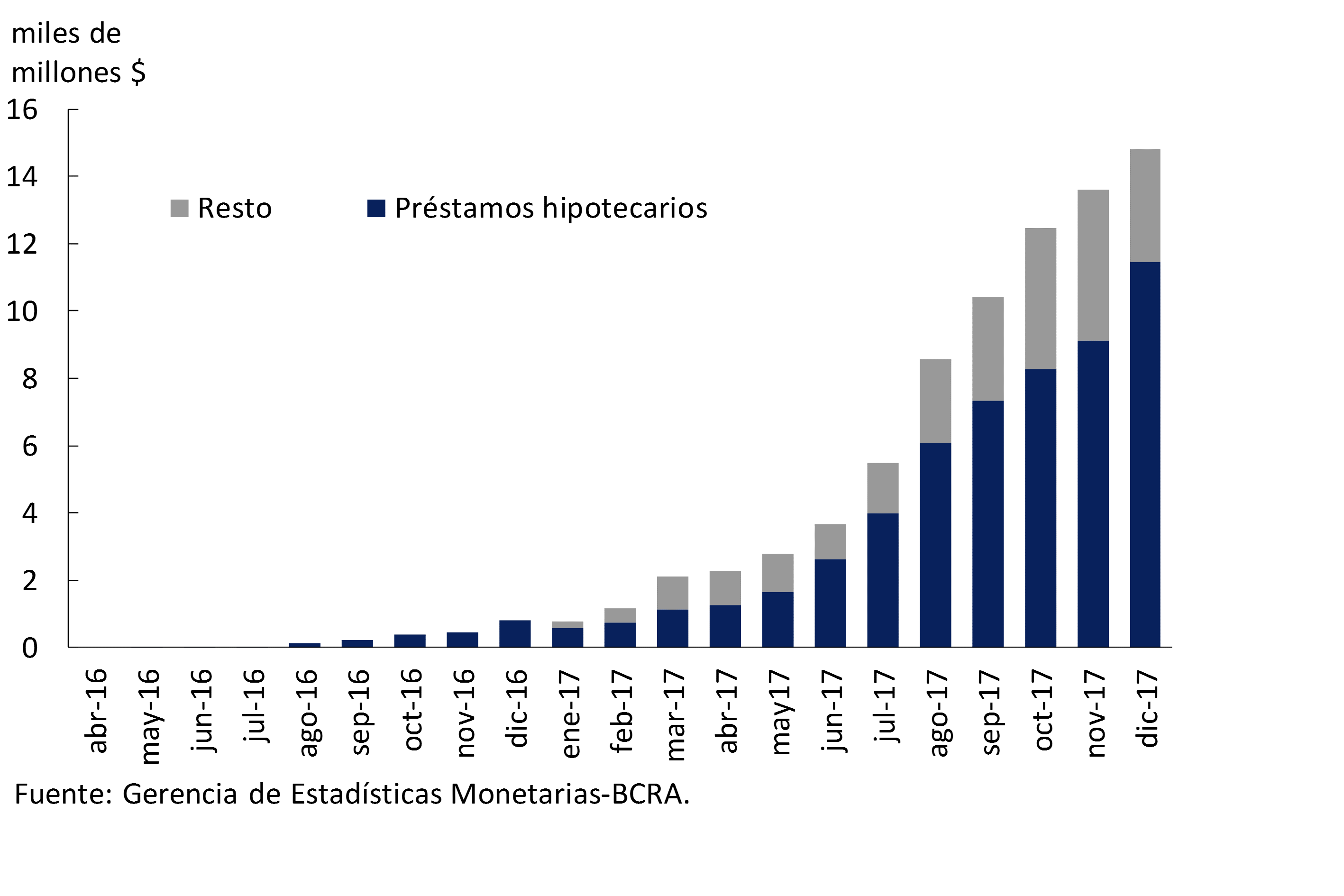
In December, total financing granted in UVA exceeded $14,800 million, with more than 77% channeled through mortgage lines (see Graph 15). In this way, throughout 2016 and 2017, more than $80,100 15 million of UVA loans were granted.
Figure 15 | UVA Financing – Amounts Granted
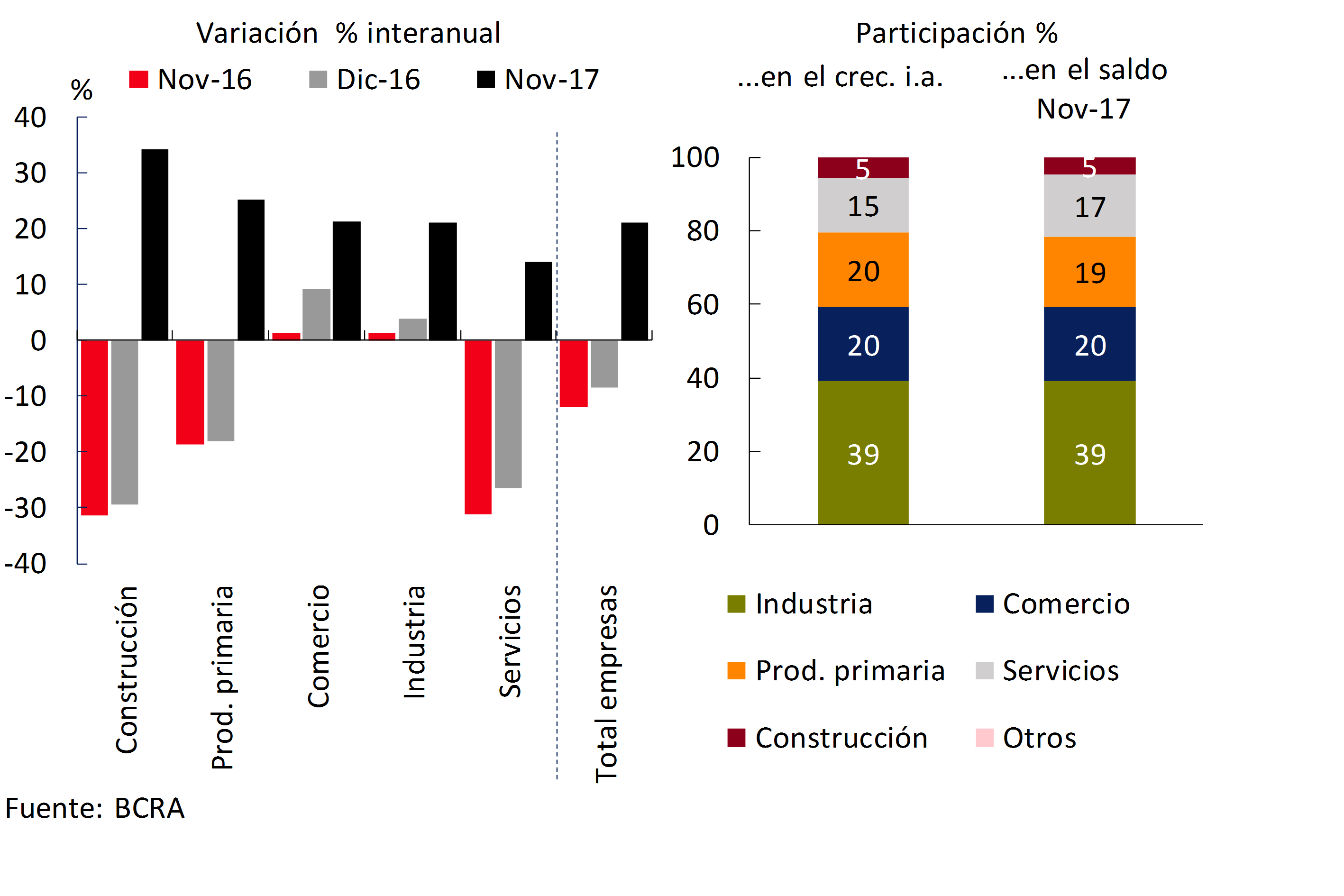
In November, the total credit balance to companies grew 1.4% when adjusted for inflation, driven mainly by public banks. Construction loans showed the largest relative monthly increase, followed by industry and commerce. In year-on-year terms, loans to companies accumulated a real increase of 21.1% (see Chart 16). Financing to industry and commerce accounted for more than half of the year-on-year evolution of total loans to the productive sector.
Figure 16 | Real Balance of Total Credit to Companies
In November, the average nominal active interest rate operated in pesos with the private sector 16 did not present changes in magnitude with respect to the previous month. In particular, the interest rates agreed on mortgages, credit cards and pledges were reduced, while those applied to documents, personal and advances increased slightly. For its part, the interest rates operated for mortgage loans in UVA averaged 4.7% in November, slightly below the October level. On the other hand, the active interest rates operated in UVA on personal and pledge loans showed a slight monthly increase.
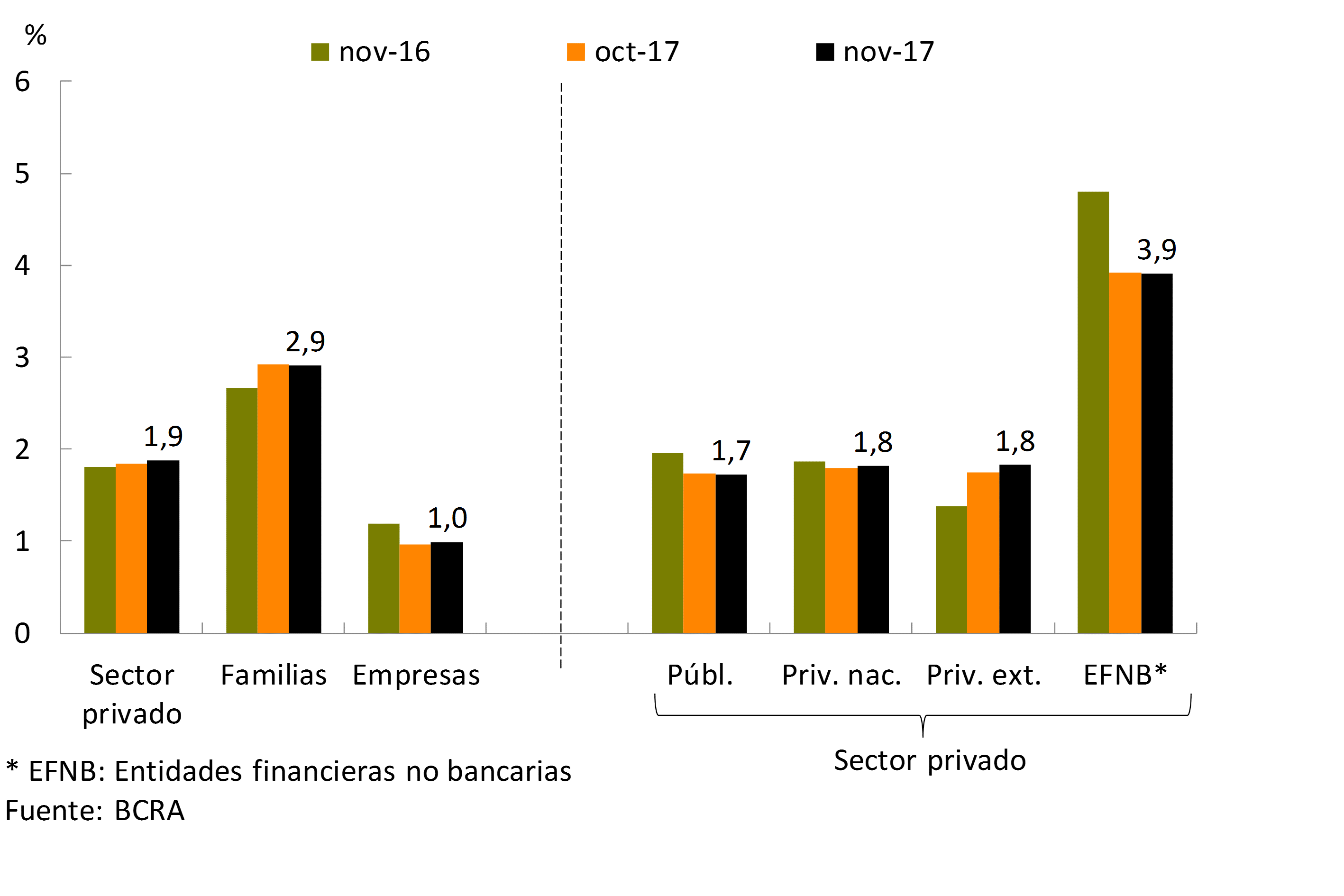
From low levels, the non-performing loan ratio to the private sector increased slightly in the month to 1.9% (see Chart 17). The increase in this indicator was mainly explained by the performance of foreign private banks. Disaggregated by segment, in November the non-performing loan ratio to households remained at 2.9% of the total portfolio in the sector, while the NPL ratio for loans to companies rose slightly, to 1% in the period. The accounting forecasts of all financial institutions represented 136% of loans to the private sector in an irregular situation, slightly below last month’s record and the level evidenced a year ago.
Figure 17 | Irregularity of Credit to the Private Sector – Irregular Portfolio / Total Financing (%) – Financial System
V. Solvency
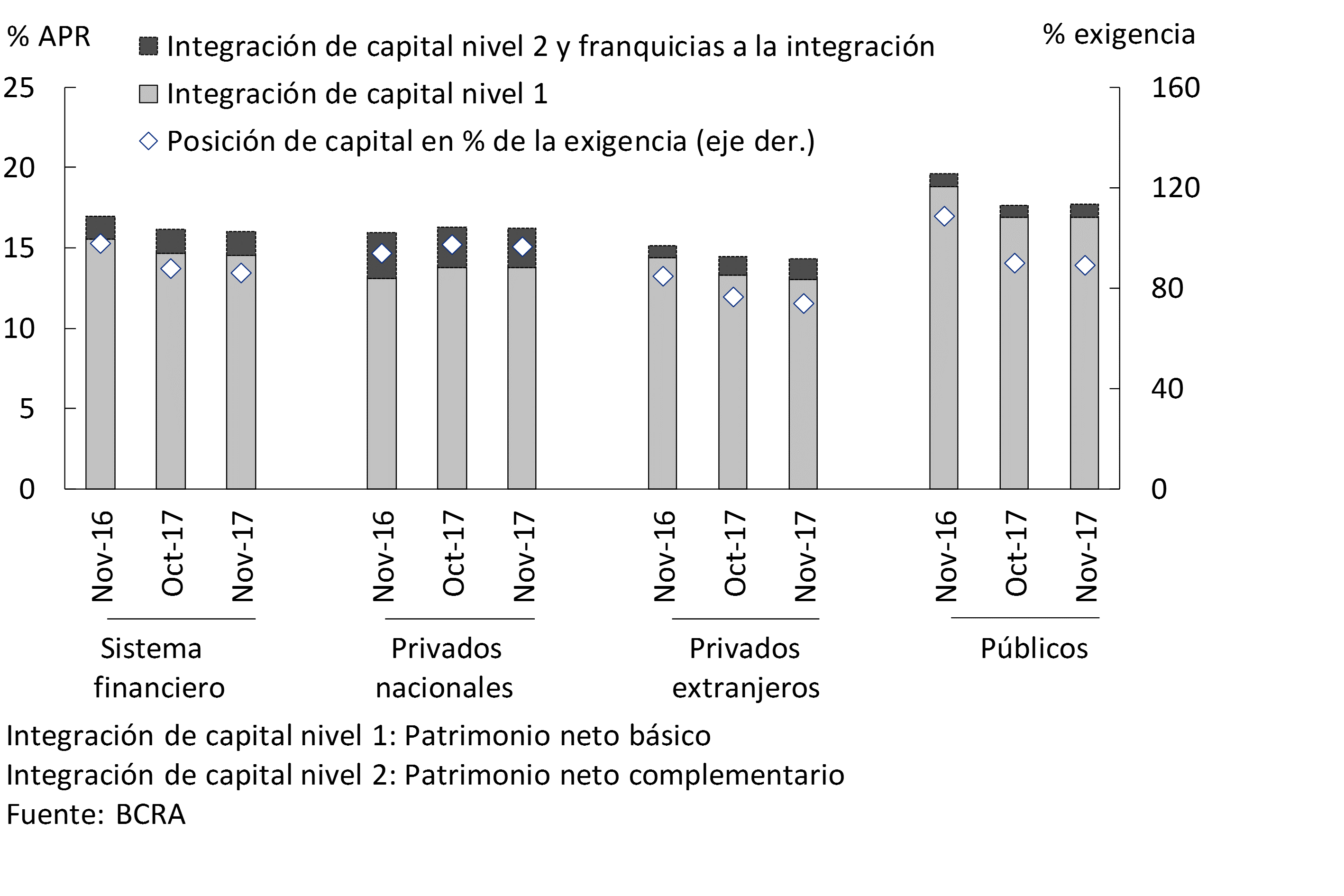
From levels that are in line with the average of the American countries (see Chart 18), the solvency indicators of the local financial system have fallen slightly in recent months. This was due to the fact that the growth of risk-weighted assets (driven by the dynamism of credit to the private sector) has been relatively greater than the increase in regulatory capital (which is mainly increased by accounting gains and capital contributions). The sector’s capital integration represented 16% of risk-weighted assets (RWA) in November, being 0.2 p.p. lower than in October and 1 p.p. lower than the figure for the same period in 2016 (see Chart 19). Tier 1 equity 17 was equivalent to 14.6% of RWAs for the month. Excess regulatory capital totaled 86% of the regulatory requirement for banks as a whole.
Figure 18 | Integration of Regulatory Capital – Comparison of countries in the Americas
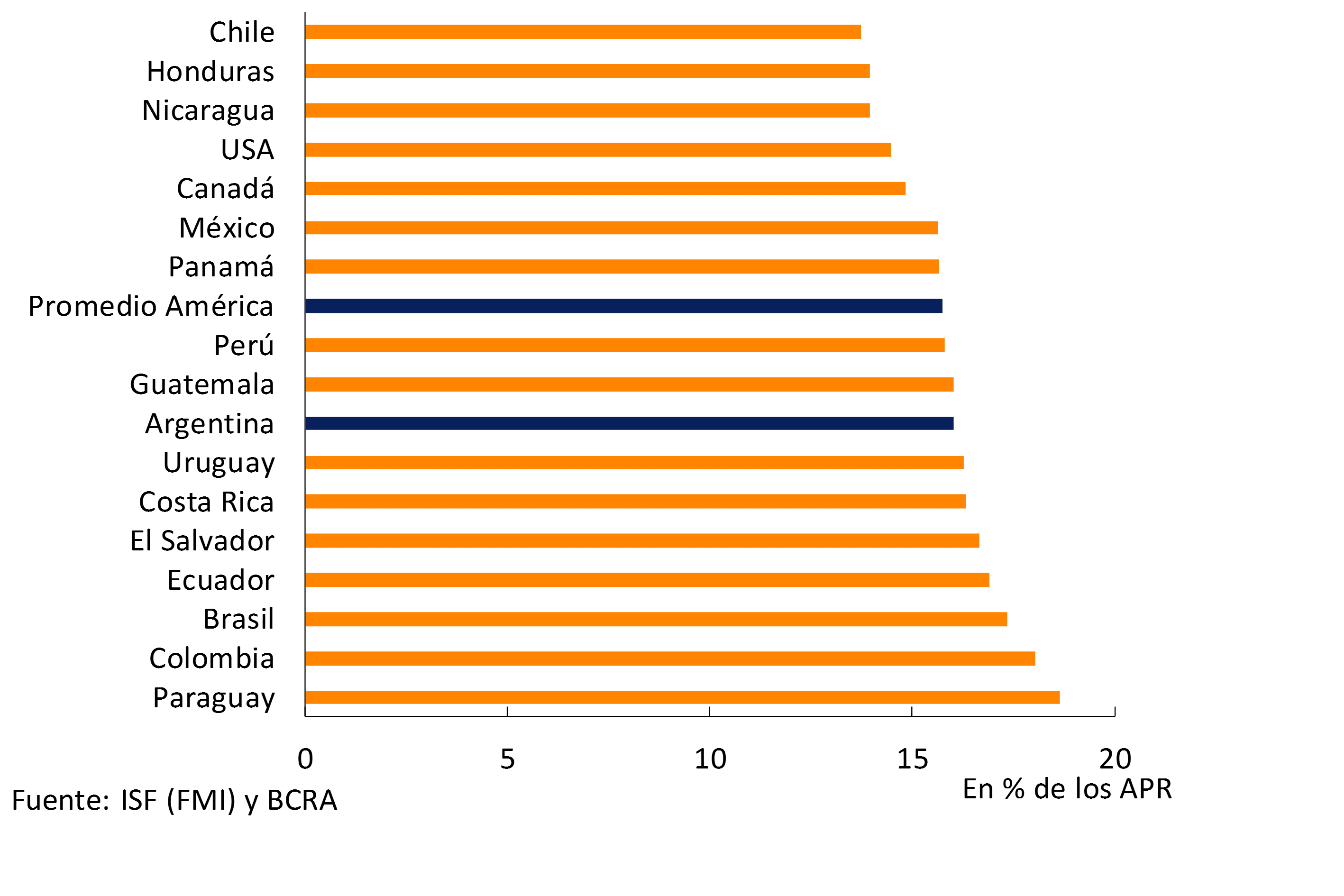
Figure 19 | Integration of Regulatory Capital
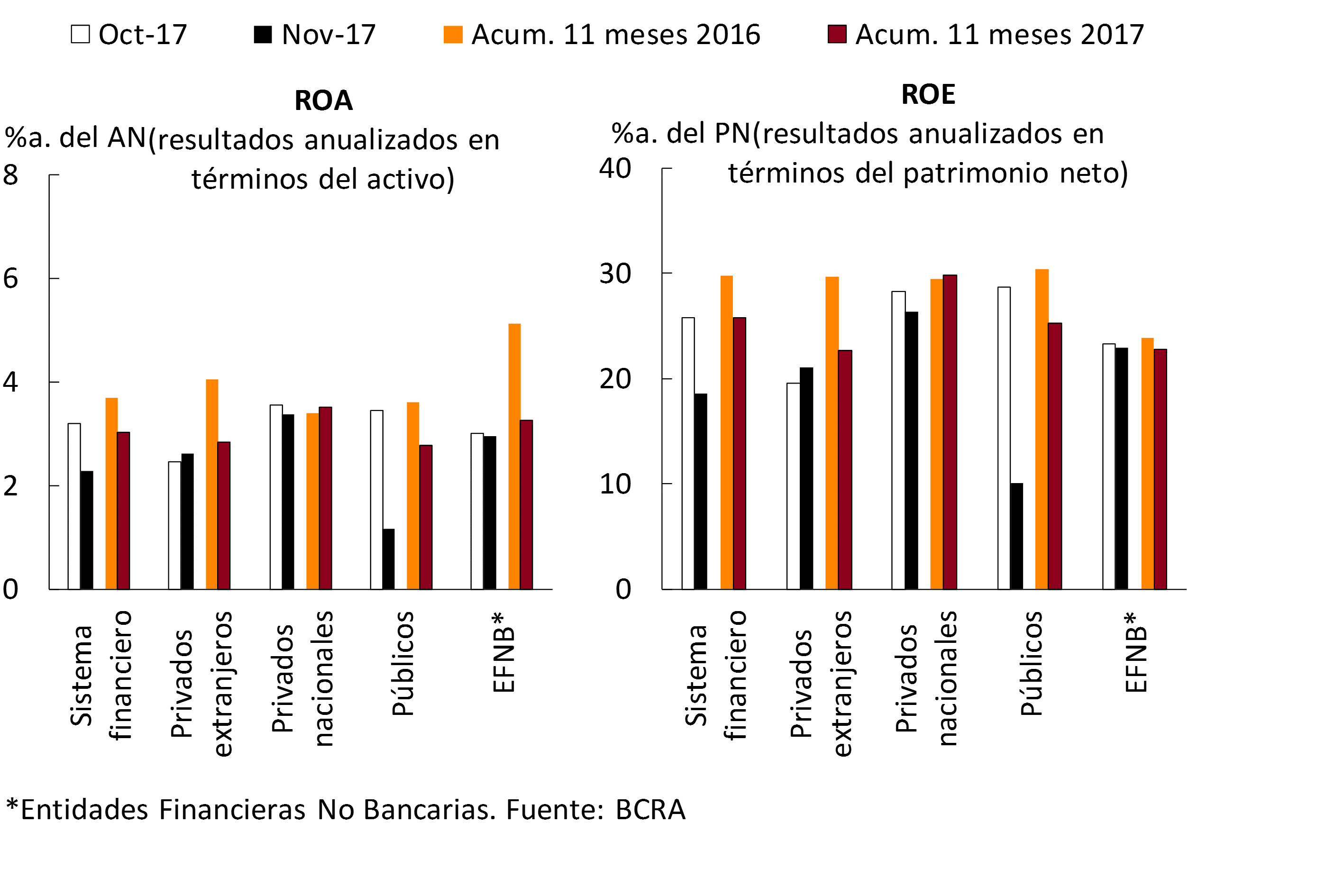
The results recorded in the month by the financial system represented 2.3% y/y of assets (18.6% y/y. of equity), falling with respect to last October’s level, mainly due to the performance of the group of public banks (see Chart 20). In the accumulated between January and November 2017, the banks as a whole increased their profits 14% in nominal terms compared to the same period in 2016 (obtaining $77,310 million). The cumulative results in eleven months totaled 3% of aggregate assets, 0.7 p.p. less than in the same period of 2016. In particular, the group of private banks accrued gains of 3% y/y of assets in November, similar to those of October (the cumulative XA in eleven months for this group of financial institutions reached 3.2%y/y, falling 0.5 p.p. in a year-on-year comparison).
Figure 20 | Profitability by Group of Financial Institutions
In November, the financial margin of the banks as a whole represented 8.4% of assets, being 3 p.p. lower than in October, mainly due to the lower accrual of gains on securities 18. Additionally, compared to last month, earnings due to share price difference19 and interest income were reduced. The cumulative financial margin in eleven months of 2017 reached 10.2%y/y of assets, 1.2 p.p. less than in the same period of 2016 (see Chart 21) from the decrease in interest income and securities gains, effects moderated by the reduction in interest expenses and the increase in pass premiums. In relation to private banks, in the month the financial margin totaled 10.8% y/y of assets, 0.5 p.p. less than in October mainly due to lower interest income and fall in earnings from securities (in the accumulated of 2017 the financial margin of private banks totaled 11.3% of assets, falling 0.9 p.p. year-on-year).
Figure 21 | Components of the Profitability of the Financial System
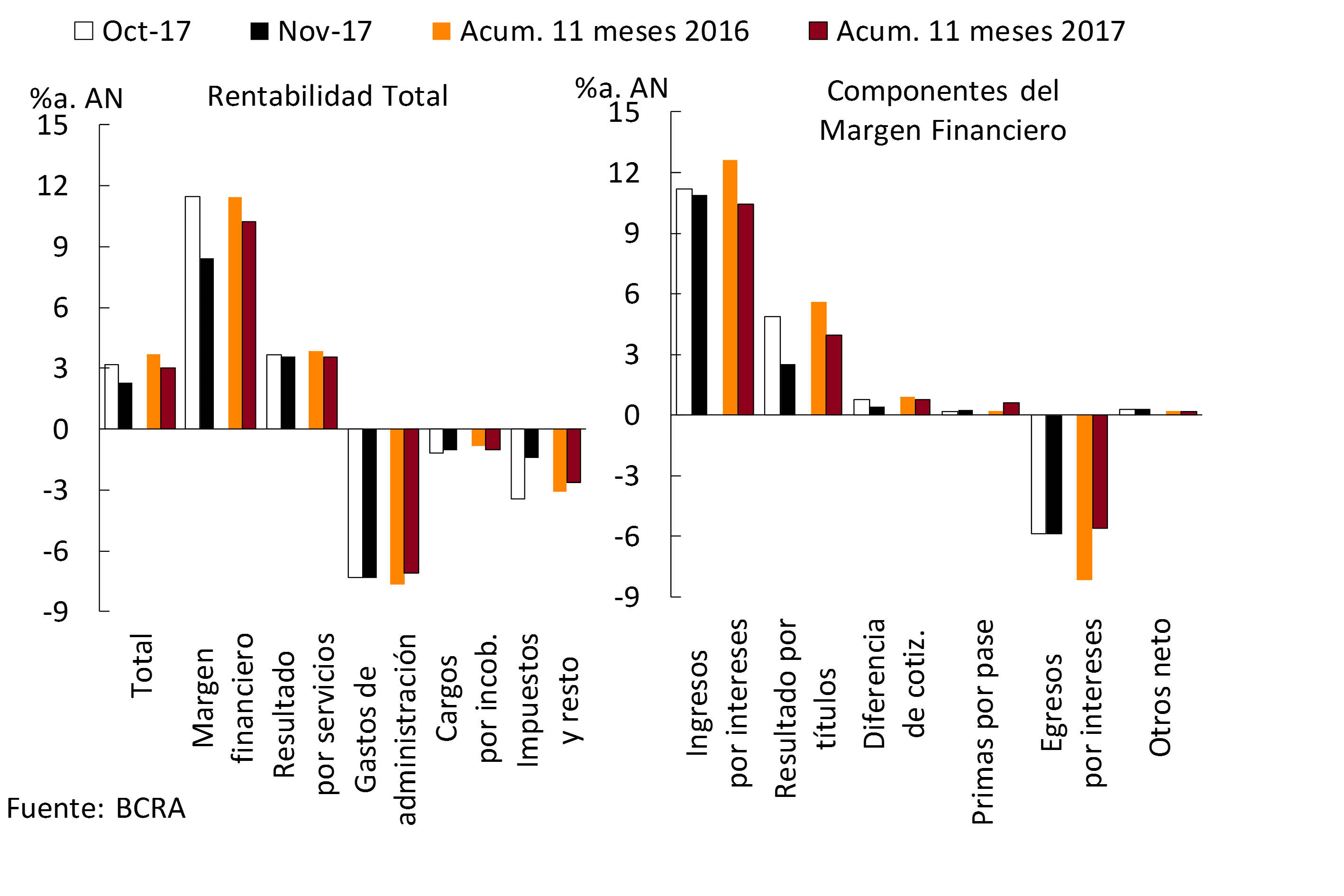
In November, net income from services of the banks as a whole represented 3.6% of assets, a level similar to that recorded in the accumulated eleven months of the year (0.2 p.p. lower in a year-on-year comparison).
Charges for uncollectibility of the financial system stood at 1% of assets both in the month and in the accumulated between January and November 2017 (0.2 p.p. more than in the accumulated of eleven months of last year).
In the month, administrative expenses represented 7.3% of assets at the aggregate level, without significant changes with respect to October. In the accumulated eleven months, administrative expenses reached 7.1% of assets (falling 0.5 p.p. y.o.y.).
In November, the tax burdens for the sector were equivalent to 2.1% of the assets in the month, similar to those of the previous month and 1.9% of the assets in the case of the accumulated in eleven months of 2017. On the other hand, the income tax accrued in the month was 0.7% of assets, reducing with respect to October 20. Between January and November, the accrual of income tax totaled 1.4% of assets, 0.3 p.p. less than in the same period of 2016.
Regulations
Summary of the main regulations of the month, implemented by the BCRA, related to financial intermediation activity. The effective date of the regulation is taken as a reference.
Communication A6352 – 03/11/17
Within the framework of the Financing Line for Production and Financial Inclusion, it is established that in January 2018, the financial institutions covered must maintain an average monthly balance of financing equivalent to 16.5% of the monthly average of daily balances of deposits of the non-financial private sector in November 2017. a percentage that will be reduced by 1.5 p.p. per month, reaching 0% in December 2018. The concepts (destinations, terms, interest rate, etc.) in force until now are maintained for the new quota.
Communication A6353 – 03/11/17
The possibility is established for Securities Transporters (TVs) and Non-Financial Credit Providers (PNFC) to process their registration through the use of electronic means. It is established that these procedures are carried out by uploading the required information through an application available on the BCRA’s website, admitting that from that moment on the PNFC and the TVs may begin to operate with financial and/or exchange institutions or access financial credit assistance – as appropriate; Notwithstanding the foregoing, it shall be the responsibility of the financial and exchange institutions to verify the registration of the aforementioned subjects in the relevant Registry. On the other hand, an adjustment is made in terms of non-compliance, facilitating the rehabilitation of TVs that are removed from the corresponding register.
Communication A6354 – 03/11/17
The rules on the expansion of financial institutions are adapted by allowing outsourcing or decentralizing activities that do not consist of serving customers and/or the general public, in the parent or controlling company abroad, or in third-party facilities.
Communication A6363 – 10/11/17
In line with the provisions of Decree 893/17, all the regulations and monitoring associated with the obligation to enter and settle the collections of exports of goods are null and void. The rules on Credit Policy are modified, eliminating the obligation to enter and settle collections from exports as a requirement for the granting of pre-financing or financing with funding of liabilities for financial intermediation in foreign currency.
Communication A6364 – 10/11/17
The amount up to which entities can round up the amounts to be paid for withdrawals of funds through ATMs is updated from $49.99 to $99.99, in order to enable the total withdrawal of funds deposited in salary/social security accounts and savings banks for the payment of social assistance plans or programs.
Communication A6374– 17/11/17
The rules on Guarantees are adapted, eliminating the maximum term (6 months or 1 year) as a requirement for operations to be considered as guaranteed with preferred “A” guarantees. Likewise, an international risk rating of “A” or higher is established for guarantees issued by central governments and by agencies or dependencies of central governments of countries of the Organization for Economic Cooperation and Development (O.C.D.E.).
Communication A6381 – 30/11/17
The rules on Savings, Salary and Special Deposits are modified, establishing that foreign investors who have obtained the Foreign Investor Code (CIE) may use this tax identification code to open “Special Current Accounts for Legal Entities”, without the need to process an additional code (CUIT or CDI) with the AFIP.
References
1 Reference is made to those measures of relevance to the financial system that were adopted since the date of publication of the previous Report on Banks.
2 Communication A6400 and Press Release of 12/22/17.
3 By virtue of their long useful life, coins adapt better than banknotes for small denomination values, as they suffer less deterioration.
5 Transactions carried out under the electronic wallet modality are exempt from collection (Communication A6043).
8 Based on balance sheet balances.
9 Mostly explained by a public bank of magnitude.
10 The increase in public sector deposits was reflected in a public bank and the decrease in loans to residents abroad was seen in the group of foreign private banks, partly associated with correspondents.
11 Of 0.8 p.p. of deposits compared to October, to 24.1%.
12 Variation in currency of origin.
13 Variation in currency of origin.
14 Information extracted from the Central Debtors (includes both national and foreign currency). Loans to residents abroad are not included. Business financing is defined here as that granted to legal persons and commercial financing granted to individuals. On the other hand, loans to families are considered to be those granted to individuals, unless they are for commercial purposes.
15 Expressed in pesos at the time of granting (CER adjustment is not included).
16 It includes a fixed and repacable interest rate.
17 Capital Level 1. Defined as basic equity (ordinary and additional capital, net of deductible accounts). See Communication A5369.
18 Influenced by a punctual record of a public bank of magnitude
19 Idem, previous note.
20 Idem, previous note.
Glossary
%a.: annualized percentage.
% YoY: Year-on-year percentage.
Liquid assets: availabilities (integration of “minimum cash” in current accounts at the BCRA and in special guarantee accounts and other concepts, mainly cash in banks and correspondent offices) plus the net credit balance for transfer operations of financial institutions against the BCRA using LEBAC and NOBAC.
Consolidated assets and liabilities: those arising from deducting transactions between entities in the system.
Net Assets (NA): Assets and liabilities are net of accounting duplications for pass-through, forward and spot transactions to be settled.
APR: Total Risk Weighted Assets.
BCBS: Basel Committee on Banking Supervision (BCBS).
Irregular portfolio: portfolio in situation 3 to 6, in accordance with the Debtor Classification regime.
Credit to the public sector: position in public securities (without LEBAC or NOBAC) + Loans to the public sector + Compensation to be received + Debt securities and certificates of participation in financial trusts (with underlying public title) + Miscellaneous credits to the public sector.
Credit to the private sector: loans to the non-financial private sector including accrued interest and CER and CVS adjustment and leasing.
Differences in exchange rates: results from the monthly update of assets and liabilities in foreign currency. The item also includes the results originated by the purchase and sale of foreign currency, which arise as a difference between the agreed price (net of the direct expenses originated by the operation) and the book value.
Miscellaneous: miscellaneous profits (including, but not limited to, gains on permanent shares, recovered loans and unaffected provisions) less miscellaneous losses (including, but not limited to, losses on permanent shareholdings, loss on sale or disposal of goods for use and amortization of business keys).
Equity exposure to counterparty risk: irregular portfolio net of provisions in terms of equity.
Administration expenses: includes remunerations, social charges, services and fees, taxes and amortizations.
IEF: BCRA Financial Stability Report.
IPCBA: Consumer Price Index of the City of Buenos Aires.
CSF: Liquidity Coverage Ratio (LCR).
LEBAC and NOBAC: bills and notes issued by the BCRA.
LR: Leverage Ratio (LR).
Financial margin: income minus financial expenses. It includes interest and securities earnings, CER and CVS adjustments, exchange rate differences and other financial results.
Mill.: Million or million, as appropriate.
ON: Negotiable Obligations.
OS: Subordinated Obligations.
Other financial results: rental income from financial leases, contribution to the deposit guarantee fund, interest on availabilities, charges for loan depreciation, premiums for the sale of foreign currency and other unidentified items.
PN: Net Worth.
p.p.: percentage points.
SME: Small and Medium Enterprises.
Consolidated profit: Results from permanent holdings in local financial institutions are eliminated. Available since January 2008.
Income from securities: includes results from public securities, temporary shares, negotiable obligations, subordinated obligations, options and other credits for financial intermediation. In the case of public securities, it includes the results accrued in terms of income, differences in share price, exponential increase based on the internal rate of return (IRR) and sales, in addition to the charge for forecasts for the risk of impairment.
Interest income: interest charged minus interest paid for financial intermediation, following the accrual criterion (balance sheet information) and not what is received. It includes interest on loans and deposits of government securities and premiums for passes.
Result for services: commissions charged minus commissions paid. It includes fees related to obligations, credits, securities, guarantees granted, the rental of safe deposit boxes and foreign and exchange operations, excluding in the latter case the results from the purchase and sale of foreign currency, the latter being accounted for in the “Differences in quotation” account. Expenses include commissions paid, contributions to the ISSB, other contributions for income from services and charges accrued from the gross income tax.
ROA: Final result as a percentage of net assets. In the case of referring to accumulated results, the average of the NA for the reference months is considered in the denominator.
SWEE: Final result as a percentage of equity. In the case of referring to accumulated results, the average net worth for the reference months is considered in the denominator.
RPC: Computable Patrimonial Liability. For more details, see Ordered Text of Minimum Capitals of Financial Institutions.
TNA: Annual nominal rate.
US$: US dollars.
UVA: Unit of Purchasing Value.
ICU: Housing Units.
Share on


