I. Recent measures1
Recently, the BCRA implemented a new monetary policy scheme, in order to reduce inflation and recover a nominal anchor for the economy2.
In this new context, the BCRA has established a set of measures aimed at reinforcing the contractionary nature of its monetary policy3. On the one hand, in order to guarantee an orderly process of LEBAC reduction, as of October 1, the minimum cash requirement rates for relatively larger financial institutions were increased by 3 percentage points4. This increase, which may be integrated with LELIQ and/or NOBAC, is in addition to those provided in recent months5. For its part, in order to encourage the capture of new fixed-term deposits, the BCRA allowed the entire minimum cash requirement on the increase in such deposits to be integrated through LELIQ and NOBAC. In addition, banks were authorized to pay interest with a periodicity of no less than 30 days for fixed-term deposits, instead of payment in full at the end, which was the only one allowed. On the other hand, this institution reduced the minimum daily minimum cash position, maintaining the average monthly requirement. In this way, financial institutions will be able to participate more actively in LELIQ’s auction operations. In addition, the BCRA allowed financial institutions to acquire BCRA Cash Clearing Notes, which will accrue one-fifth of the reference rate determined by the BCRA6.
In mid-September, it was admitted that financial institutions may grant guarantees to foreign residents on the fulfillment of obligations related to their commercial operations of goods and/or services abroad, to the extent that the payer counterguarantees them locally in their entirety and in the same currency through some of the preferred guarantees provided7.
In order to continue promoting banking penetration and financial inclusion, limitations on the operation of mobile branches8 were recently eliminated, such as the requirement that a maximum period of stay in the same location be established.
Recently, the BCRA regulated the electronic check (ECHEQ)9. The ECHEQ is a check in the strict sense of the current regulations, which has the particularity of being issued by electronic means, ensuring that the functionalities of the physical check with which it will coexist are maintained. Therefore, it may be common or deferred payment, will have the character of an enforceable title and will be endorsable without the limitations that currently apply to traditional checks. Financial institutions will have the obligation to allow their customers to make ECHEQ deposits and to pay those ECHEQs that are presented at the cash window. The measure will allow greater security and speed in the management of collection and reduce the causes of check rejections, which is expected to have a positive impact on the efficiency of the system.
II. Activity
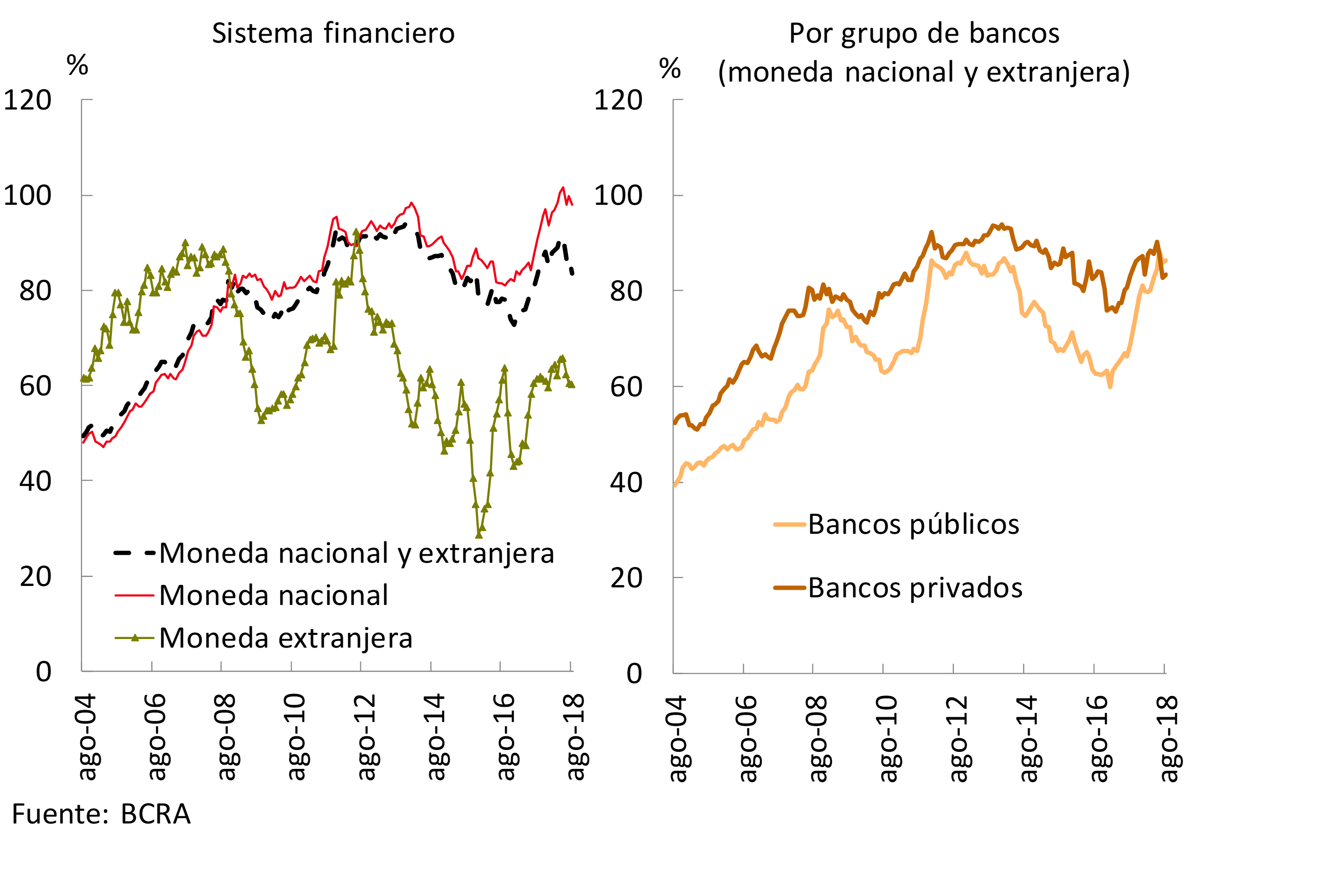
In line with what has been evidenced in recent months, in August the financial intermediation of all banks with the private sector fell when taking into account the effect of inflation on balance sheet balances. In this context, the ratio between loans and deposits – private sector – fell in the month, to around 83% (a figure similar to that evidenced in the same period of the previous year, see Graph 1). The decrease in this quotient was explained by private banks, mostly in the segment in national currency. In August, bank assets in domestic currency grew 1.4% in real terms, while assets in foreign currency increased 1.2% – in the currency of origin.
Graph 1 | Loans in Deposit Terms – Balance Sheet Balances – Private Sector
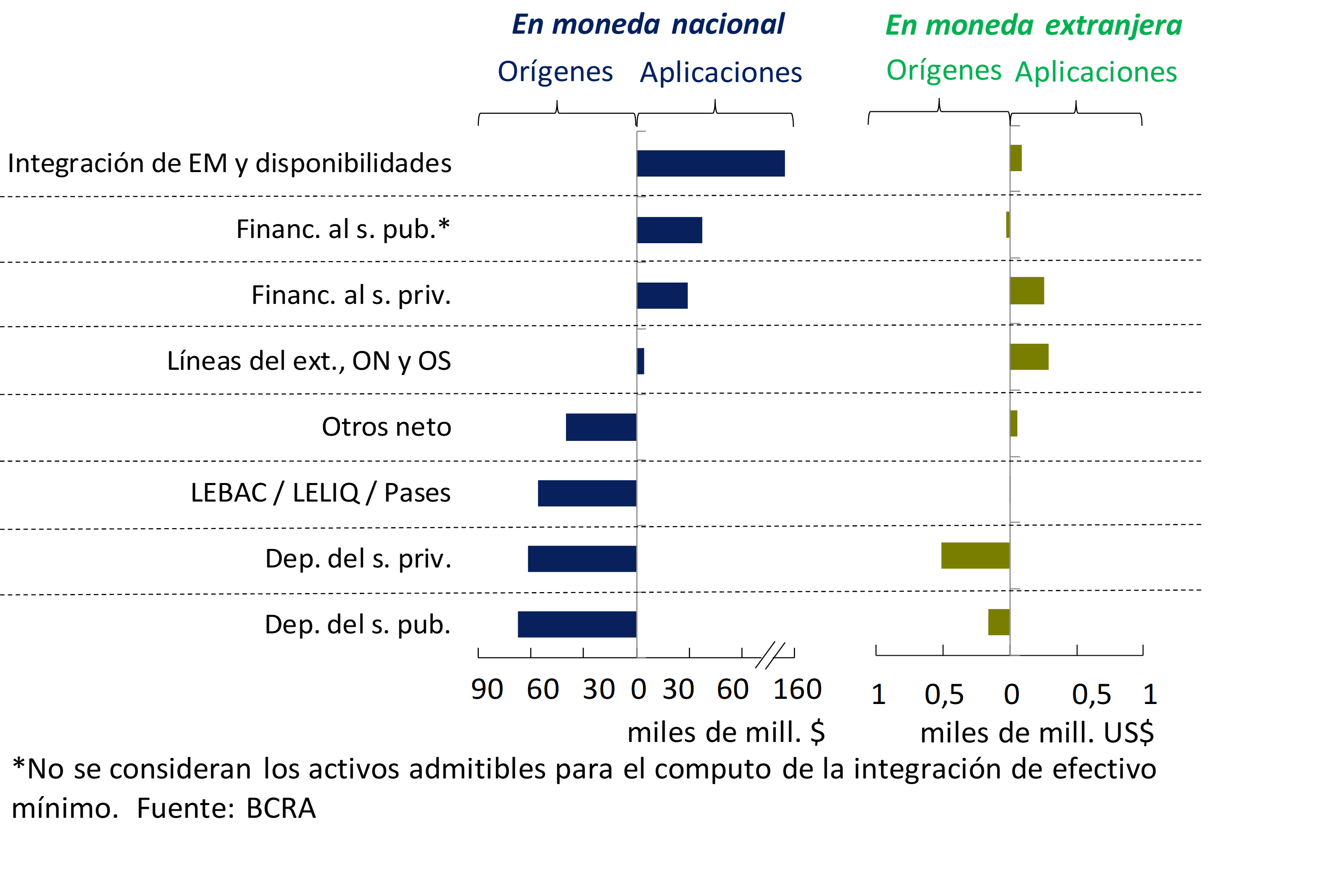
Regarding the estimated monthlycash flow 10 for the financial system, in August the main sources of resources in pesos were the increase in deposits from the public sector ($68,000 million), the private sector ($62,000 million) and the reduction in the balance of BCRA instruments ($56,000 million, see Chart 2). On the side of the applications of resources in national currency, the month highlighted the increase in the integration of minimum cash ($155,000 million) within the framework of the increase in the reserve ratios for deposits in pesos that the BCRA ordered during August. On the other hand, taking into account the monthly variations in foreign currency items, the increase in private sector deposits was the main source of funds in the month. Meanwhile, the reduction of the balance of foreign credit lines and the increase in credit to the private sector were the main applications in this denomination for the period.
Graph 2 | August 2018 Cash Flow Estimate – Financial System – By Source Currency
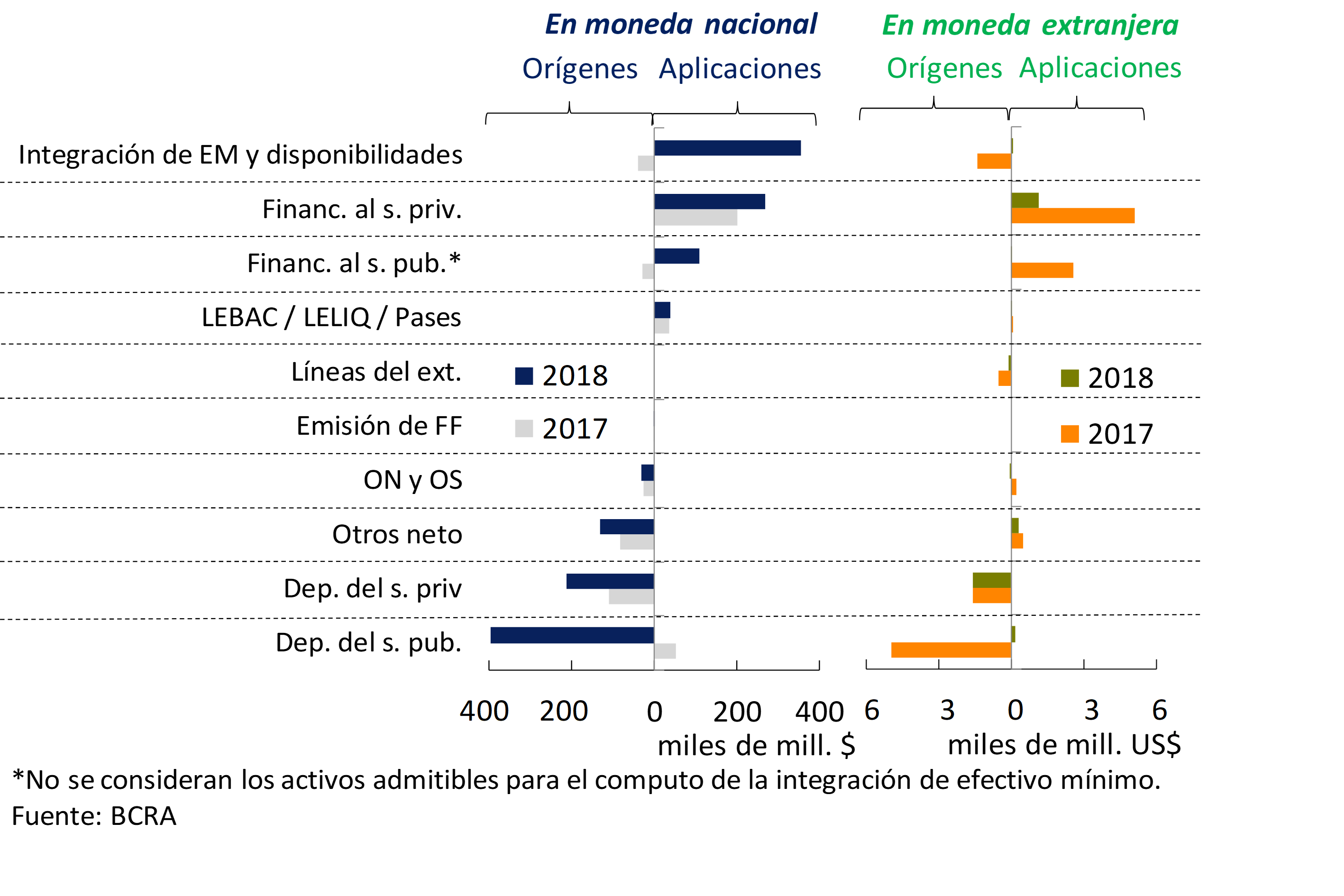
Considering the flow of funds from the financial system for the accumulated eight months of 2018, the expansion of deposits from the public sector ($398,000 million) and the private sector ($212,000 million) were the most outstanding origins in national currency (see Graph 3). These resources were mainly channeled to increase the integration of minimum cash in pesos ($356,000 million) and financing to companies and families in the same denomination ($270,000 million). As for items in foreign currency, so far this year financial intermediation with the private sector has predominated. The increase in deposits and loans was the most relevant source and destination of funds, respectively.
Graph 3 | Estimated 8-Month Cumulative Cash Flow – Financial System – By Currency of Origin
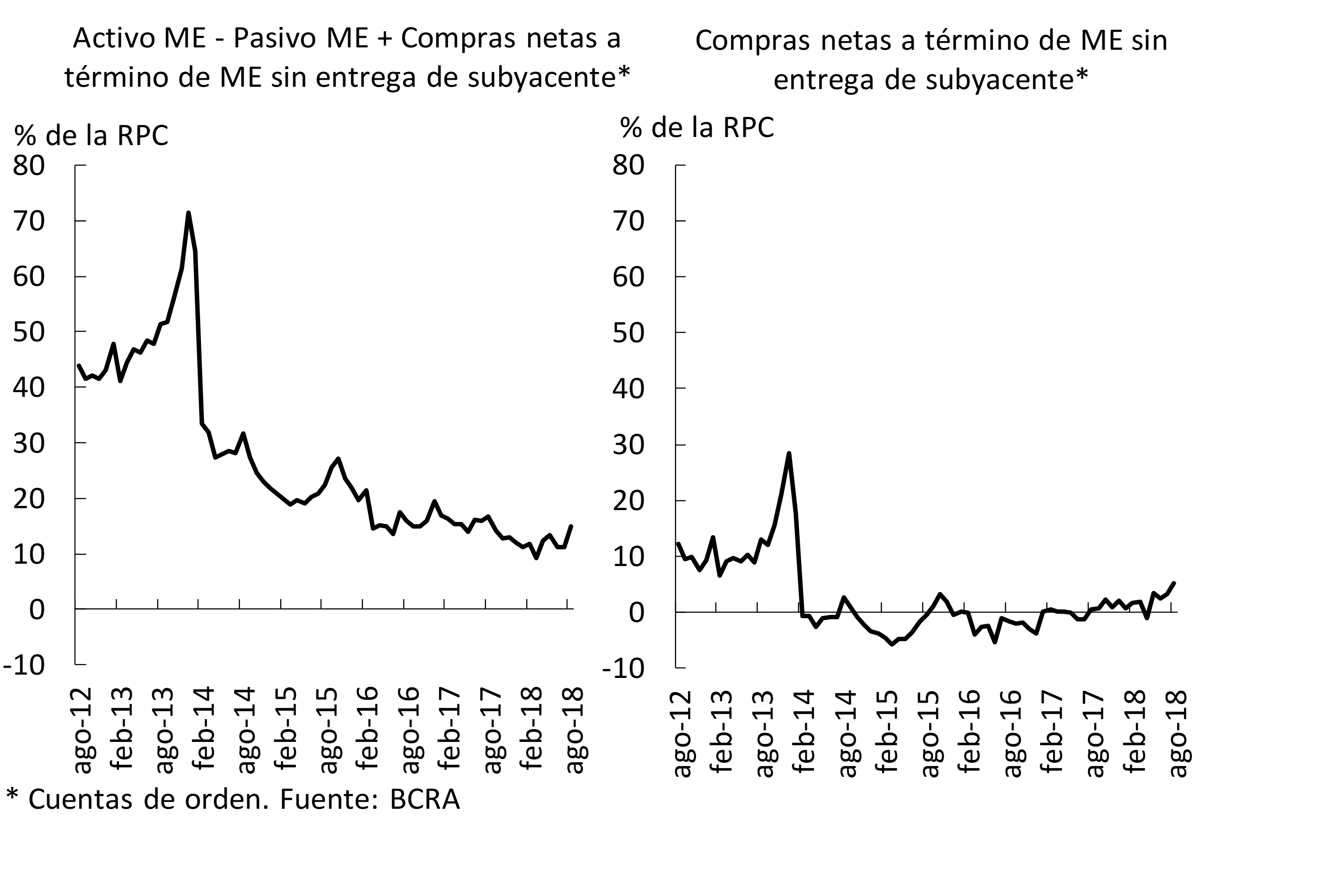
In August, the financial system’s foreign currency asset mismatch stood at 14.9% of regulatory capital, remaining in an environment of low values in relation to the levels reached in recent years (see Chart 4). This ratio increased 3.8 p.p. compared to last month due to the fact that the re-expression of the mismatch of foreign currency at the end of the month exchange rate (which increased 35% compared to the end of July) was relatively higher than the increase in the Computable Patrimonial Liability.
Figure 4 | Foreign Currency Mismatch of the Financial System – As % of the PRC
In relation to the spread between assets and liabilities adjustable by CER, in August the group of banks presented an estimated asset mismatch equivalent to 46.6% of the PRC, with no relevant changes compared to last month. It should be remembered that public banks concentrate most of this type of assets, while adjustable liabilities are more distributed among the different homogeneous groups of banks.
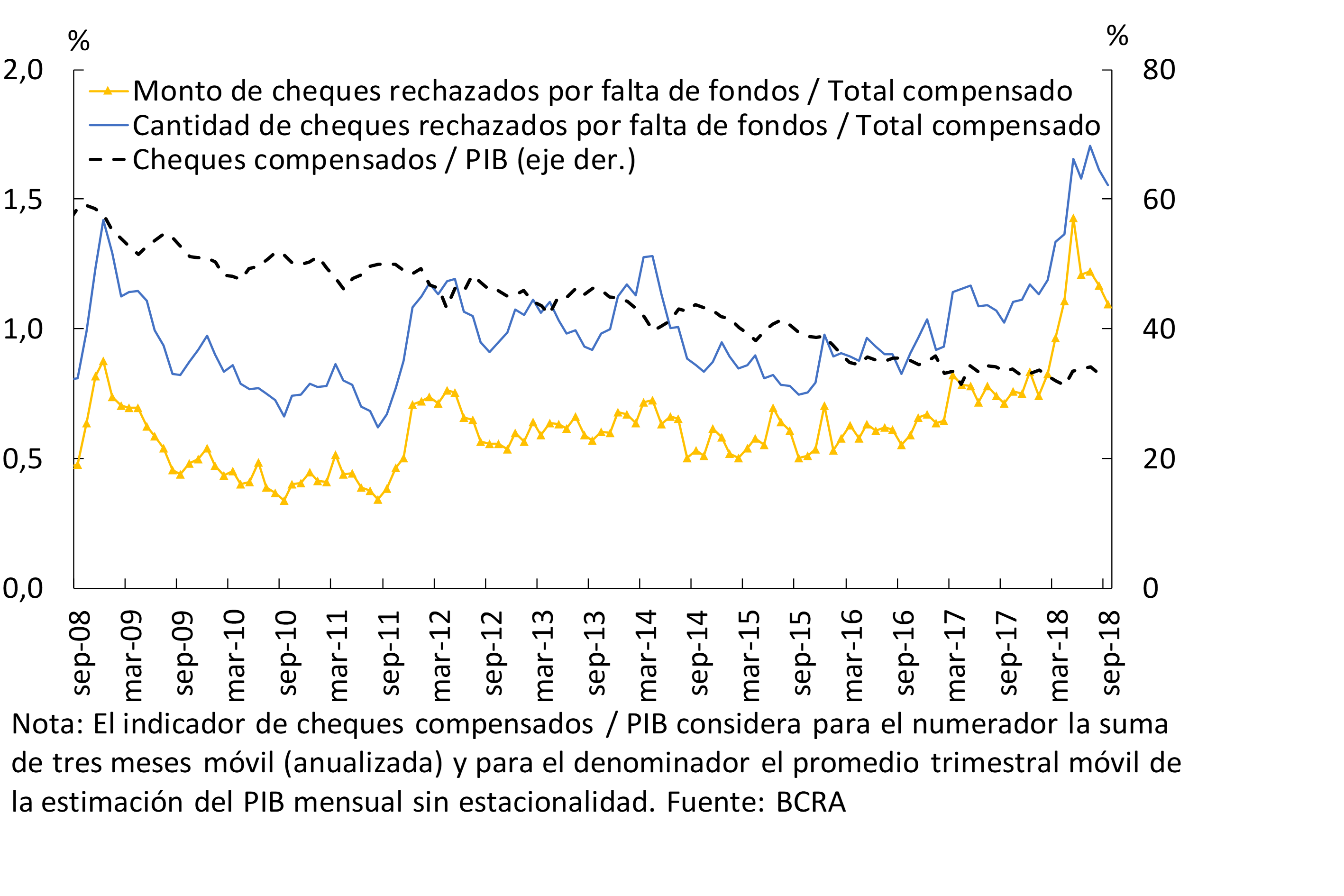
Considering the operations carried out by the National Payment System, in September – the latest information available – the clearing of checks was reduced, both in values and in the number of documents issued. As of September, checks cleared by camera represented 32.8% of GDP, 1 p.p. and 26 p.p. below what was evidenced in September 2017 and the level of 10 years ago, respectively. In this context, at the end of the third quarter of the year, the rejection of checks due to lack of funds was reduced in terms of the total compensated —both in amount and quantity— (see Graph 5). In particular, in terms of amounts, the check rejection ratio fell to 1.1% of the total cleared, continuing the decline observed after the peak of May 2018 (when it had reached a level of 1.4%).
Graph 5 | Cleared and Bounced Checks
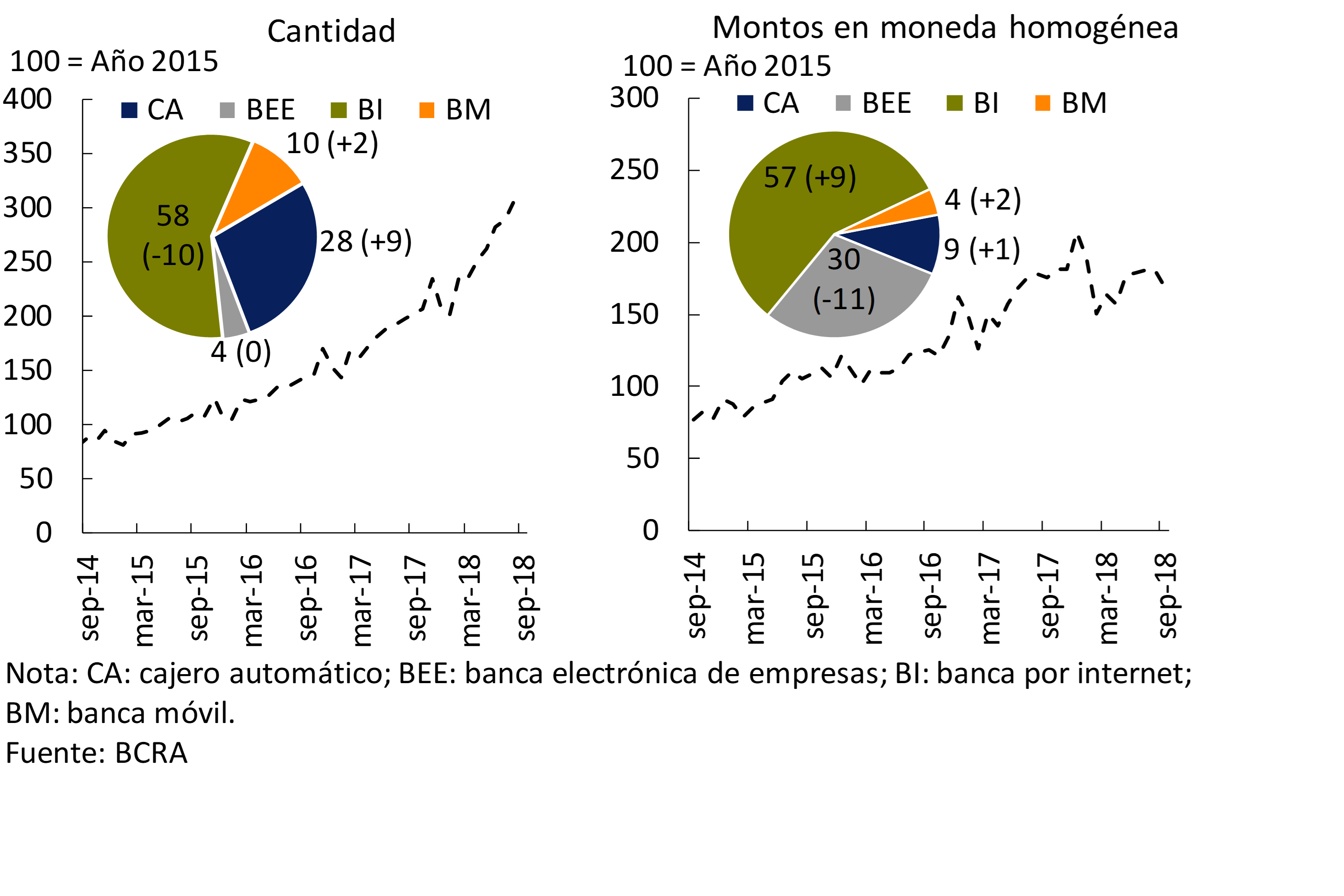
For its part, in September immediate transfers registered a monthly increase considering the number of operations and a reduction compared to August when taking into account the amounts in real terms. Considering a year-on-year comparison, transfers with instant credit accumulated an increase of 55% for the amount and a slight reduction in real terms. As for the channels in which this type of transfer is made, internet banking stands out, which continues to account for more than half of monthly transactions, both in amounts and in values (see Graph 6).
Graph 6 | Immediate Transfers of Funds by Channel – Evolution of the total and share % by channel as of Sep-18 (in parentheses year-on-year change)
III. Deposits and liquidity
Total deposits in pesos increased 1.7% in real terms in August (+5.6% nominal), driven by public sector placements11. The balance of private sector deposits in national currency did not show significant changes in the period when adjusting for inflation (+3.8% nominal), observing a monthly drop in term deposits that was partially offset by the increase in demand accounts. Meanwhile, total deposits arranged in foreign currency increased 2.1% – in source currency – in August, with increases in placements by the public sector (+4.3%) and the private sector (+1.9%).
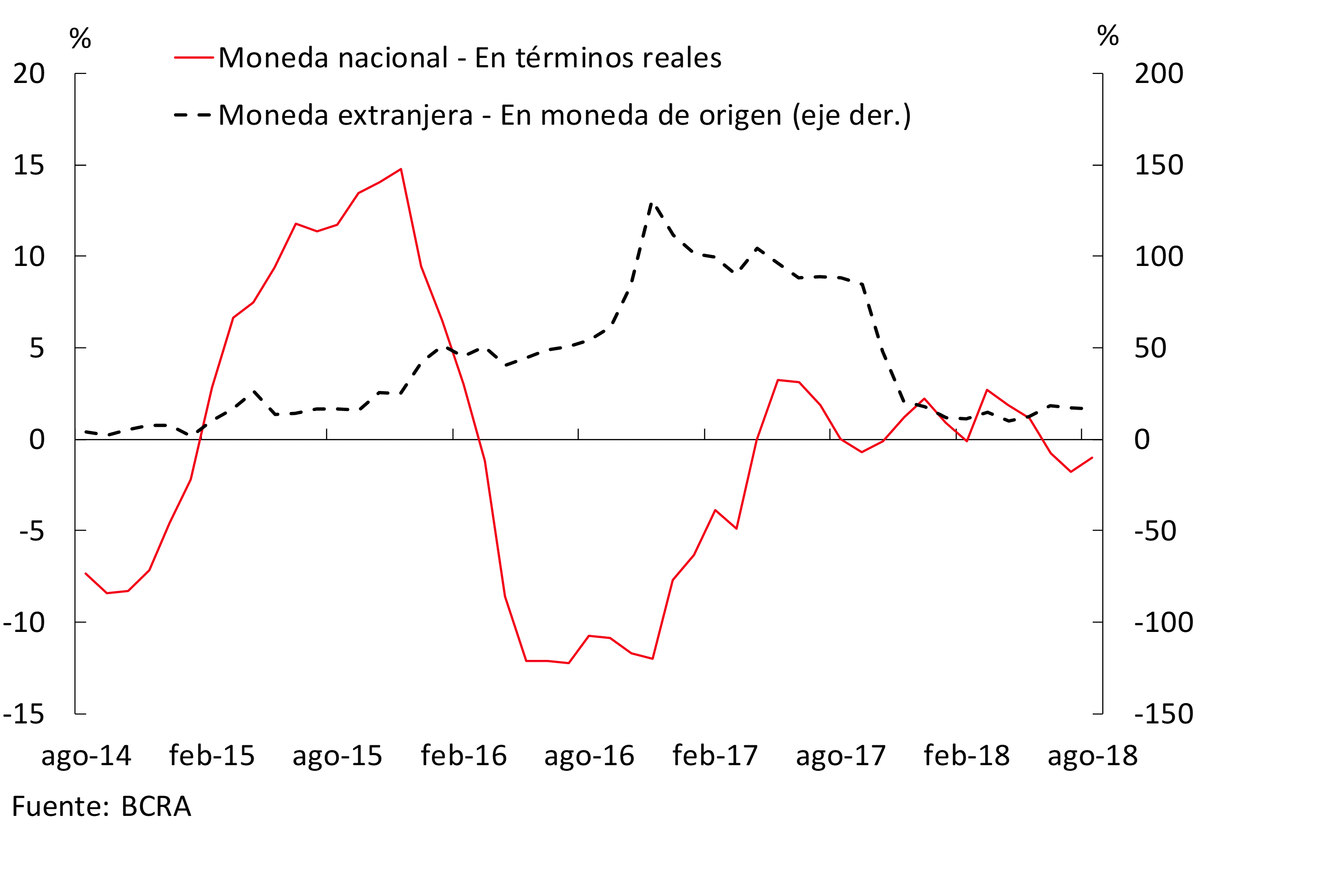
In year-on-year terms, the balance of total deposits in national currency grew 13.9% adjusting for inflation, a dynamic driven by public sector impositions. Private sector deposits in pesos fell slightly in the last twelve months (-1% real y.o.y., see Chart 7). On the other hand, total placements in foreign currency increased 2.2% – in foreign currency – compared to August 2017, with an increase of 16.4% in private sector accounts in the same period.
Figure 7 | Private Sector Deposits – Var. A.I. of the balance
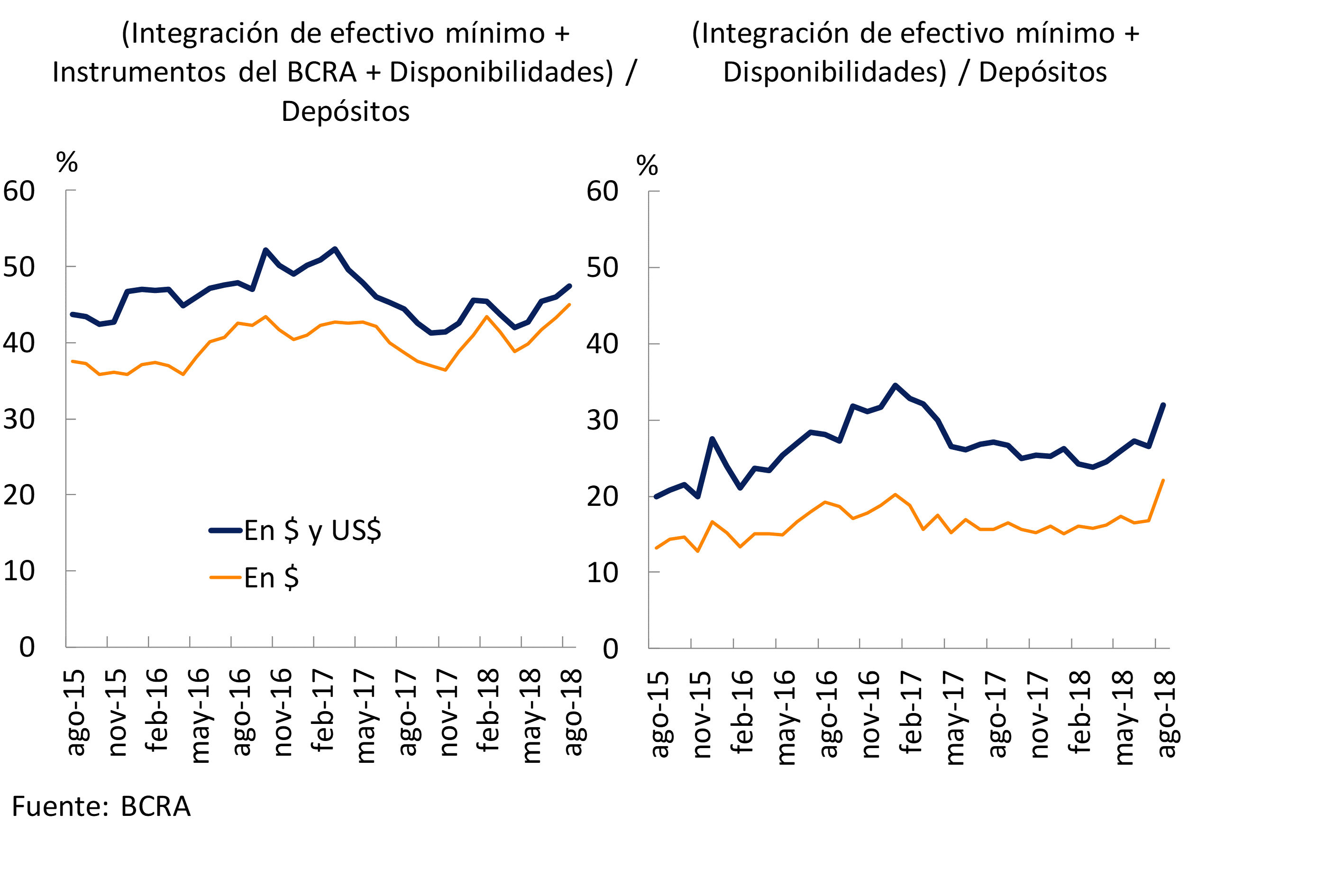
In August, a reserve requirement increase of 3 p.p. was ordered for deposits in pesos12 of those financial institutions included in group “A”13, which must be integrated in its entirety into the current accounts that these entities have with the BCRA. In this context, the ample liquidity of the financial system – integration of minimum cash, BCRA instruments and availabilities, in domestic and foreign currency – reached 47.4% of total deposits in August (45% in peso items), increasing 1.4 p.p. (1.7 p.p.) compared to July (see Chart 8). As a result of the new reserve requirement regulations, during the period there was a change in the composition of liquid assets with an increase in the relative importance of liquidity held in current accounts at the BCRA. The strictest liquidity indicator – it includes only the integration of minimum cash and availabilities, in domestic and foreign currency – increased 5.4 p.p. of deposits in the month to around 31.9% (52.4% when considering only items in foreign currency). Considering the last 12 months, bank liquidity increased 2.9 p.p. of deposits for the broad indicator and 4.8 p.p. of deposits for the strict indicator.
Figure 8 | Liquidity of the Financial System
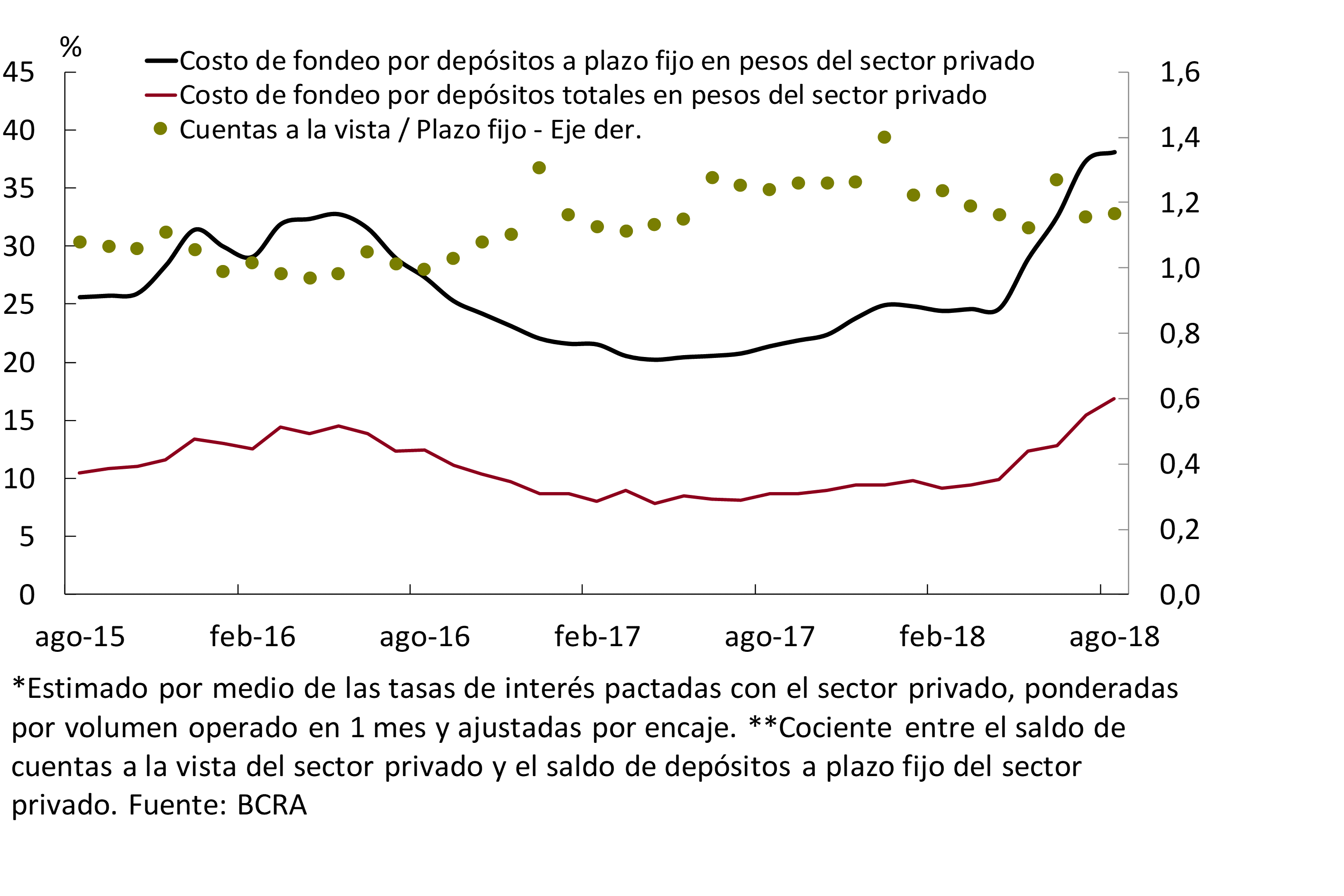
The interest rate that banks operated with the private sector for fixed-term deposits in pesos increased in August, to 32.8% nominal annual on average14. In this context, and in the context of the increase in reserve requirements, the estimated funding cost for private sector deposits in national currency showed a slight increase in the month (see Chart 9). This rise was slightly tempered by the greater weighting of demand placements in total private sector deposits.
Figure 9 | Estimated Funding Cost for Private Sector Deposits in Pesos* and Ratio between Demand and Time Deposits**
IV. Financing
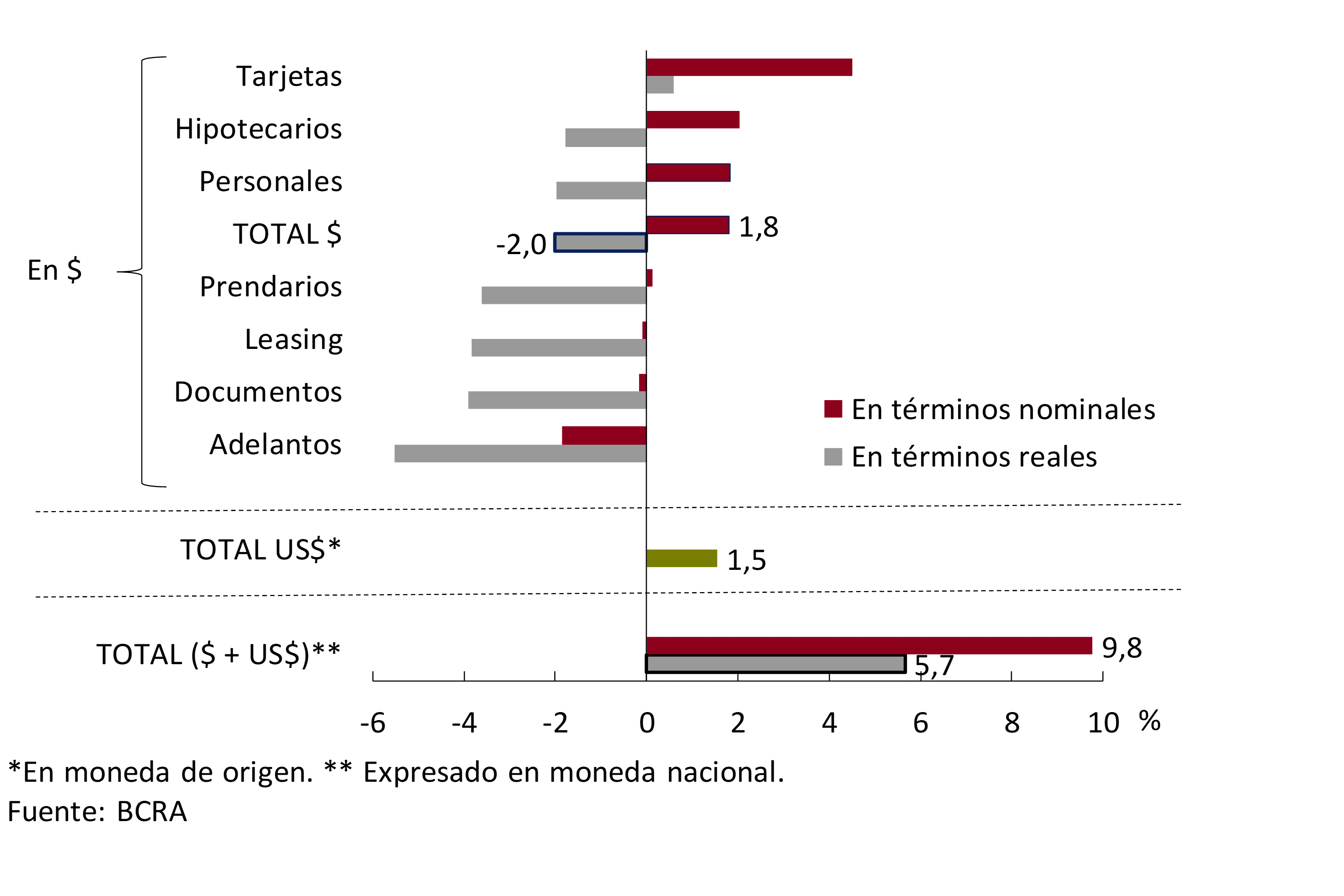
In August, the balance of financing in national currency to the private sector fell by 2% when adjusted for inflation compared to July (+1.8% in nominal terms). Within this segment, almost all credit lines showed declines in real terms, with the exception of credit cards (see Chart 10). Meanwhile , in the month the balance of loans in foreign currency increased 1.5%15, mainly explained by pre-financing for exports. As a result of this performance and the effect of the depreciation of the peso against the dollar in August, the total balance (in domestic and foreign currency) of financing to the private sector expressed in pesos increased by 5.7% when adjusted for inflation.
Figure 10 |Total Credit Balance to the Private Sector – Monthly % Change – August 2018
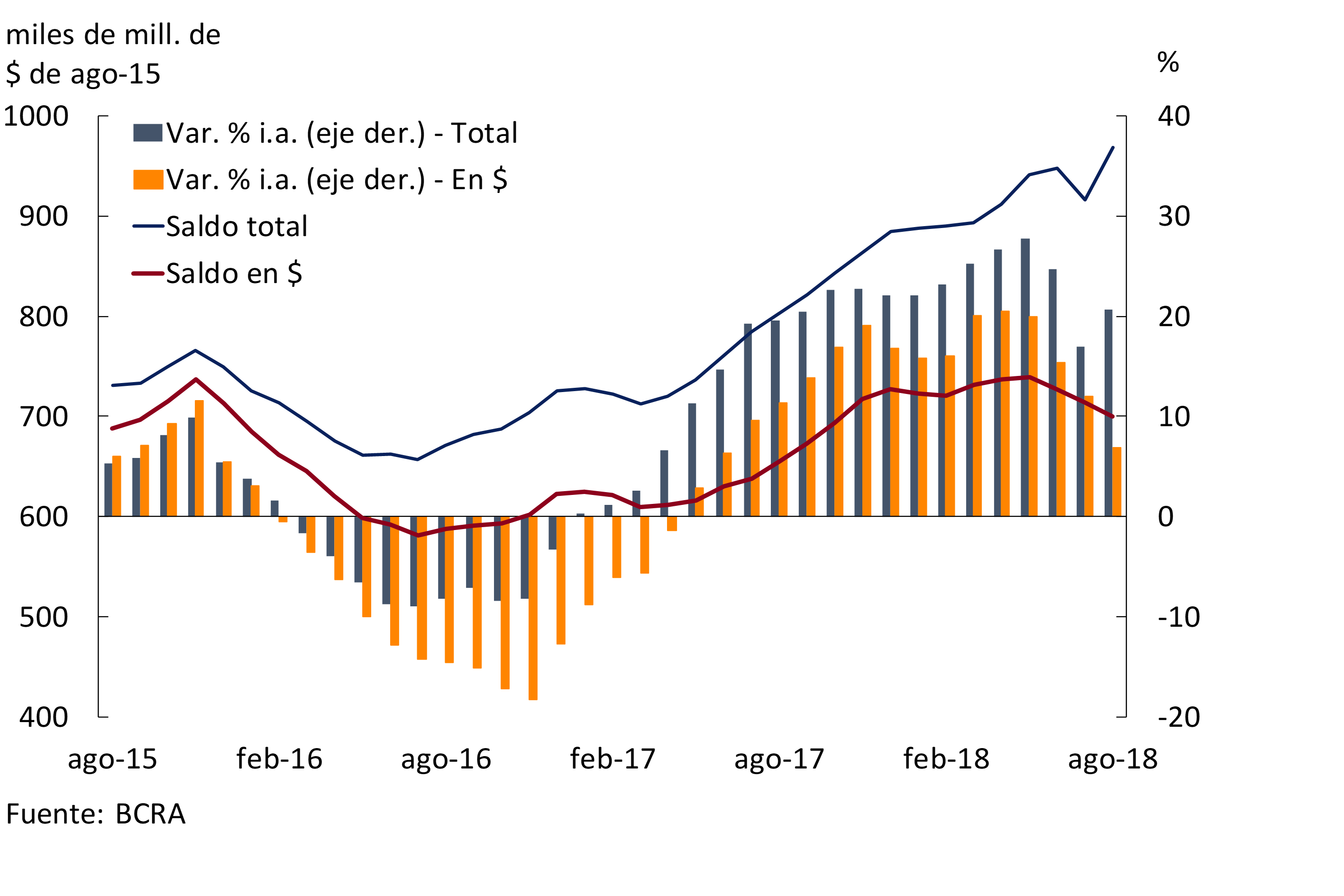
In year-on-year terms, loans in pesos to the private sector accumulated an increase of 6.9% in real terms in August, showing a slowdown in recent months (see Chart 11). This year-on-year dynamic was mainly driven by public banks, followed by domestic and foreign private banks. Within the lines in pesos, mortgage loans showed the highest relative year-on-year increase (72.2% real y.o.y.). On the other hand, loans in foreign currency grew 14.3% YoY.16, mainly explained by pre-financing for exports and documents. In this context, in August the total credit balance (including both domestic and foreign currency) to the private sector grew by 20.6% YoY in real terms.
Figure 11 |Total Credit Balance to the Private Sector
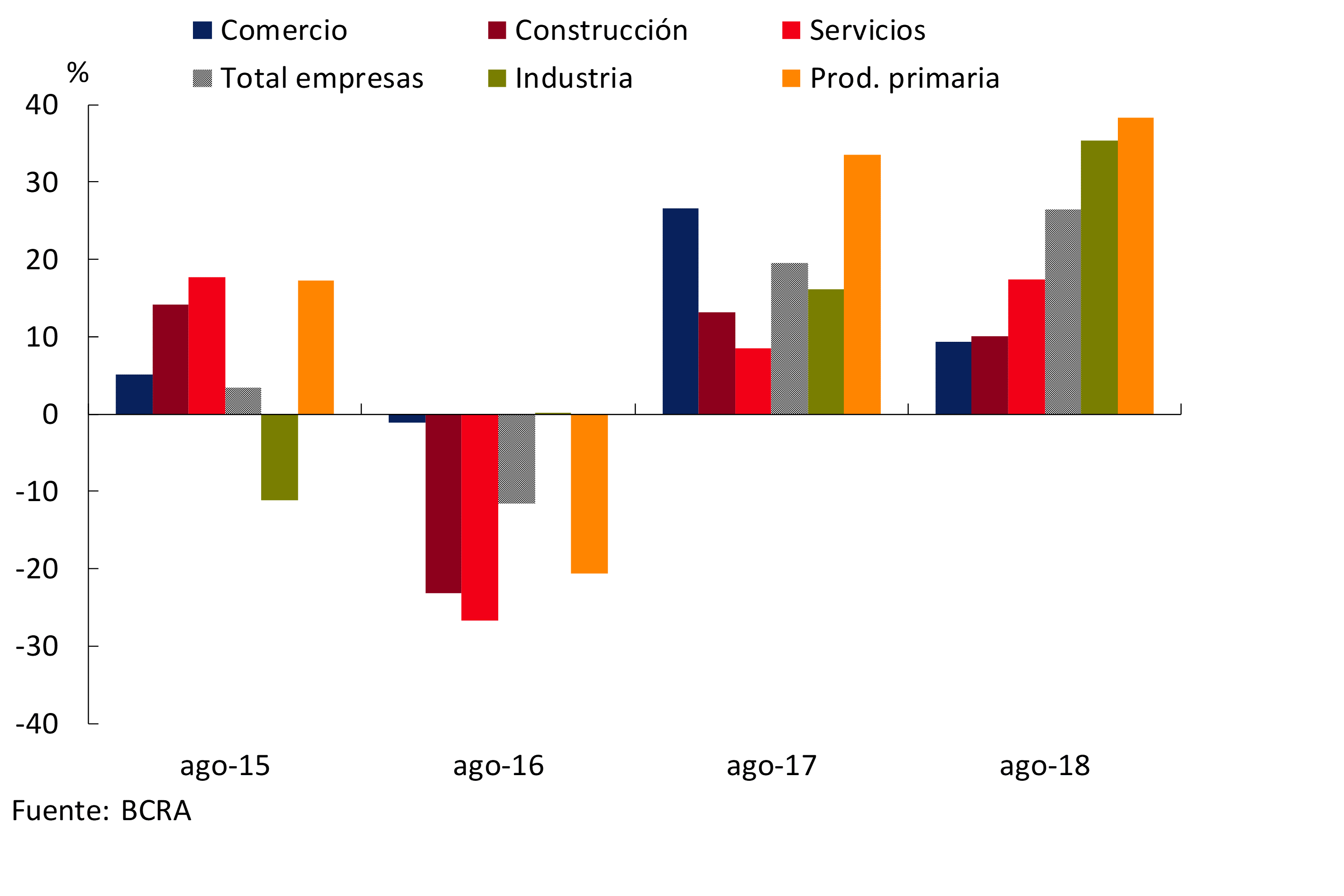
In the month, total credit (in national and foreign currency) expressed in pesos to companies17 increased 10.5% in real terms (+14.8% nominal), a variation that was mainly explained by the depreciation of the peso against the dollar. Loans to primary production and industry presented the largest relative monthly increases. In the last twelve months, the balance of financing to companies accumulated an increase of 26.5% when adjusted for inflation (see Chart 12). Loans granted by non-bank financial institutions and public banks were the most dynamic year-on-year.
Figure 12 | Total Credit Balance to Companies – Real Year-on-Year % Change
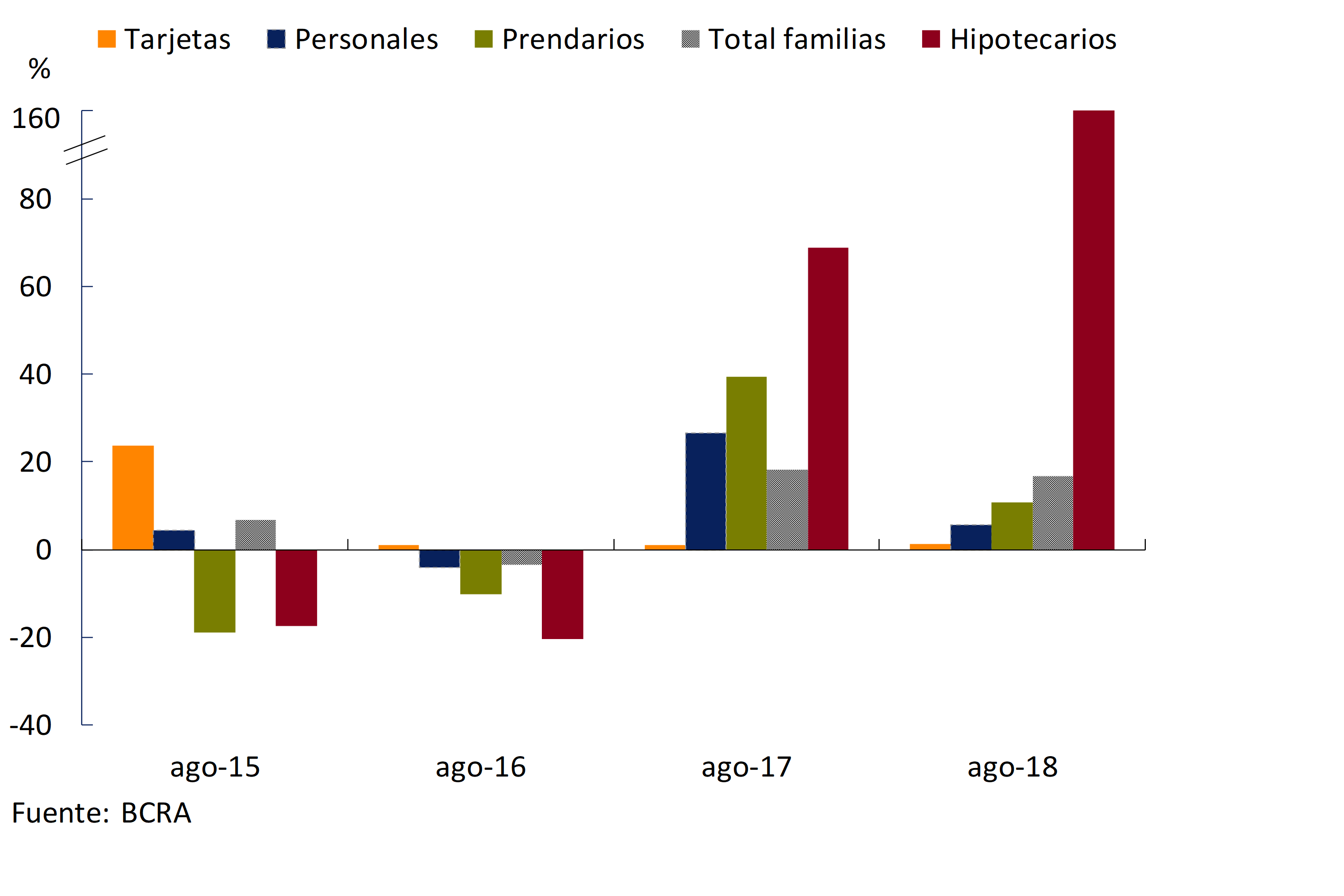
In August, the balance of total bank financing to households fell slightly when adjusted for inflation (+3.5% nominal). In the month, mixed behaviors were recorded between the different lines of credit to households: increases in mortgage loans and cards and falls in pledges and personal loans. In a year-on-year comparison, the balance of credit to households increased by 16.8% y.o.y. in real terms (see Graph 13), driven mainly by public banks. In the period, the growth of mortgage lines continued to stand out, compared to the same month in previous years.
Figure 13 | Total Credit Balance to Households – Real Year-on-Year % Change
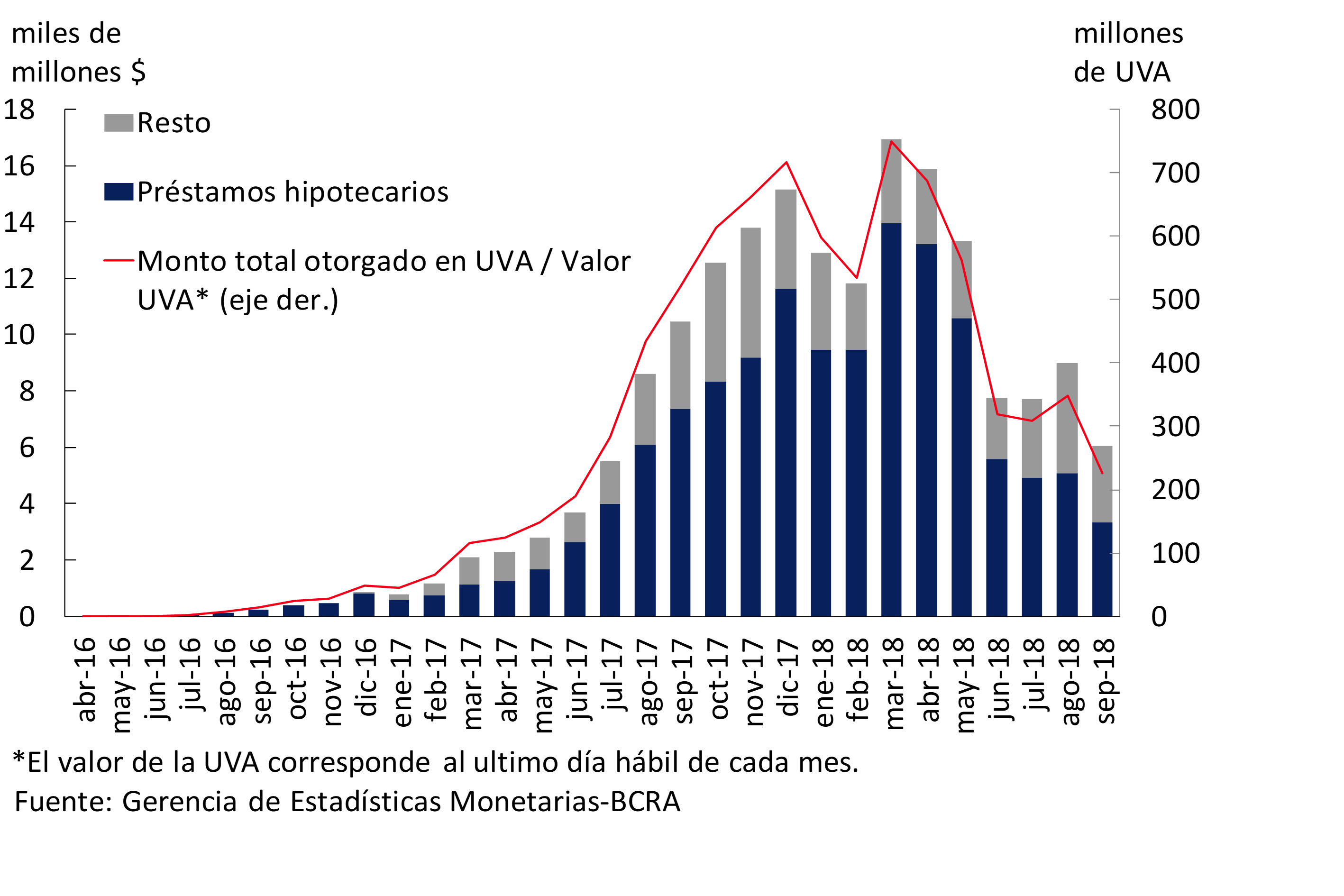
In September, the volume of loans to the private sector in UVA was around $6,000 million (227 million UVA18), below previous months (see Graph 14). A little more than half of the total granted corresponded to mortgage loans ($3,351 million). Considering the balance sheet of all financial institutions, in August mortgage loans in UVA to the private sector totaled more than 155,000 million19, personal loans $39,000 million and pledges exceeded $13,400 million.
Figure 14 | UVA Financing – Amounts Granted
With respect to the evolution of lending rates in the financial system, dissimilar behaviors were observed in August. On the one hand, nominal interest rates operated in pesos20 with the private sector increased slightly in most lines, except for pledges. On the other hand, in the period, the average interest rates operated in UVA were reduced in personal and pledge loans, while in mortgages they remained practically unchanged in magnitude with respect to July levels.
V. Portfolio Quality
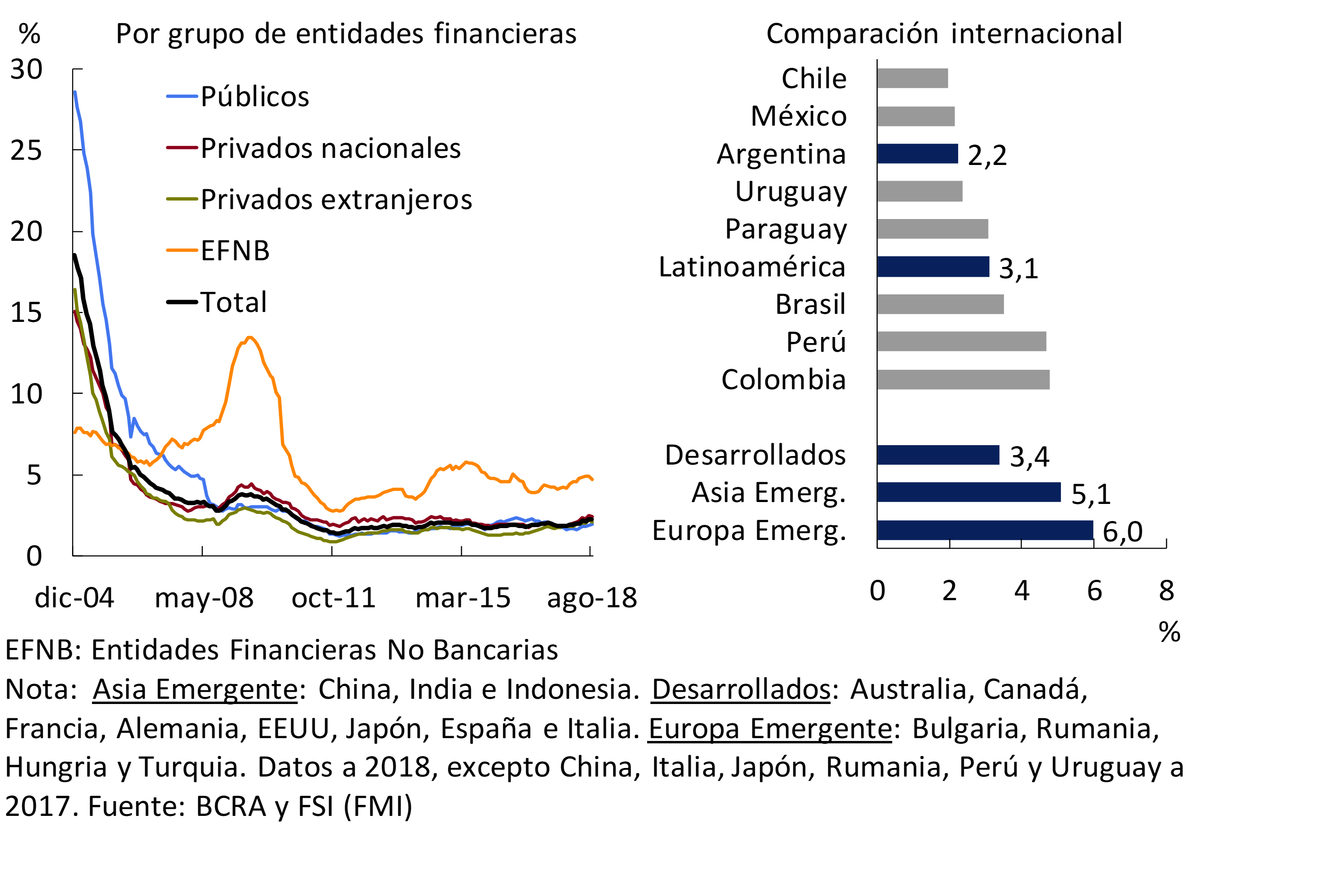
In August, the NPL ratio for loans to the private sector stood at 2.2%, remaining without significant changes compared to last month’s record. In a year-on-year comparison, this indicator showed a slight increase of 0.3 p.p., a performance mainly explained by national private banks and non-bank financial institutions. Despite this slight increase, the level of irregularity of loans to companies and households continued to be at low levels compared to those observed in the last fifteen years and those in force in other emerging and developed countries (see Graph 15). In particular, the credit irregularity ratio for the simple average of the countries of the region stood at 3.1% (median of 2.7%).
Figure 15 | Bank Credit Irregularity – Irregular Portfolio / Total Financing (%)
Non-performing loans to companies remained unchanged in magnitude in the month, representing 1.3% of the total portfolio (see Chart 16). In year-on-year terms, this indicator showed a slight increase (+0.3 p.p.), driven mainly by trade finance, and to a lesser extent, to industry and service providers (see Chart 17). For its part, the irregularity of loans to primary production remained stable in the last twelve months, while in construction it was reduced.
Figure 16 | Irregularity of Credit to the Private Sector – Irregular portfolio / Total financing (%)
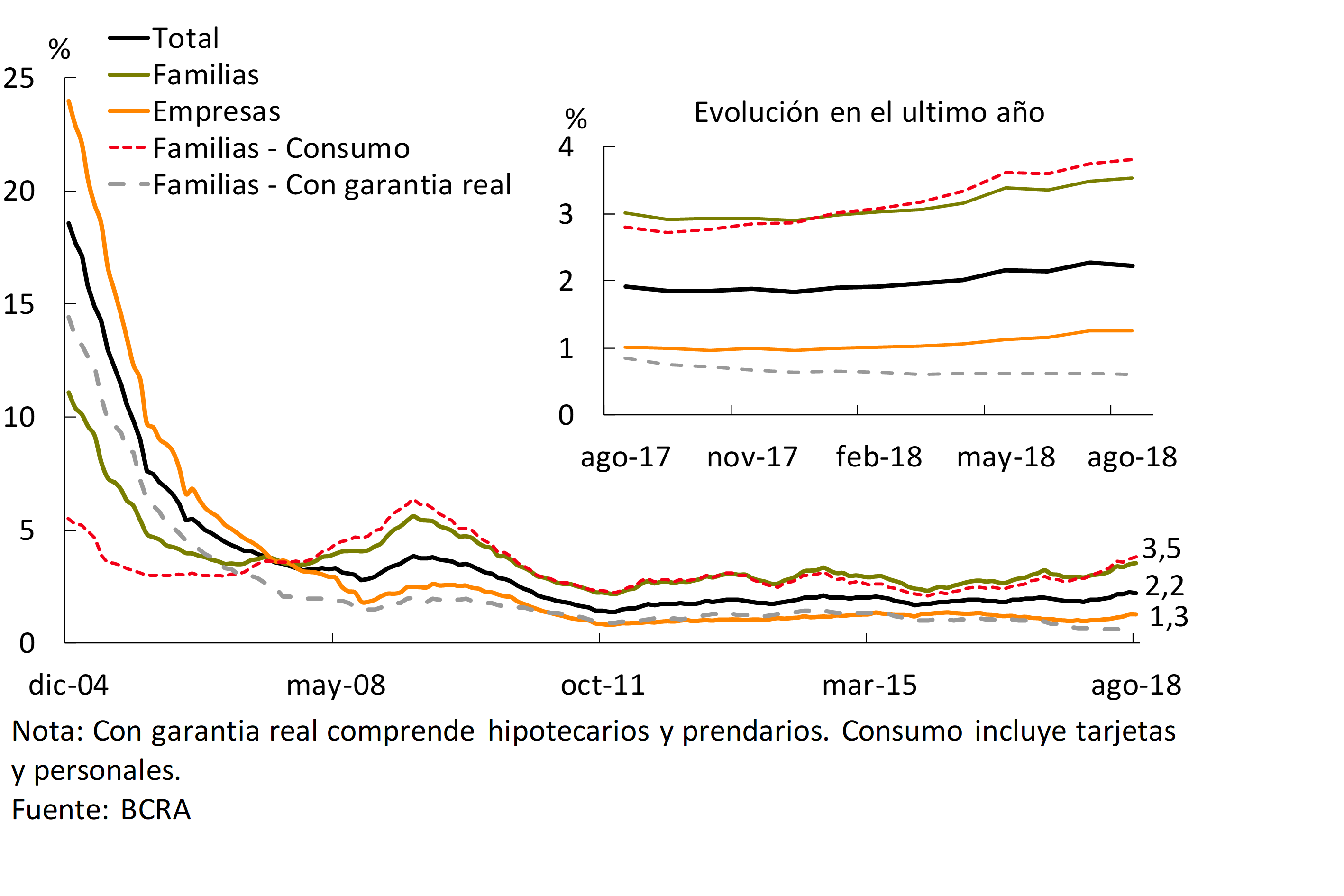
The non-performing loan ratio for households stood at 3.5% in August (see Chart 16). In the last twelve months, this indicator accumulated an increase of 0.5 p.p., due to a greater extent to the performance of personal loans and cards (see Chart 17). For its part, the NPL ratio of mortgage lines fell slightly compared to the level of August 2017, to 0.2%21, and by only 0.11% for the subset in UVA.
Figure 17 | Irregularity of Credit to the Private Sector – Irregular portfolio / Total financing (%)
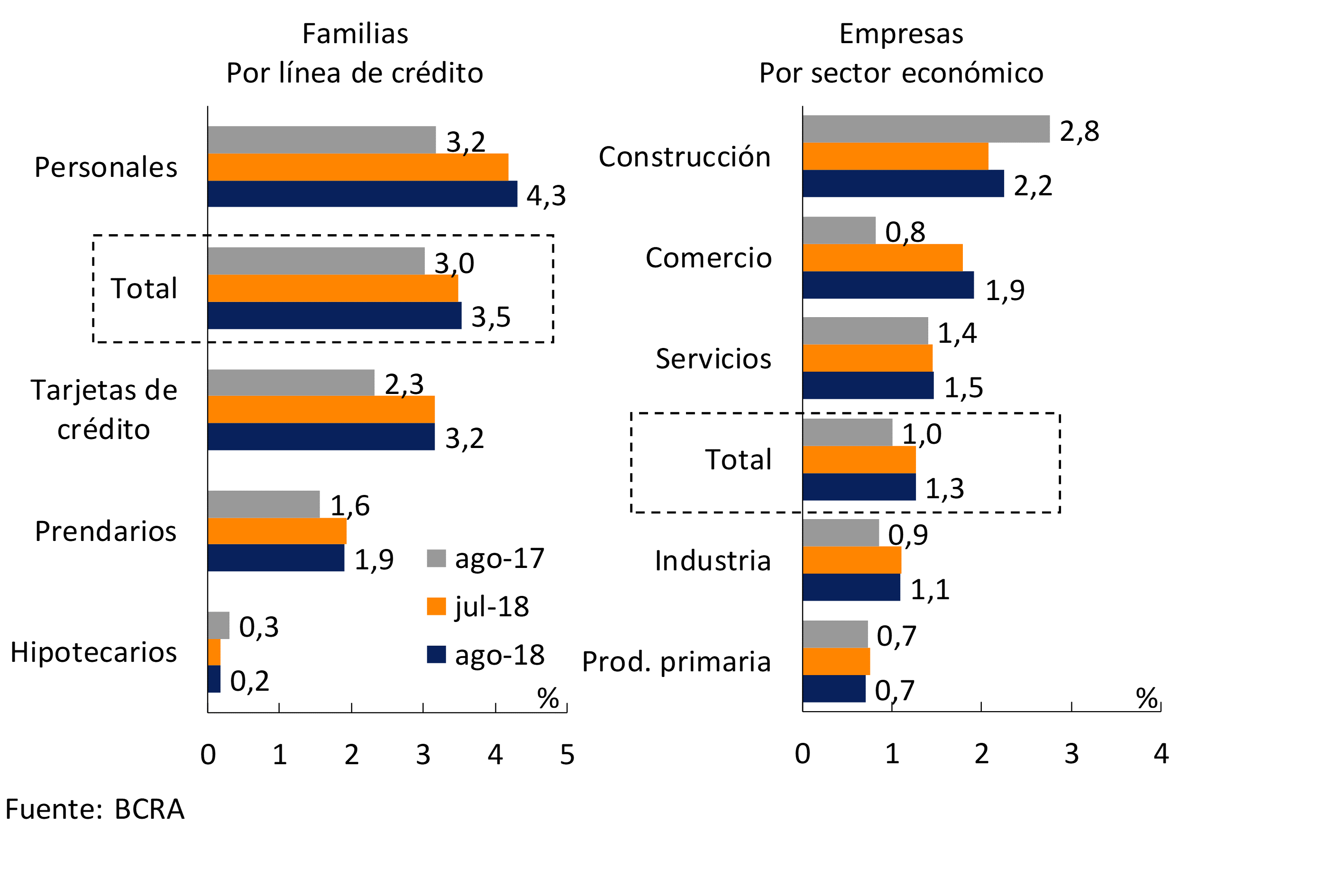
In August, the financial system continued to exhibit high levels of forecasting, which far exceed the minimum regulatory requirement in all groups of banks. Thus, the sector’s accounting forecasts represented 124% of the private sector’s irregular portfolio in the month. If the minimum forecasts for the portfolio in regular status are excluded, this ratio would stand at 77% in the period.
VI. Solvency
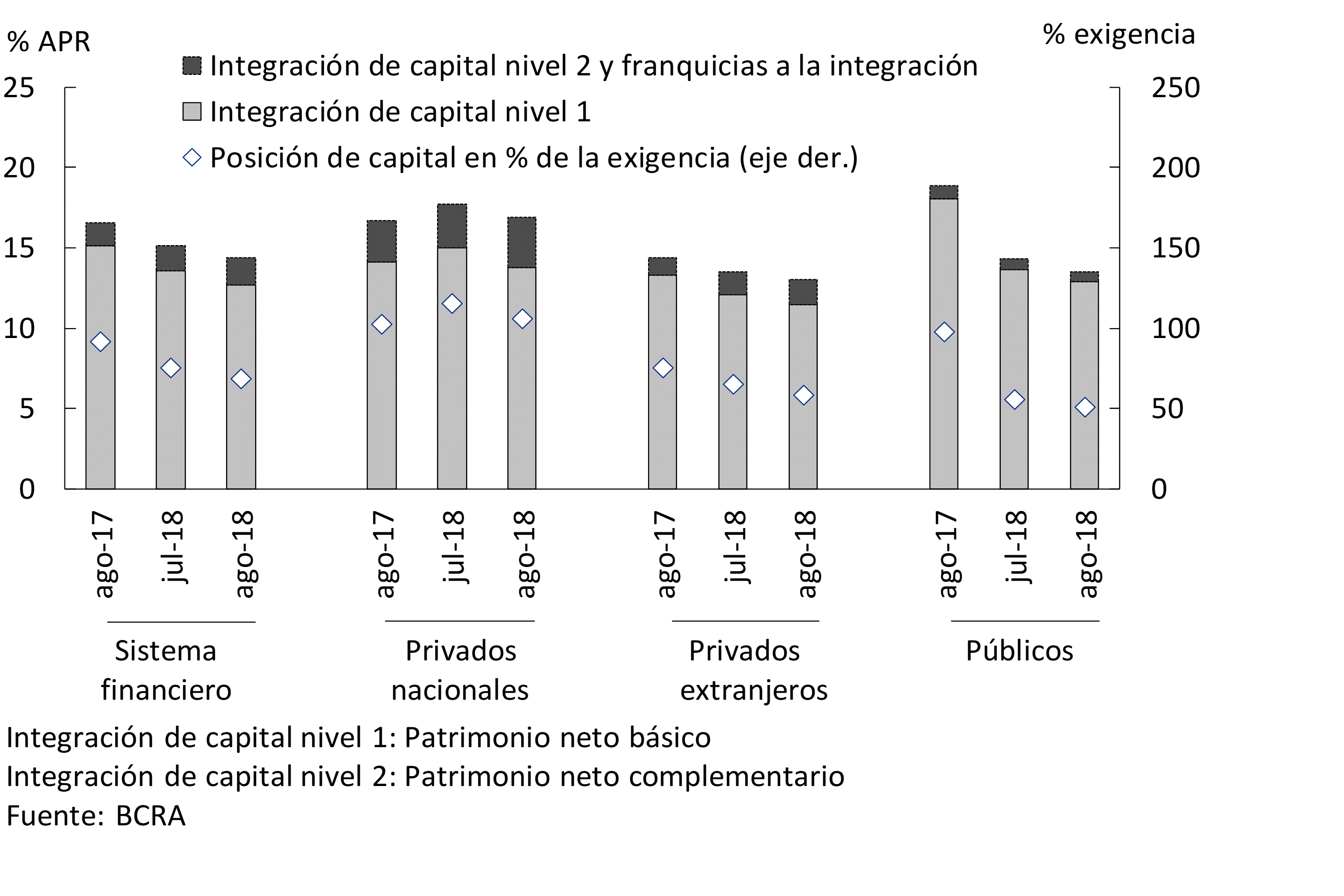
The solvency ratios of the financial system continued to be high in August. In the month, the integration of regulatory capital of the banks as a whole represented 14.4% of risk-weighted assets (RWA, see Chart 18). Tier 1 capital totaled 12.7% of RWAs in the period. The aggregate excess of capital integration in terms of the minimum prudential requirement was 69% in the period. From these high levels, solvency ratios declined on a monthly and year-on-year basis.
Figure 18 | Integration and Excess Regulatory Capital (Position)
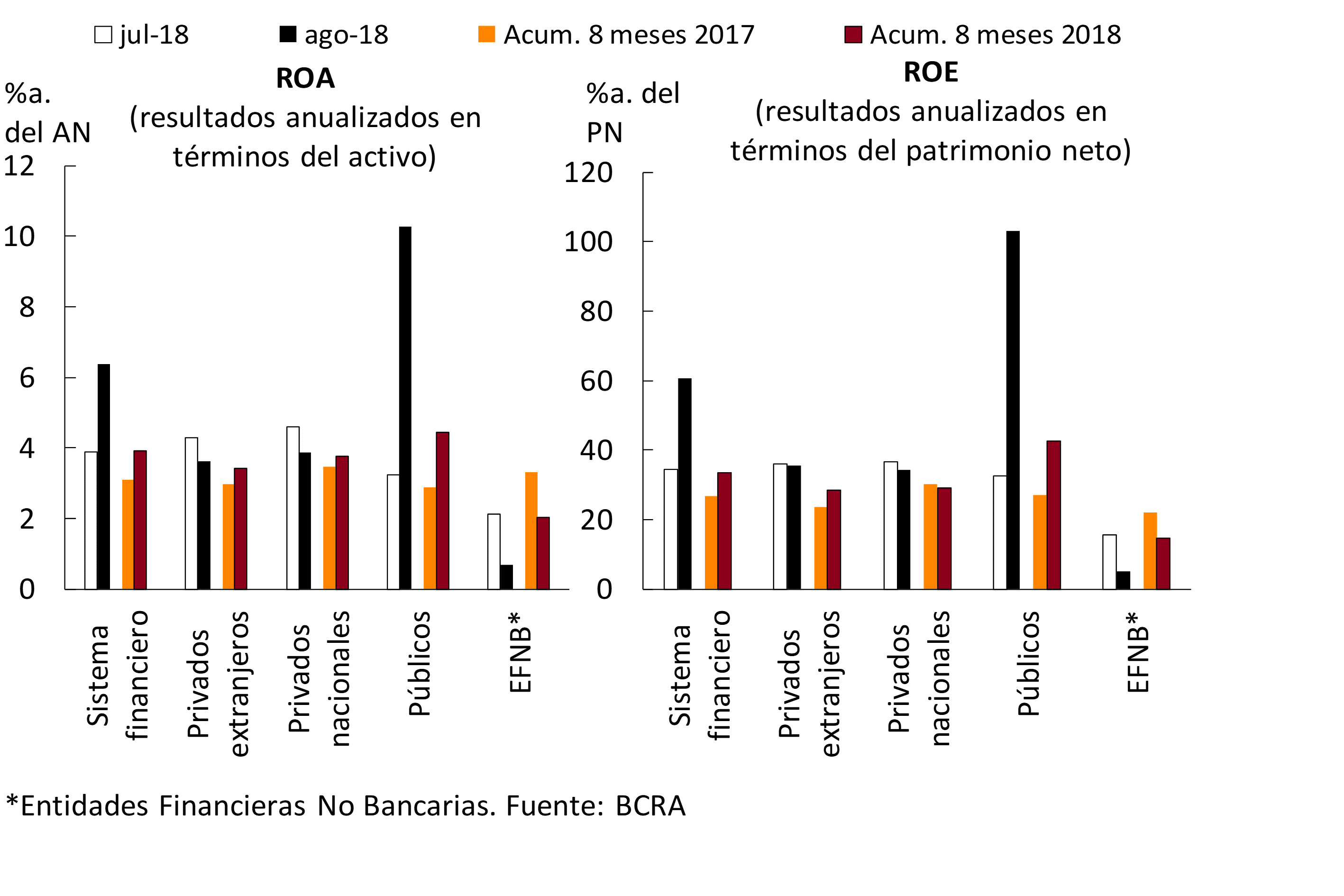
In August, the results recorded by the banks as a whole represented 6.4% annualized (y) of assets. Monthly profitability ratios (ROA and ROE) increased compared to July, mainly due to the increase in the financial margin in public banks. While public banks increased their profits in the month, private banks slightly reduced their profits (see Chart 19). In the eight-month cumulative of the year, the ROA of the financial system was 3.9%y. (ROE of 33.6%y), increasing 0.8 p.p. y.o.y. (+6.8 p.p. y.o.y.).
Figure 19 | Income Statement by Financial Institution Group
The financial margin for the entities as a whole reached 11.7% y/y of assets in August, increasing 1.8 p.p. compared to July (see Chart 20). The monthly increase was mainly due to higher positive results from securities, adjustments for forward operations in foreign currency and, to a lesser extent, the increase in net income from CER adjustment. These monthly effects were partially offset by lower contribution differences, lower interest income, and higher interest expenses. In the eight-month cumulative period of 2018, the financial margin represented 10.7% of assets, 0.2 p.p. higher than in the same period of 2017. This increase was mainly due to higher gains from securities, income from CER adjustments and interest income, effects tempered by the increase in interest and CER expenses and by the reduction in pass premiums. Considering only private banks, in August the financial margin represented 11.4% of assets, falling 1.7 p.p. compared to July. This decrease was mainly due to lower gains on exchange rate differences and lower interest income, effects offset by higher gains from foreign currency forward transactions. In the eight-month cumulative of the year, the financial margin of private banks stood at 11.6% of assets, 0.3 p.p. more than in the same period of 2017.
Figure 20 | Components of the Income Table – Financial System
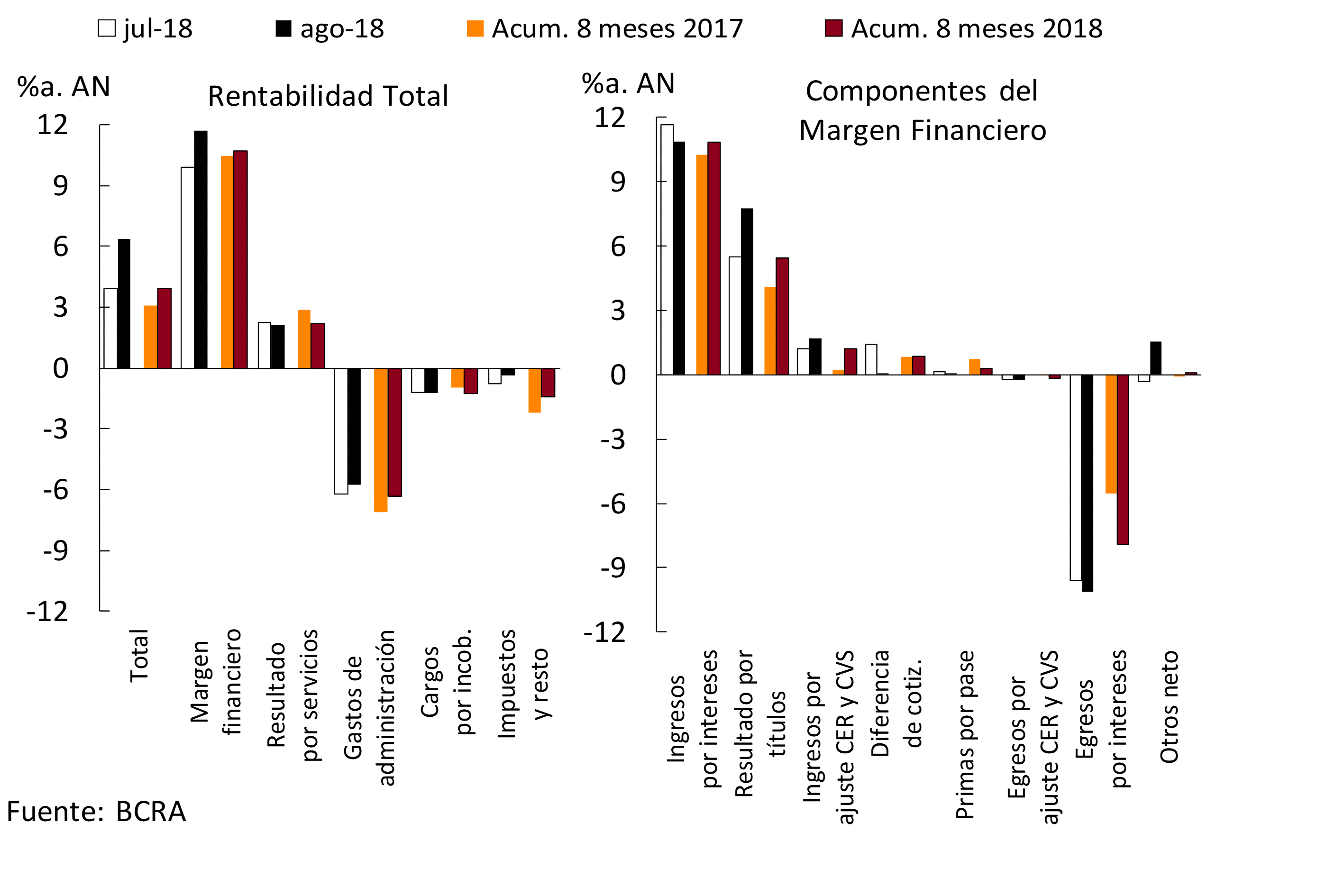
In the month, the results for services of the financial system totaled 2.1% of assets, falling slightly compared to July. In the cumulative period between January and August 2018, these net revenues reached 2.2% of assets, falling 0.7 p.p. in a year-on-year comparison (see Chart 20). The group of private banks obtained net income from services of 2.8% y/y of assets in August, falling 0.3 p.p. compared to July (in the cumulative eight-month period it totaled 3% y/y, reducing 0.9 p.p. y/y).
Bad debt charges stood at 1.2% of assets in August for the aggregate financial system, in line with the July level (see Chart 20). In the accumulated eight months of the year, charges for uncollectibility totaled 1.3% of assets, 0.3 p.p. more than in the same period last year. Considering private banks, in the month charges for uncollectibility represented 1.4% of assets, slightly reduced compared to July (in the accumulated eight months a similar level was reached).
In the month, the administrative expenses of all financial institutions represented 5.8% of assets, 0.5 p.p. less than in July. In 2018 as a whole, administrative expenses reached 6.3% of assets, down 0.7 p.p. in a year-on-year comparison (see Chart 20). These outflows in August reached 6.5% y/y of assets for the group of private banks, falling 0.5 p.p. compared to July (they reached 7.1% y/y of assets in eight months of 2018, falling 1.2 p.p. y.o.y.).
Regulations
Summary of the main regulations of the month, implemented by the BCRA, related to financial intermediation activity. The date of publication of the standard is taken as a reference.
Communication A6547 – 06/08/18
The model of posters with relevant information for the user of financial services established in the regulations on “Communication by electronic means for the care of the environment” is adapted. The modification will be mandatory as of 1/10/18 in the public service venues and on the websites of financial institutions.
Communication A6548 – 13/08/18
It is provided that, effective as of 8/13/18, financial institutions may not subscribe BCRA Bills in pesos for their own portfolio, nor sell such monetary regulation instruments for their own portfolio to counterparties that are not financial institutions.
Communication A6550 – 16/08/18
The rules on “Minimum cash” are adapted by establishing, effective as of 8/16/18, an increase of 3 percentage points in the minimum cash requirement rates in pesos applicable to demand and term placements of up to 59 days of residual term, for financial institutions included in Group “A”. according to the rules on “Authorities of financial institutions”. It should be noted that this increase in demand cannot be integrated with fixed-rate bonds of the National Government in pesos maturing in 2020.
Communication A6556 – 30/08/18
The rules on “Minimum cash” are adapted by establishing, effective as of 9/1/18, an increase of 5 percentage points in the minimum cash requirement rates in pesos applicable to demand and term placements up to 59 days of residual term, for financial institutions included in Group “A”, according to the rules on “Authorities of financial institutions”. This increase cannot be integrated with fixed-rate bonds of the National Government in pesos maturing in 2020. However, it can be integrated with both pesos and bank liquidity bills (LELIQ) and/or BCRA notes (NOBAC), valued at market prices.
Communication A6557 – 31/08/18
The rules on “Credit assistance to non-financial credit providers” are modified, incorporating as financing reached those granted to all individuals and legal entities, regardless of whether or not they are users of financial services. It is established that non-financial credit providers that (as of the validity of this communication) must register in the corresponding registry will have a period of 60 calendar days from the date of its dissemination.
References
1 Reference is made to those measures of relevance to the financial system that were adopted since the date of publication of the previous Report on Banks.
2 For more details see Press Release of 26/09/18.
3 Communication A6575 and Press Release of 28/09/18.
5 See previous editions of the BCRA’s Report on Banks and the Minimum Cash Order.
6 These acquisitions can be made with part of their banknote holdings not subject to the “Interbank Banknote Clearing” (CIB).
10 Considering differences in balance sheet balances.
11 This monthly increase occurred within the framework of debt placements by the National Treasury.
12 Applicable for deposits in pesos on demand and up to 59 days of residual term. For more detail, see Communication A6550.
13 Made up of those entities in which the amount of their assets is greater than or equal to 1% of the total assets of the financial system. For the included list, see Communication A6538.
14 Passive interest rates remained relatively stable for most of the month and increased after the increase in the policy rate defined on August 30, which had a reduced impact on the monthly average.
15 In currency of origin.
16 In currency of origin.
17 Information extracted from the Central Debtors (includes both national and foreign currency). Loans to residents abroad are not included. Business financing is defined here as that granted to legal entities and commercial financing granted to individuals. On the other hand, loans to families are considered to be those granted to individuals, unless they are for commercial purposes.
18 The value of the UVA is that corresponding to the last working day of September.
19 Includes capital and adjustment of capital for the evolution of the CER.
20 It includes operations at a fixed and repacable interest rate.
21 For more detail, see “Did mortgage loan delinquencies change significantly in the face of recent changes in the macroeconomic context? An analysis of harvests” in the BCRA’s Ideas de Peso Blog.
Glossary
%a.: annualized percentage.
% YoY: Year-on-year percentage.
Liquid assets: availabilities (integration of “minimum cash” in current accounts at the BCRA and in special guarantee accounts and other concepts, mainly cash in banks and correspondent offices) plus the net credit balance for transfer operations of financial institutions against the BCRA using LEBAC and NOBAC.
Consolidated assets and liabilities: those arising from deducting transactions between entities in the system.
Net Assets (NA): Assets and liabilities are net of accounting duplications for pass-through, forward and spot transactions to be settled.
APR: Total Risk Weighted Assets.
BCBS: Basel Committee on Banking Supervision (BCBS).
Irregular portfolio: portfolio in situation 3 to 6, in accordance with the “Classification of Debtors” regime.
Credit to the public sector: Position in public securities (without LEBAC or NOBAC) + Loans to the public sector + Compensation to be received + Debt securities and Certificates of participation in financial trusts (with underlying public securities) + Miscellaneous credits to the public sector.
Credit to the private sector: loans to the non-financial private sector including accrued interest and CER and CVS adjustment and leasing.
Contribution differences: Results from the monthly update of assets and liabilities in foreign currency. The item also includes the results originated by the purchase and sale of foreign currency, which arise as a difference between the agreed price (net of the direct expenses originated by the operation) and the book value.
Miscellaneous: miscellaneous profits (including, but not limited to, gains on permanent shares, recovered loans and unaffected provisions) less miscellaneous losses (including, but not limited to, losses on permanent shareholdings, loss on sale or disposal of goods for use and amortization of business keys).
Equity exposure to counterparty risk: irregular portfolio net of provisions in terms of equity.
Administration expenses: includes remunerations, social charges, services and fees, taxes and amortizations.
IEF II-17: BCRA Financial Stability Report.
IPCBA: Consumer Price Index of the City of Buenos Aires.
CSF: Liquidity Coverage Ratio (LCR).
LEBAC and NOBAC: bills and notes issued by the BCRA.
LELIQ: BCRA liquidity bills.
LR: Leverage Ratio (LR).
Financial margin: Income minus financial expenses. It includes interest and securities earnings, CER and CVS adjustments, exchange rate differences and other financial results.
Mill.: Million or million, as appropriate.
IFRS: International Financial Reporting Standards.
ON: Negotiable Obligations.
ORI: Other comprehensive results.
OS: Subordinated Obligations.
Other financial results: rental income from financial leases, contribution to the deposit guarantee fund, interest on availabilities, charges for loan depreciation, premiums for the sale of foreign currency and other unidentified items.
PN: Net Worth.
p.p.: percentage points.
SME: Small and Medium Enterprises.
Consolidated profit: Results from permanent holdings in local financial institutions are eliminated. Available since January 2008.
Income from securities: includes results from public securities, temporary shares, negotiable obligations, subordinated obligations, options and other credits for financial intermediation. In the case of public securities, it includes the results accrued in terms of income, differences in share price, exponential increase based on the internal rate of return (IRR) and sales, in addition to the charge for forecasts for the risk of impairment.
Interest income: interest charged minus interest paid for financial intermediation, following the accrual criterion (balance sheet information) and not what is received. It includes interest on loans and deposits of government securities and premiums for passes.
Result for services: commissions charged minus commissions paid. It includes fees related to obligations, credits, securities, guarantees granted, the rental of safe deposit boxes and foreign and exchange operations, excluding in the latter case the results from the purchase and sale of foreign currency, the latter being accounted for in the “Differences in quotation” account. Expenses include commissions paid, contributions to the ISSB, other contributions for income from services and charges accrued from the gross income tax.
ROA: Final result as a percentage of net assets. In the case of referring to accumulated results, the average of the NA for the reference months is considered in the denominator.
SWEE: Final result as a percentage of equity. In the case of referring to accumulated results, the average net worth for the reference months is considered in the denominator.
RPC: Computable Patrimonial Liability. For more details, see Ordered Text “Minimum Capitals of Financial Institutions”.
TNA: Annual nominal rate.
US$: US dollars.
UVA: Unit of Purchasing Value.
ICU: Housing Units.
Share on


