1. Executive Summary
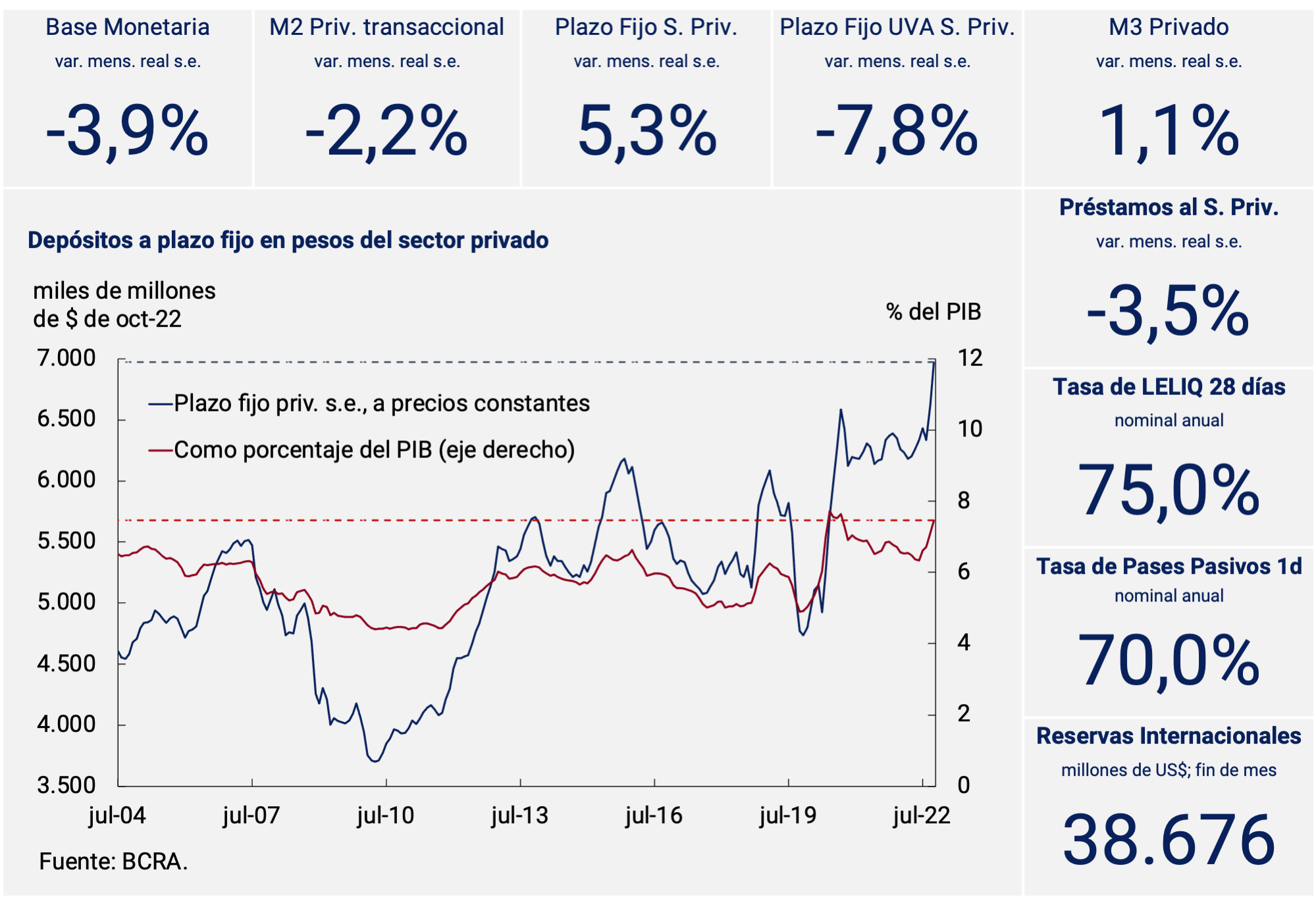
The monthly inflation rate fell in September to a level similar to the monthly yield of the monetary policy rate (6.2%). Core inflation was even lower (5.5%). In this context, the BCRA kept its reference interest rates and the minimum guaranteed rate on fixed-term deposits unchanged, after nine consecutive monthly increases.
The broad monetary aggregate (private M3) would have registered a slight monthly expansion at constant prices (1.1% s.e.), although with a heterogeneous behavior at the component level. While the means of payment continued to contract, deposits continued to grow and gain relative share. In fact, these exceeded transactional demand deposits, a situation that had not occurred in the last 20 years.
Among the savings instruments in pesos, fixed-term placements stood out, whose monthly expansion in real terms would have been more than 5% s.e. In this way, the balances of fixed-term deposits in pesos of the private sector at constant prices would have marked a new maximum in historical terms and as a percentage of GDP would be at a level similar to the maximum reached during the pandemic.
Finally, loans to the private sector at constant prices and without seasonality would have registered a monthly contraction, accumulating four consecutive months of declines, with a generalized behavior at the level of the large lines of loans.
2. Payment methods
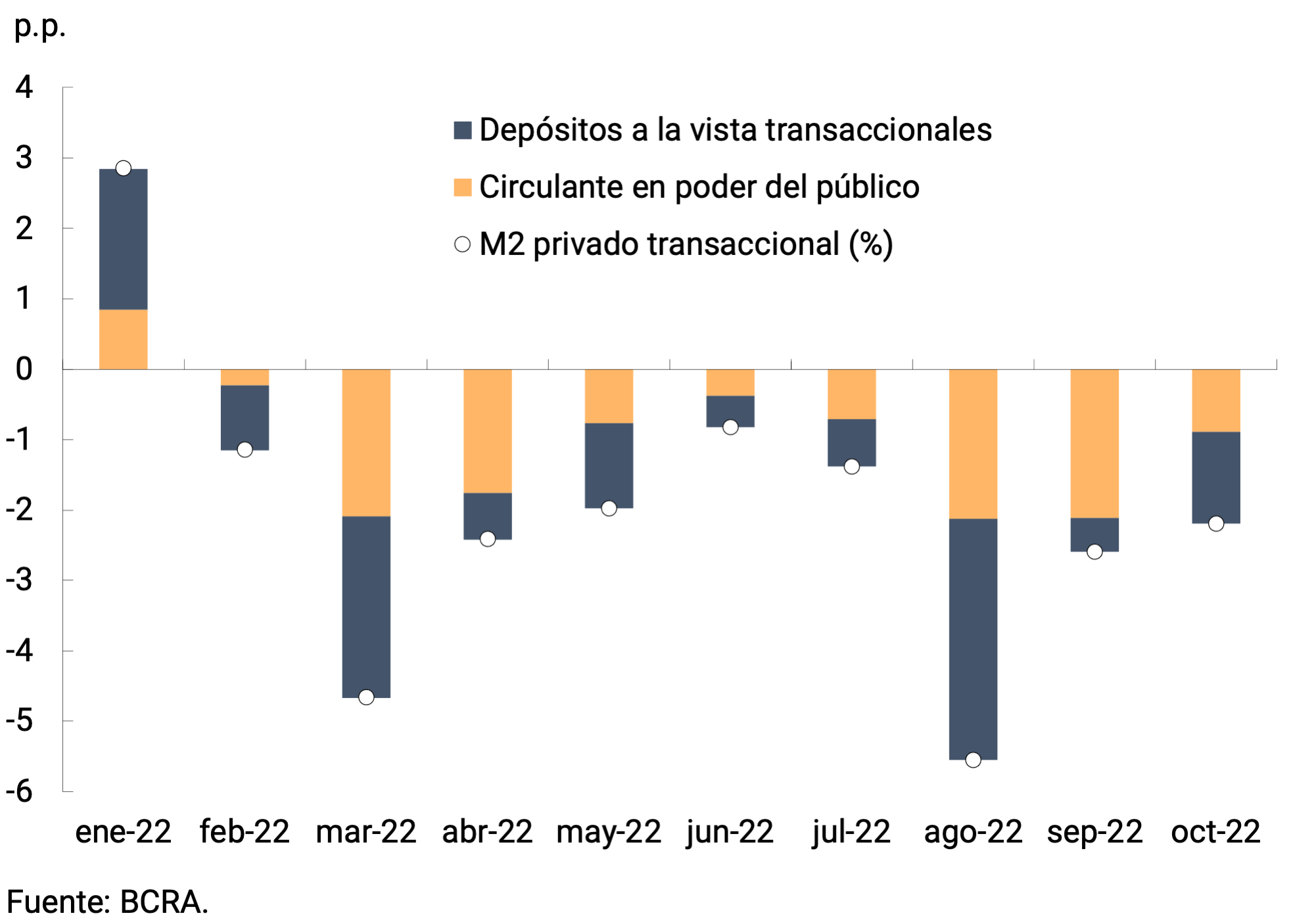
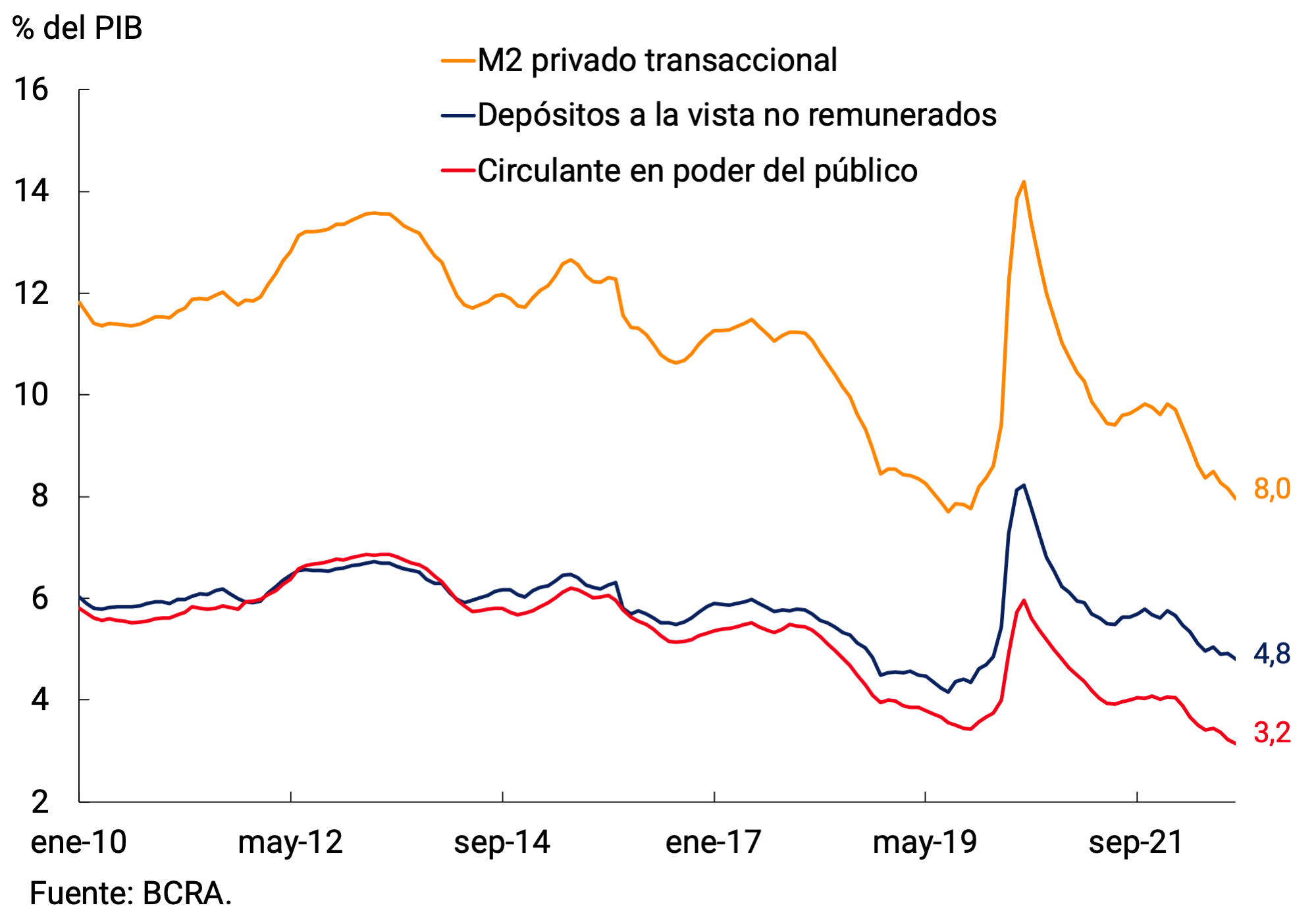
Means of payment (private transactional M21), at constant prices and adjusted for seasonality (s.e.), would have registered a contraction of 2.2% in October, a rate slightly lower than that of the previous month. Thus, they accumulated 9 consecutive months of negative variations (see Figure 2.1). The dynamics of the month responded both to the behavior of working capital held by the public and of non-interest-bearing demand deposits. In the year-on-year comparison, and at constant prices, the transactional private M2 would be around 18.4% below the level of October 2021. In terms of Output, it would have stood at 8%, showing a decrease (0.2 p.p.) compared to last month (see Graph 2.2). Both components of the means of payment remain in terms of GDP around the lows of the last 20 years and, in the case of the working capital held by the public, a new minimum was set.
Figure 2.1 | | Private transactional M2 at constant
prices Contribution by component to the monthly vari. s.e.
3. Savings instruments in pesos
The low dynamism of the demand for means of payment was explained by a greater preference of agents for remunerated savings instruments. Thus, in October, fixed-term deposits in pesos of the private sector at constant prices would have marked a new positive monthly variation, this time of 5.3% s.e. In this way, the balance of time deposits reached, at constant prices, a new maximum in historical terms. As a GDP ratio, these placements would have registered an increase compared to September (0.4 p.p.) and would reach a level of 7.5%, a record similar to the maximum reached during the pandemic and one of the highest in recent years.
It should be noted that, after 9 consecutive monthly increases and the inflation rate falling to a level similar to the monthly yield of the monetary policy rate (6.2%), the Board of Directors of the Central Bank of the Argentine Republic (BCRA) decided to keep the minimum guaranteed interest rates on fixed-term deposits unchanged on October2. The decision was taken considering the moderation in the pace of price growth in September, especially the Core CPI indicator (5.5%). Thus, the minimum guaranteed rate for placements by individuals for up to an amount of $10 million remains at 75% n.a. (107.05% e.a.), while for the rest of the depositors of the financial system3 the interest rate stands at 66.5% n.a. (91.07% e.a.).
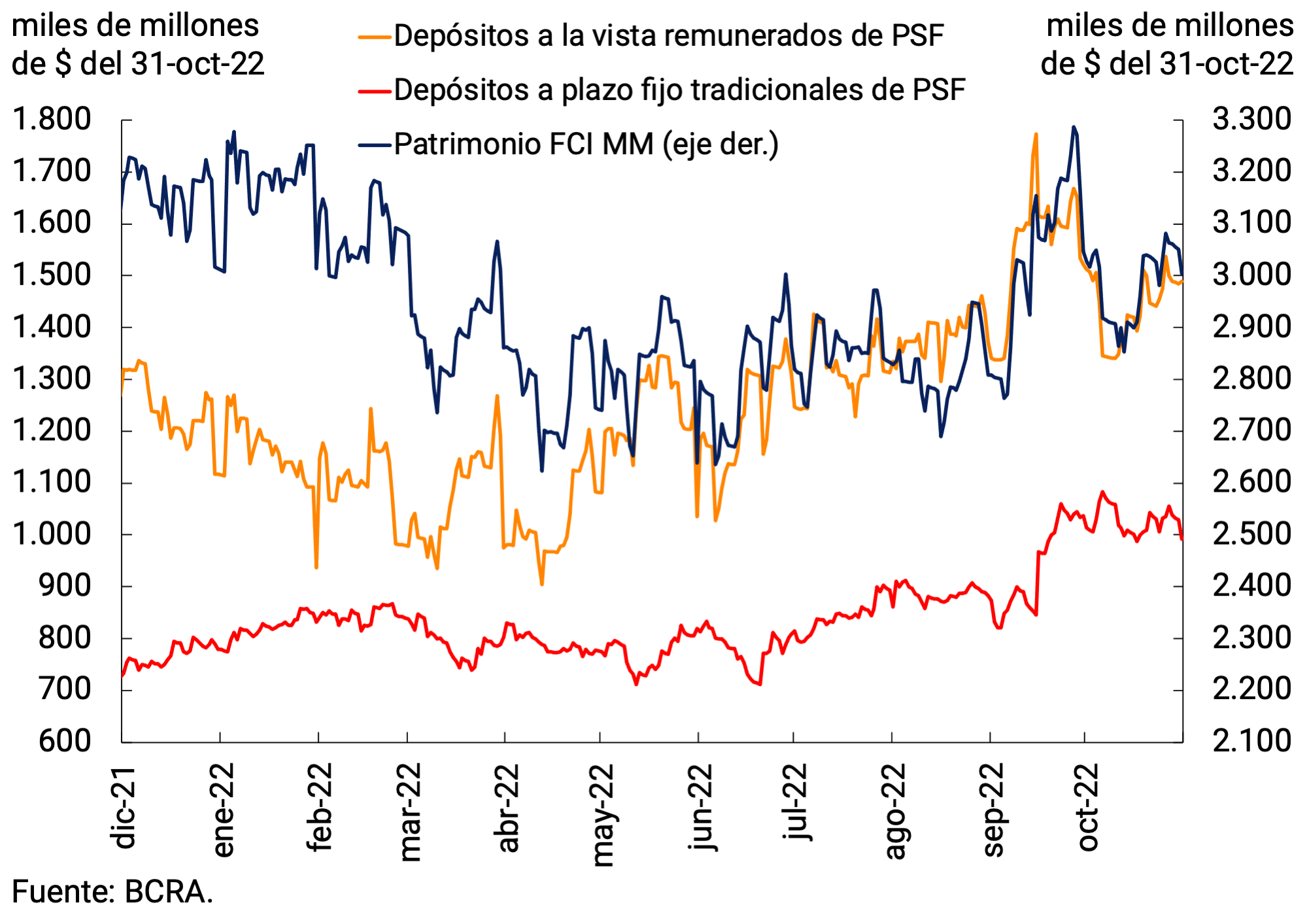
Analyzing the evolution of term placements by strata of amount, although all segments contributed positively to the expansion of the month, the most dynamic was that of $1 to $20 million (see Figure 3.1). Deposits of more than $20 million grew on average, although mainly due to the positive statistical carryover left by the previous month. Indeed, if we consider the variation between balances at the end of the month, a contraction is observed. This behavior was linked to a growth in the holdings of Financial Services Providers (FSPs) that was lower than inflation for the month. In fact, the assets of the Money Market Mutual Funds (FCI MM) fell by 1.8% at constant prices, these being the main agents within the PSF. Something similar happened with the interest-bearing demand deposit holdings of these institutional investors (see Figure 3.2). Investments with early cancellation options (which cannot be classified by type of holder) also explained the fall observed throughout the month in the wholesale segment. Finally, deposits of less than $1 million remained relatively stable once corrected for price developments.
Figure 3.1 | | Fixed-term deposits in pesos of the private
sector Var. real monthly and without seasonality by amount stratum
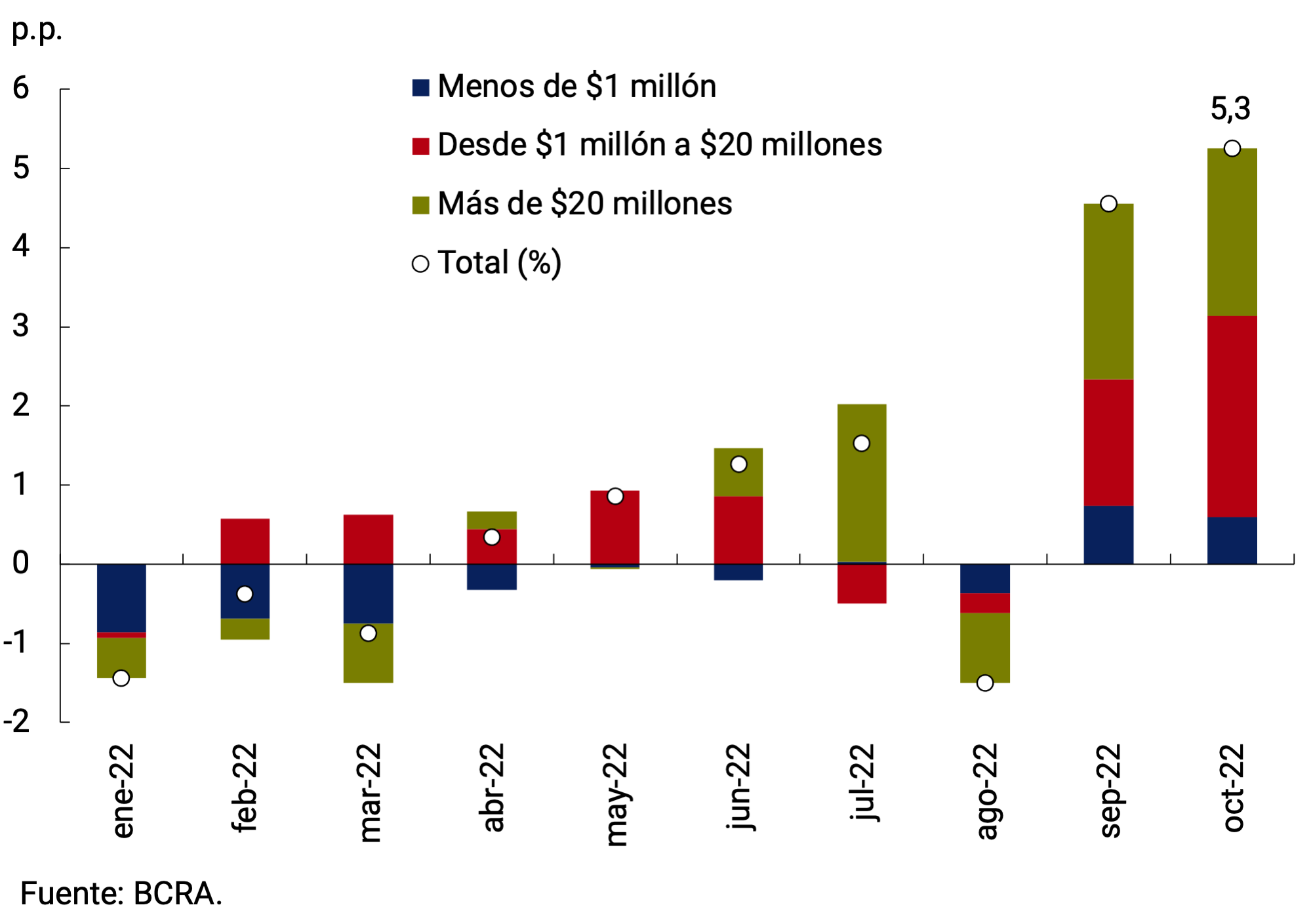
Figure 3.2 | Fixed-term deposits of more than $20 million
Balance at constant prices by type of depositor and instrument. Original Series
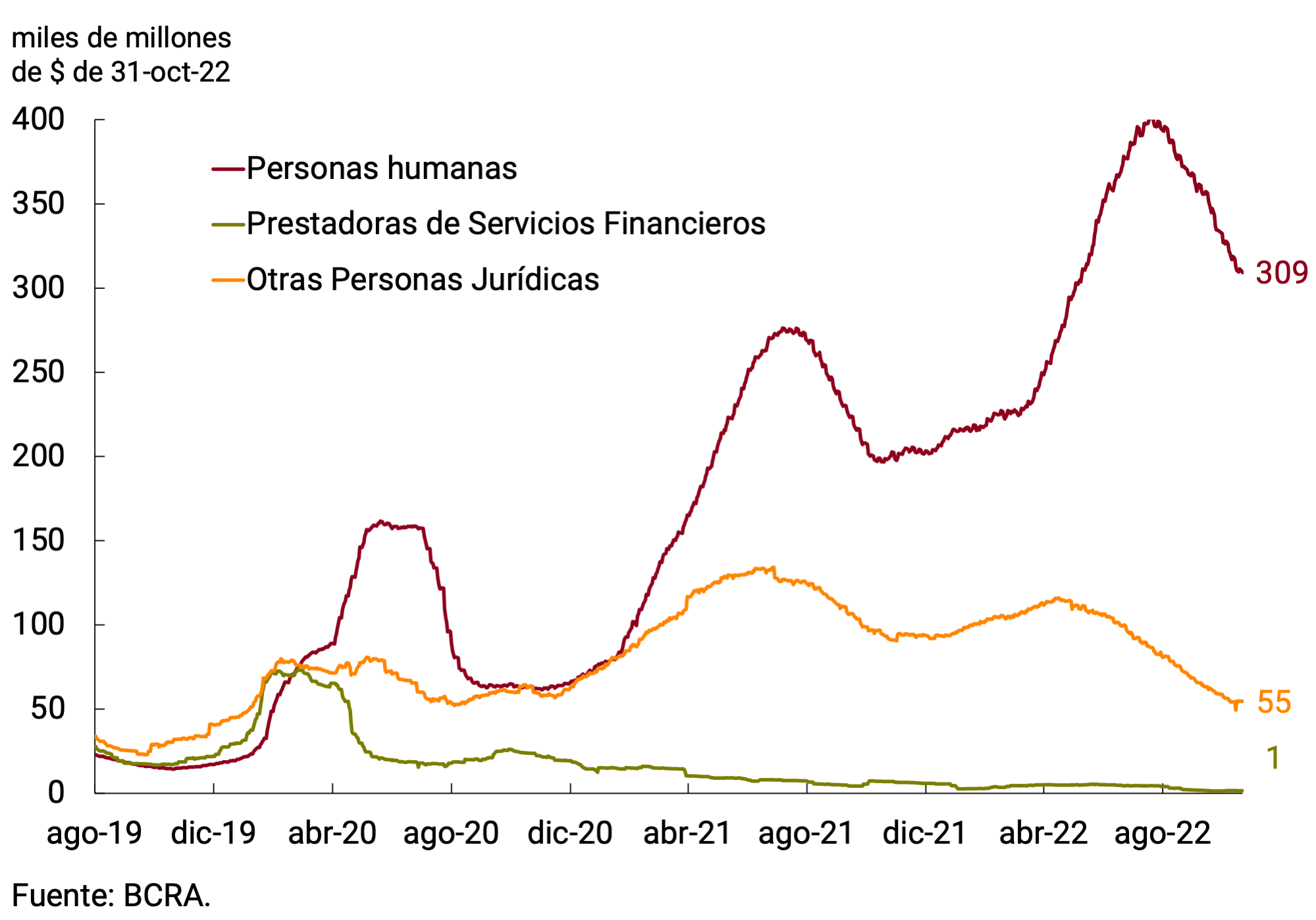
The segment of fixed-term deposits with CER adjustment presented a contraction in real terms for the third consecutive month. The decrease was verified in both traditional and pre-cancellable UVA placements, whose monthly rates of change stood at -11.5% s.e. and -4.0% s.e., respectively (see Chart 3.3). Distinguishing by type of holder within the instruments with CER adjustment, it can be seen that the fall was mainly explained by lower holdings of individuals and, to a lesser extent, by the dismantling of corporate positions (excluding FSPs; see Figure 3.4). All in all, UVA deposits reached a balance of $367,053 million at the end of the month, which represented 5.2% of the total of term instruments denominated in domestic currency.
Figure 3.3 | Fixed-term deposits in UVA from the private
sector Balance at constant prices by type of instrument
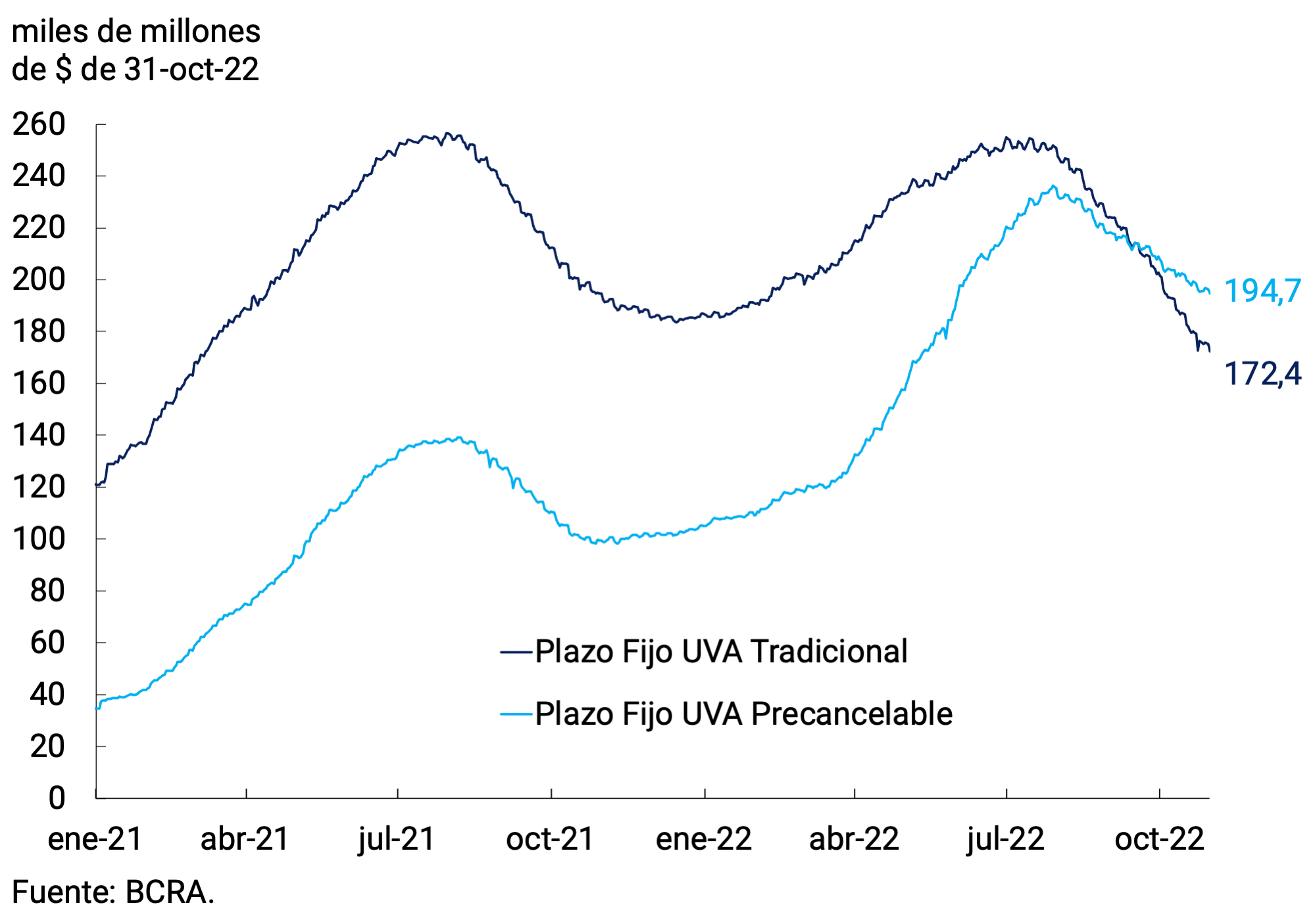
Figure 3.4 | | Fixed-term deposits in UVA in the private
sector Balance at constant prices by type of holder
On the other hand, deposits adjusted for the value of the reference exchange rate continued to show a growing dynamic. It should be remembered that the agricultural sector has two different types of deposits with exchange coverage available: a demand account, commonly known as “chacarero deposits” and term investments, called DIVA dollar. The first type of deposit registered a variation at the end of the month of 7.5% at current prices (1.4% real s.e.), reaching a balance of $116,000 million at the end of October. It should be noted that this increase was concentrated in the first days of the month as a result of the latest operations linked to the “Export Increase Program”4. For its part, the DIVA dollar reached a balance of $42,700 million at the end of October, which implied an average monthly expansion of 9.4% at current prices in the tenth month of the year. To cover the exchange rate risk of these deposits, financial institutions have at their disposal the Bills with adjustment according to the value of the dollar (LEDIV).
All in all, the broad monetary aggregate, private M35, at constant prices and adjusted for seasonality, would have registered a monthly expansion in October (1.1%). In year-on-year terms, this aggregate would have experienced a decrease of 4.9%. As a percentage of GDP, it would stand at 17.5%, 0.2 p.p. above the September record.
4. Monetary base
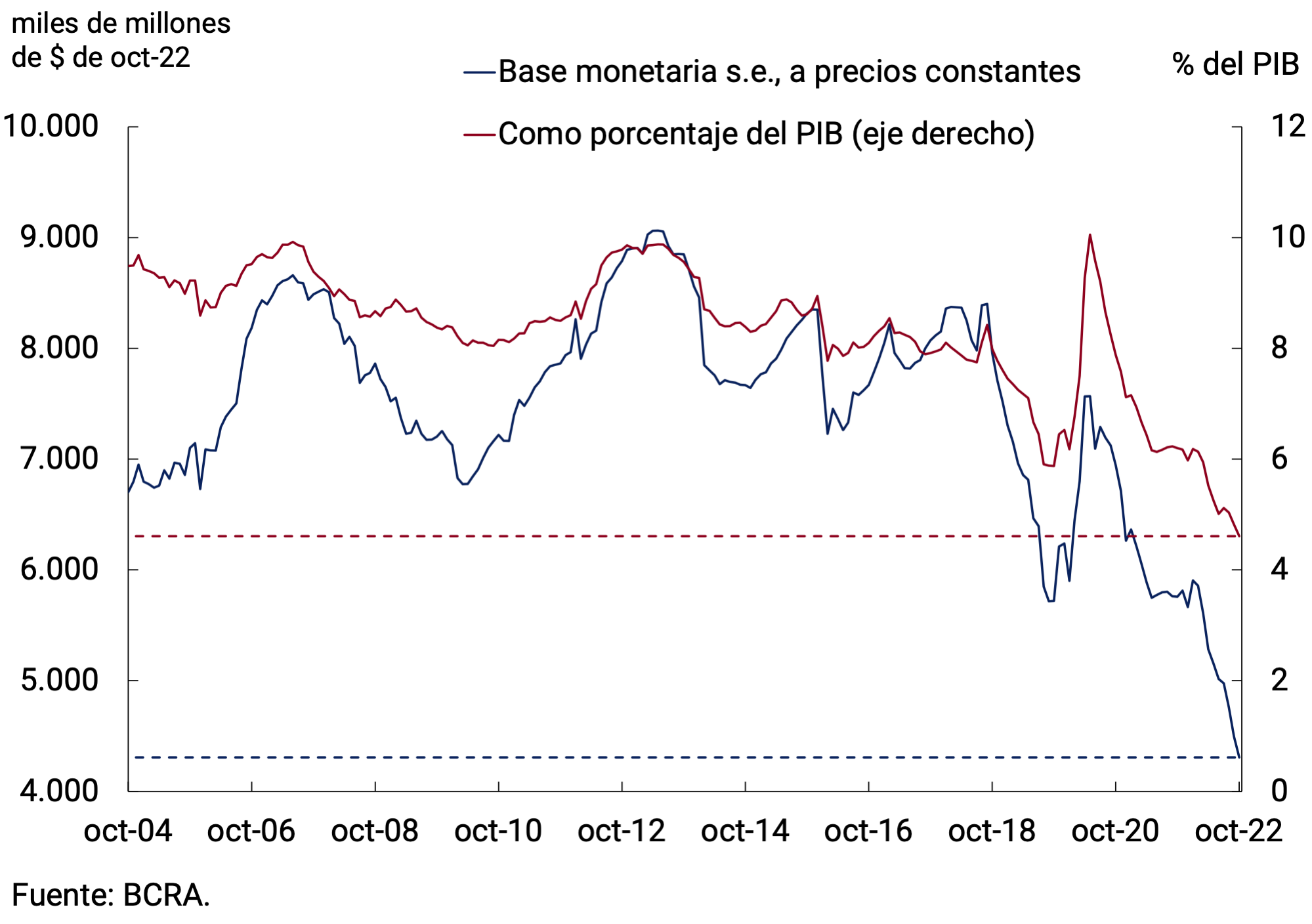
The Monetary Base on average in October stood at $4,225.1 billion, which implied a monthly increase of 1.1% ($45,232 million) in the original series at current prices. Adjusted for seasonality and at constant prices, it would have exhibited a contraction of 3.9% and in the last twelve months it would accumulate a fall of around 25%. As a GDP ratio, the Monetary Base would stand at 4.6%, a figure slightly lower than that of the previous month and the lowest value since 2003 (see Figure 4.1).
On the supply side, the average monthly expansion of the Monetary Base was mainly explained by the statistical carryover left by the purchases of foreign currency made within the framework of the “Export Increase Program” during September. This effect was, on average for the month, partially offset by the dynamics of monetary regulation instruments and public sector operations (see Figure 4.2).
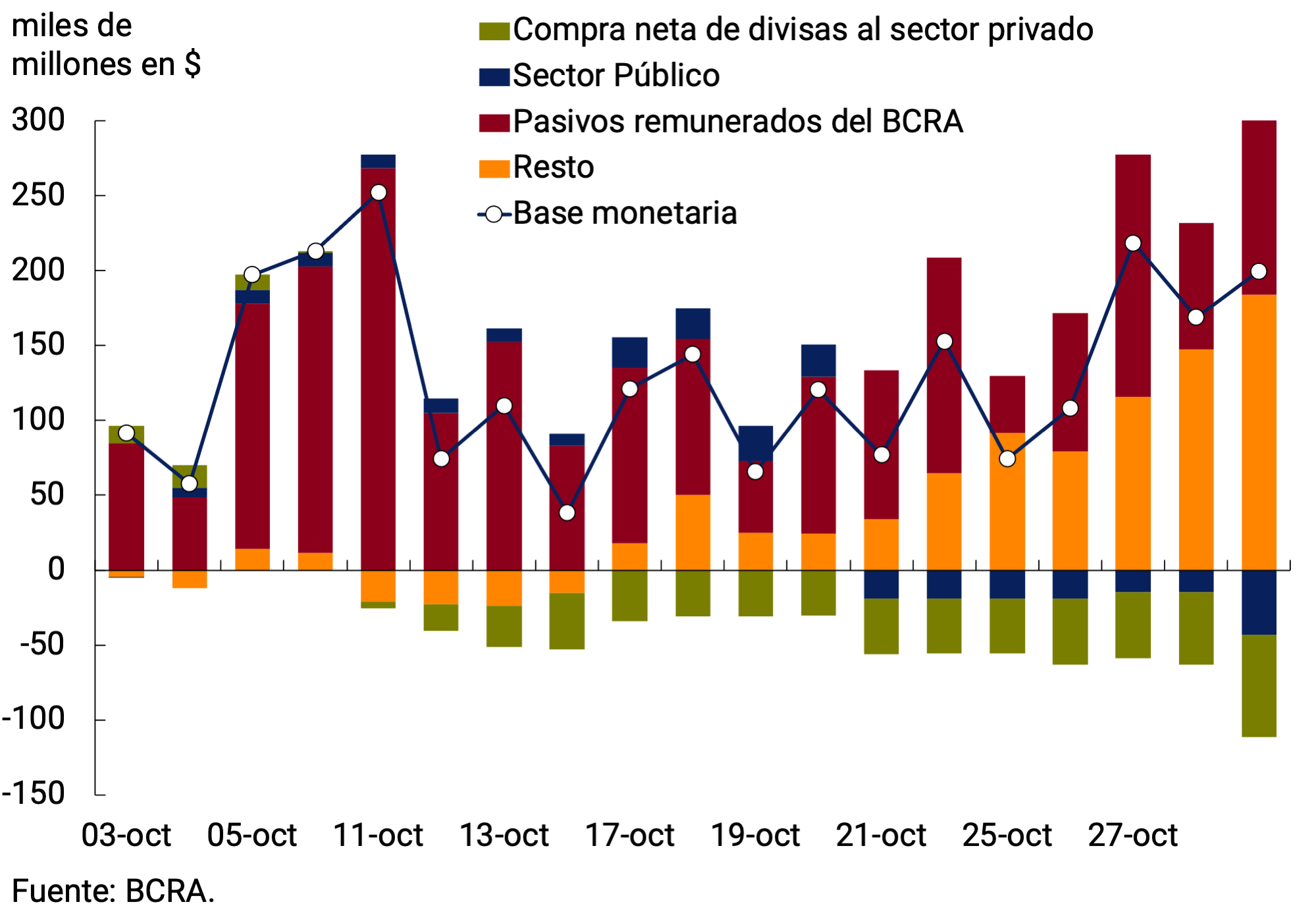
On the other hand, if we analyze the change at the end of the period of the Monetary Base due to supply factors, we observe the opposite behavior. Net purchases of foreign currency had a slight contractionary effect, which was offset by an expansion due to the dismantling of the BCRA’s interest-bearing liabilities. It should be noted that, in mid-October, the BCRA once again intervened in the secondary market for Treasury instruments6. However, the expansionary effect of these operations, on average, was relatively limited (see Figure 4.3).
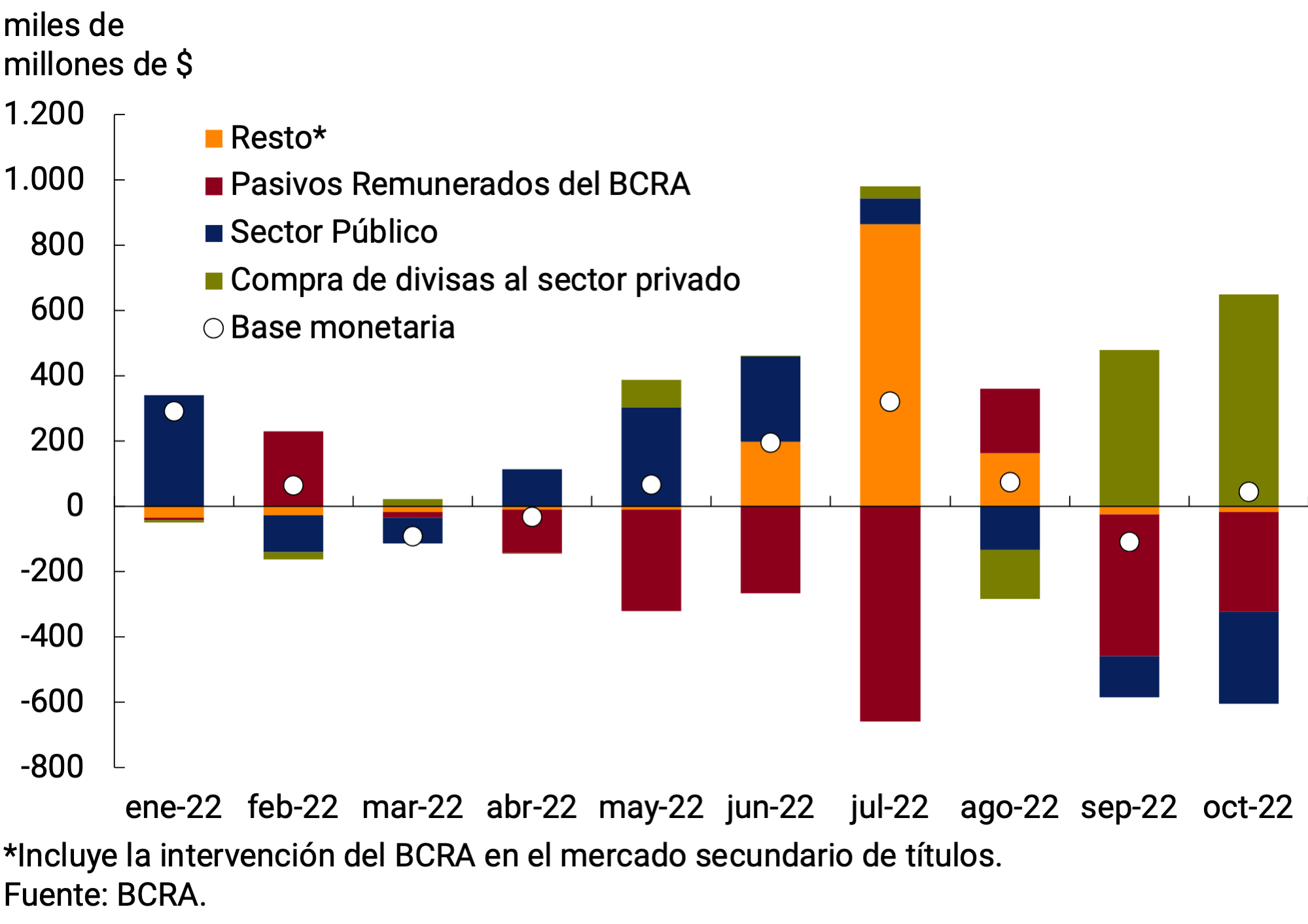
Figure 4.3 | | Factors explaining the Monetary
Base Daily cumulative since the beginning of October
The BCRA kept its benchmark interest rates unchanged in October, based on the decline observed in inflation. Thus, the interest rate on the 28-day LELIQ continued to stand at 75% n.a. (107.35% y.a.), while the interest rate on the 180-day LELIQ remained at 83.5% n.a. (101.23% y.a.). As for shorter-term instruments, the interest rate on 1-day pass-throughs stands at 70% n.a. (101.24% y.a.); while the interest rate on 1-day active passes stands at 95% n.a. (158.25% e.a.). Finally, the fixed spread of the NOTALIQ in the last auction of the month was set at 8.5 p.p.
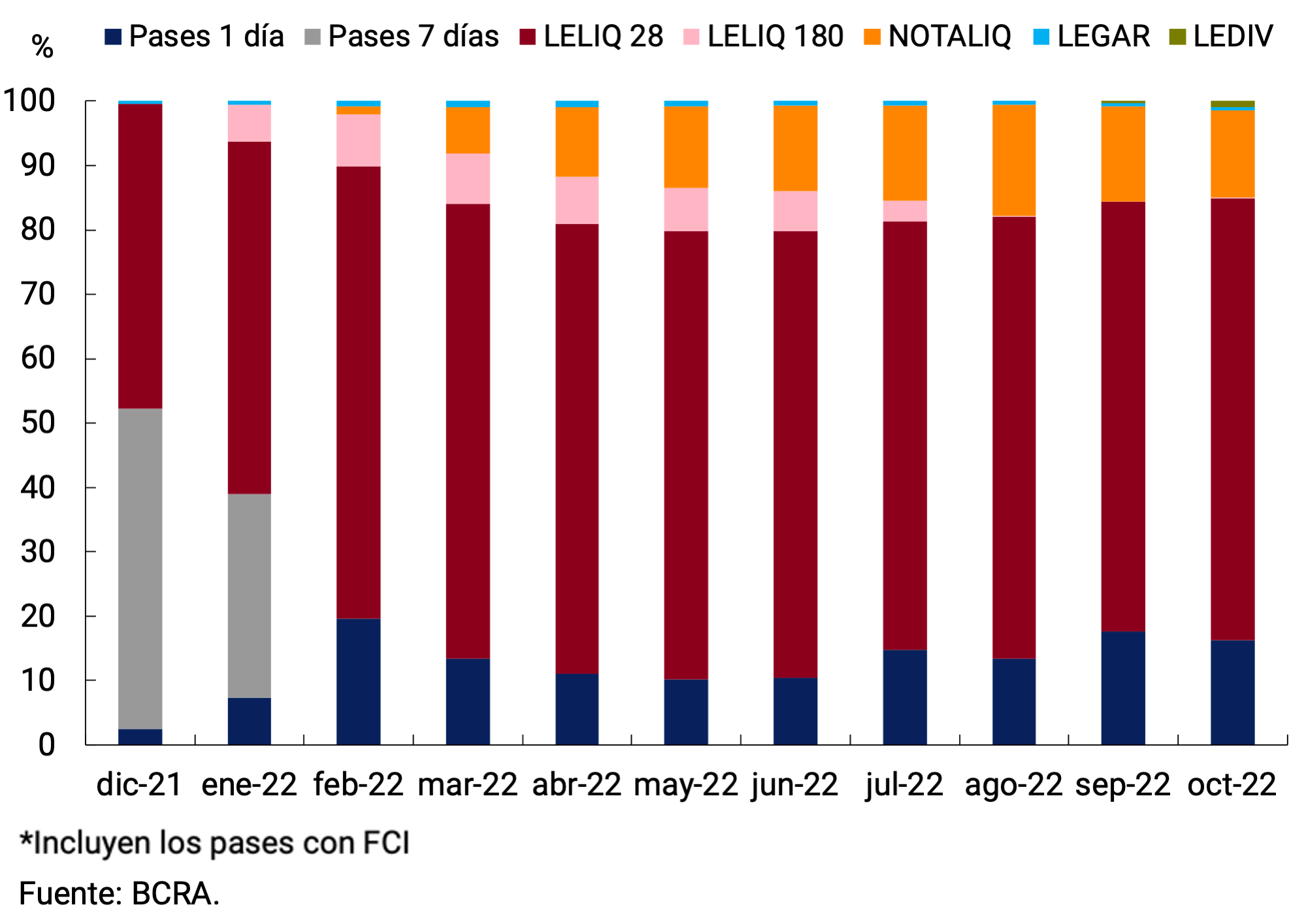
With the current configuration of instruments, in October the remunerated liabilities were conformed, on average, to around 69% by LELIQ with a 28-day term. The longer-term species accounted for 13.6% of the total, almost entirely concentrated in NOTALIQ. On the other hand, 1-day pass-by-passes decreased their share of total instruments, representing 16.2% of the total (1.5 p.p. less than the previous month). Finally, the LEDIV, together with the LEGARs, accounted for the remaining 1.4%, with an increase of 0.6 p.p. compared to September (see Figure 4.4).
5. Loans to the private sector
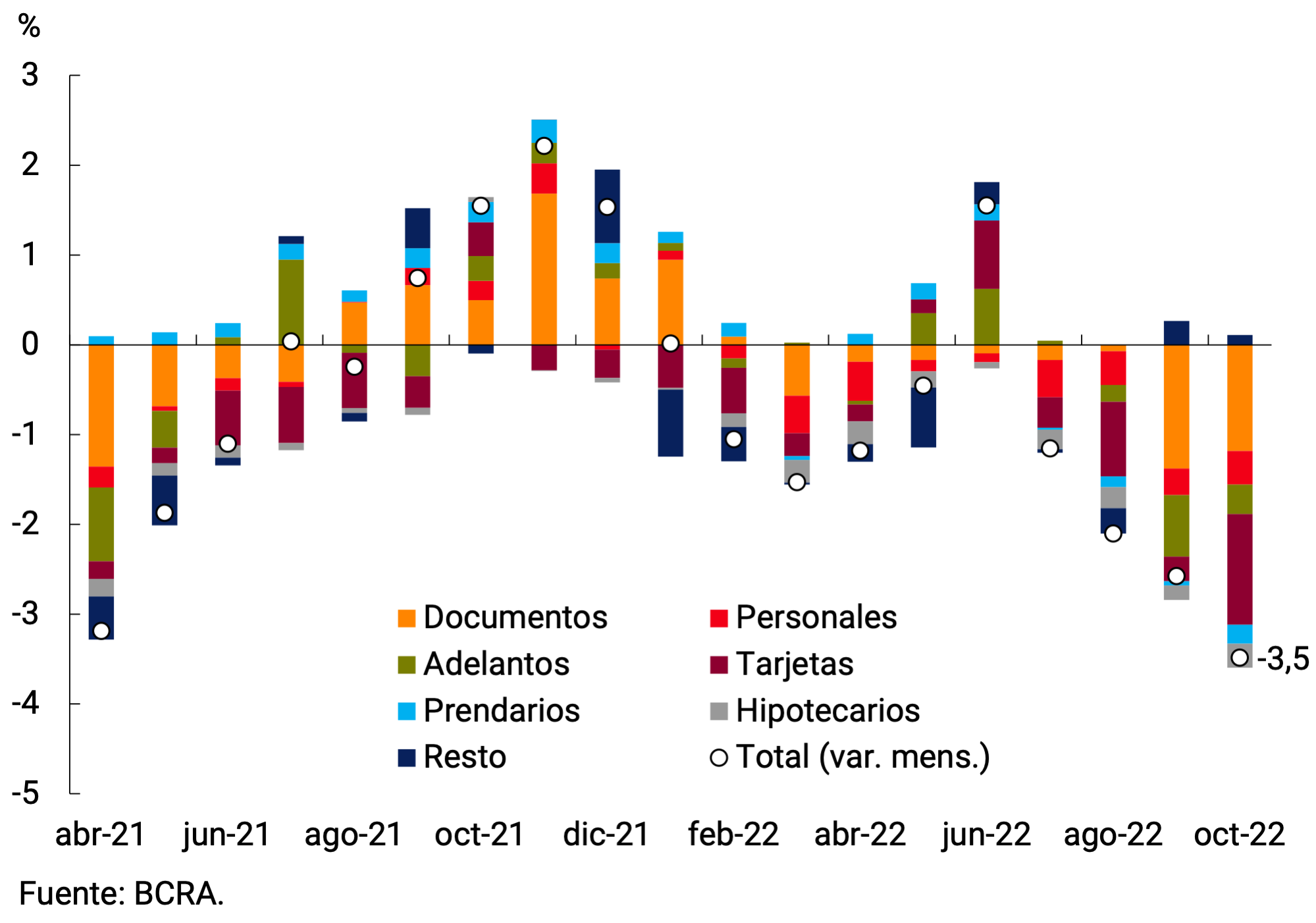
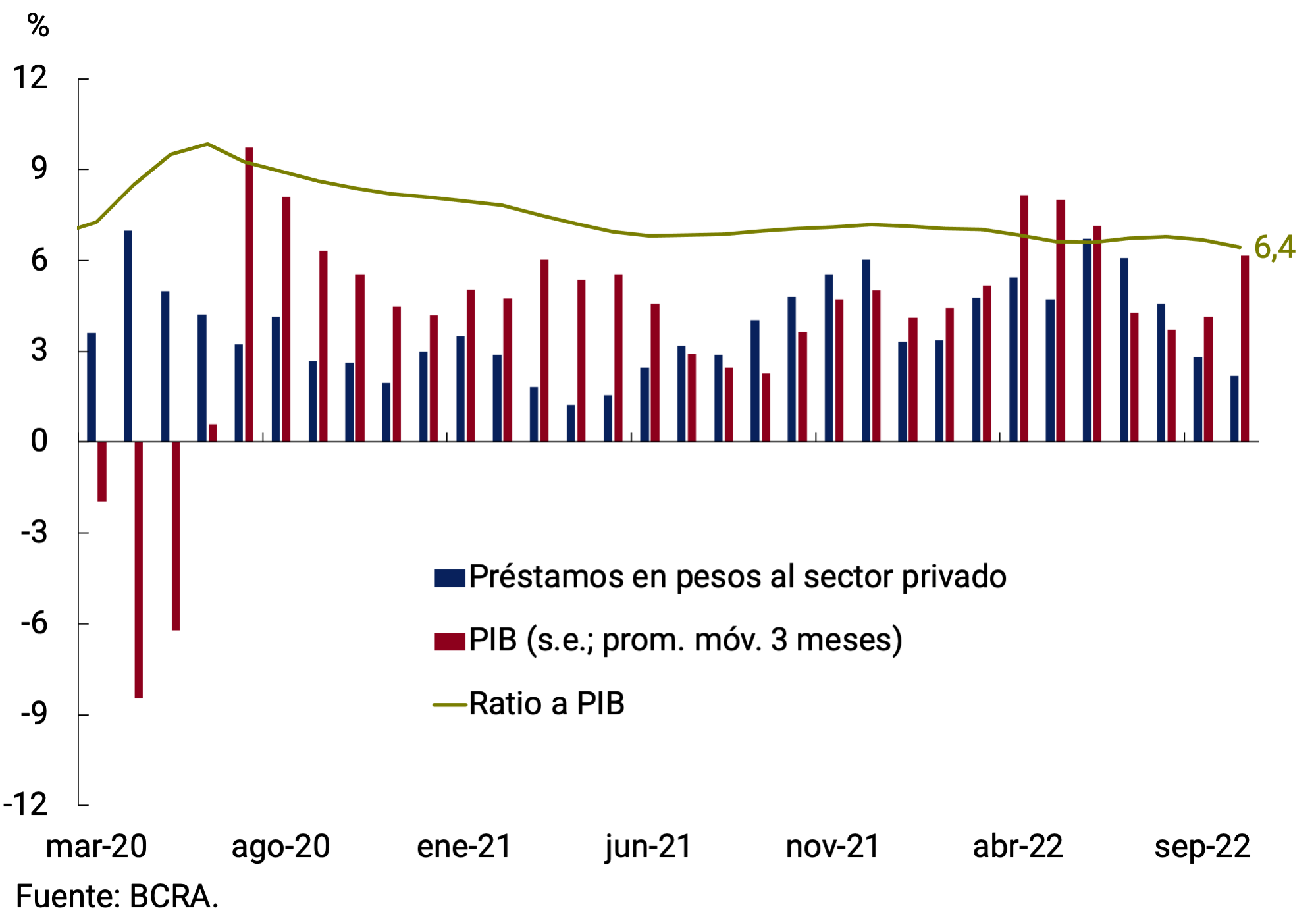
In October, loans in pesos to the private sector, measured in real terms and without seasonality, would have registered a monthly contraction of 3.5%, accumulating four consecutive months of decline. The decline was widespread at the broad line level (see Figure 5.1). Thus, in the last twelve months credit would have accumulated a fall of 8.1% in real terms. The ratio of peso loans to the private sector to current GDP fell in the month (0.3 p.p.) to 6.4% (see Figure 5.2).
Figure 5.1 | Loans in pesos to the private
sector Real without seasonality; contribution to monthly growth
When looking at the evolution of loans by type of financing, lines mainly for commercial purposes would have fallen 3.5% per month s.e. in real terms. In the year-on-year comparison and at constant prices, they would be 2.8% below the level of October 2021. Within these financings, current account advances would have fallen 3% s.e. in real terms (+2.3% y.o.y.). On the other hand, the financing granted through documents would have exhibited a decrease at constant prices of 4.6% s.e. (-1.0% y.o.y.), explained both by the behavior of single-signature documents (-3.1% monthly; +2.4% y.o.y.) and by that of discounted documents (-8.4% monthly; -3.0% y.o.y.).
The Financing Line for Productive Investment (LFIP) continued to be the main tool used to channel productive credit to Micro, Small and Medium-sized Enterprises (MSMEs). At the end of October, cumulative disbursements through the LFIP amounted to approximately $3.259 billion since its launch, with a nominal increase of 6.4% compared to last month (see Figure 5.3). By type of destination, about a third of the financing granted through the LFIP corresponds to investment projects and the rest to working capital.
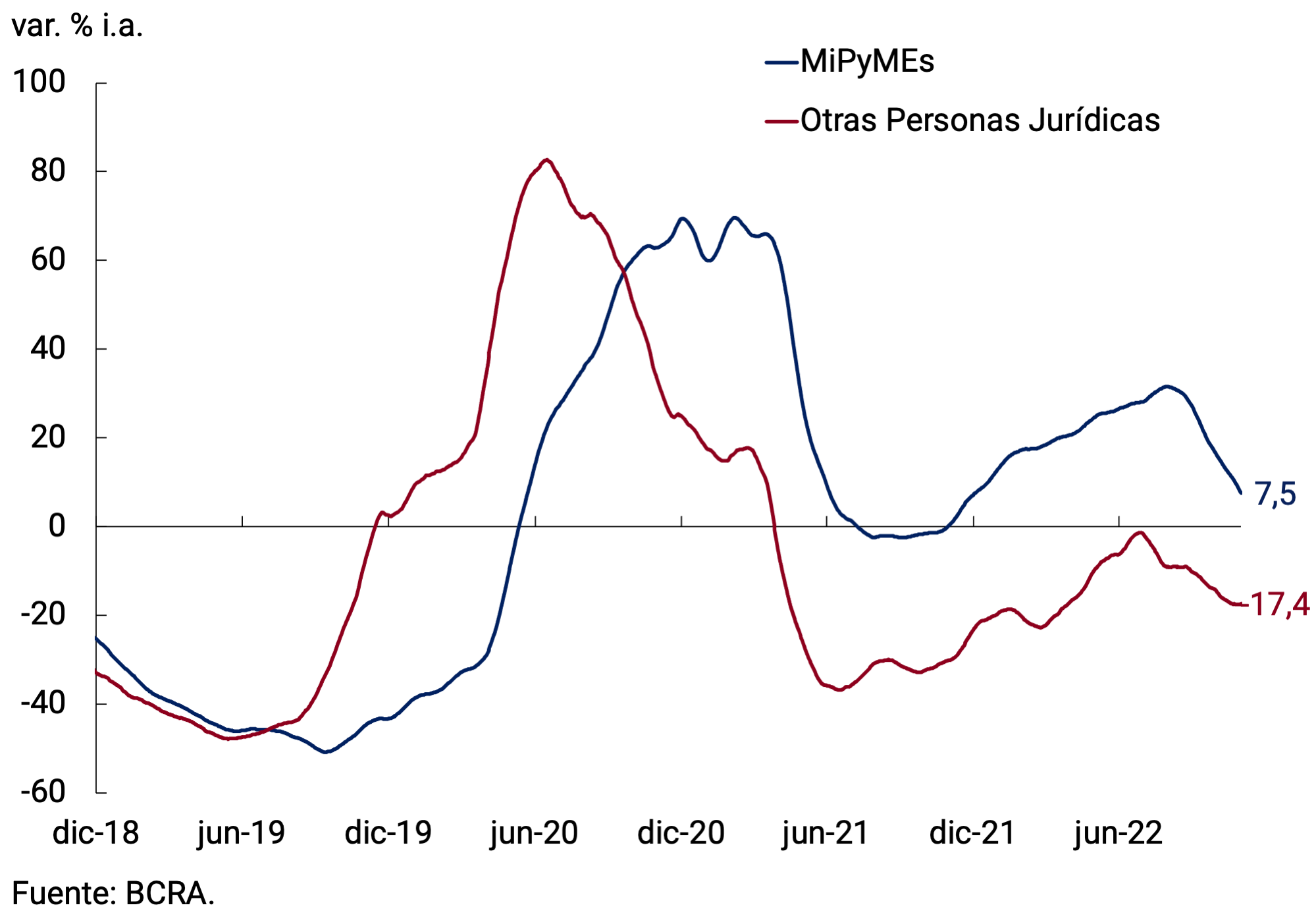
Differentiating commercial loans by type of debtor, it can be seen that in October, credit to MSMEs in real terms would have expanded in year-on-year terms at a rate of 7.5%, evidencing a slowdown in the margin. On the other hand, financing for large companies showed a contraction of 17.4% YoY (see Figure 5.4).
Figure 5.3 | Financing granted through the Productive Investment Financing Line (LFIP)
Accumulated disbursed amounts; data at the end of the month
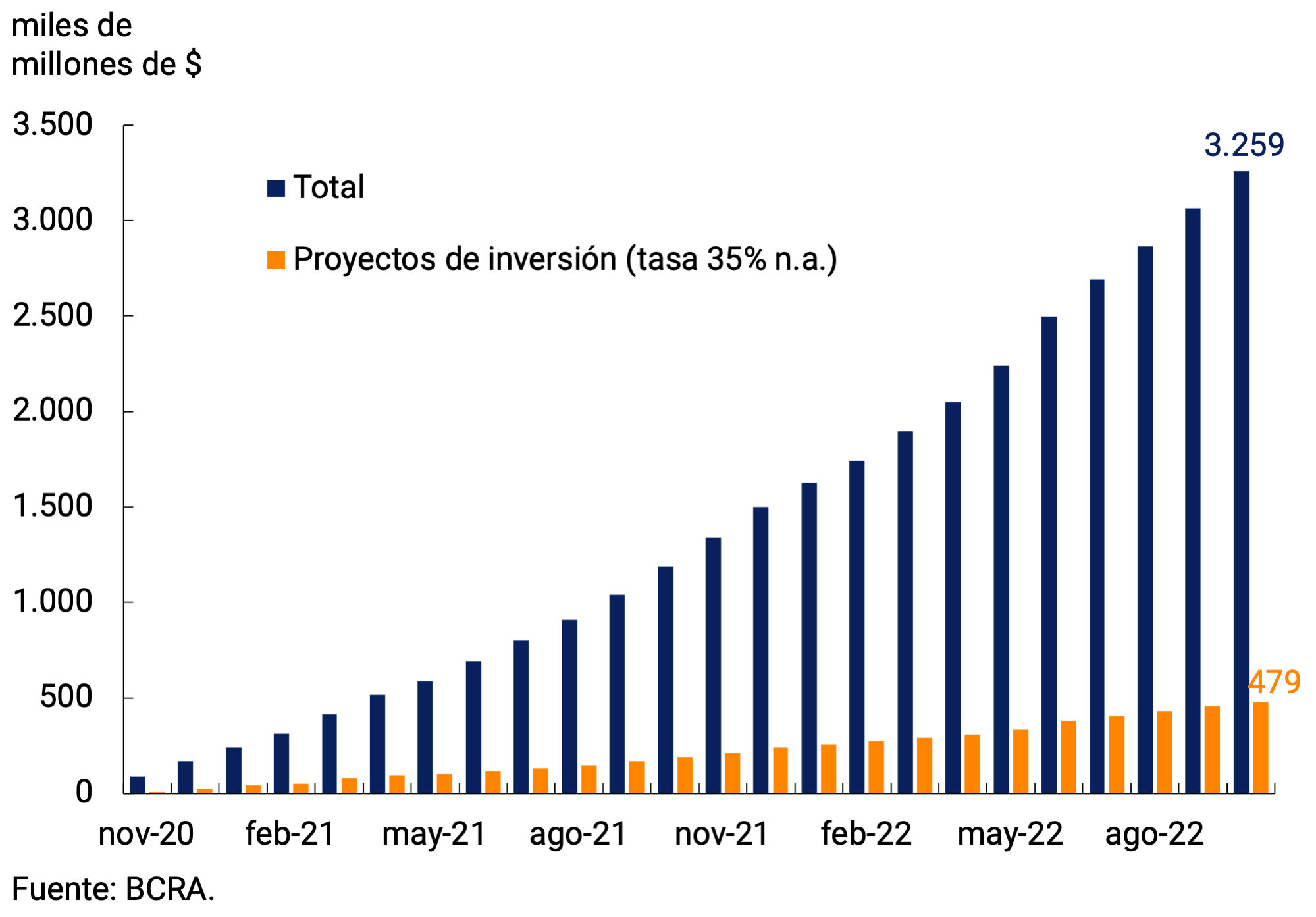
Figure 5.4 | Commercial Loans by type of debtor
Var. i.a. at constant prices of the 30-day moving average balance
Among loans associated with consumption, financing instrumented with credit cards would have shown a decrease in real terms of 4.2% s.e. in October, placing the average balance 12.3% below the level of a year ago. Meanwhile, personal loans would have exhibited a 2.3% monthly drop at constant prices and would be 13.4% below the level of October 2021. The interest rate corresponding to personal loans averaged 82.9% n.a. in October (123% y.a.), increasing 4.6 p.p. compared to the previous month.
With regard to secured lines, collateral loans would have registered a decrease in real terms of 3.1% s.e., although they would remain 15% above the record of a year ago. For its part, the balance of mortgage loans would have shown a fall of 4.3% s.e. at constant prices in the month, accumulating a contraction of 25.0% in the last twelve months.
6. Liquidity in pesos of financial institutions
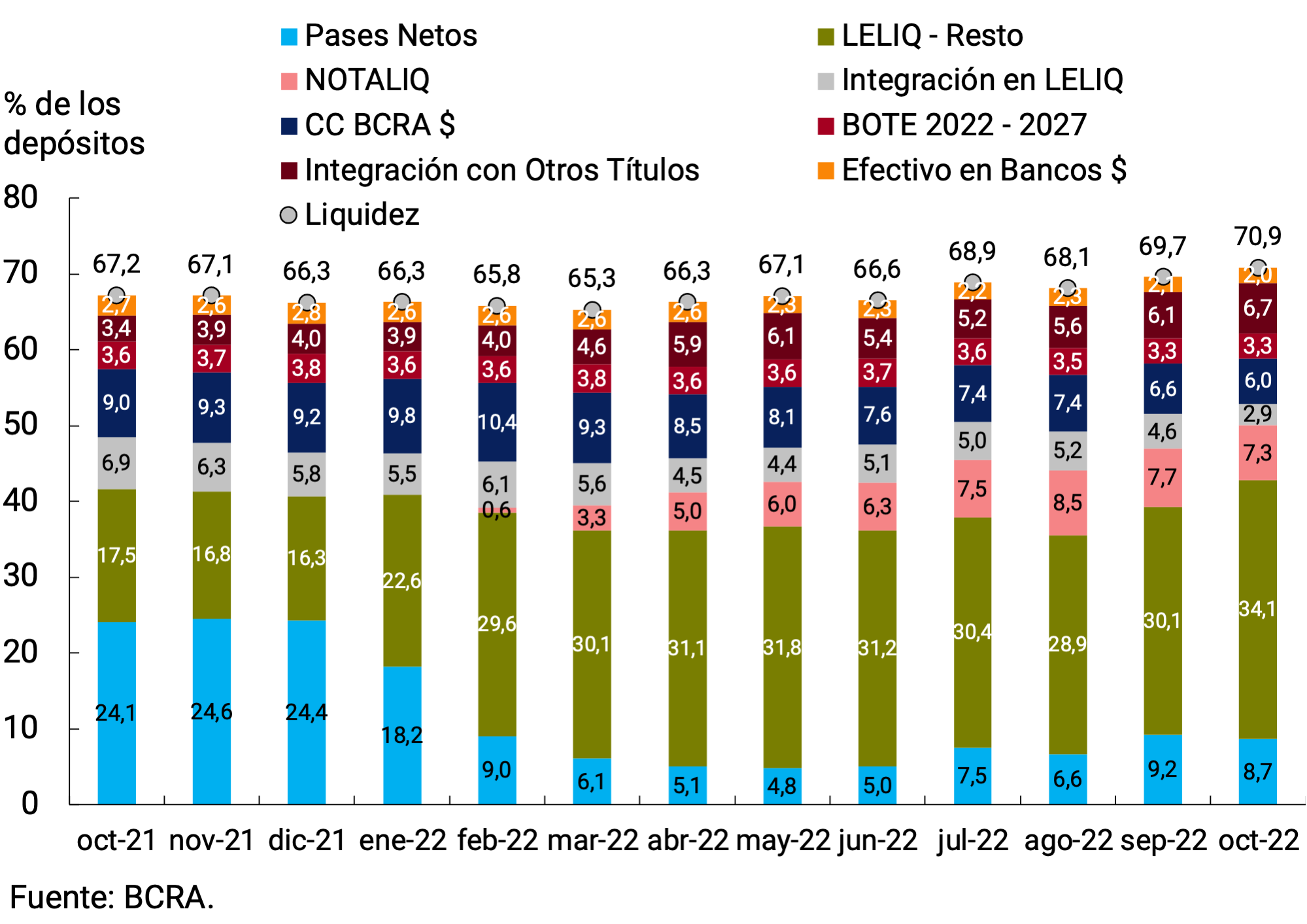
In October, ample bank liquidity in local currency7 showed an increase of 1.2 p.p. compared to September, averaging 70.9% of deposits. Thus, it remained at historically high levels. This increase was mainly driven by the BCRA’s interest-bearing liabilities (with increases in the LELIQ that are not used to integrate minimum cash, partially offset by the NOTALIQ and the Net Passes).
In turn, there was a fall in current account integration in the BCRA and LELIQ, partially offset by an increase in government securities (see Figure 6.1). In this regard, it is worth mentioning that in October the simplification of the minimum cash regime established on June8 came into force. In this way, most of the LELIQ became considered surplus.
Figure 6.1 | Liquidity in pesos of financial institutions
7. Foreign currency
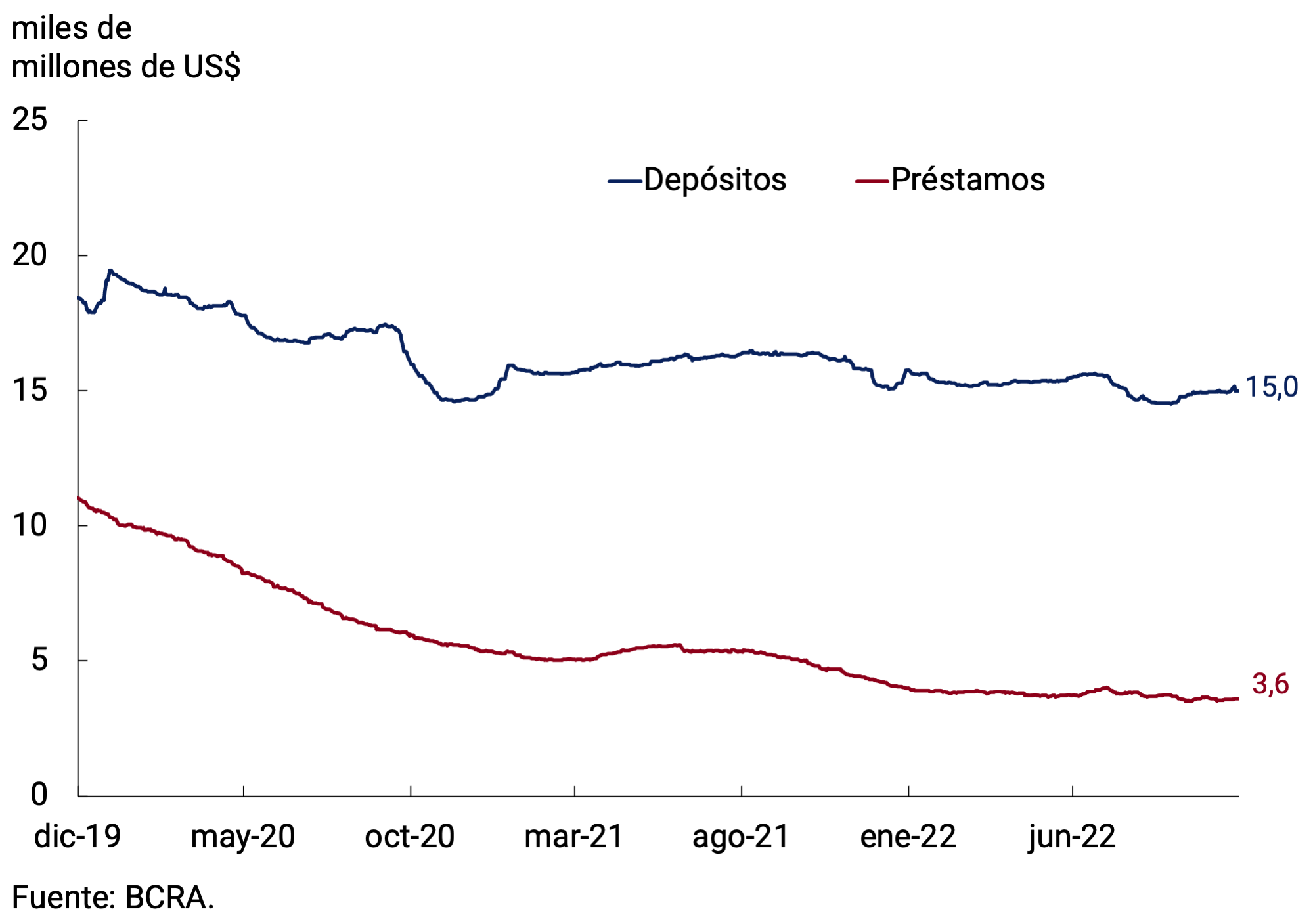
In the foreign currency segment, the main assets and liabilities of financial institutions registered limited variations. On the one hand, the balance of private sector deposits increased for the second consecutive month, averaging US$15,000 million, which implied a variation of about US$160 million. This increase was mainly explained by demand deposits of legal entities of more than US$1 million. On the other hand, the stock of foreign currency loans to the private sector remained broadly unchanged in the month (see Figure 7.1).
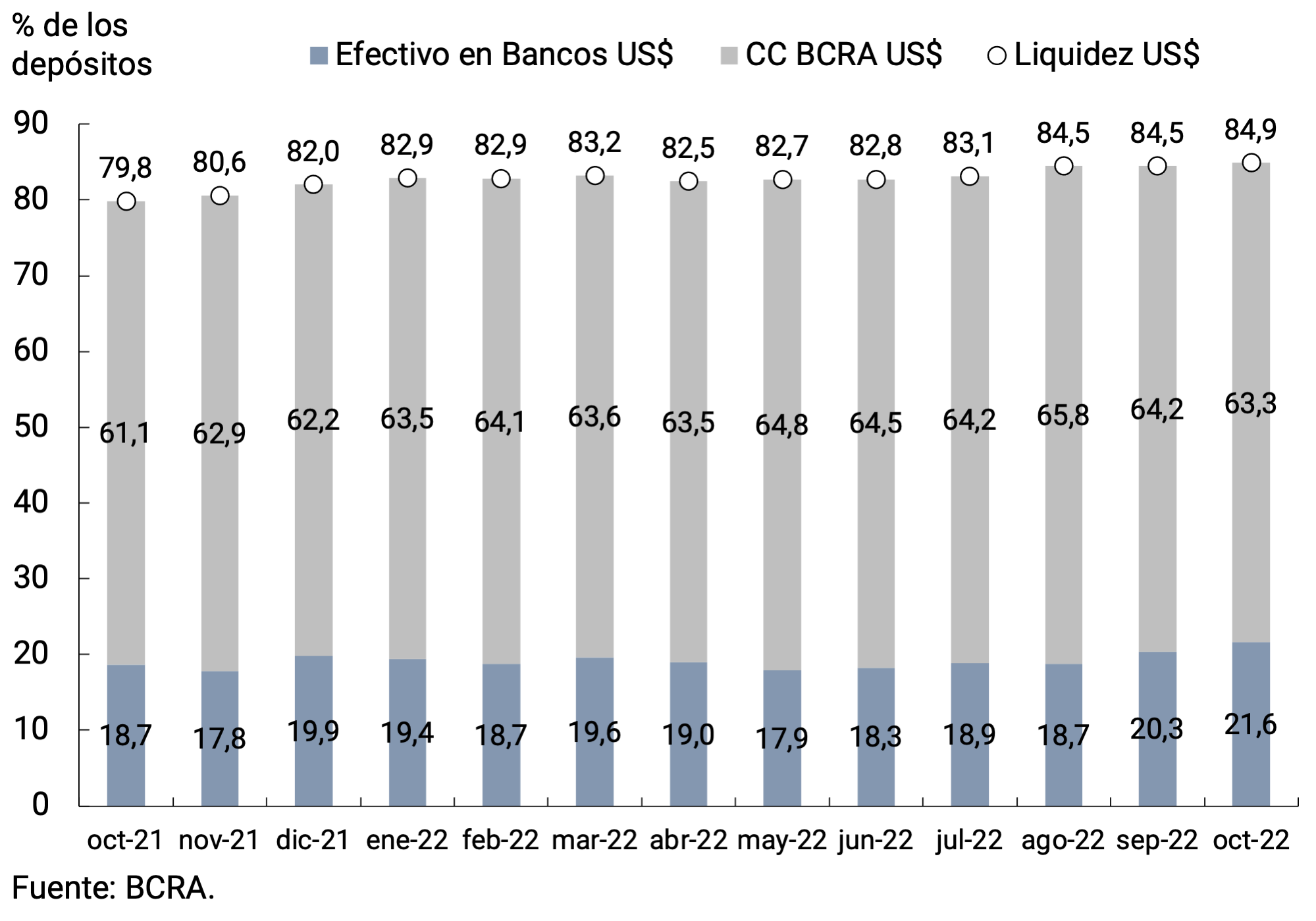
The liquidity of financial institutions in the foreign currency segment registered an increase of 0.4 p.p. compared to the previous month, standing at 84.9% of deposits in October. This increase was explained by an increase in cash in banks that was partially offset by a fall in the balance of current accounts in foreign currency (see Figure 7.2).
During October, a series of regulatory modifications took place in foreign exchange matters with which they sought to allocate foreign currency more efficiently. On the one hand, regulations related to the refinancing and cancellation of principal maturities of liabilities in foreign currencywere extended 9 and, on the other, conditions were established to give access to the foreign exchange market to customers from various productive sectors10. Among the latter, access to the foreign exchange market for companies that are beneficiaries of the regimes of access to foreign currency for the incremental production of oil and/or natural gas, to make payments of debt principal, repatriation of investments and payments of profits and dividends11. Finally, it was decided to tax with an additional levy certain consumption in foreign currency that exceeds a certain amount12, as well as some services (personal, cultural and recreational) contracted abroad13.
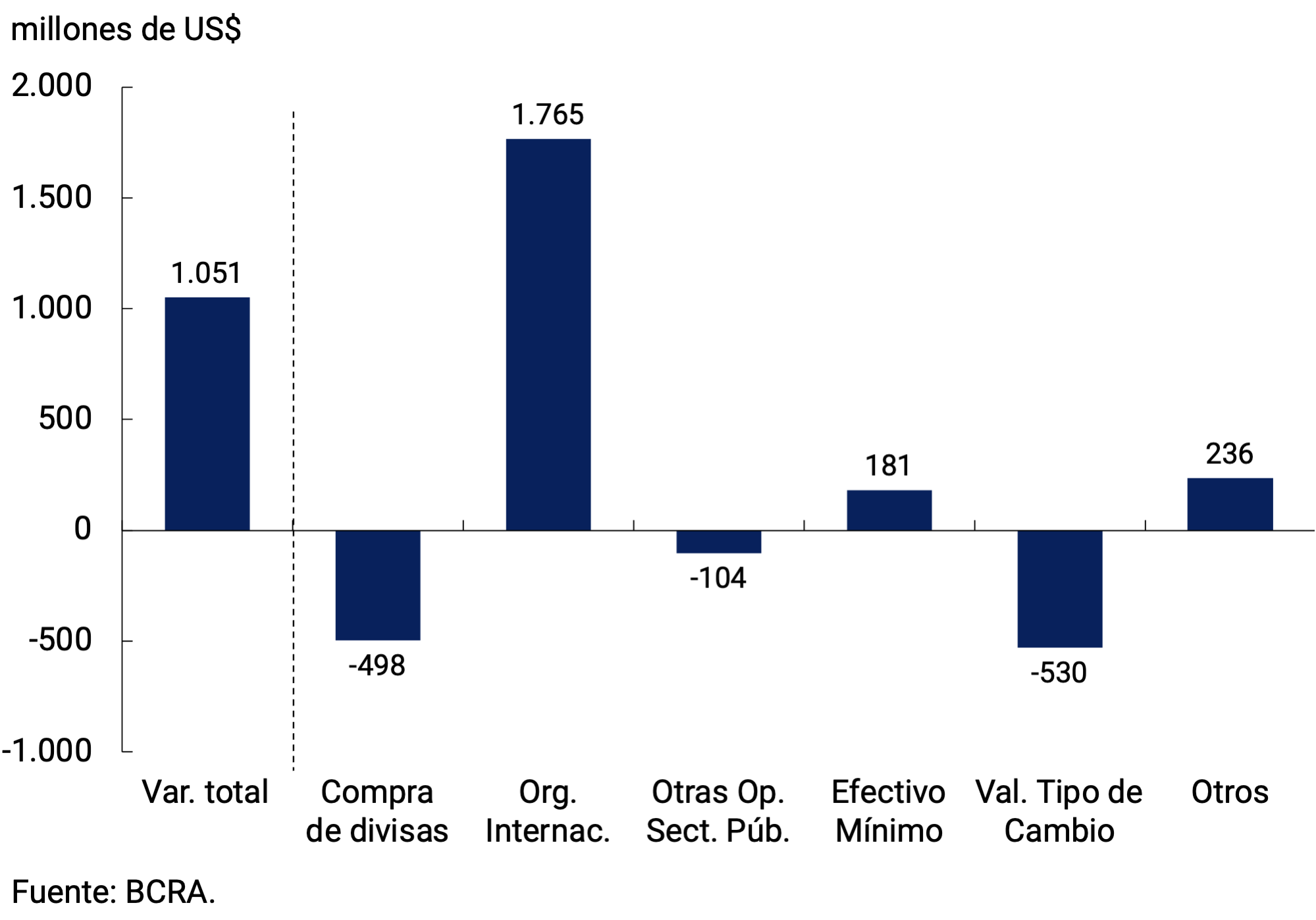
The BCRA’s International Reserves ended October with a balance of US$38,676 million, reflecting an increase of US$1,051 million compared to the end of September. This increase was explained by the third disbursement by the International Monetary Fund made within the framework of the Extended Facilities Program (PFE). This disbursement was for about US$3,900 million and was partially offset by: capital payments to the organization (approximately US$2,500 million) and by the net sale of foreign currency to the private sector (US$498 million; see Figure 7.3).
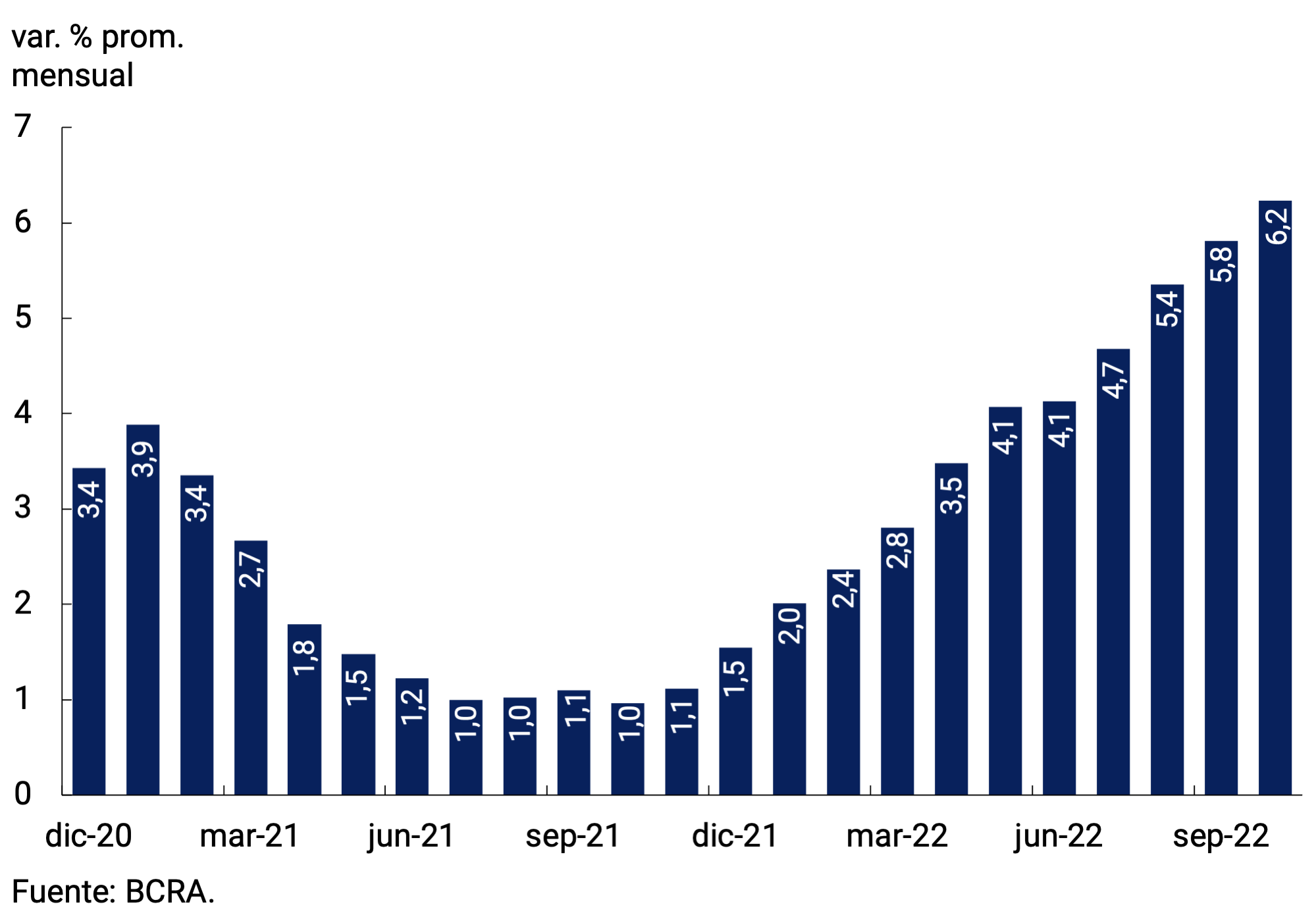
Finally, the bilateral nominal exchange rate (TCN) against the U.S. dollar increased 6.2% in October, a higher increase than in the previous month (see Figure 7.4). Thus, it was located, on average, at $152.05/US$.
Figure 7.3 | Variation in the balance at the end of the month of International Reserves
: Explanation factors. October 2022
Glossary
ANSES: National Social Security Administration.
AFIP: Federal Administration of Public Revenues.
BADLAR: Interest rate on fixed-term deposits for amounts greater than one million pesos and a term of 30 to 35 days.
BCRA: Central Bank of the Argentine Republic.
BM: Monetary Base, includes monetary circulation plus deposits in pesos in current account at the BCRA.
CC BCRA: Current account deposits at the BCRA.
CER: Reference Stabilization Coefficient.
NVC: National Securities Commission.
SDR: Special Drawing Rights.
EFNB: Non-Banking Financial Institutions.
EM: Minimum Cash.
FCI: Common Investment Fund.
A.I.: Year-on-year .
IAMC: Argentine Institute of Capital Markets
CPI: Consumer Price Index.
ITCNM: Multilateral Nominal Exchange Rate Index
ITCRM: Multilateral Real Exchange Rate Index
LEBAC: Central Bank bills.
LELIQ: Liquidity Bills of the BCRA.
LFIP: Financing Line for Productive Investment.
M2 Total: Means of payment, which includes working capital held by the public, cancelling cheques in pesos and demand deposits in pesos from the public and non-financial private sector.
Private M2: Means of payment, includes working capital held by the public, cancelling cheques in pesos and demand deposits in pesos from the non-financial private sector.
Private transactional M2: Means of payment, includes working capital held by the public, cancelling cheques in pesos and non-remunerated demand deposits in pesos from the non-financial private sector.
M3 Total: Broad aggregate in pesos, includes the current currency held by the public, cancelling checks in pesos and the total deposits in pesos of the public and non-financial private sector.
Private M3: Broad aggregate in pesos, includes the working capital held by the public, cancelling checks in pesos and the total deposits in pesos of the non-financial private sector.
MERVAL: Buenos Aires Stock Market.
MM: Money Market.
N.A.: Annual nominal.
E.A.: Effective Annual.
NOCOM: Cash Clearing Notes.
ON: Negotiable Obligation.
GDP: Gross Domestic Product.
P.B.: basis points.
PSP.: Payment Service Provider.
p.p.: percentage points.
MSMEs: Micro, Small and Medium Enterprises.
ROFEX: Rosario Term Market.
S.E.: No seasonality
SISCEN: Centralized System of Information Requirements of the BCRA.
SIMPES: Comprehensive System for Monitoring Payments of Services Abroad.
TCN: Nominal Exchange Rate
IRR: Internal Rate of Return.
TM20: Interest rate on fixed-term deposits for amounts greater than 20 million pesos and a term of 30 to 35 days.
TNA: Annual Nominal Rate.
UVA: Unit of Purchasing Value
References
1 Corresponds to private M2 excluding interest-bearing demand deposits from companies and financial service providers. This component was excluded since it is more similar to a savings instrument than to a means of payment.
2 The rates currently in force are those established by communication “A” 7527.
3 Financial Services Providers, Companies and Individuals with deposits of more than $10 million.
4 Operations that were arranged in September, but were settled in the first days of October.
5 Includes working capital held by the public and deposits in pesos of the non-financial private sector (demand, term and others).
6 Communication “A” 7546 established the BCRA’s intervention mechanism in the secondary market for public securities.
7 Includes current accounts at the BCRA, cash in banks, balances of net passes arranged with the BCRA, holdings of LELIQ and NOTALIQ, and public bonds eligible for reserve requirements.
8 Communication “A” 7536 Communication “A” 7536. A series of franchises were eliminated, preserving only those that favor productive credit to MSMEs and household consumption financing (Ahora12). In order to minimise the monetary effect, there was a change in the rates applied to minimum cash items. The latter will come into force in October, while the deductible associated with ATM withdrawals will be computed up to and including December.
10 Communication “A” 7622 and Communication “A” 7624.
12General Resolution 5272/2022 of the General Administration of Public Revenues.
13 Decree 682/2022 of the National Executive Branch.
Share on


