1. Executive Summary
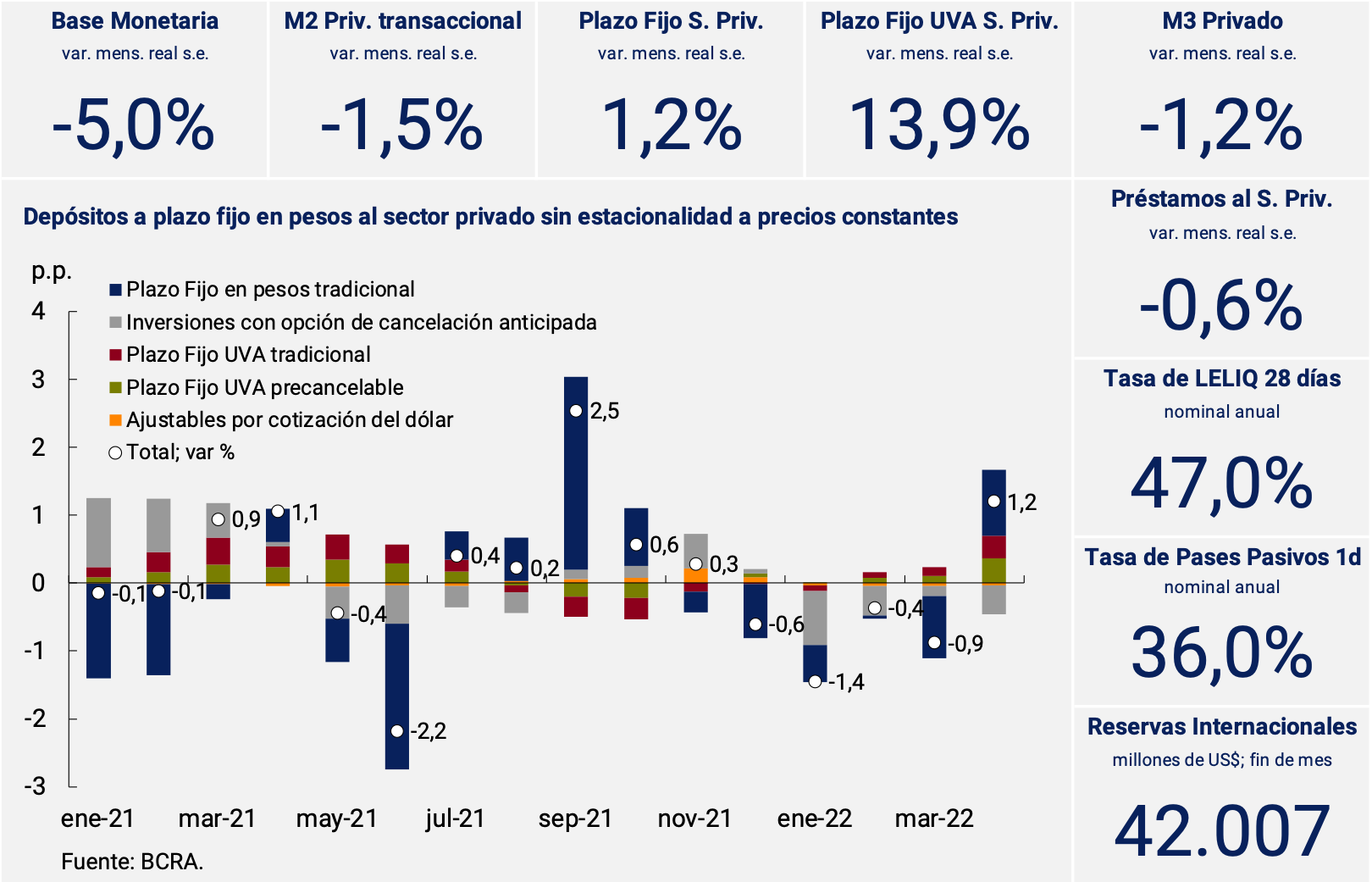
In April, the BCRA raised the benchmark interest rates again, the fourth hike of the year. Likewise, in order to guarantee the transmission of the new interest rates to depositors and to tend towards positive returns for savings in domestic currency, the minimum guaranteed interest rates of savings instruments in pesos were also modified.
In this context, fixed-term deposits in pesos of the private sector registered an increase at constant prices and without seasonality (1.2%), remaining around the highest levels of recent decades. This expansion of time deposits was mainly explained by the growth of traditional placements in pesos and of placements adjustable by CER, which were partially offset by a fall in holdings of investments with non-adjustable early cancellation options. Specifically, placements adjusted by CER continued to show increasing dynamism, although they still maintain a limited participation in the total. The latter were driven mainly by the holdings of human persons. In this way, deposits denominated in UVA (traditional and pre-cancelable segment) were positioned at constant prices at a level similar to that of the middle of last year, when they had reached an all-time high.
The rise in time deposits was not enough to compensate for the fall in real terms in means of payment, which resulted in a contraction of private M3. In fact, this broad monetary aggregate would have registered a monthly decrease of 1.2% s.e. in April at constant prices.
Loans to the private sector at constant prices contracted again in the month, accumulating their third consecutive month of contraction. At the level of lines, all contributed negatively in the fourth month of the year, with the exception of loans with collateral.
2. Payment methods
Means of payment (transactional private M21), at constant prices2 and seasonally adjusted (s.e.), would have registered a fall of 1.5% in April, marking their third consecutive contraction (see Chart 2.1). This dynamic was due to the behavior of both non-interest-bearing demand deposits and working capital held by the public, although the latter accounted for most of the fall. In the year-on-year comparison, and in real terms, the transactional private M2 would be 1.4% below the level of April 2021.
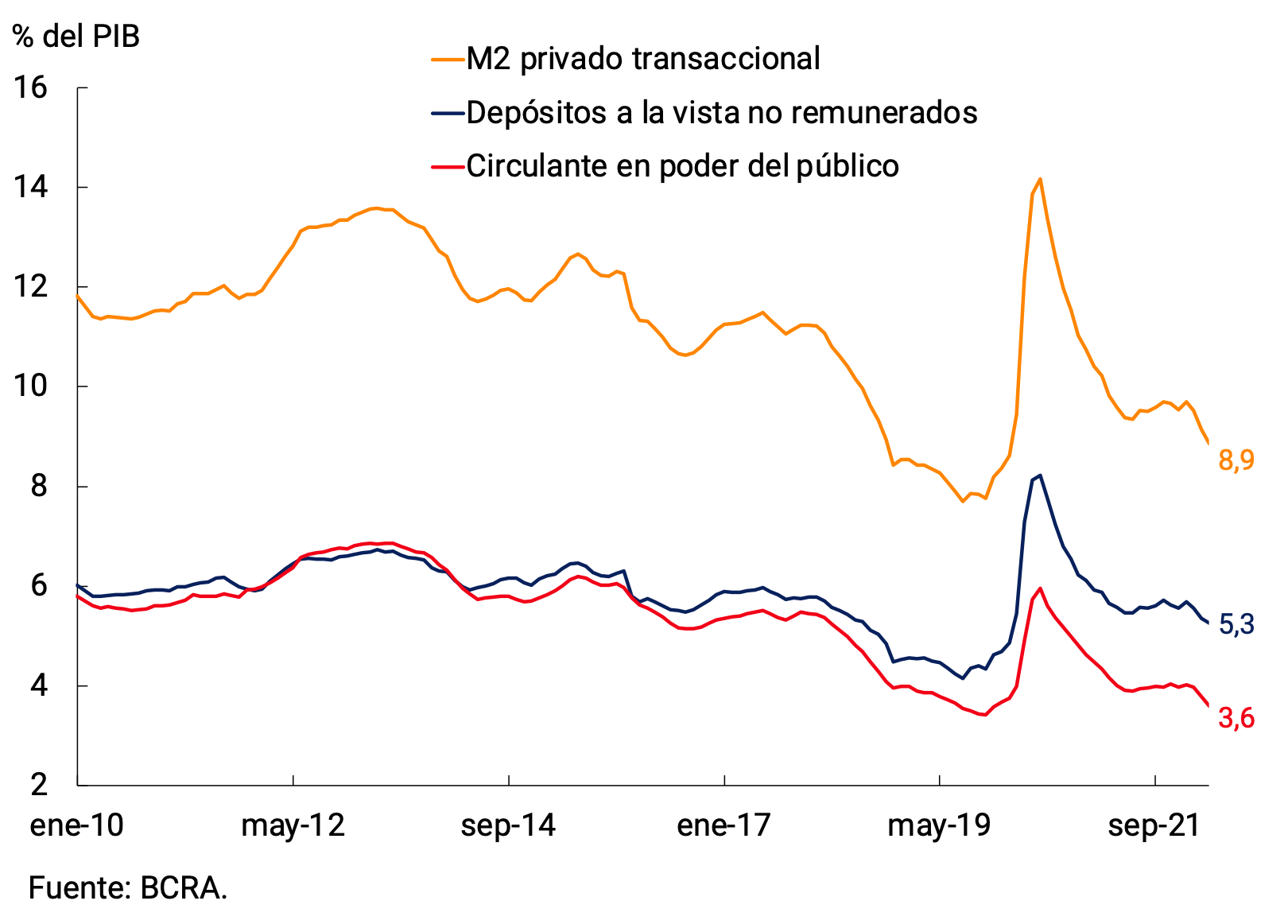
Private transactional M2 in terms of output would have stood at 8.9%, which would imply a decrease (0.3 p.p.) compared to March (see Chart 2.2). As mentioned in previous editions, the circulating currency held by the public remained around its lowest records of the last 15 years. The low level of demand for banknotes and coins is partly linked to a higher relative demand for demand deposits, given the growing use of electronic means of payment in recent years.
Figure 2.1 | Private transactional M2 at constant
prices Monthly variance s.e. per component
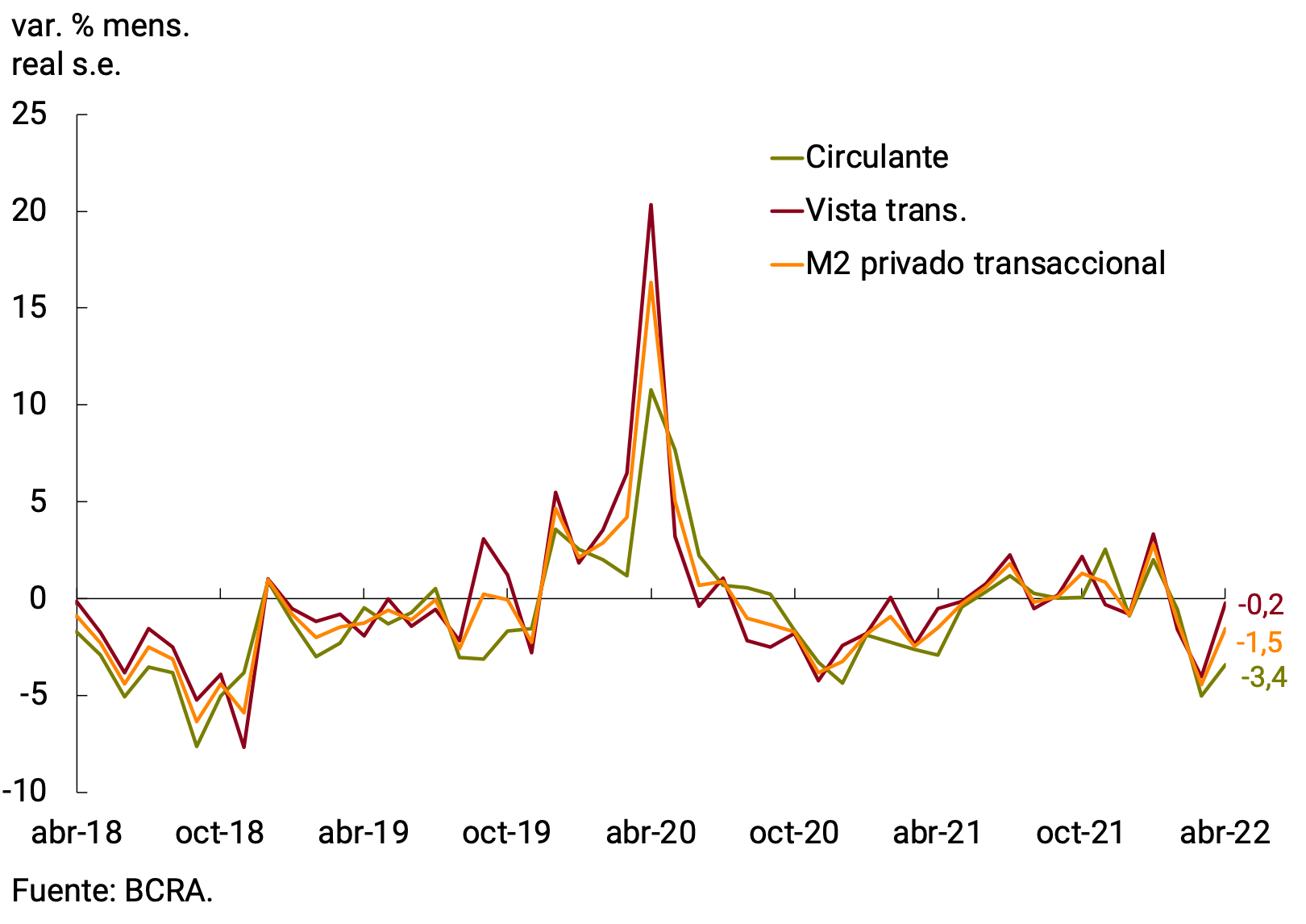
Figure 2.2 | Private transactional
M2 as % of GDP
3. Savings instruments in pesos
In mid-April, the Board of Directors of the BCRA decided to raise the minimum guaranteed interest rates on fixed-term deposits for the fourth time so farthis year 3. The measure is in line with its strategy of establishing a path of interest rates that tend to achieve returns in line with the evolution of inflation. Thus, the minimum guaranteed rate for placements of individuals for up to an amount of $10 million was increased from 43.5% n.a. to 46% n.a. (57.1% y.a.). For the rest of the depositors of the financial system4 the interest rate also rose by 2.5 p.p. to 44% (54.1% y.a.).
In this context, fixed-term deposits in pesos of the private sector would have registered a monthly expansion rate in real terms (1.2% s.e.) and, thus, remained around the highest records of recent decades at constant prices. In terms of GDP, April’s figure would have remained at 6.4%, a record that is also among the highs in recent years.
When we analyze the evolution of term placements, stratifying according to the level of the minimum guaranteed rate, it can be seen that placements by individuals of less than $10 million at constant prices would have remained unchanged throughout the month (-0.6% s.e.). The rest of the deposits in the non-financial private sector (those made up of legal entities, regardless of the amount, and by individuals with placements of more than $10 million) would have been those that experienced an increase in the month in real terms (1.9% s.e.; see Figure 3.1).
With regard to time deposits of legal entities, the growth observed in the month was explained by the higher holdings of companies, excluding Financial Services Providers (FSPs). On the other hand, the placements of FSPs registered a slight increase on average in the month, which was mainly explained by the carry-over effect. In fact, in the top comparison, the holdings of FSPs registered a fall in real terms (see Figure 3.2). This contraction occurred in a context in which the assets of the Mutual Funds of Money Market (FCI MM), which are the main agents within the PSFs, decreased in real terms. Finally, Investments with early cancellation option, which cannot be classified by type of holder, continued to exhibit a decline in the month, which was entirely explained by the segment not adjustable by CER.
Figure 3.1 | Fixed-term deposits in pesos from the private
sector Balance at constant prices by rate segment
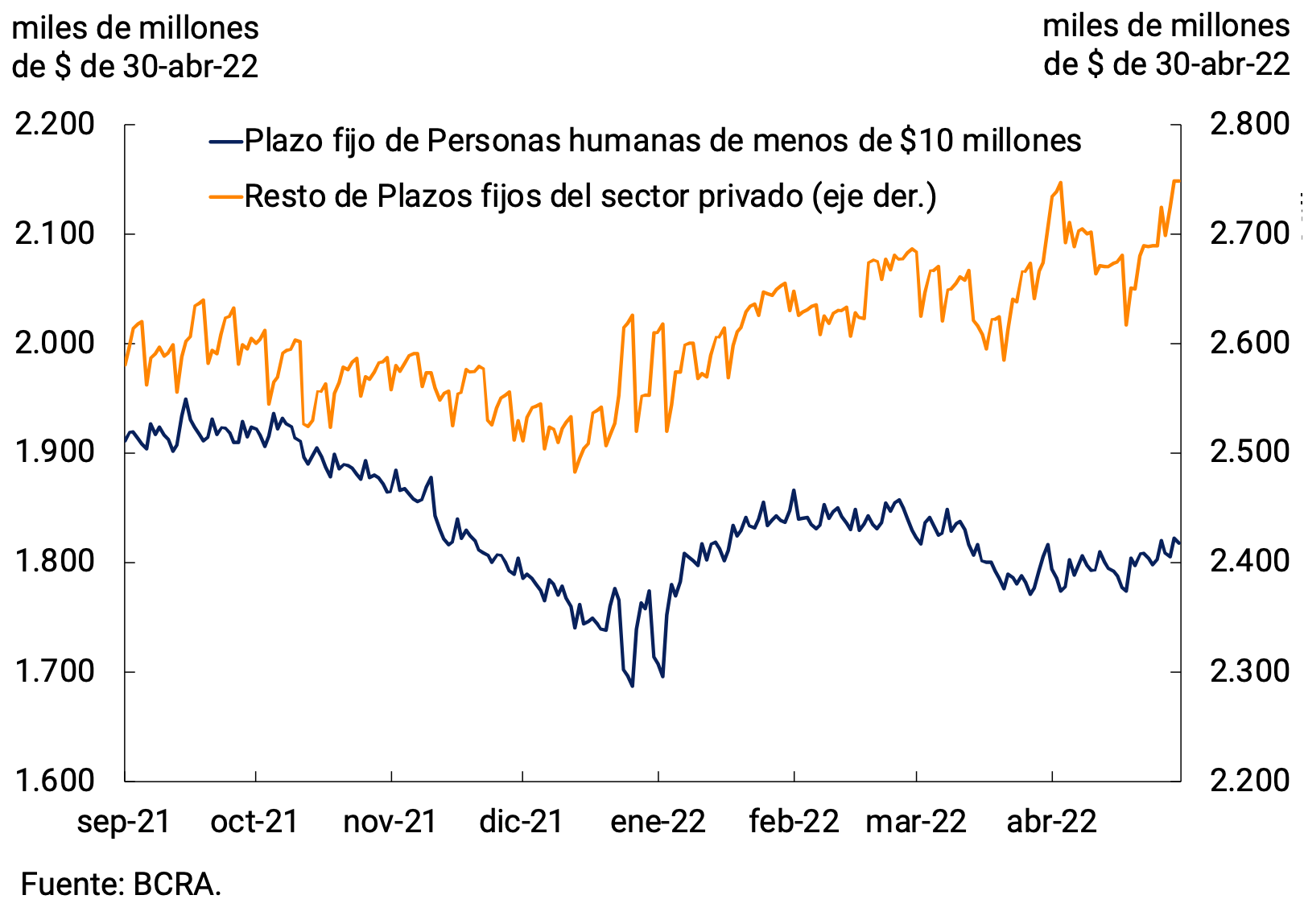
Figure 3.2 | Fixed-term deposits in pesos of more than $20 million
Balance at constant prices by type of depositor and instrument
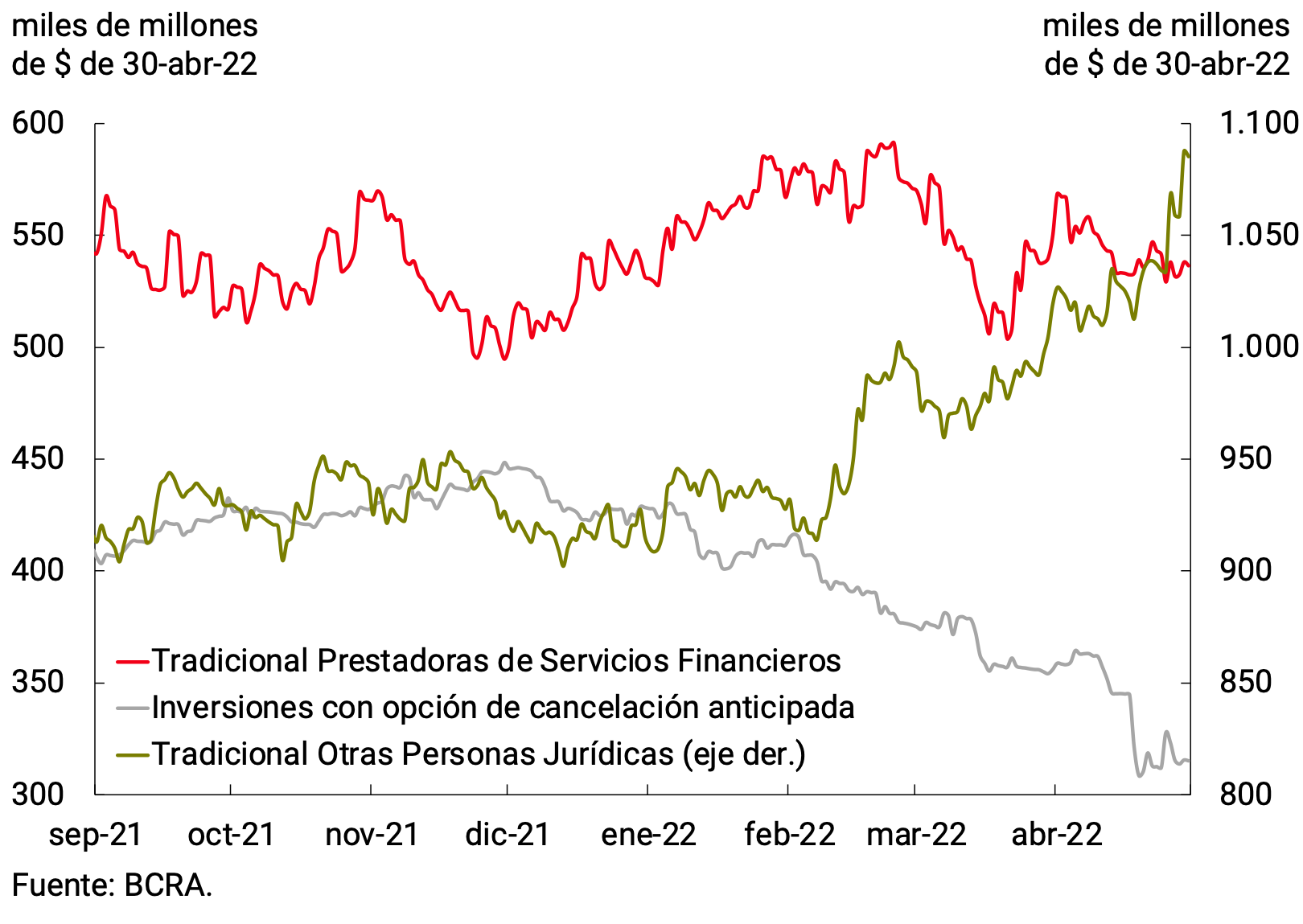
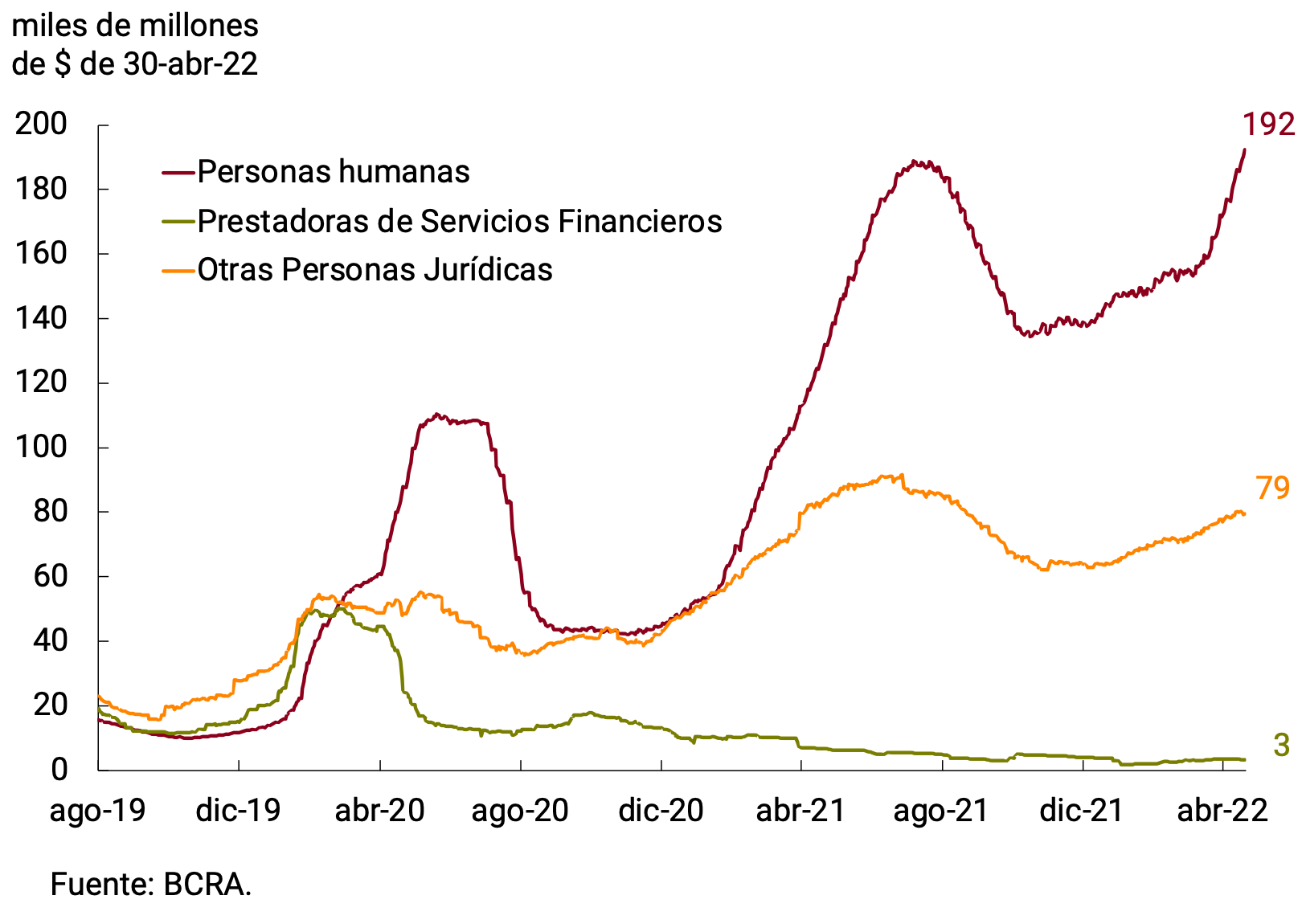
At the instrument level, traditional fixed-term deposits in pesos, not adjustable by CER, accounted for most of the total growth in fixed-term deposits, while investments with early cancellation options, which are not updated by UVA, showed a decrease in the month. Meanwhile, UVA deposits continued to exhibit increasing dynamism in April, although their share in the total of term instruments remains limited, but growing (around 6% of the total). These placements registered an average monthly growth of 13.9% s.e. in real terms and reached a balance of $269,873 million at the end of April. In this way, they were positioned at constant prices at a level similar to that of the middle of last year, when they had reached an all-time high. This dynamic was due to both traditional and pre-cancellable UVA placements, whose monthly expansion rates stood at 10.7% s.e. and 19.2% s.e. at constant prices, respectively (see Figures 3.3). Discriminating the balance by type of holder, it is verified that the impulse came from the holdings of individuals and, to a lesser extent, from companies (excluding FSPs; see Figure 3.4).
Figure 3.3 | Fixed-term deposits in UVA of the private
sector Var. monthly s.e by type of instrument
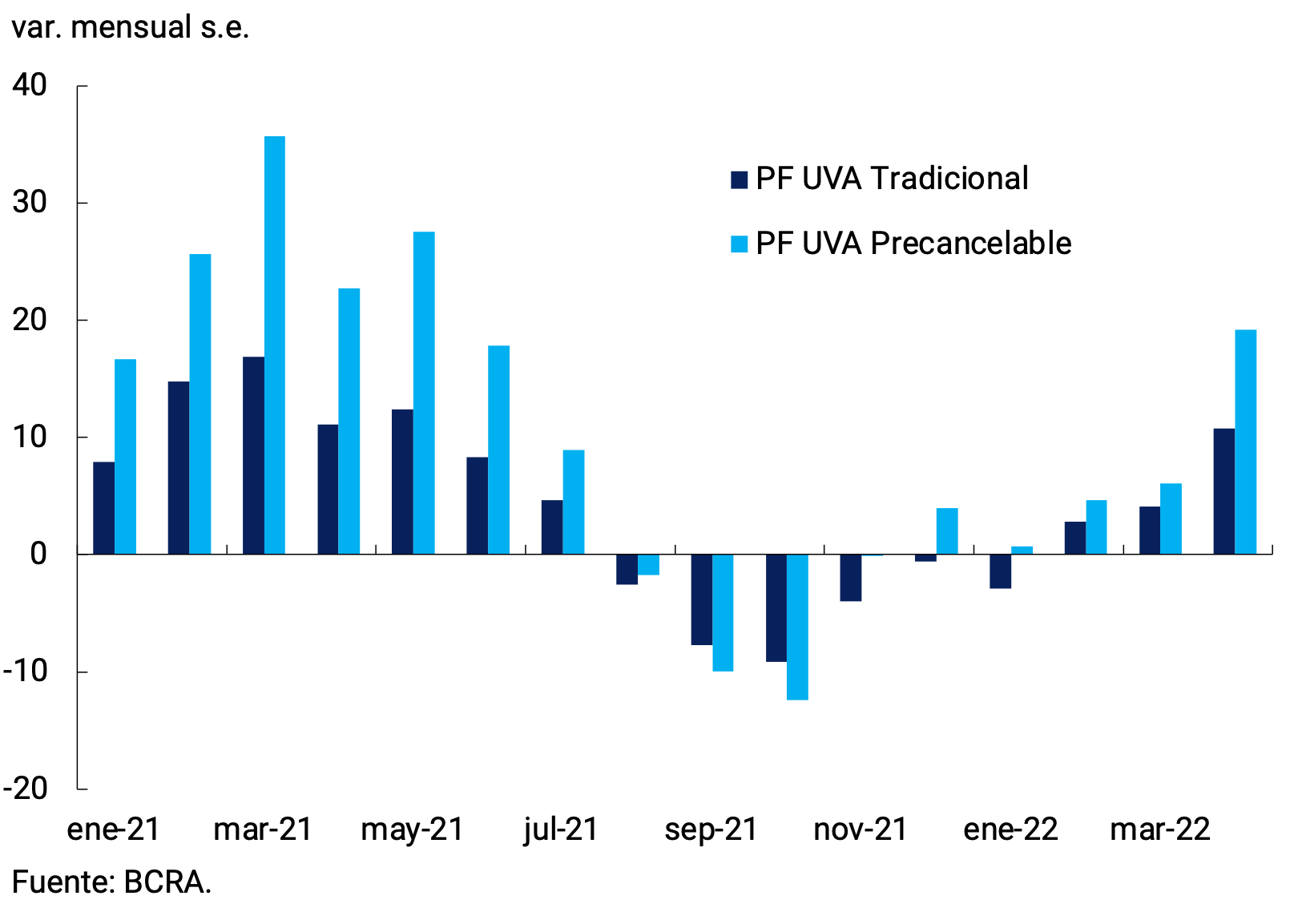
Figure 3.4 | Private sector UVA fixed-term deposits Dailybalance at constant prices by type of holder
All in all, the broad monetary aggregate, private M35, at constant prices would have registered a monthly decrease of 1.2% s.e. in April, cutting the rate of decline of last month. In the year-on-year comparison, this aggregate would have experienced a slight decrease (0.5%). As a percentage of GDP, it would have registered a slight drop to 16.5%, 0.5 p.p. below the value of March.
4. Monetary base
In April, the Monetary Base stood at $3,628.7 billion, which meant an average monthly nominal fall of 0.9% (-$31.6 billion) in the original series. This marks two consecutive months of nominal contraction. Adjusted for seasonality and at constant prices, the Monetary Base would have presented a contraction of 5%, registering a fall of the order of 9% in the last twelve months. In terms of GDP, the Monetary Base would stand at 5.3%, 0.4 p.p. below the value recorded in the previous month and at its lowest level since 2003 (see Figure 4.1).
Figure 4.1 | Monetary Base
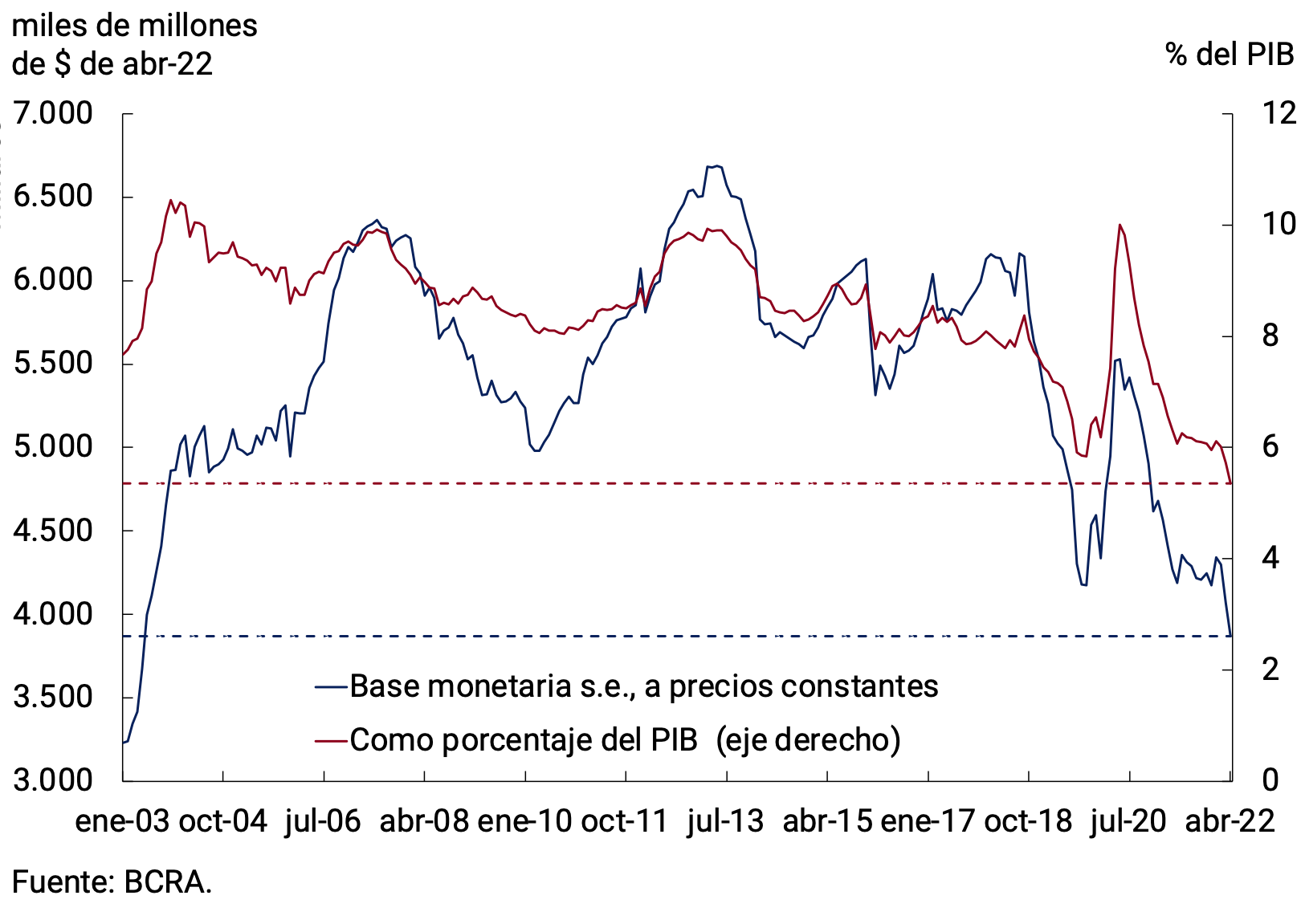
Figure 4.2 | Monetary base and expansion factors by supply
Variation of monthly averages
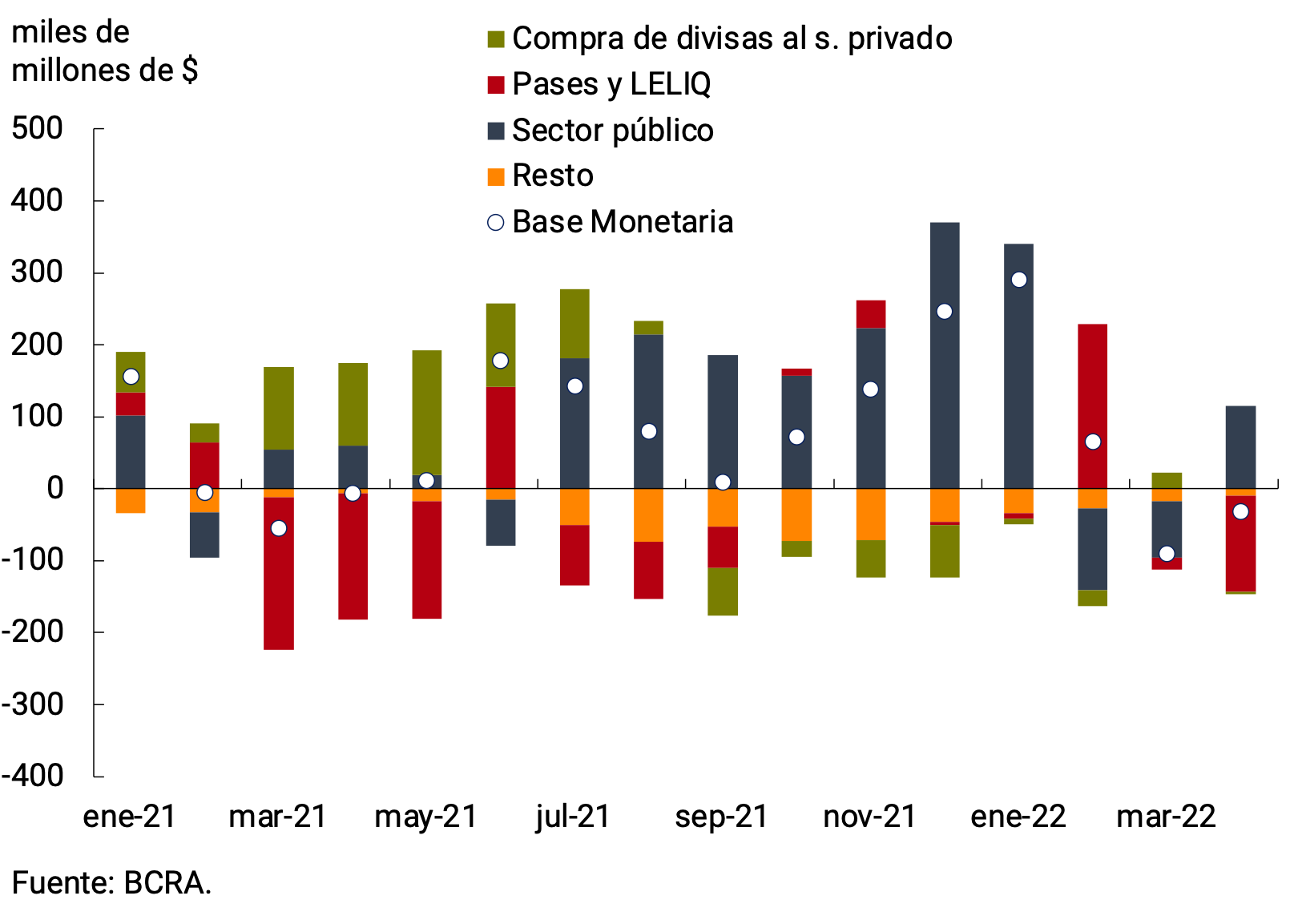
If we analyze the factors of variation on the supply side, the monthly contraction of the monetary base was mainly explained by the absorption of liquidity through monetary regulation instruments, which more than compensated for the expansion associated with public sector operations linked, fundamentally, to the dismantling of its demand positions in the BCRA (see Figure 4.2).
In mid-April, the Board of Directors of the BCRA decided to adjust the interest rates of monetary policy instruments upwards again, in line with the objectives of establishing a path for the policy interest rate in order to tend towards positive real returns on investments in local currency and to preserve monetary and exchange rate stability. Specifically, it was decided to raise the interest rate of the LELIQ to 28 days by 2.5 p.p., which stood at 47% n.a. (58.7% y.a.). Meanwhile, the interest rate of the LELIQ with a 180-day term was set at 52% n.a. (58.9% e.a.). Finally, with regard to shorter-term instruments, the interest rate on 1-day pass-by-passes increased by 1.5 p.p. to 36% n.a. (43.3% y.a.); while the number of active 1-day passes stood at 50% n.a. (64.8% e.a.). Finally, the fixed spread of the NOTALIQ in the last auction of the month remained at 5.0 p.p.
With the current configuration of instruments, in April the remunerated liabilities were made up of around 80% of LELIQ (considering both types), highlighting the shortest term that represented approximately 70% of the total remunerated liabilities. The rest corresponded to 1-day passive passes and NOTALIQ, with an increasing share of the latter (see Figure 4.3).
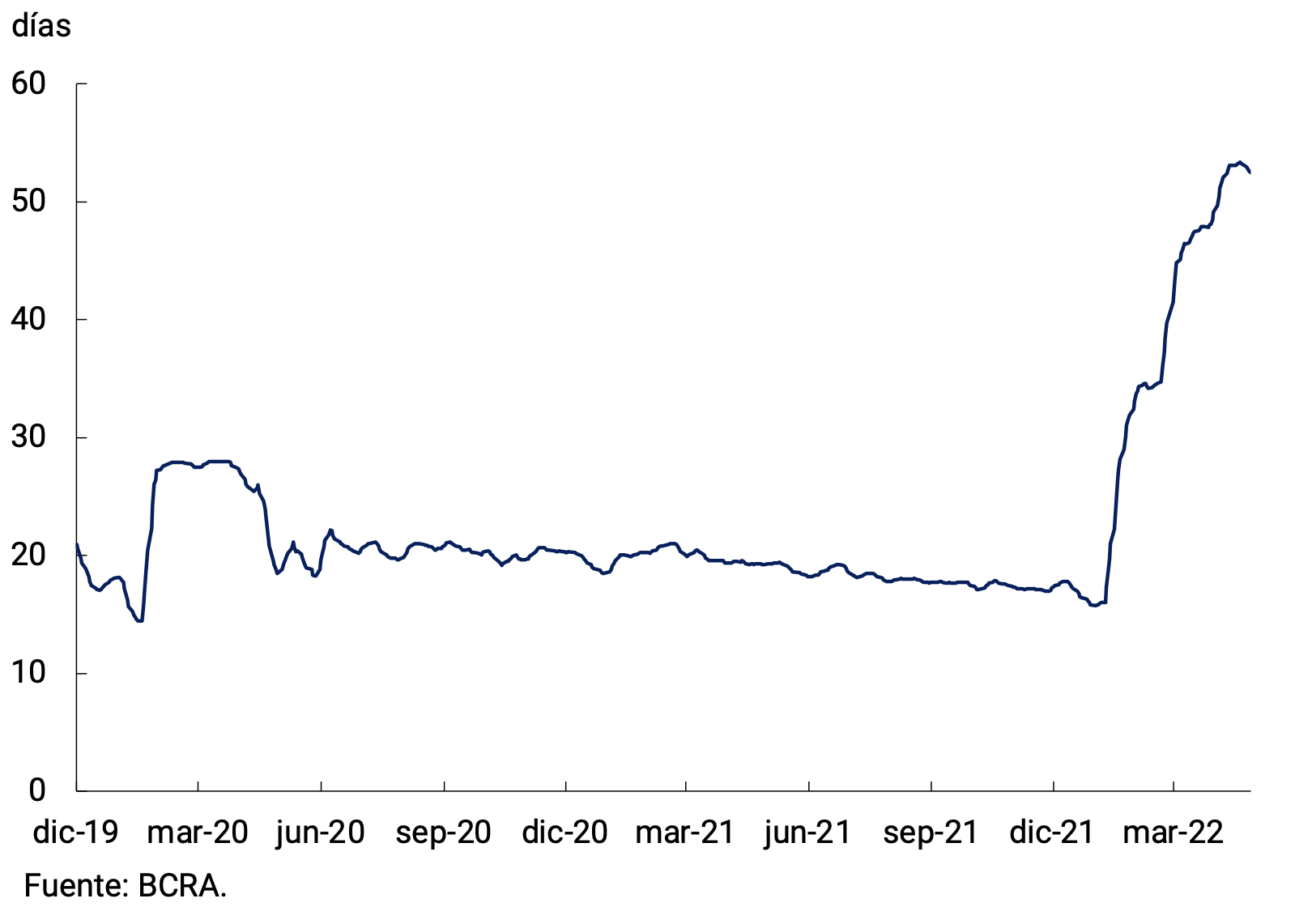
These changes in the relative composition of the monetary regulation instruments made it possible to continue with the policy of extending the terms of interest-bearing liabilities initiated by the BCRA since the beginning of the administration. In fact, the average term of the monetary regulation instruments (LELIQ, Pases and NOTALIQ) was approximately 50 days, more than triple the one in force at the beginning of this year (see Figure 4.4).
Figure 4.3 | Composition of Interest-Bearing Liabilities of the BCRA
Monthly Average
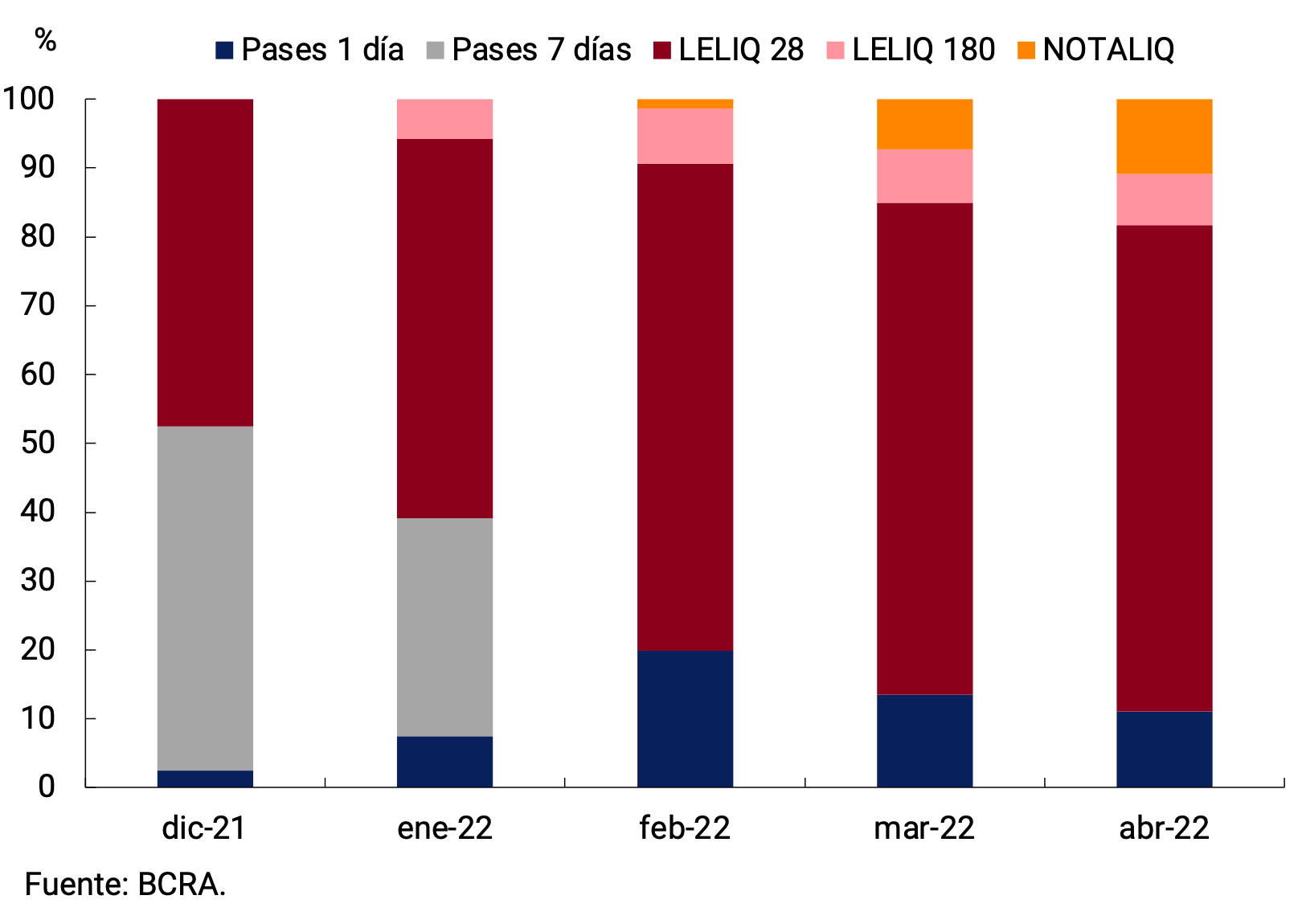
Figure 4.4 | Average term of the BCRA’s interest-bearing liabilitiesMoving average 7 days
5. Loans to the private sector
In April, loans in pesos to the private sector measured in real terms and without seasonality, would have registered a new monthly contraction (-0.6%). Practically all credit lines contributed negatively to the variation of the month, with the exception of collateral loans, which grew and credit card financing, which remained practically unchanged (see Figure 5.1). Thus, in the last twelve months, loans in pesos accumulated a slight contraction at constant prices of -0.2%. The ratio of loans in pesos to the private sector to GDP would have remained in the order of 7%, without major changes compared to previous months (see Figure 5.2).
Figure 5.1 | Loans in pesos to the private
sector Real without seasonality; contribution to monthly growth
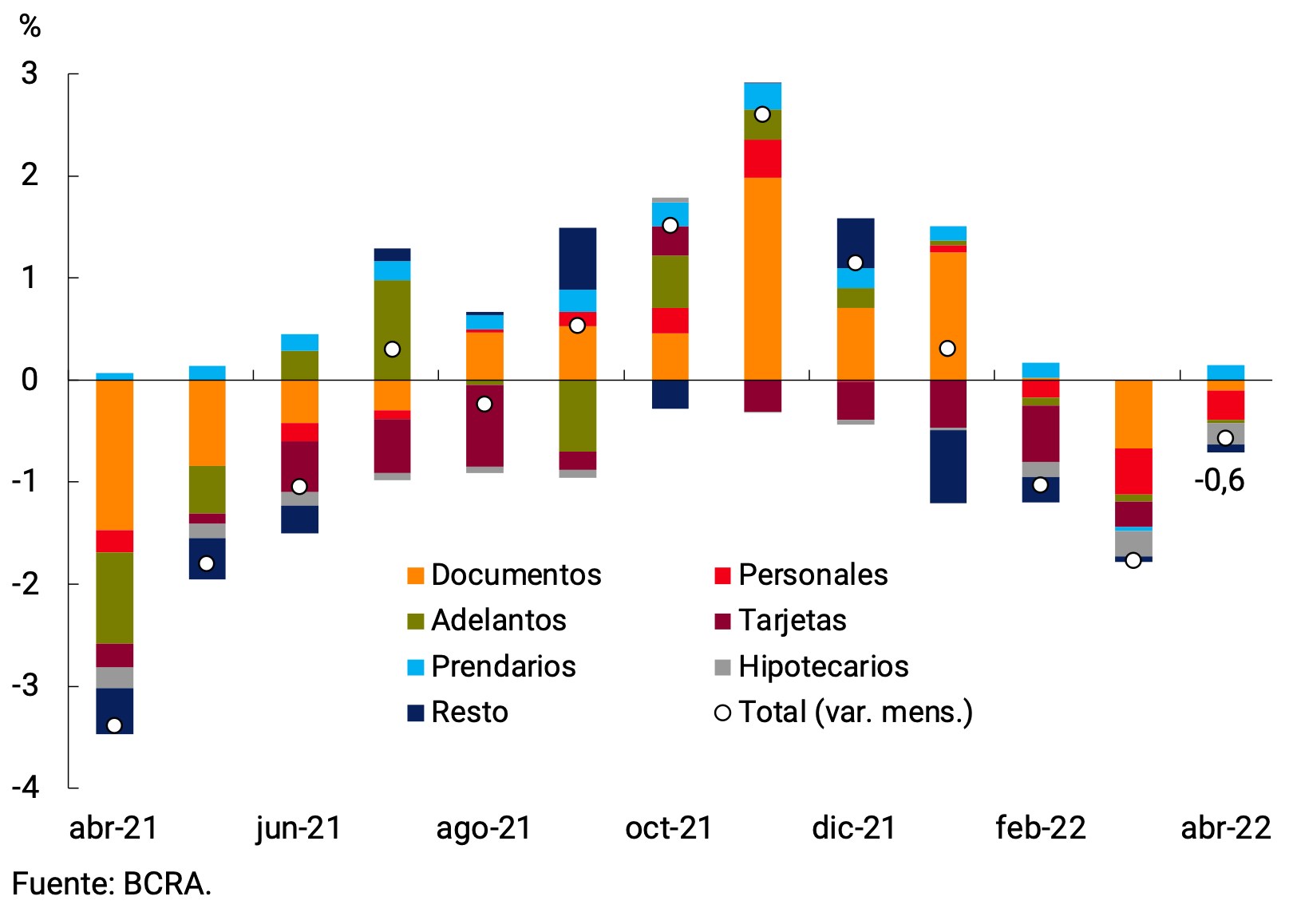
Figure 5.2 | Loans in pesos to the private
sector as a percentage of GDP
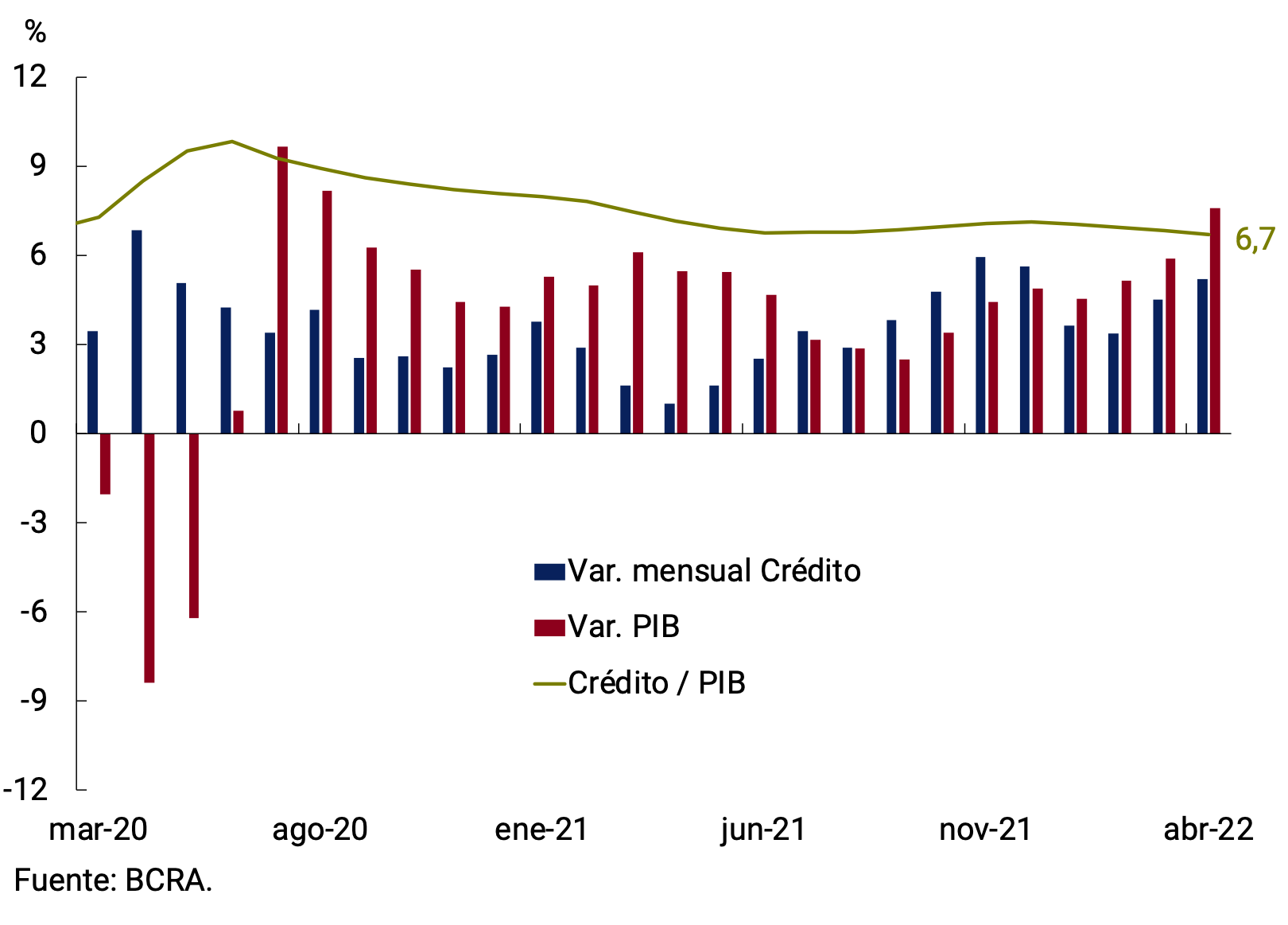
Lines with mainly commercial destinations would have exhibited a fall of 0.4% s.e. at constant prices in April, standing 8.6% above the record of a year ago. This dynamic was homogeneous by type of financing. In fact, financing granted through current account advances registered a monthly contraction of 0.3% s.e. at constant prices (+9.7% y.o.y.), while documents showed a decrease of 0.4% s.e. in real terms (+13.2% y.o.y.). By type of debtor, the monthly decrease in commercial credit, at constant prices and without seasonality, was due to the behavior of both the MSME segment and that of large companies. However, in year-on-year terms, financing to MSMEs grew 25.8% at constant prices, while financing for large companies showed a contraction of 9.3% compared to a year ago.
The Financing Line for Productive Investment (LFIP) remained the main vehicle through which loans to Micro, Small and Medium-sized Enterprises (MSMEs) were channeled. At the end of April, loans under the LFIP had accumulated disbursements of approximately $2 trillion since its inception, an increase of 8.1% from last month (see Figure 5.3). As for the destinations of these funds, about 85% of the total disbursed corresponds to working capital financing and the rest to the line that finances investment projects. With respect to the former, it should be noted that the maximum interest rate was increased by 2.5 p.p. and stood at 45.5%, in line with the increase in monetary policy interest rates. At the time of publication, the number of companies that accessed the LFIP amounted to 251,874.
Figure 5.3 | Financing granted through the Productive Investment Financing Line (LFIP)
Accumulated disbursed amounts; data at the end of the month
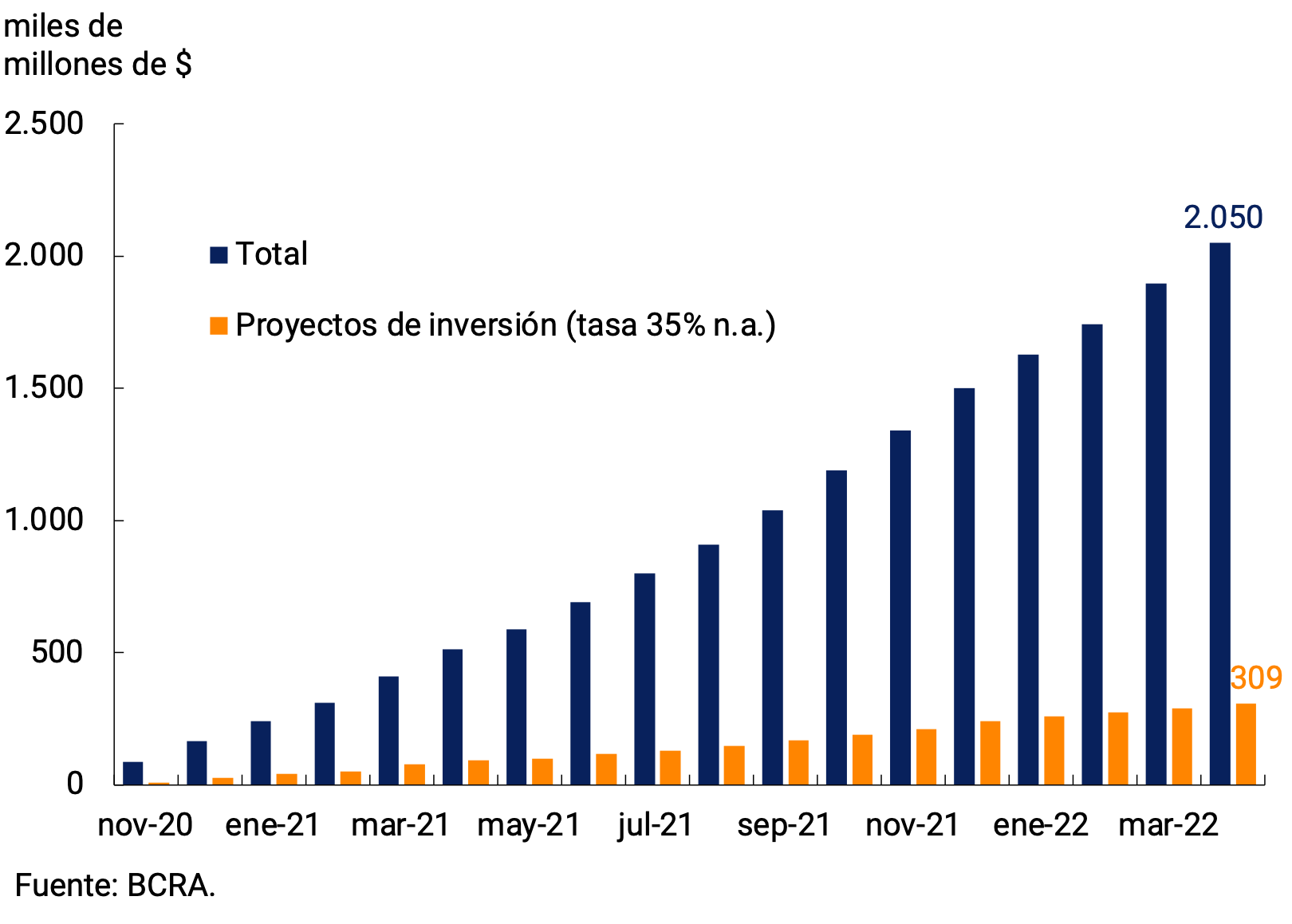
Figure 5.4 | Figure 5.4 | Title Loans
Var. average monthly s.e. at constant prices
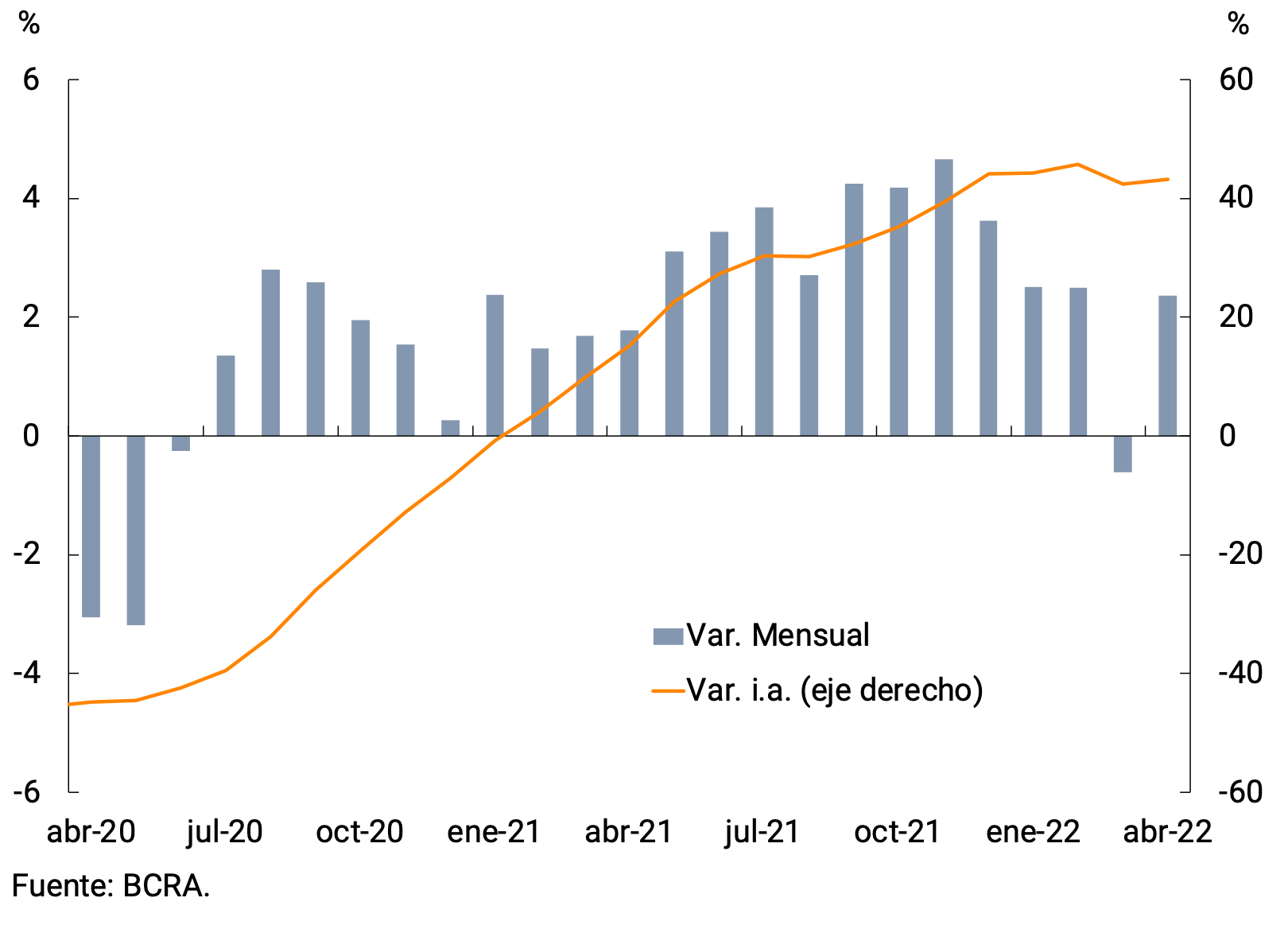
Among loans associated with consumption, credit card financing would have remained at the same level as in March in real terms, standing 11.7% below the level of a year ago. Meanwhile, personal loans would have exhibited a 1.7% monthly drop at constant prices and are 2% below the level of April 2021. The interest rate corresponding to personal loans rose in April to 58.0% n.a. (76.3% y.a.), increasing 2.1 percentage points compared to March.
As for lines with real collateral, pledge loans would have registered an increase in real terms (2.4% s.e.), reversing the fall of the previous month. In year-on-year terms, they accumulated growth of 43.1% at constant prices (see Figure 5.4). On the other hand, the balance of mortgage loans registered a fall of 3.0% s.e. at constant prices in the month, accumulating a contraction of 14.3% in the last twelve months.
6. Liquidity in pesos of financial institutions
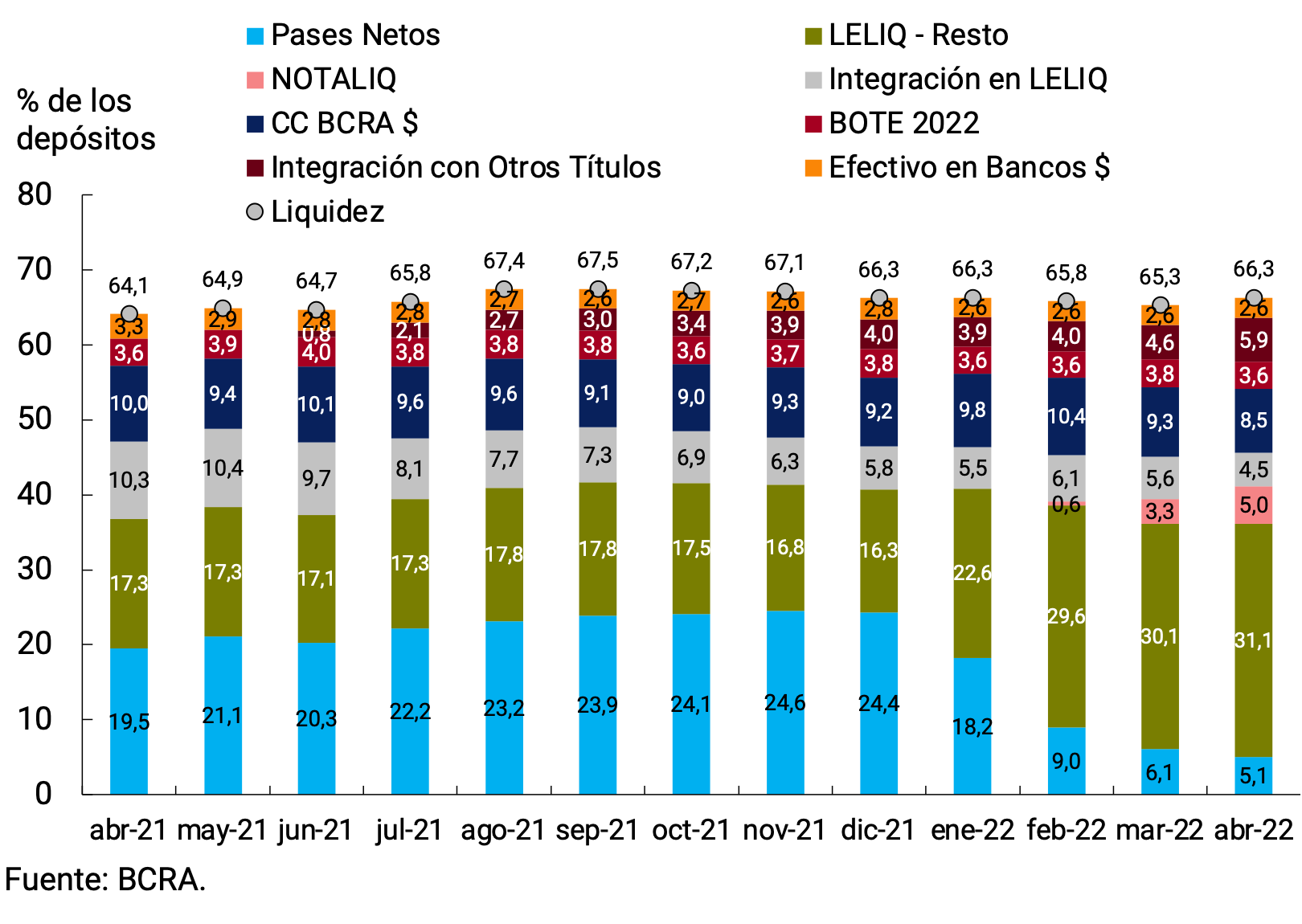
In April, ample bank liquidity in local currency6 averaged 66.3% of deposits, standing 1 p.p. above the March level. Thus, it remains at historically high levels.
In terms of the composition of bank liquidity, NOTALIQs increased their participation by averaging 5.0% of deposits. On the other hand, public securities gained weight in the integration of minimum cash (having as a counterpart a fall in the integration in LELIQ). Meanwhile, the balance of passive passes experienced a drop again. There was also a decrease in the balance of current accounts at the BCRA, partly due to the growing weight of deductions (see Figure 6.1).
Regarding regulatory changes with minimal cash impact, it is worth mentioning that the percentage to determine the reduction in the requirement for financing investment projects within the framework of the “Financing Line for the productive investment of MSMEs” was increased from 30% to 34%.
Figure 6.1 | Liquidity in pesos of financial institutions
7. Foreign currency
In the foreign currency segment, the main assets and liabilities of financial institutions showed limited variations. In fact, the average monthly balance of private sector deposits stood at US$15,334 million in April, which meant an increase of US$93 million compared to March. The increase was explained by demand deposits of individuals of up to US$250,000 and by term placements of legal entities of more than US$1 million. On the other hand, the average monthly balance of loans to the private sector was US$3,780 million, which implied a drop of US$74 million compared to March (see Figure 7.1). This contraction was explained by the lines destined for the pre-financing of exports and, to a lesser extent, by credit card financing.
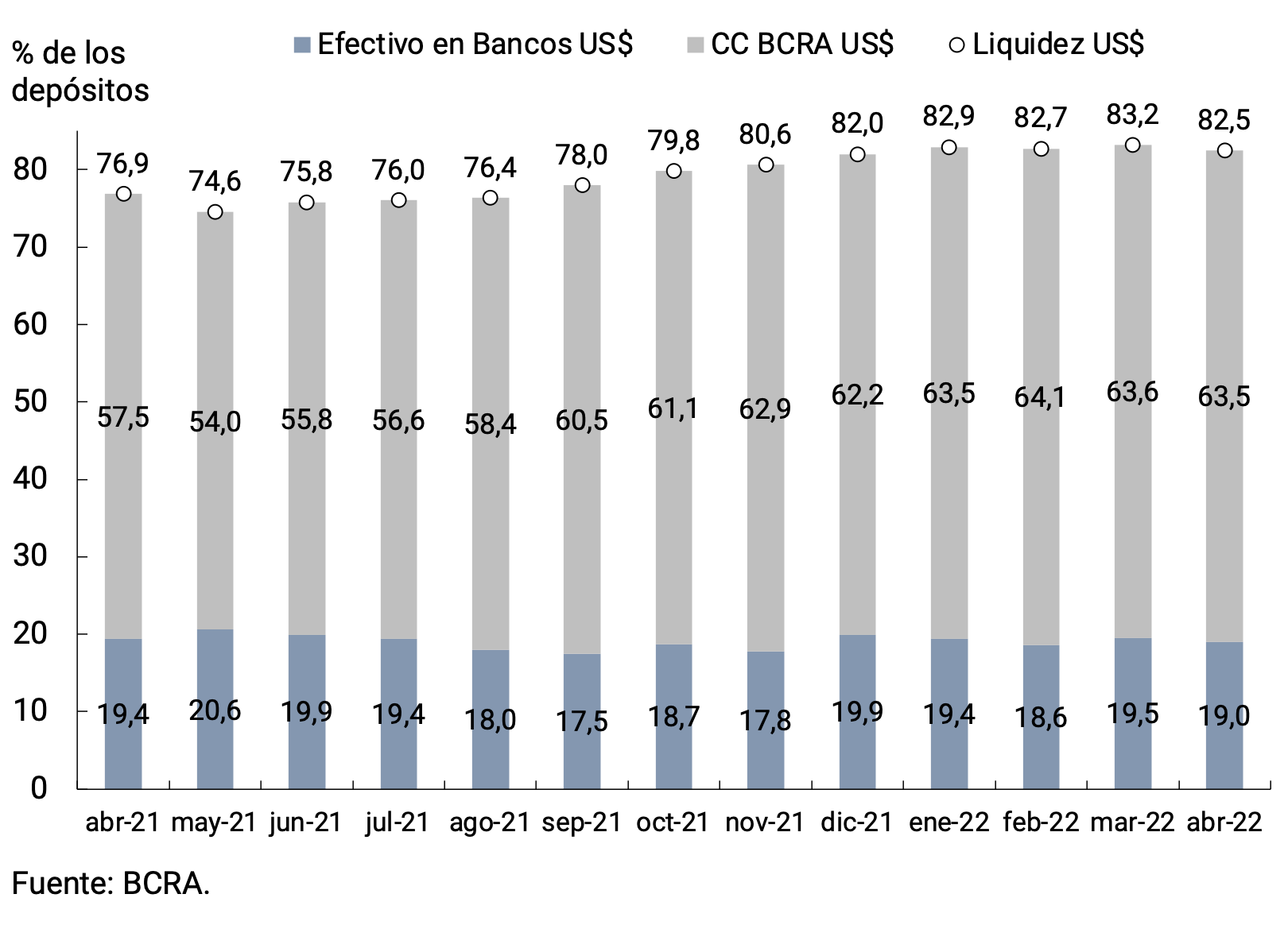
The liquidity of financial institutions in the foreign currency segment stood at 82.5% of deposits in April, registering a slight decrease (0.7 p.p.). Among its components, the fall was mainly explained by the variation in cash in banks, given that the current account balance at the BCRA remained practically unchanged (see Figure 7.2).
Figure 7.1 | Balance of private sector foreign currency deposits and loans
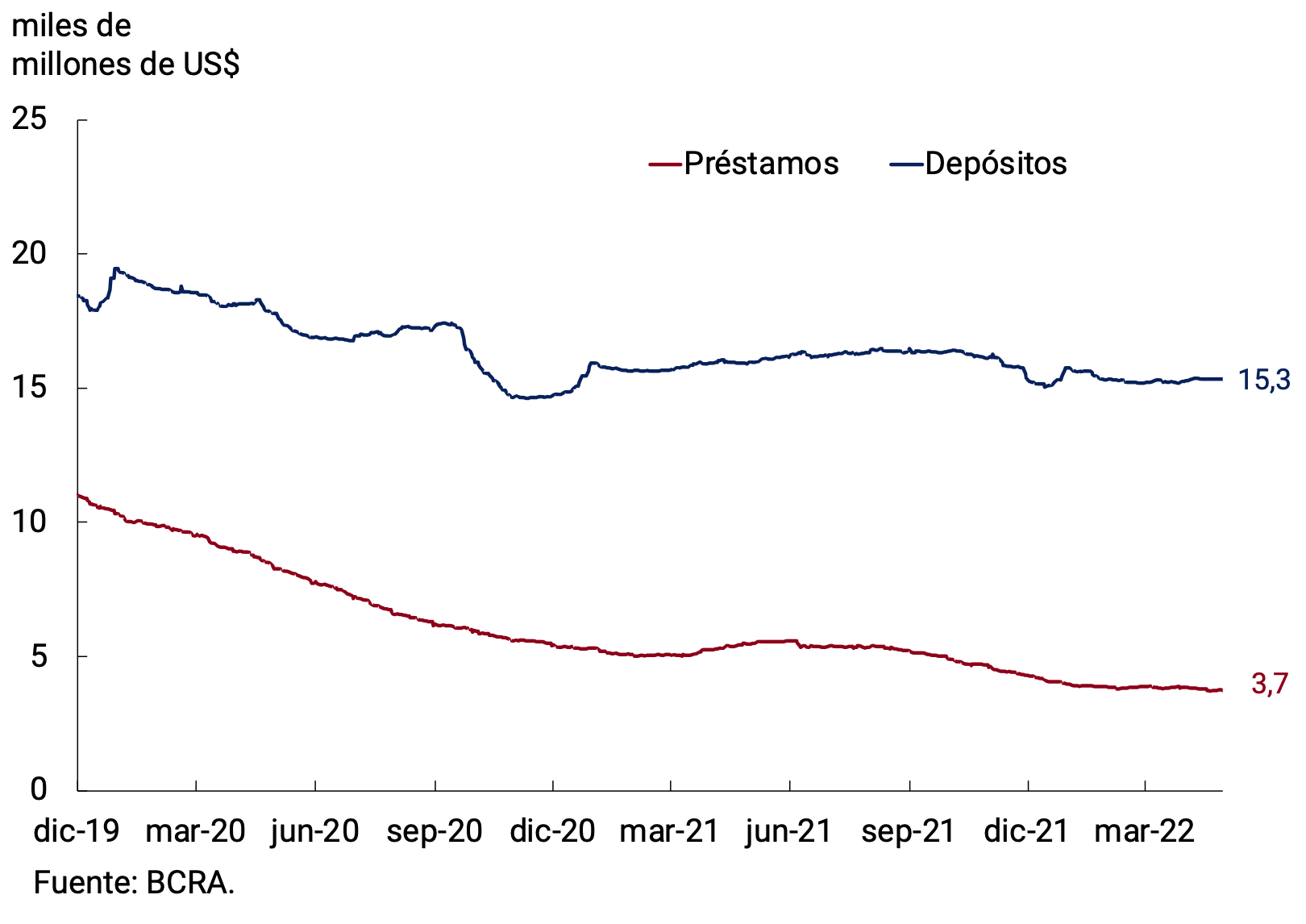
Figure 7.2 | Liquidity in foreign currency of financial institutions
During April, some regulatory changes took place in foreign exchange matters. On the one hand, with the aim of improving access to foreign currency for certain sectors that warned of the lack of essential inputs, it was provided that imports corresponding to certain tariff headings that have an associated declaration in the Integrated Import Monitoring System (SIMI) category C in “EXIT” status, will have access to the foreign exchange market under the same conditions as a SIMI category A for a limit amount calculated based on the usual requirements of the importer, provided that certain conditions are met. In the event that these conditions are not met, the form of access to the foreign exchange market will be the corresponding one for a SIMI category B8.
The BCRA’s International Reserves ended April with a balance of US$42,007 million, reflecting a decrease of US$1,131 million compared to the end of March (see Figure 7.3). The decrease was explained by the losses on valuation of net foreign assets (US$1,087 million) and by the capital payment made to the International Monetary Fund (IMF) for US$687 million at the end of the month. These effects were partially offset by net foreign exchange purchases from the private sector and minimum cash accounts.
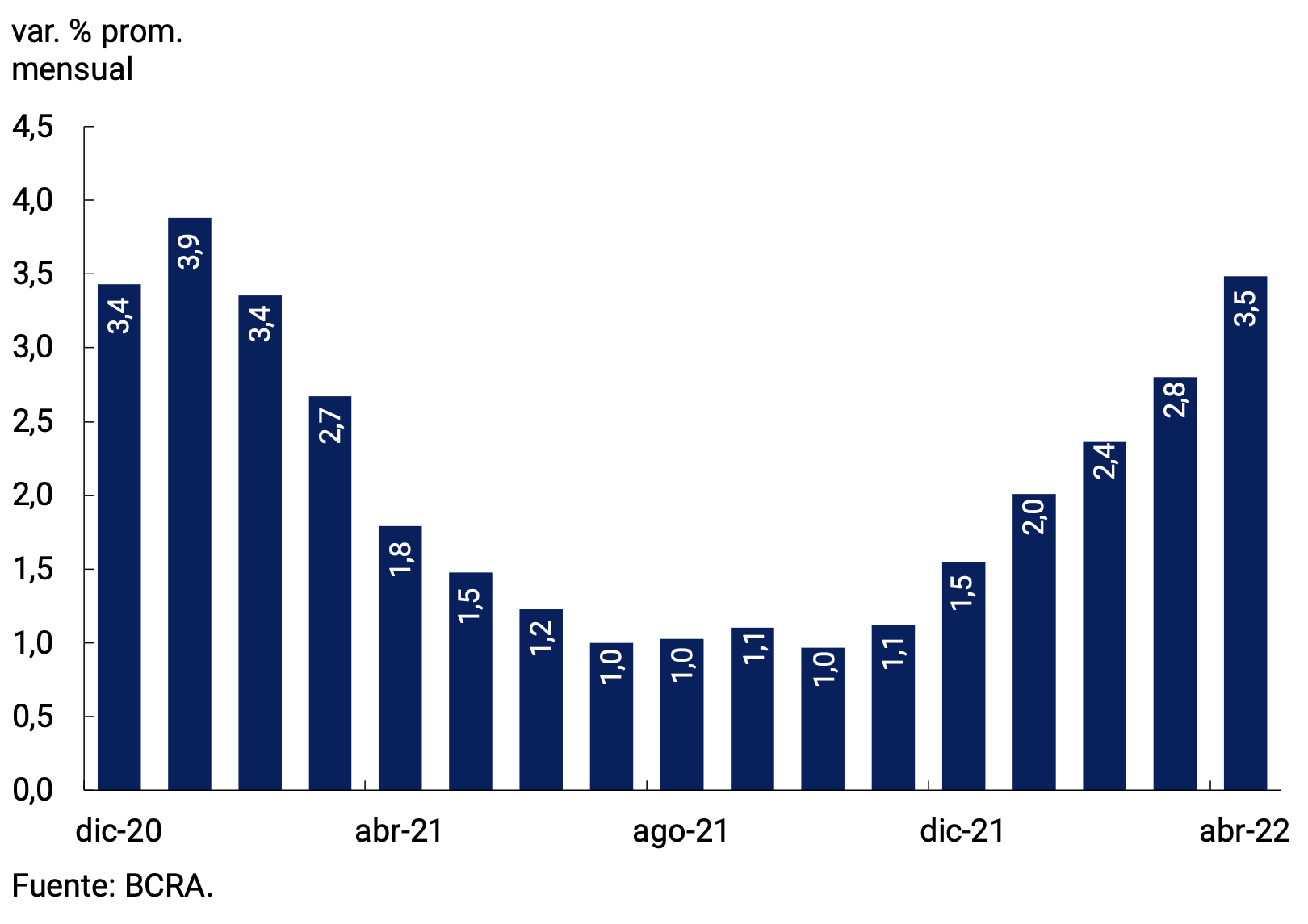
Finally, the bilateral nominal exchange rate (TCN) against the U.S. dollar increased 3.5% in April to settle, on average, at $113.18/US$ (see Figure 7.4). Given that the rate of depreciation of the domestic currency accelerated throughout the month, the peak variation in April was higher (3.9%). In this way, the rate of depreciation of the domestic currency is gradually converging to levels more compatible with the inflation rate, with the aim of preserving the Multilateral Real Exchange Rate Index (ITCRM) around competitive levels. Thus, it seeks to strengthen the position of International Reserves, based on the genuine income of foreign currency from the external sector.
Figure 7.3 | International Reserves
Daily Balance
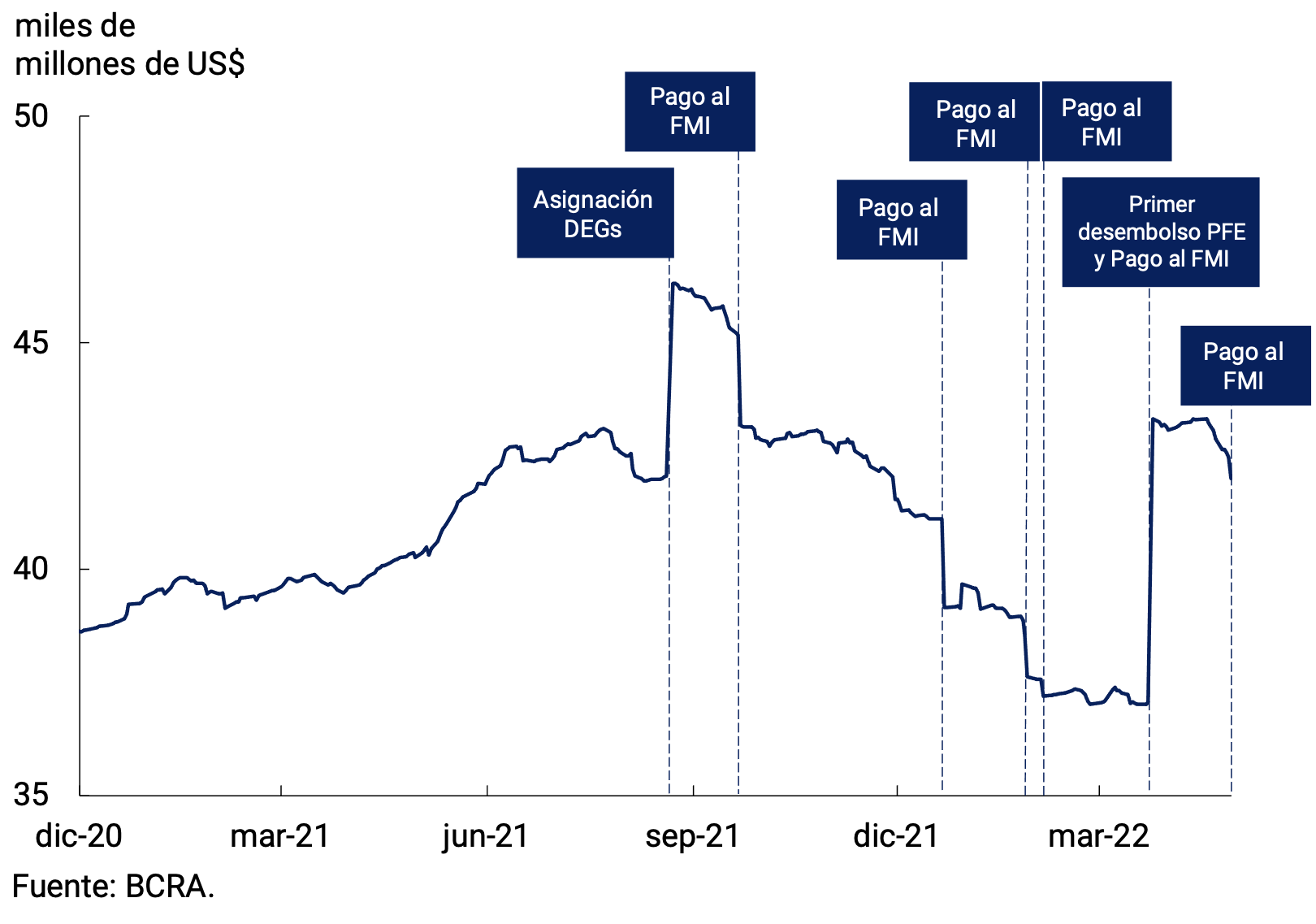
Figure 7.4 | Variation in the bilateral nominal exchange rate with the United States
Glossary
ANSES: National Social Security Administration.
BADLAR: Interest rate on fixed-term deposits for amounts greater than one million pesos and a term of 30 to 35 days.
BCRA: Central Bank of the Argentine Republic.
BM: Monetary Base, includes monetary circulation plus deposits in pesos in current account at the BCRA.
CC BCRA: Current account deposits at the BCRA.
CER: Reference Stabilization Coefficient.
NVC: National Securities Commission.
SDR: Special Drawing Rights.
EFNB: Non-Banking Financial Institutions.
EM: Minimum Cash.
FCI: Common Investment Fund.
A.I.: Year-on-year .
IAMC: Argentine Institute of Capital Markets
CPI: Consumer Price Index.
ITCNM: Multilateral Nominal Exchange Rate Index
ITCRM: Multilateral Real Exchange Rate Index
LEBAC: Central Bank bills.
LELIQ: Liquidity Bills of the BCRA.
LFIP: Financing Line for Productive Investment.
M2 Total: Means of payment, which includes working capital held by the public, cancelling cheques in pesos and demand deposits in pesos from the public and non-financial private sector.
Private M2: Means of payment, includes working capital held by the public, cancelling cheques in pesos and demand deposits in pesos from the non-financial private sector.
Private transactional M2: Means of payment, includes working capital held by the public, cancelling cheques in pesos and non-remunerated demand deposits in pesos from the non-financial private sector.
M3 Total: Broad aggregate in pesos, includes the current currency held by the public, cancelling checks in pesos and the total deposits in pesos of the public and non-financial private sector.
Private M3: Broad aggregate in pesos, includes the working capital held by the public, cancelling checks in pesos and the total deposits in pesos of the non-financial private sector.
MERVAL: Buenos Aires Stock Market.
MM: Money Market.
N.A.: Annual nominal
E.A.: Annual Effective
NOCOM: Cash Clearing Notes.
ON: Negotiable Obligation.
GDP: Gross Domestic Product.
P.B.: basis points.
p.p.: percentage points.
MSMEs: Micro, Small and Medium Enterprises.
ROFEX: Rosario Term Market.
S.E.: No seasonality
SISCEN: Centralized System of Information Requirements of the BCRA.
TCN: Nominal Exchange Rate
IRR: Internal Rate of Return.
TM20: Interest rate on fixed-term deposits for amounts greater than 20 million pesos and a term of 30 to 35 days.
TNA: Annual Nominal Rate.
UVA: Unit of Purchasing Value
References
1 M2 private excluding interest-bearing demand deposits from companies and financial service providers. This component was excluded since it is more similar to a savings instrument than to a means of payment.
2 INDEC will release April’s inflation data on May 12.
4 Financial Services Providers, Companies and Individuals with deposits of more than $10 million.
5 Includes working capital held by the public and deposits in pesos of the non-financial private sector (demand, term and others).
6 Includes current accounts at the BCRA, cash in banks, balances of net passes arranged with the BCRA, holdings of LELIQ, and bonds eligible for reserve requirements.
Share on


