I. STAGE 1: First stage of the stabilization program
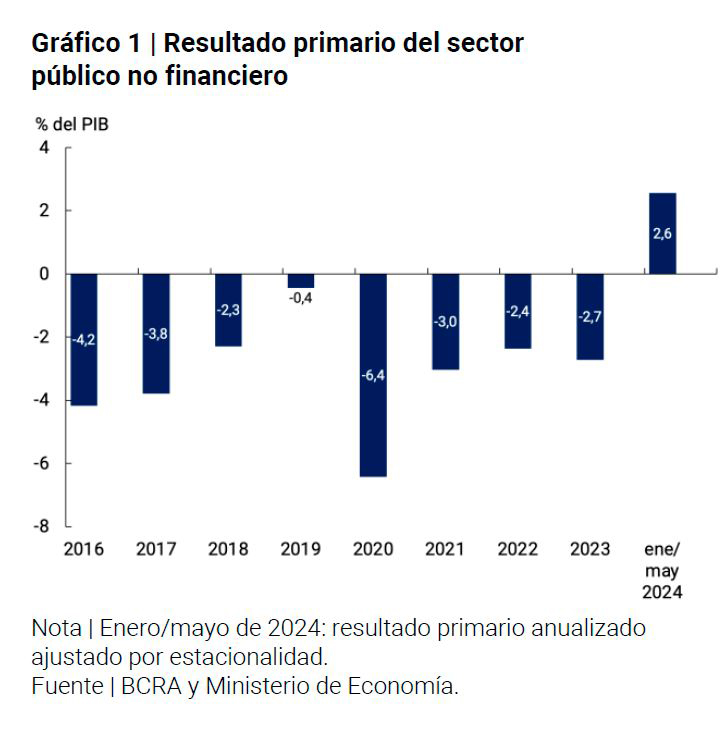
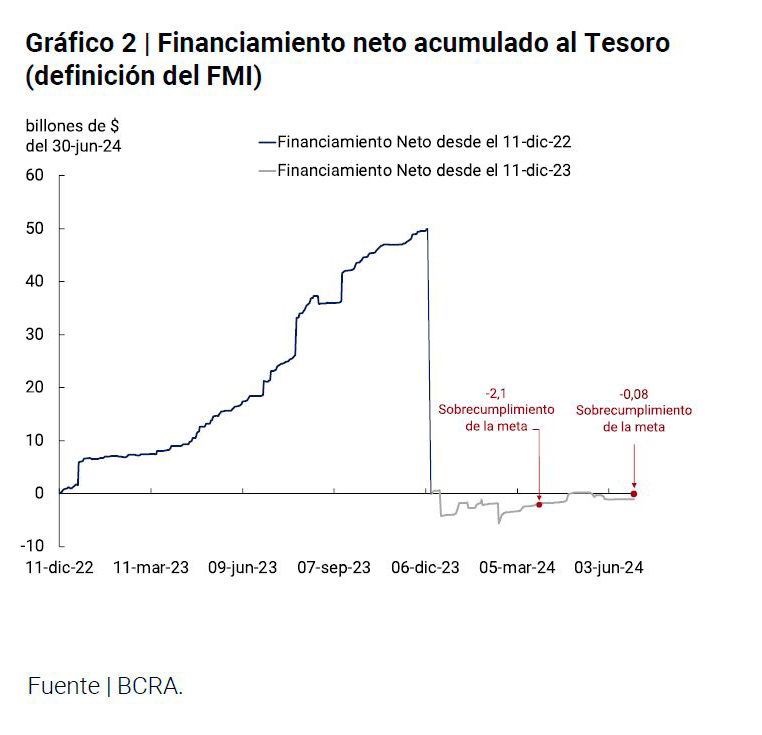
Elimination of the fiscal deficit and monetization: A macroeconomic stabilization program was launched in December 2023 seeking to eliminate fiscal and balance of payments deficits, the main triggers of money issuance and loss of reserves, ultimately curbing the then ongoing inflationary spiral. During 2023 and until December 10, the BCRA total net financing to the Treasury (as defined in the 7th review of the International Monetary Fund (IMF)) reached ARS50 trillion at constant pesos of June 2024. Upon the launch of the stabilization program, the Treasury committed to zero fiscal deficit, and the BCRA undertook to end net financing to the Treasury through both money issuance and operations in dollars.
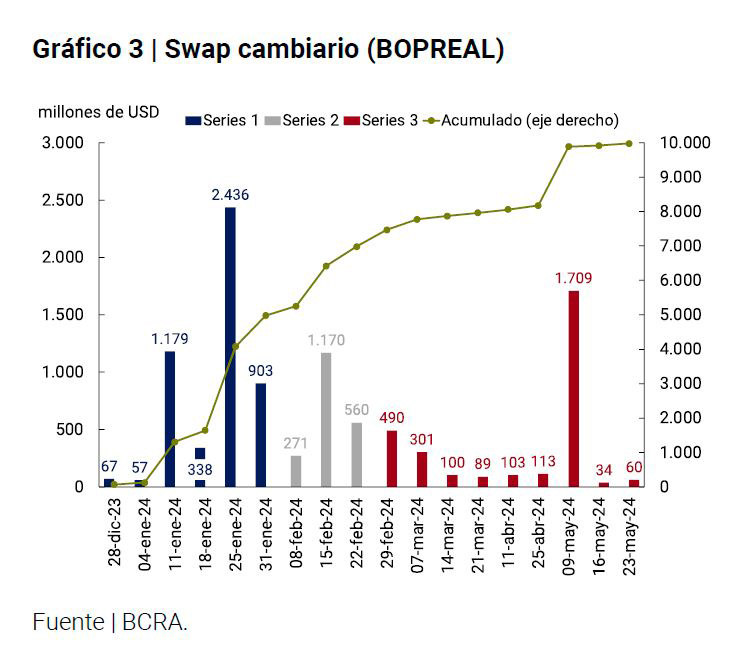
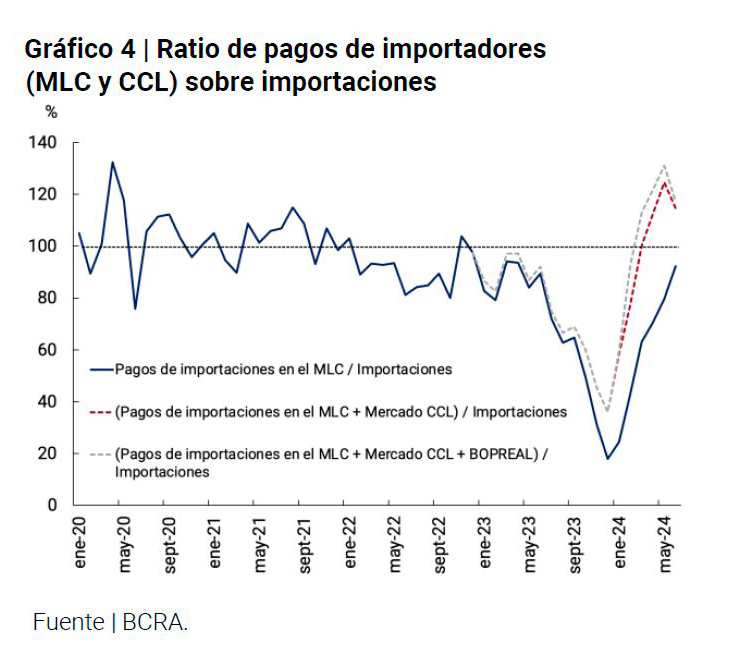
Importers’ expanding access to the free foreign exchange market (MLC): At the onset of the stabilization program, importers’ access to the free foreign exchange market (mercado libre de cambios, MLC) barely covered less than 20% of imports. The BCRA devised a transparent schedule for importers to have incremental access to the MLC and offered the private sector the possibility of subscribing Bonds for the Reconstruction of a Free Argentina (Bonos para la Reconstrucción de una Argentina Libre, BOPREAL) for the repayment of accumulated commercial debt. These efforts were intended to bring the payment chain in foreign trade and private financing to normalcy. 1 During the first half of 2024, importers’ payments through the MLC reached virtually 100% of the average monthly amount of imports. 2 The sum of importers’ payments made through the MLC and the so-called CCL market has exceeded 100% from March, evidencing an early reduction in the debt stock. The BCRA deems it crucial to continue moving forward in the path of easing the productive private sector’s access to the MLC as one of the preliminary steps towards the eventual unification of exchange rates, the lifting of exchange controls and the establishment of a currency competition regime.
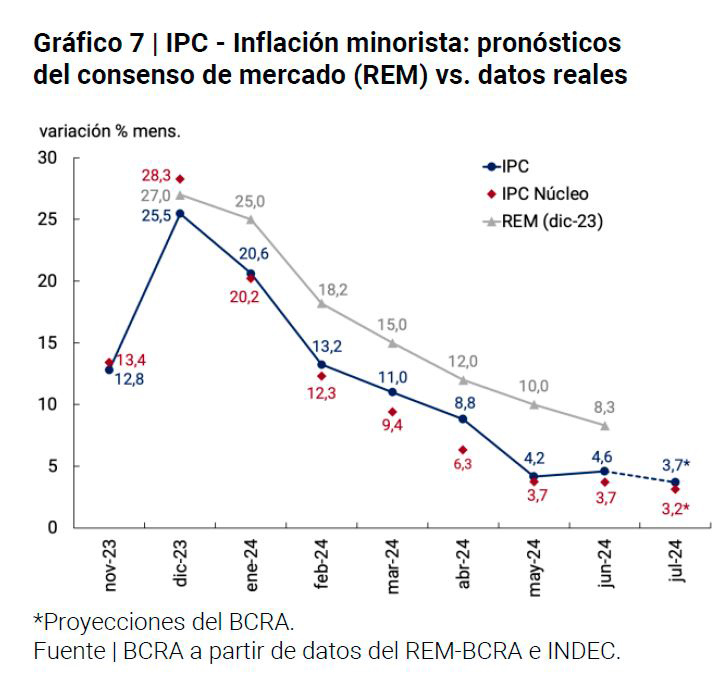
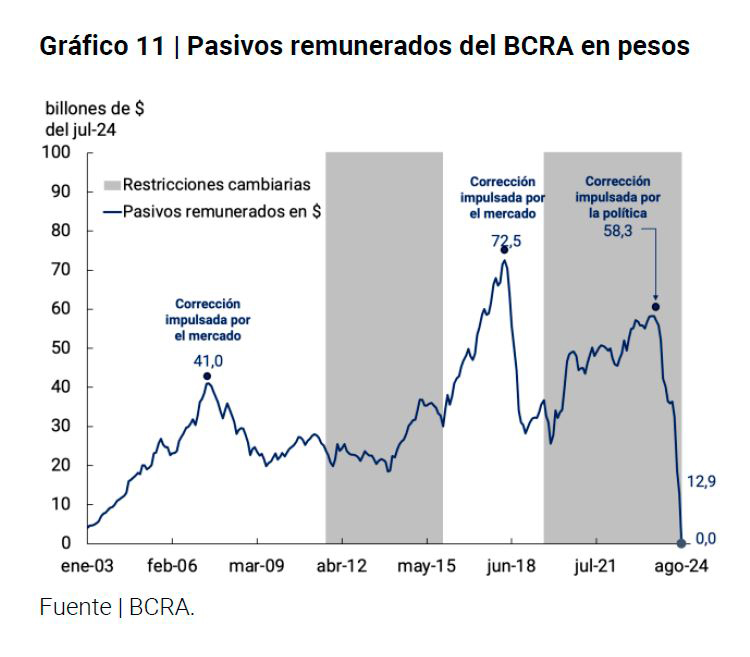
Reduction of the monetary policy interest rate: Alongside the measures mentioned, the BCRA started to eliminate the second source of excess money supply: interest paid on remunerated liabilities. During the second half of 2023, remunerated liabilities (liquidity bills (LELIQs) and reverse repos) had reached ARS58.3 trillion, a figure that was only exceeded by the peak of ARS72.8 trillion (both at constant prices of June 2024) recorded in April 2018. The monetary flexibility over the first half of the year was hand in hand with the consistent macroeconomic program, allowing the BCRA to pull down the monetary policy rate (on reverse repos) from 130% to 40% APR and to reduce the monthly retail inflation rate.
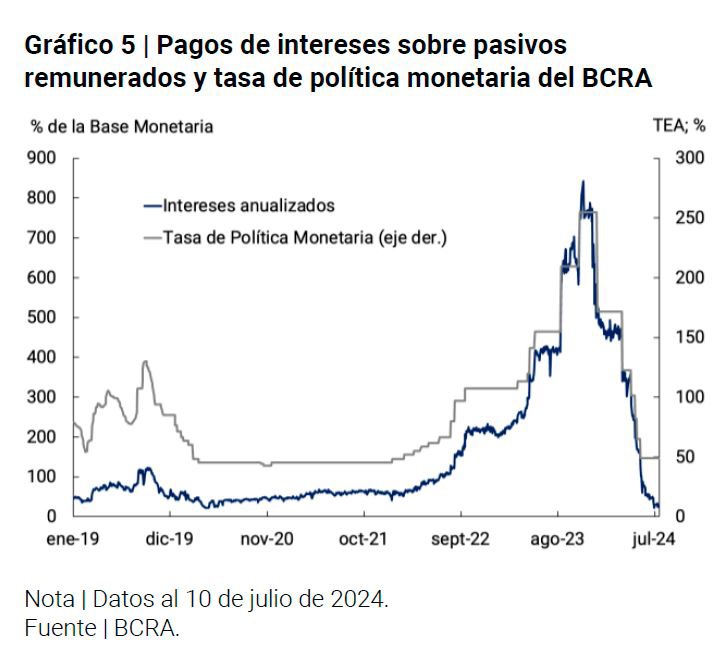
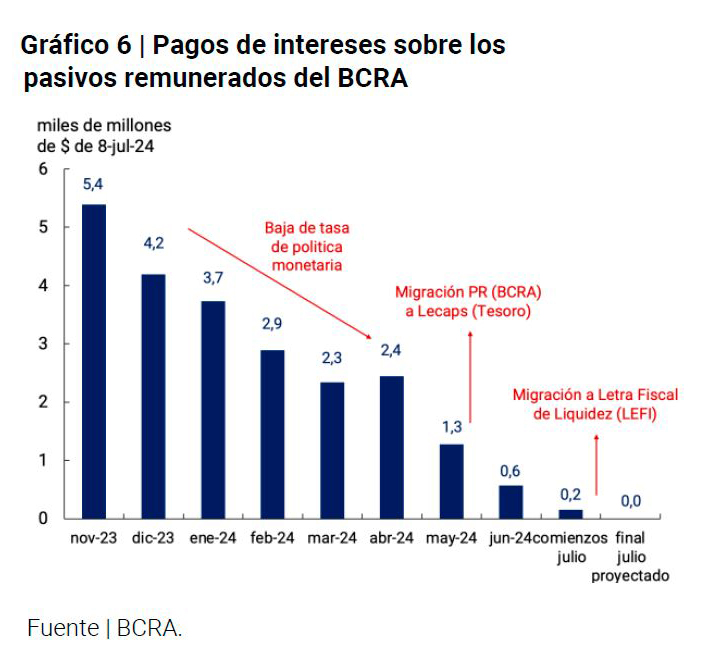
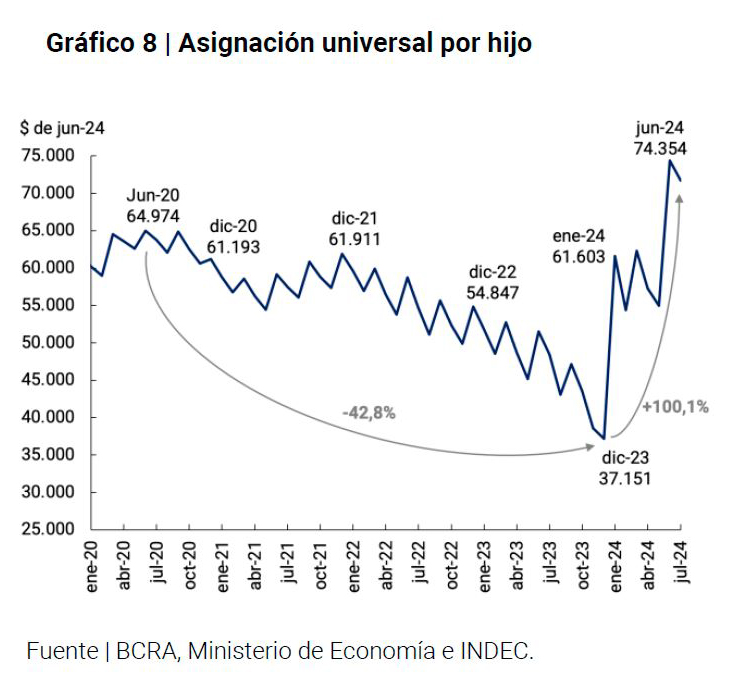
Decline in BCRA’s remunerated liabilities and inflation: Accrued interest on the BCRA’s remunerated liabilities fell from ARS5.4 trillion per month in November 2023 at constant prices of June 2024 (equivalent to 32% of the monetary base) to just ARS0.6 trillion per month in June 2024. In turn, the broad monetary base (BMB) at constant prices of June 2024 went down from ARS56.7 trillion (as of December 10, 2023) to ARS36.1 trillion by the end of June 2024—a fall of 36.4% in real terms. In line with this monetary contraction, core CPI inflation declined during this period from 28.3% per month in December 2023 to 3.7% in June 2024. The consolidation of the downward inflation trend and the realignment of budgetary priorities conducted by the Executive Branch resulted in the actual increase of social security payments, including pensions and social assistance programs (such as the universal child allowance (Asignación Universal por Hijo, AUH)) in real terms.
II. STAGE 2: Second stage of the stabilization program
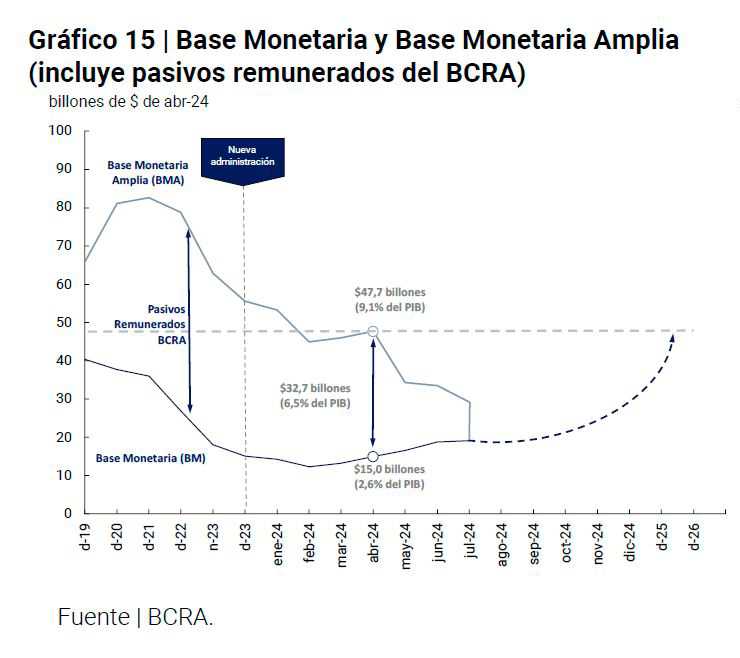
The new monetary policy framework: determination of the money supply in terms of the broad monetary base. The BCRA launched the second stage of the stabilization program addressing foreign exchange controls. The process of eliminating inflation will thus be consolidated alongside the foundations for the regulatory framework for currency competition. 3 At this stage, the existing nominal amount of the BMB will also be adjusted to the amount recorded as of April 30, that is, ARS47.7 trillion (or 9.1% of GDP). Such BMB is similar in real terms to the entire monetary base (MB) existing in the Argentine economy prior to the establishment of exchange controls in August 2019. The ceiling on the expansion of demand for MB means that, from the introduction of currency competition, the peso will become the “scarce currency.” 4
The same objective of monetary policy: eliminating inflation. The first stage of the program thus came to an end. The monetary policy was, then, oriented towards lowering the policy interest rate to negative figures in real terms, reducing endogenous issuance for interest payments. The second stage of the program is based on the assumption that this objective has been met; therefore, the BCRA will have greater leeway to manage liquidity regulation instruments. While maintaining a strong commitment to fiscal balance, flexibility is reinforced as the other sources of new money supply are eliminated or sterilized: (A) the remunerated liabilities of the BCRA; (b) the indirect financing of the Treasury through bids and puts and, as long as exchange controls persist; and (c) the accumulation of international reserves.
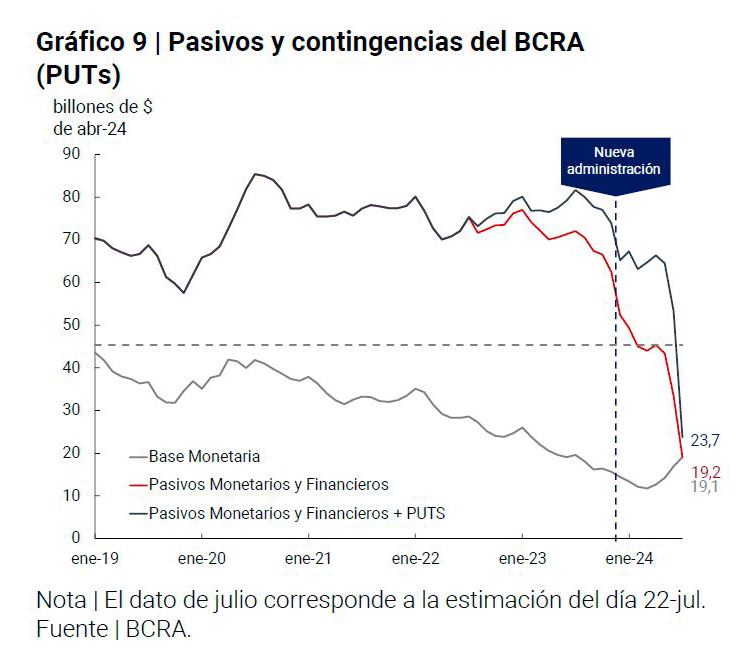
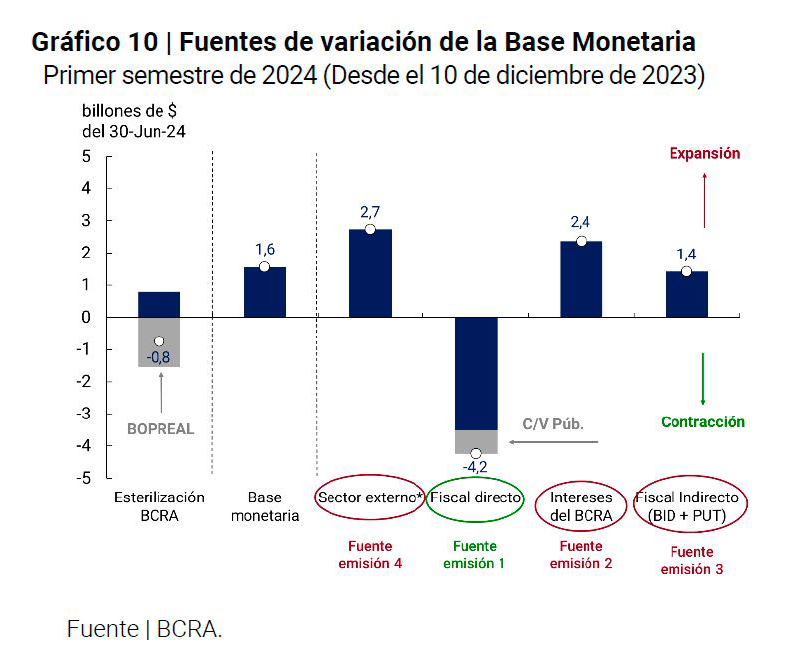
The improvement in the balance sheet and the definition of the monetary instruments of the BCRA: The ceiling on the amount of money in circulation (based on the nominal BMB of April 30) will enable the BCRA to raise to the following major challenges: (1) strengthening its balance sheet by eliminating all forms of “dominance” (whether fiscal, banking or exchange rate) over the exercise of monetary policy; and (2) defining the instruments needed to efficiently achieve its goals, particularly in search of steering private sector inflation expectations downwards.
1. The strengthening of the BCRA’s balance sheet:
-
- The transfer of all remunerated liabilities to the Treasury and the termination of most American puts by participating banks will allow the BCRA’s authorities to ensure greater control over the liquidity management of the banking system. Indeed, this set of measures seeks to end the undesired sources of peso supply that restrained, in recent years, the ability of the BCRA to fulfill its mandate of safeguarding price stability
-
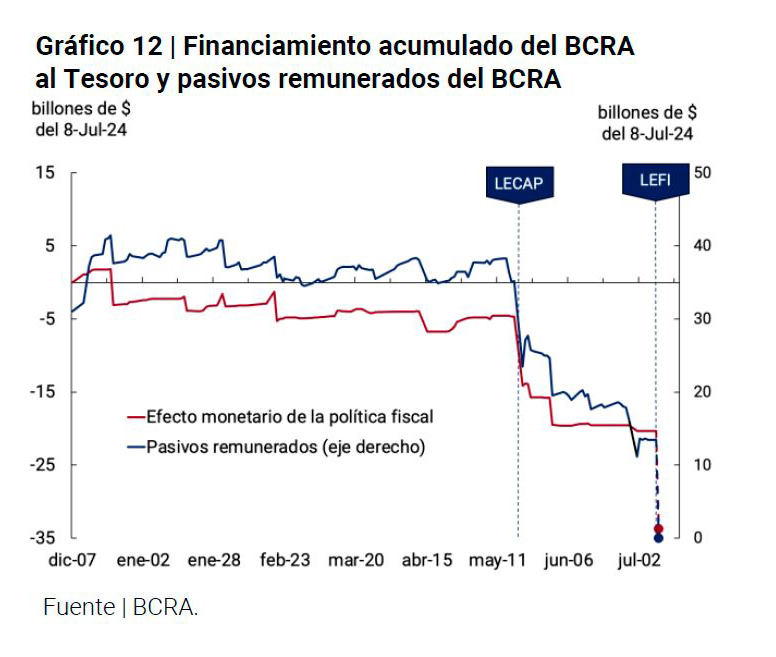
- The onset of the transfer of BCRA’s remunerated liabilities (placement of LECAPs by the Treasury). The BCRA’s reverse repo rate was last reduced on May 14 to exclusively encourage a new monetary process: the transfer of the remaining monetary liabilities from the balance sheet of the BCRA to that of the Treasury. This bank liquidity transfer started to be implemented against the issuance of Treasury capitalization bills (Letras de capitalización del Tesoro, LECAPs). Thus, the BCRA transferred ARS8.6 trillion of reverse repos to the Treasury’s LECAPs on May 20. Thanks to the transfer of remunerated liabilities to LECAPs, the BCRA’s monthly financial cost of sterilizing the fiscal deficits accumulated in previous years fell to ARS1.3 trillion in May and to ARS0.6 trillion in June (prices of June 2024).
- The elimination of all BCRA’s remunerated liabilities (placement of LEFIs by the Treasury): On July 17, the Treasury issued 1-year term fiscal liquidity bills (Letras Fiscales de Liquidez, LEFIs) for ARS20 trillion. This measure seeks to establish a liquidity regulation mechanism (avoiding the cost of sterilization) that complements that of repos on LECAPs (and other Treasury instruments), while absorbing liquidity surpluses. On the first day on which LEFIs became available, banks subscribed, through the BCRA, a total of ARS10.85 trillion. 5 The BCRA closed the reverse repo window on July 22, thus completing the process of reducing its remunerated liabilities from ARS52 trillion in November 2023 (at constant prices of June 2024) to zero in July 2024.
- The elimination of regulations that led to indirect fiscal monetization (bids): On May 15, the BCRA began the process of reducing contingent monetary liabilities by eliminating the automatic bids on Treasury securities. The bids were introduced in 2022 to support the banks’ demand for Treasury securities in primary auctions by committing the BCRA to adopt the role of buyer under certain preset parameters. The BCRA enabled multiple mechanisms of indirect monetization of the fiscal deficit, among other similar regulations (automatic purchase by the BCRA of eligible securities for minimum reserve requirements), and the sale of derivative instruments to banks (put options or, simply, puts). These indirect mechanisms allowed the Treasury to exceed the limits on fiscal monetization (based on its direct sources, temporary advances, and BCRA transfers of dividends) agreed to in the IMF program signed in March 2022. Overall, these monetary contingencies of the BCRA accounted for 3% of GDP in December 2023 (0.93 times the monetary base at that time).
- The termination of options on Treasury securities held by banks (puts): On July 16, the BCRA launched, after holding a collaborative debate with most banks, a comprehensive and voluntary proposal to terminate American and European put options on Treasury securities portfolios held by banks for a maximum amount of ARS17.7 trillion. The premiums paid by the BCRA were determined based on the original purchase price (adjusted by residual maturity and by CER), representing only 0.6% (about ARS90 billion) of the potential monetization that the exercise of puts could entail. Banks thus contributing to reduce macroeconomic risk will have a 12-month grace period (counted from the date of original amortization of the corresponding government securities) for complying with the regulations on Diversification of Credit Risk6.
- The sterilization of pesos issued for purchasing international reserves in the MLC since 30 April: For the sake of reducing inflation, the BCRA will sterilize the pesos issued to cover the purchase of the balance of payments’ stock since April 30, when the amount of money in circulation was restrained in terms of the BMB. This measure is expected to achieve a maximum monetary contraction of about ARS2.4 trillion. The starting point is to choose an operating mechanism: the sale of dollars in parallel foreign exchange markets, including MEP and CCL. The BCRA will manage sterilization both in terms of pace and amount, as well as the market through which it will be carried out, based on quarterly liquidity trends and the impact on price stability that deviations from the monetary program’s projected path may cause.
2. The definition of liquidity regulation instruments within the new monetary framework:
-
- The BCRA will implement a conventional and orthodox approach to domestic liquidity management in stage 2 of the stabilization program consistently with the ceiling set on the amount of pesos in circulation in terms of the BMB on April 30. This approach will be underpinned by the quantitative models of the BCRA’s monetary programming and will benefit from the full recovery of the monetary policy instruments required to achieve price stability and financial stability goals outlined in the Charter of the BCRA. The implementation of this new framework is supported by the bank’s liquidity regulation instruments detailed below.
-
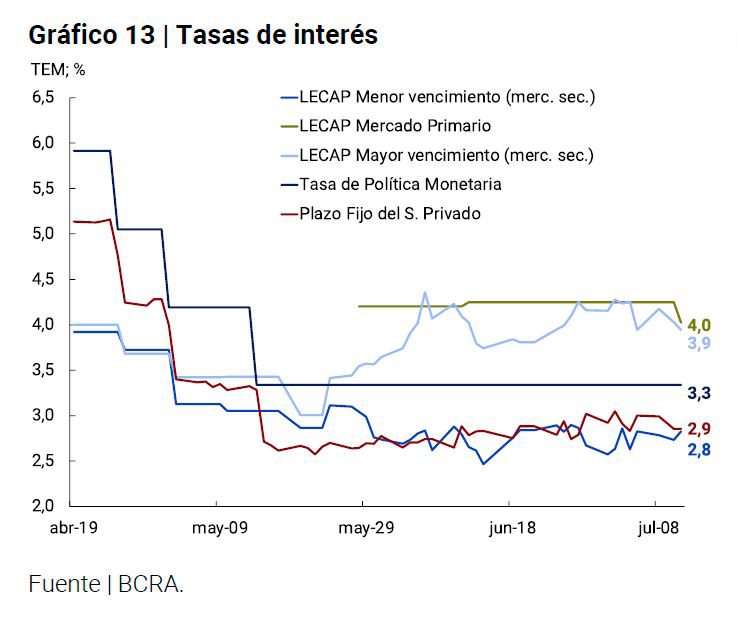
- Liquidity provision to banks through the repo window: LECAPs can be traded on the secondary market and allow banks and mutual funds to activate their stocks in pesos at a fixed rate paid by the Treasury. LECAPs are also used by the BCRA as bank liquidity instruments. Banks may only use their holdings of LECAPs (and other Treasury securities) as collateral to request the BCRA temporary liquidity, in 1 to 7-day terms, when they so decide. Liquidity is provided by the BCRA through the repo window at a 48% APR paid by banks.
- Liquidity Absorption from banks through LEFI purchases and sales: LEFIs can only be purchased by banks; they capitalize the monetary policy rate daily, today standing at 40% APR. They are not traded on the secondary market but are traded exclusively between banks and the BCRA. The net monetary policy rate perceived by banks will be automatically raised from 3% to 3.34% EMR at the start of operations due to the tax treatment, whereby LEFIs are not subject to the gross income tax. The Board of the BCRA will regulate the liquidity of the banking system by setting the interest rate on LEFIs and the rate on repos, according to the BCRA monetary programming.
3. The BCRA monetary programming anticipates continuous growth in real demand for money during the second half of 2024:
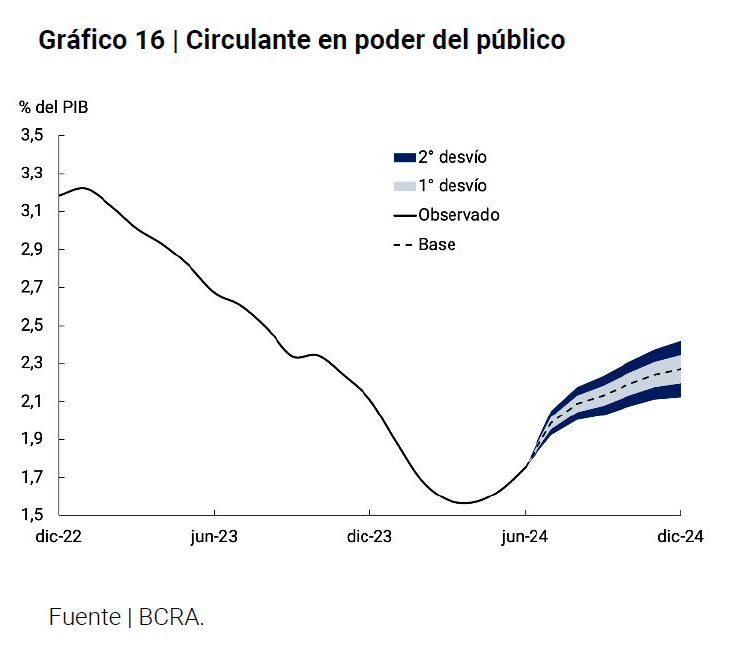
Between April and June, cash held by the public and the monetary base (including minimum reserve requirements) exhibited an increase of ARS2.1 trillion and ARS6.2 trillion, respectively, in real and seasonally-adjusted terms. In this way, the MB would have shown a turning point from its low of 2.5% of GDP recorded in March 2024. The BCRA monetary programming models anticipate the continuity of the economy remonetization process throughout the second half of 2024. The BCRA base case scenario expects monetization to absorb 21% of idle liquidity determined at the date of setting the maximum amount of money supply (BMB to April 30).
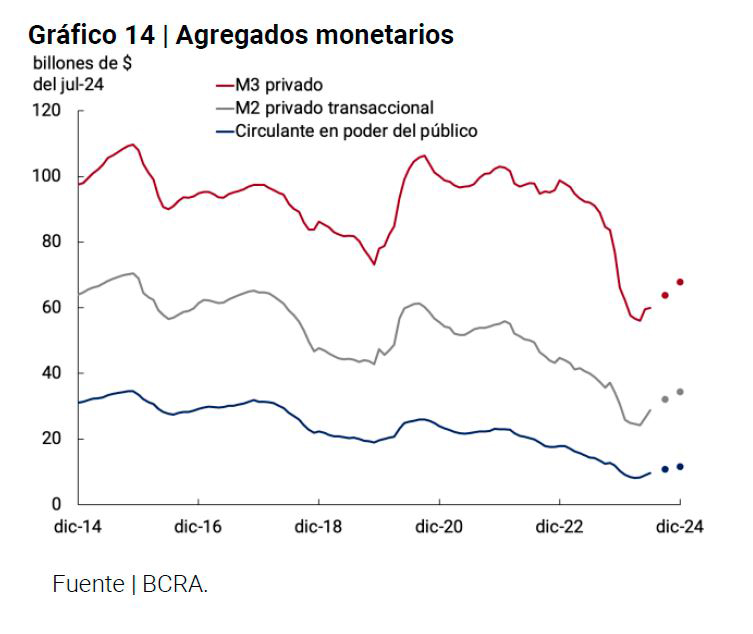
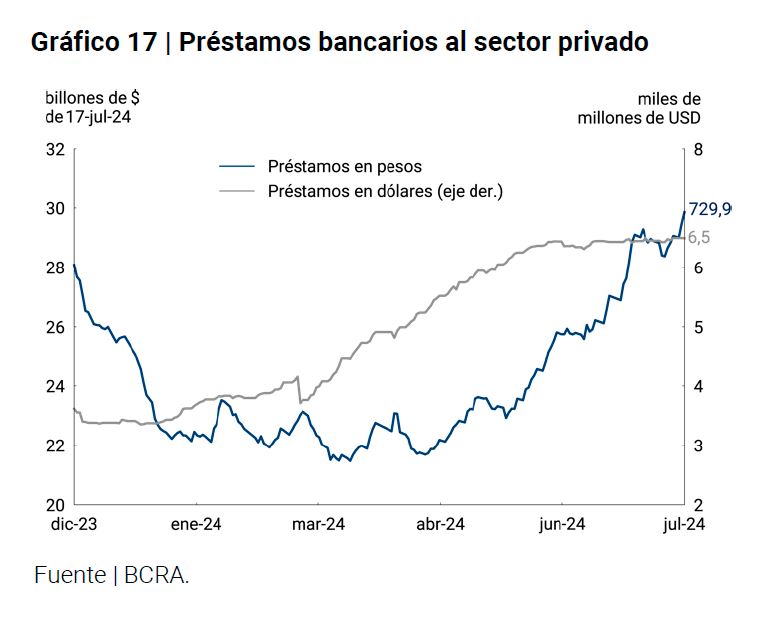
4. An increase in the monetary multiplier would be consistent with the expected real expansion of money demand. The remonetization process is also expected to result in the growth of broader monetary aggregates, after witnessing several years of contraction in real terms. The BCRA has defined the incentives of the new monetary framework with the aim of reversing the crowding out of credit to the private sector caused by accumulated fiscal deficits in the past. These deficits have caused the stock of bank credit to the private sector to collapse, plunging to 4% of GDP. The crowding-in process anticipated by the BCRA would go hand-in-hand with an increase in the monetary multiplier. To date, the growth observed in credit in pesos (in real terms) and in dollars has been 6.8% and 79.8% compared to the end of 2023.
References
1 Against the backdrop of lack of dollars, the supply and placement of BOPREALs prevented the collapse of economic activity and employment that the lack of supplies could have triggered. This measure allows private sector players to access the forex market in the future for pre-existing foreign trade debts as of December 10. In turn, the placement of BOPREALs allowed the BCRA to sterilize the surplus of pesos at the exchange rate in force on the subscription date for an amount equivalent to USD10 billion between January and May 2024.
2 At the same time, the BCRA relaxed access conditions to the MLC for 80% of MSMEs and, more recently, to the payment of interest to related institutions where the financing extends for two years or more.
3 The design and launch of the new monetary policy framework allow for the fulfillment of the structural benchmark of late June as agreed with the IMF under the current program.
4 The peso will still be required as a sole means of payment for taxes and the BCRA will continue to adjust the regulations in order to streamline the inclusion of foreign currency into the domestic banking system. Recently, the BCRA likened the conditions for opening foreign currency bank accounts to those denominated in pesos and lifted the restrictions on the number of transfers allowed to and from foreign currency accounts.
5 LEFIs were incorporated into the BCRA assets by delivering Treasury securities adjusted by the Reference Stabilization Coefficient (Coeficiente de Estabilización de Referencia, CER) to the BCRA portfolio, without increasing the gross debt of the Treasury. Conversely, as banks unwind their LEFIs positions to lend these funds to the private sector, the gross debt of the Treasury may decrease. LEFIs are subject to a floating interest rate in agreement with the monetary policy rate. In the short term, the transfer of remunerated liabilities from the BCRA to the Treasury does not entail an increase in the financial cost in real terms for the Treasury since the monetary policy rate is 3.3% EMR, slightly lower than June’s monthly inflation rate of 4.6%. The financial cost of LEFIs may impact the Treasury accounts in the future, given the possibility that the monetary policy rate might become positive in real terms.
6 The remaining American puts (which account for 22% of all original puts) may be held by the BCRA in the future to reduce that risk completely. Conversely, institutions may exercise them but, in this case, they will not benefit from the deferral in the compliance with the regulations on Diversification of Credit Risk.


