History and architectural heritage
History
The Argentine monetary and banking system before the foundation of the BCRA
Until 1881, the Argentine financial system was marked by the coexistence of several currencies issued by different banks in Argentina or abroad. A national gold-pegged currency was created in 1881. However, convertibility did not last long since what is known as “stop-gap currencies” (other than the national currency) continued to circulate. It was only in the early 20th century—in the aftermath of several crises mostly associated with external indebtedness—that Argentina could come back to the gold standard and build a tight link between the balance of payments and the amount of circulating money (suspended between 1914 and 1927, and eventually abandoned in December 1929).
This, coupled with the lack of a centralized authority to control currency, caused great instability in the system. The outburst of the 1890-1891 bank crisis led to the creation of institutions such as the Caja de Conversión and Banco de la Nación, which concentrated the management of instruments among other duties until 1930, subsequently assigned to the BCRA.
In spite of these efforts, the serious monetary and financial instability could not be overcome for lack of coordination and fluctuations in the balance of payments resulting from both unstable capital movements and the country’s commodity-based economy—highly vulnerable to shifts in the world market.
In this scenario, several bills were introduced to Congress from 1900 with a view to creating a body in charge of the arrangement and control of the country’s monetary and banking system. One of the bills that stood out was the one put forward by President Hipólito Yrigoyen in 1917, which included an active monetary policy that was ahead of his time.
None of these bills saw the light on account of the mostly conservative composition of Congress.
A decade later, the worldwide financial crisis of 1929 erupted and Argentina’s financial system utterly collapsed. With a fully open economy, Argentina was seriously affected by its trade partners’ protectionist measures and by a dramatic decrease in capital flows. This was critical to underpin a balance of payments heavily burdened by foreign companies’ large remittances abroad and government debt service. As a result of the crisis, the authorities were forced to resort to exchange controls among other measures of state intervention, which in practice meant leaving free trade aside. This context, which exerted a dramatic impact on the banking system, paved the way for the creation of a central bank that would keep control over the monetary and foreign exchange policies.
The BCRA over the years
The BCRA was created as a mixed private-public institution as a consequence of the monetary and banking reform of 1935. Among its duties, the BCRA was in charge of issuing notes and coins in its exclusive character of issuer, regulating the amount of lending and money, accumulating international reserves, controlling the banking system and being the financial agent of the government. The monetary authority was thus vested with powers to act as “lender of last resort” and to adopt countercyclical policies to mitigate economic fluctuations.
During the period 1935-1943, when Raúl Prebisch held office as general manager within the framework of an exchange control scheme, the BCRA pursued countercyclical policies (in the words of Prebisch, the “national monetary policy”), serviced Argentina’s external debt, and even redeemed part of it with available reserves within the framework of sharp increases in export prices.
However, the implementation of monetary policies continued to be subject to the preferences and interests of foreign—mostly British—investors, who sought to transfer their profits abroad in the absence of national currency’s devaluation.
The BCRA became a fully state-run institution in 1946 with the main goal of fostering economic development. It thus sought to reduce the number of loans being channeled to speculative activities and to redirect resources to finance productive activities.
In 1949, the BCRA began to operate under the umbrella of the Ministry of Finance, strengthening the policy of channeling lending to production in activities that were relevant to the country’s development.
Since then until 1976, a period marked by political and economic profound changes and several coups d’état, the BCRA played a significant role in regulating interest rates and granting selected loans for import substitution and export promotion with a view to diversifying the production matrix and leaving behind a model based on exports of agricultural products.
Against the backdrop of these changes, a reform was introduced in 1957 seeking to liberalize the financial system and swerve from deposits nationalization and credit allocation by the BCRA. Even though the BCRA was vested with greater autonomy, its competence was still dependent on the “fundamental directives of the national government on economic policy”. Also, a cap was placed on the amount the BCRA could lend to the government. However, the role of the monetary authority was not entirely removed as to granting loans toward productive activities—through interest rate control and rediscounts, which enabled to substantially reduce the financial cost of investment projects.
The Argentine economy experienced a dramatic change of course upon the breakdown of its constitutional order by a civil-military coup in 1976. The de facto authorities believed the import substitution process was over and started to pursue trade and financial liberalization, particularly, in respect of interest rates and capital inflows and outflows.
Although the Charter of the BCRA was not amended, it began to perform new duties emerging from the liberalization of interest rates and the massive entry of new institutions into the banking system under the new Law on Financial Institutions (1977). This change of course meant an early and somewhat careless introduction of Argentina into the financial globalization process, which ended up with serious crises unfolding in the banking system in 1980, the balance of payments in 1981 and external debt since 1982.
Democracy was reinstated in 1983, and there was a short period of active monetary policy with some restrictions on speculative capital movements until 1987. Subsequently, the convertibility plan made the liberalization scheme, which had been introduced in 1976, even more profound in 1992.
Under the convertibility scheme, money supply was determined by Argentina’s net flow of foreign exchange, and the BCRA was charged with the duty of “preserving the value of currency”, thus having a role similar to that played by the Caja de Conversión in 1899, but with powers to supervise the banking system in a somehow decentralized manner, through the Superintendence of Financial and Exchange Institutions (SEFyC). The Charter of the BCRA was amended in 1992 so that its mission and duties would be in line with the economic policy and, particularly, the peso-US dollar convertibility.
This period was marked by a sharp decrease in the inflation rate compared to previous decades. At the beginning, this scheme made a swift recovery possible, but it was too rigid to cushion external shocks. Consequently, the 1998 Russian crisis triggered a widespread capital outflow from emerging markets, and Argentina went into a major recession in a context of a fixed exchange rate under a convertibility scheme. This eventually resulted in the enactment of the Law on Economic Emergency in 2002, which removed such scheme, adopting a more flexible system in which the BCRA regained powers to implement active monetary and foreign exchange policies.
That period witnessed a substantial improvement in the BCRA’s prudential regulation, which ultimately resulted in increased solvency in financial institutions operating in Argentina.
A decade later (more specifically, in March 2012), the Charter of the BCRA was amended and multiple mandates were reinstated: the BCRA was once again called to contribute towards economic development and social equality, while continuing to pursue its key objectives of preserving monetary and financial stability.
The 2012 Charter also reestablished a closer relationship in the decision-making process between the SEFyC, on the one hand, and the BCRA’s Board and Governor, on the other, on the grounds that supervision of institutions should be within the scope of central banks, as evidenced by worldwide experience during the financial crisis that erupted in 2007.
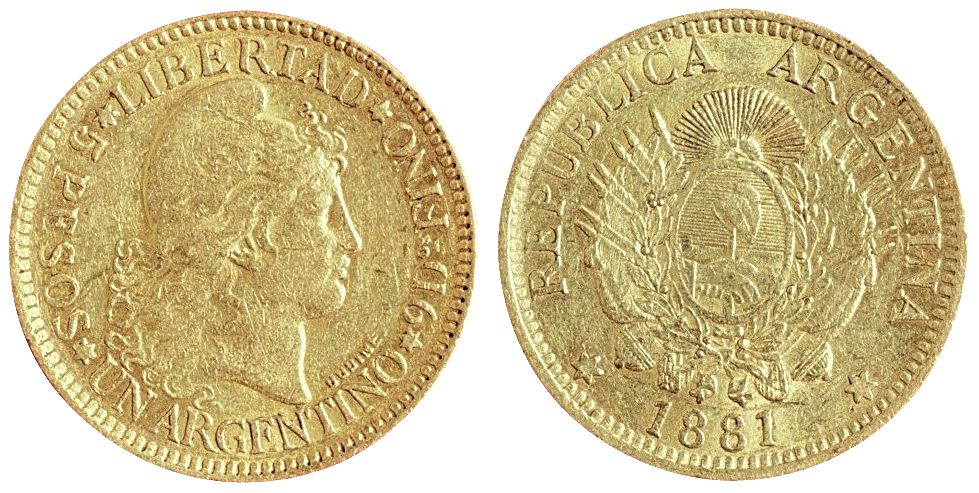
Law 1,130 (November 4, 1899) created the Peso Moneda Nacional as the monetary unit for the Argentine Republic
in force until 1969.
Law 12,155 established the foundation of the BCRA, which began to function under the governoship of Ernesto Bosch. A supplementary law created a mixed board of directors composed of 12 members
representing the National State and private banks in equal numbers.
Architectural heritage
The headquarters of the BCRA has a rich architectural heritage, being one of the icons of the city of Buenos Aires. It is composed of several buildings on the block bounded by San Martín, Reconquista, Teniente General Perón and Sarmiento streets. The building located at San Martín 216—in the adjacent block—is also part of this group.
Several buildings have been incorporated over almost four decades, exhibiting different architectural and construction styles.
The BCRA was founded in 1935 and located at San Martín 275. The building had been built in 1872 and was the former headquarters of Banco Hipotecario de la Provincia de Buenos Aires. Two years later, part of the building’s rear façade was renovated and an annex was built in the center of the block, which was called Central.
In 1940, the development continued with the construction of the Reconquista 266 building, connecting both sides of the block. At that time, this building was identified as the “new” building of the BCRA.
Afterwards, other properties were added. By 1985, the BCRA had 17 buildings occupying a total covered area of 60,000 square meters. Today, several of these buildings are no longer part of the BCRA. It is worth mentioning that, during the presidency of Roque Maccarone in 2001, the inauguration of the Reconquista 250 building took place, which houses the SEFyC.
San Martín 216 building
The building was designed and built by architects Henry Hunt and Hans Schröeder to be the headquarters of the Buenos Aires Stock Exchange in 1862.
Henry Hunt and Hans Schröeder were pioneers in Argentine bank architecture. They designed works such as Banco de Londres (1867) and Banco de la Provincia de Buenos Aires (1874)—currently demolished—and Banco Hipotecario de la Provincia de Buenos Aires (1876), which today is one of the headquarters of the BCRA, located at San Martín 275.
The San Martín 216 building embodies the Italianate style. It is a two-story building with a large double-height hall, accessed through a lobby fringed by colored-glass doors. In the central hall, stock market transactions were carried out.
At present, the façade is the most important aspect of the building, set back from the municipal line with imposing fence of symmetrical composition and sober lines.
From 1935 onwards, the building was used by several banking institutions and, in 1942, it was transferred to the BCRA.
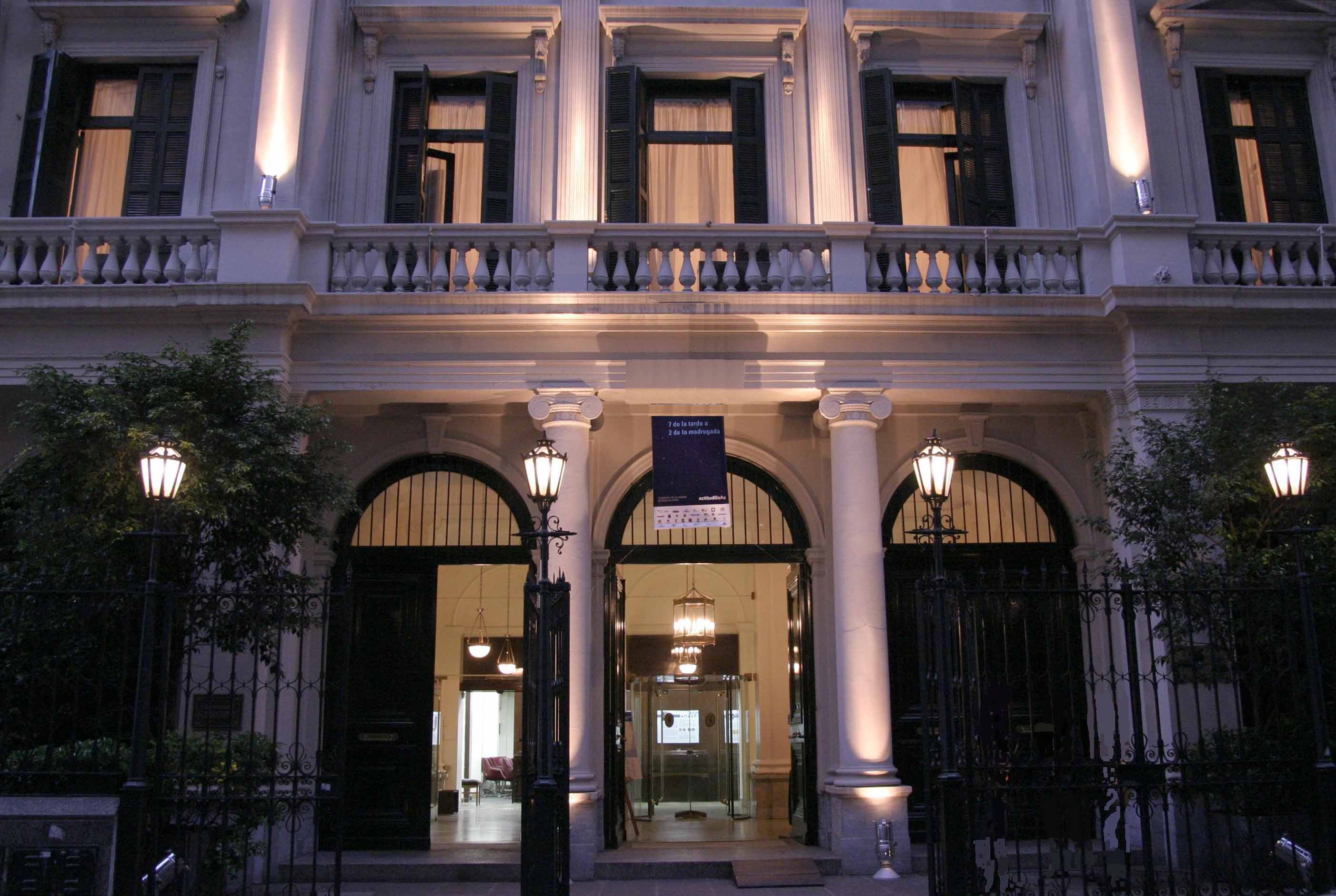
San Martín 216
San Martín 275 building
The building was designed by architect Henry Hunt and initially housed the headquarters of Banco Hipotecario de la Provincia de Buenos Aires. It is the oldest bank building in the city of Buenos Aires.
It was built between 1872 and 1876. The façade, which exhibits significant institutional character, is an icon of the Italianate trend of the second period. The building of monumental scale, with columns and pilasters on both stories. It has plenty decoration and luxurious materials.
Throughout its history, the building housed different national institutions including the Argentine Supreme Court of Justice and the Caja de Conversión.

San Martín 275
San Martín 235 building
The San Martín 235 building was designed by Gino Aloisi. The building was erected in 1920 and was originally designed for the insurance company “La Inmobiliaria.” It was built in Italian Renaissance style with sober lines, and looks monumental and eclectic in nature.
The building was acquired by the BCRA in 1946. It features abundant cornices, balusters, coats of arms and façades. The first floor was renovated due to operational needs in 1960. The façade was modified and the original portico was eliminated.

San Martín 235 building interior design
Central and Reconquista 266 buildings
In 1935, when the BCRA was founded, the so-called Central building was erected, with access through the lobby of the San Martín 275 building.
The building was designed by architects Lanús, Woodgate and Lanús. It has a rationalist style, with open stories and a compact circulation core.
At the same time, the rear land of the building was acquired. The building was finished in 1940. With the inauguration of the Reconquista 266 building, the new headquarters of the BCRA was completed, which included the building of Banco Hipotecario de la Provincia de Buenos Aires and the central tower to connect all other buildings.
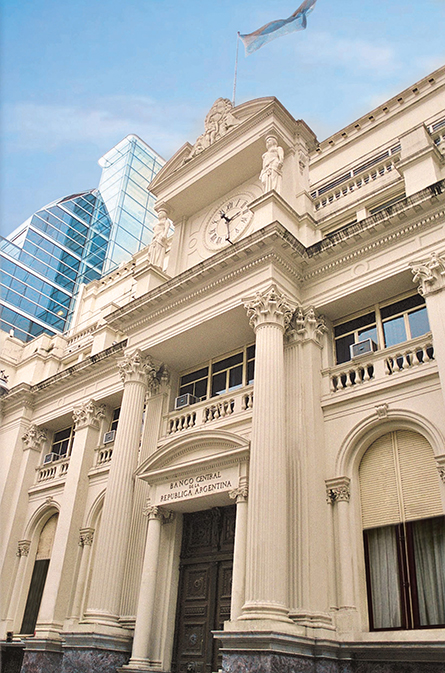
Central and Reconquista 266 buildings
Reconquista 250
In 1944, the BCRA acquired this property from the Anchorena family and for many years it was used as a parking lot. In 1993, the Board of Directors decided to carry out studies to construct a new building and connect it to the existing ones. Five years later, a national competitive selection process for preliminary projects was held. The winner was the Romero-Di Tata Studio. During excavation works, an original 19th century cistern was discovered in an excellent state of preservation. This valuable finding gave rise to the Rescue Archeology Project of the Universidad de Buenos Aires directed by Daniel Schavelzón, to safeguard real testimonies of the daily life of one of the old neighborhoods of the city.
The building was opened in September 2001 during the governorship of Roque Maccarone. Today, it houses the “Dr. Raúl Prebisch” library, the numismatic issues stand, and the SEFyC, among other offices.

Reconquista 250 Building exterior design