Financial Stability
Financial Stability Report
First Half 2018
Half-yearly report presenting recent developments and prospects for financial stability.
Table of Contents
Chapters
- Executive summary
- 1. Context
- 2. Situation of the financial system
- 3. Stability analysis
- 4. Payment system
Sections
-
- 1. Companies with public offering and mismatch of coins
- 2. Law on Productive Financing, Development of Capital Markets and Financial Stability
- 3. Negotiable Obligations (ON) as a source of funds for banks
- 4. Access to Financial Services
- 5. Competition in the Argentine Financial System
- 6. An Analysis of Harvests of Mortgage Loans Destined for Families
Boxes
-
- 1. Mitigate the currency mismatch of bank debtors, one of the axes of the BCRA’s macroprudential policy
- 2. Public-private partnership contracts: new mechanism for developing infrastructure projects
- 3. Recent changes to deposit insurance
- 4. Developments in the local fintech ecosystem
- 5. On the BCRA’s stress tests. Latest overall results and progress for 2018
- 6. UVA Credits: Possibility of Term Extension
- 7. Agricultural loans and climate risk coverage
- 8. The boost of fintechs to the local prepaid card market
- 9. Improvements in the Composition of Cash in the Economy
- 10. Obligation to accept electronic means of payment. Advantages of using PEI
- Glossary of abbreviations and acronyms
Executive summary
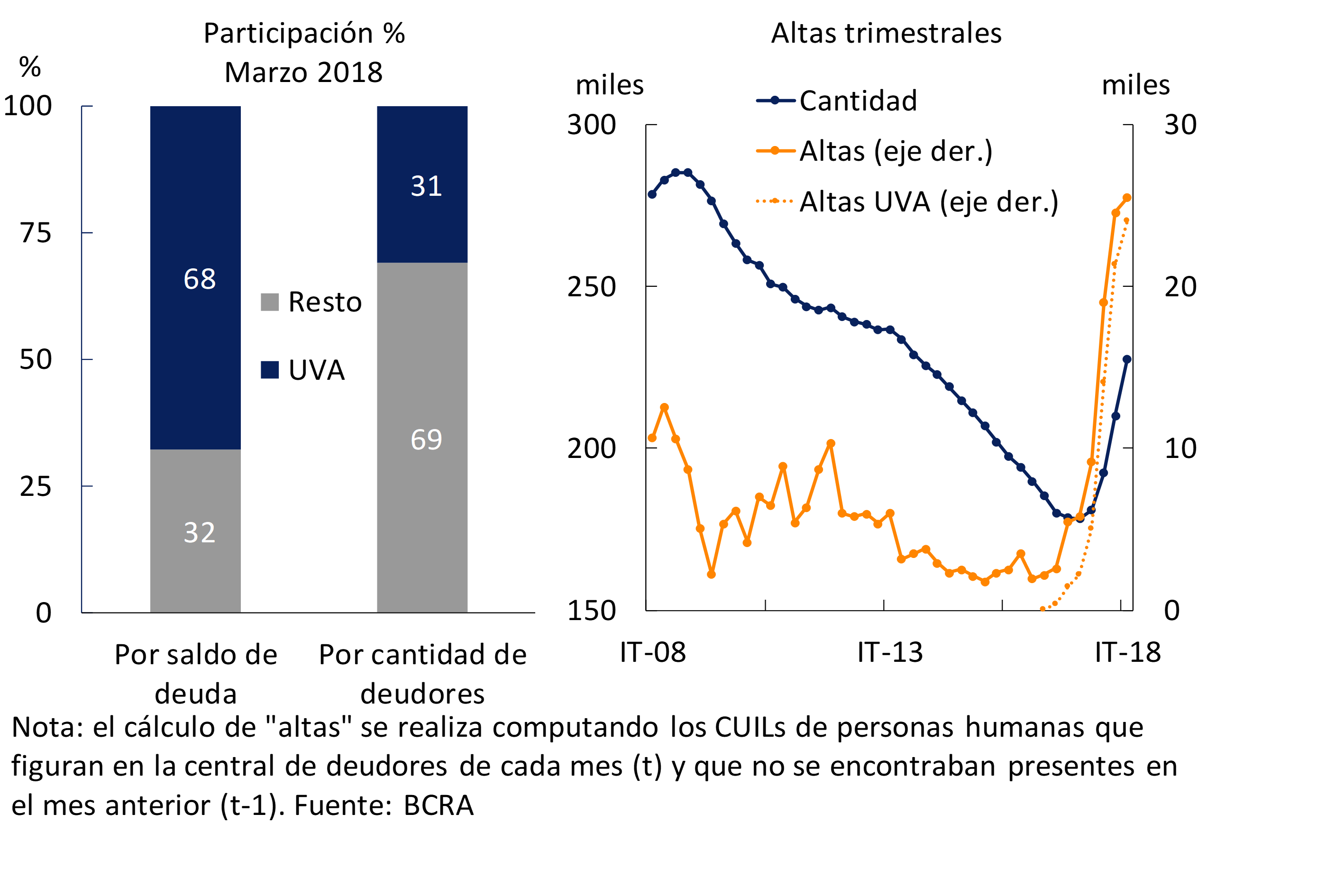
With the economy growing, since the last publication of the IEF (November 2017), the financial system continued to show progress in terms of greater depth, inclusion and modernization, boasting levels of liquidity and solvency that contribute to sustaining a significant degree of resilience in the sector. There is also evidence of a higher level of competition in the system, within the framework of the measures implemented for this purpose. With a real year-on-year expansion of 25%, credit to the private sector reached a level equivalent to 14.3% of GDP in March 2018 (+2.5 percentage points (p.p.) in the last 12 months). This depth variable, which still has significant room for growth based on its own history and regional comparison, presented the highest value in the last 15 years. Mortgage loans played a relevant role in this expansion of intermediation (mainly due to UVA instruments), with a balance that grew almost 200% year-on-year (y.o.y.) in March (to almost $93,000 million). UVA mortgage loans, with the capacity to facilitate access to housing, allowed the inclusion of almost 84,000 new debtors in this line of loans since the beginning of 2017.
As part of the measures taken to modernize and provide greater security and inclusiveness to the payment system, the trend towards greater availability and use of electronic means continued. Overall, the amounts involved in immediate transfers, direct debits and the use of credit and debit cards registered a year-on-year increase of almost 3.9 p.p. in terms of GDP in the first quarter of 2018 (real y.a. variation of 15.9%), reaching a level of 32.4%. Despite this expansion, the BCRA intends to move towards greater integration in the use of these alternative means of payment to cash.
As expected, the current expansionary phase of the financial cycle has resulted in a gradual growth in risk exposure (mainly credit and interest rates) for financial institutions as a whole. The available indicators show that exposure to systemic risk factors would remain low to moderate, with no significant changes with respect to what was mentioned in the IEF of the previous semester. In this regard, based on limited exposures to credit, currency and interest rate risk, and relatively high current coverage levels (liquidity, forecasts, capital), the financial system continues to show a significant degree of resilience to possible adverse changes in the context. This statement is supported by the results of the tension exercises (scenarios and sensitivity) that are regularly carried out at the BCRA. This evaluation remains similar to that carried out in the previous IEF.
With the continuation of the disinflation process (once the transitory increases of recent months have been overcome) and the effects of a context of greater competition, the financial system remains challenged to face downward pressures on profitability in order to sustain the process of growth of intermediation with adequate levels of solvency. After stabilizing during the first half of 2017, the profitability of the financial system showed a new decline in the last two quarters. In terms of development and stability of the sector, it is positive to observe that the relative weight of administrative expenses continues to decrease as a result of a greater scale of operations and improvements achieved in efficiency levels.
Although some deterioration in external liquidity conditions was observed in recent months, the general medium-term context remains favorable for the deepening of financial intermediation in Argentina. In line with the assessment foreseen in the IEF of the previous semester, and given the increase in volatility in international markets in the first part of 2018, it is estimated that one of the main sources of risks to the stability of the sector continues to be a possible abrupt (and sustained over time) change in risk appetite in international markets. that acts through the financial channel. Faced with this transmission channel, it is worth mentioning that the vulnerabilities of the local economy related to levels of leverage, debt burden, and sectoral currency mismatches, for example, would still be at relatively limited levels. Likewise, the BCRA is using all the tools at its disposal to limit the effects of the situation on the achievement of the inflation target set for the current year. On the side of the sources of risk originating in the local context, and based on a medium-term macroeconomic scenario that continues to be positive and attentive to the aforementioned degree of resilience of the sector, only the materialization of extreme negative deviations (with respect to what is expected for fundamental variables) could generate tension in the conditions of financial stability.
Going forward, the economy is expected to continue in an expansion phase, maintaining the disinflation process and making progress in terms of the reordering of macroeconomic variables (including the planned improvement in the fiscal situation). With this base scenario and having been sanctioned the Productive Financing Law, the conditions would be reinforced for the growth process of traditional financial intermediation to continue. In this regard, bank credit is expected to continue its expansion in the medium term, eventually observing greater exposures to risk, leverage and lower liquidity margins in the sector. With a regulatory framework in line with the standards recommended globally, the financial system is solid. The BCRA must adequately monitor the sources of risks and accumulation of vulnerabilities associated with the process of deepening the financial system. The monetary authority has a multiplicity of macroprudential policy instruments to use to ensure the orderly progress and sustainability of this process.
1. Context
The recent situation has revived fears about the possibility of a period of deterioration in international financial markets (for example, due to changes in expectations regarding monetary policy in the US) or a trade war between large countries. Given that the materialization of an adverse external context, over a prolonged period, could affect the process of gradual improvement in the country’s macroeconomic fundamentals and the progress in the structural reform agenda (for example, by restricting financing alternatives), talks have recently begun with the IMF to obtain a preventive credit line. Based on the strength of sectoral balance sheets and, in particular, the high degree of resilience estimated for the financial system (see Chapter 3), the deterioration in external conditions should be very marked to disrupt the current financial stability conditions. With respect to the baseline macroeconomic scenario at the domestic level, it is expected that the economy will continue in an expansion phase, that the disinflation process will continue (once the transitory increases of recent months have been overcome) and that the fiscal situation will continue to improve. With this base scenario, and having enacted the Productive Financing Law, the conditions for the deepening of capital markets would be reinforced, enhancing the growth of traditional financial intermediation, for example, by extending the dynamism of the placement of negotiable obligations and the growth of UVA instruments.
International situation
Recent developments and potential risks
Since the last IEF, there have been improvements in global growth (despite some marginal and transitory slowdowns), dynamism in trade activity in Brazil (Argentina’s main trading partner) and, until the end of April, still favorable conditions for emerging markets in international financial markets in a historical comparison (for example, in terms of liquidity and access to financing). More recently, however, the mostly positive outlook has been compromised to some extent by a series of risks that have already been mentioned in recent editions of the IEF.
The increase in volatility observed in international markets towards February – and, more recently, at the end of April and the beginning of May – highlighted the tensions implied by a change in risk appetite at the global level. For example, expectations regarding the situation of the US economy affect the expected path of gradual dismantling of monetary stimulus policies. Indeed, with rising inflation expectations, stronger labor markets, and prospects for more expansionary fiscal policy (accompanied by increases in yields on long-term U.S. Treasury debt), in February the market began to anticipate that the Federal Reserve could accelerate its policy of gradual interest rate hikes (see Figure 1.1).1 This led to a sharp increase in volatility2 and a sudden drop in the US stock indices (which had been showing considerable advances and valuation indicators at high levels), which ended up having an impact on a (short) episode of generalized deterioration of the financial markets at the global level (see Figure 1.2).
Figure 1.1 | Expectations linked to interest rates and yields – US
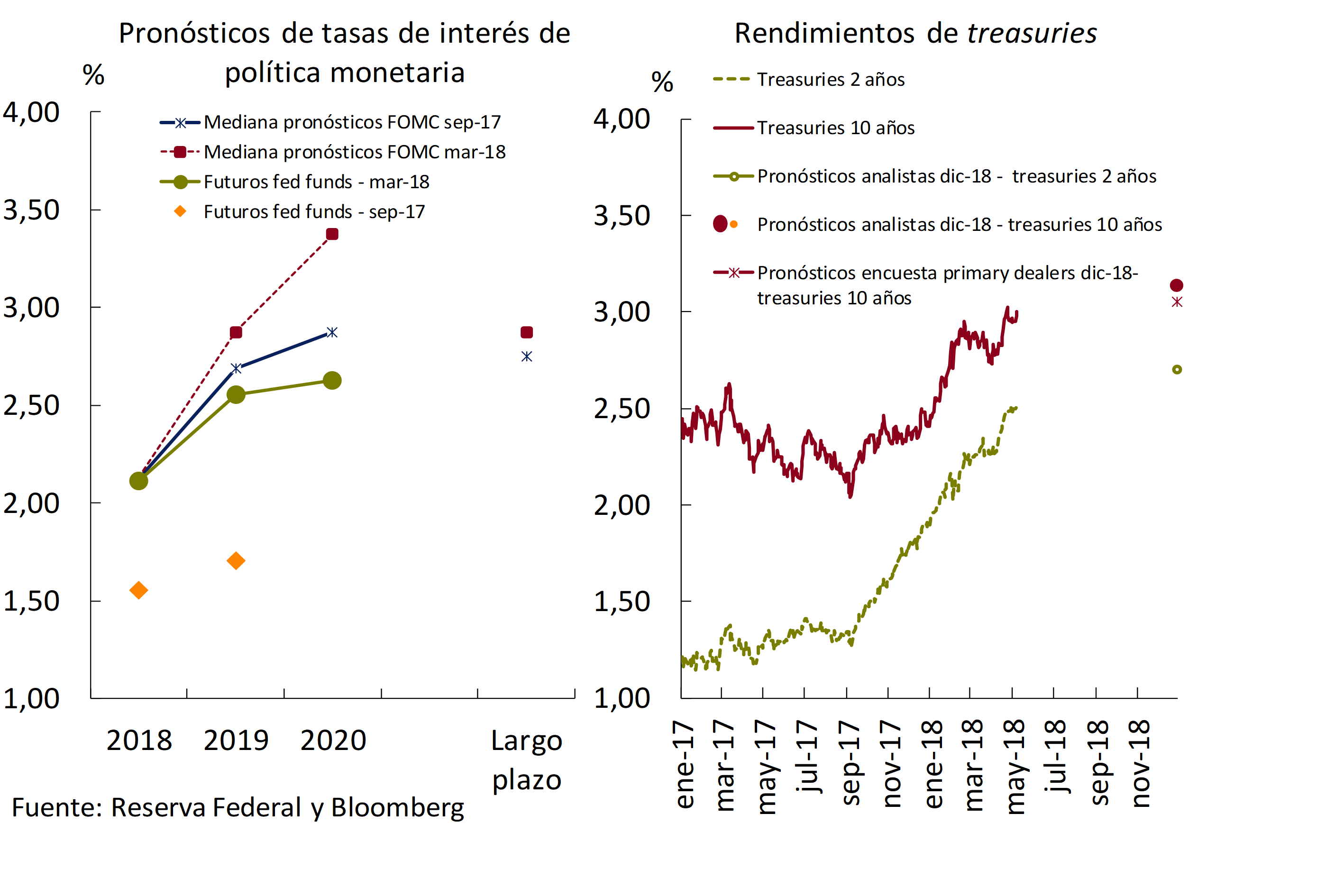
Figure 1.2 | Stock markets and currencies
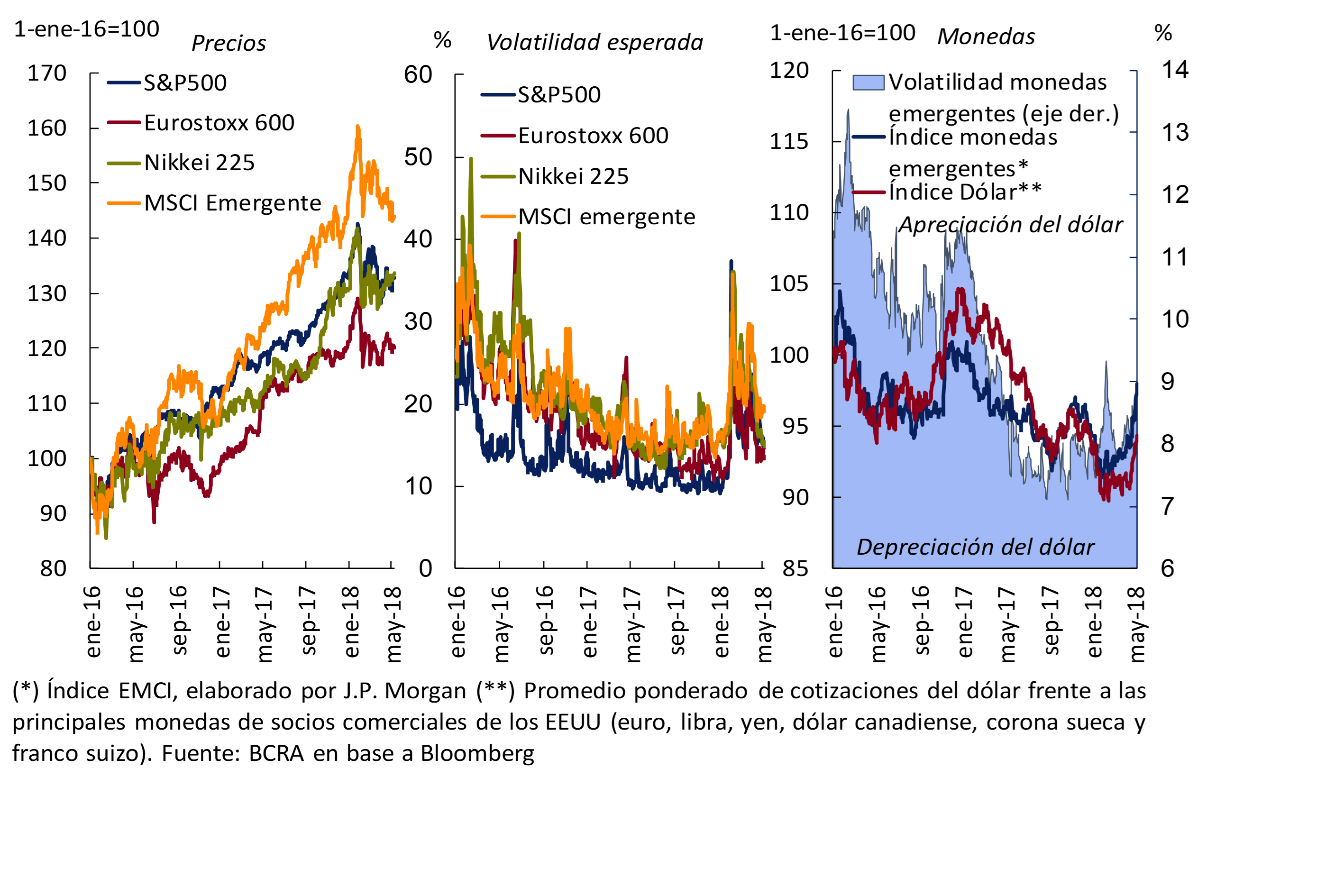
The pressure was also on the assets of emerging economies, with stock indices that moderated the gains they had been accumulating, while an impact was also observed on the debt markets, currencies and flows to specialized funds in emerging economies. Subsequently, a recomposition was observed until April. With yields on 10-year US Treasury debt exceeding the 3% level and global appreciation of the dollar, emerging markets came under pressure again in April. In the case of emerging economies, this time the deterioration was more marked in the currency market.
Another risk present in recent months, although with less weighting and more linked to the commercial channel, was given by the possibility of a tariff war that affects international trade and growth at the global level. Indeed, there was increased concern about the protectionist approach to US foreign trade policy and the reaction of large economies (such as China). This contributed to an increase in market volatility towards March 2018.
Another potential source of risks is the possibility of increasing geopolitical tensions (conflicts in the Middle East, for example), with an eventual impact on commodity prices or on risk appetite at the global level. With respect to Latin America, the presence of various electoral processes stands out in 2018, with particular relevance for Argentina, such as the Brazilian case.
Financial stability vulnerabilities
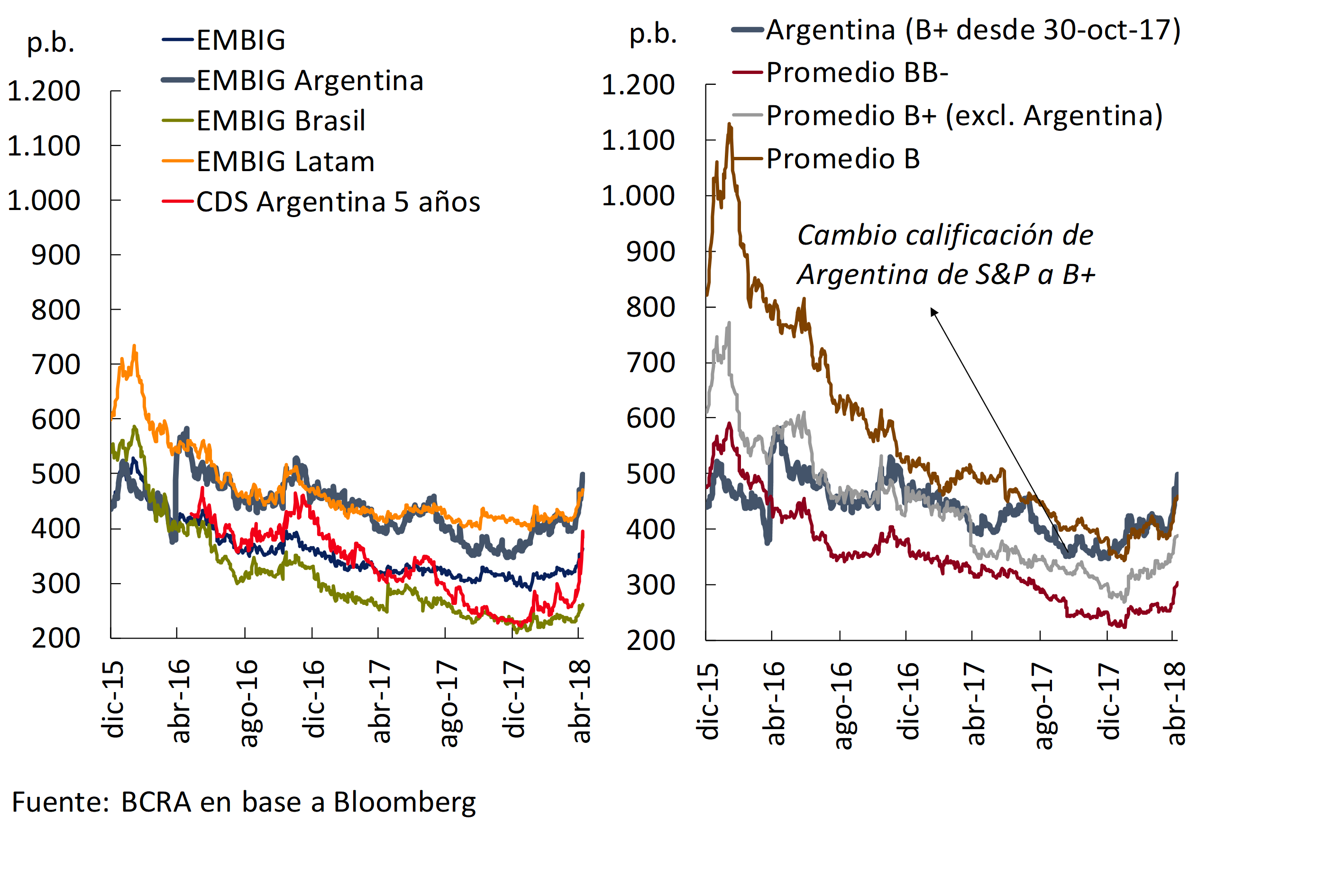
This more challenging context affects Argentina, given that the process of gradual improvement in macroeconomic fundamentals implies financing needs of the public sector (decreasing over time) that so far have been channeled in part through external markets. In this regard, at the beginning of the year the aim was to anticipate the coverage of the financial needs of 2018 with a large operation in the international markets (see Figure 1.3), as had been done in 2013. However, yield differentials between Argentine and U.S. Treasury debt subsequently increased so far this year, moving them away from the average observed for countries with ratings similar to or close to Argentina’s (see Figure 1.4). This trajectory was one of the factors that influenced the decision in early May, as a preventive measure, to begin negotiations with the IMF in order to access a line of credit.
Figure 1.3 | Financing in foreign markets of Argentine agents – Bonds
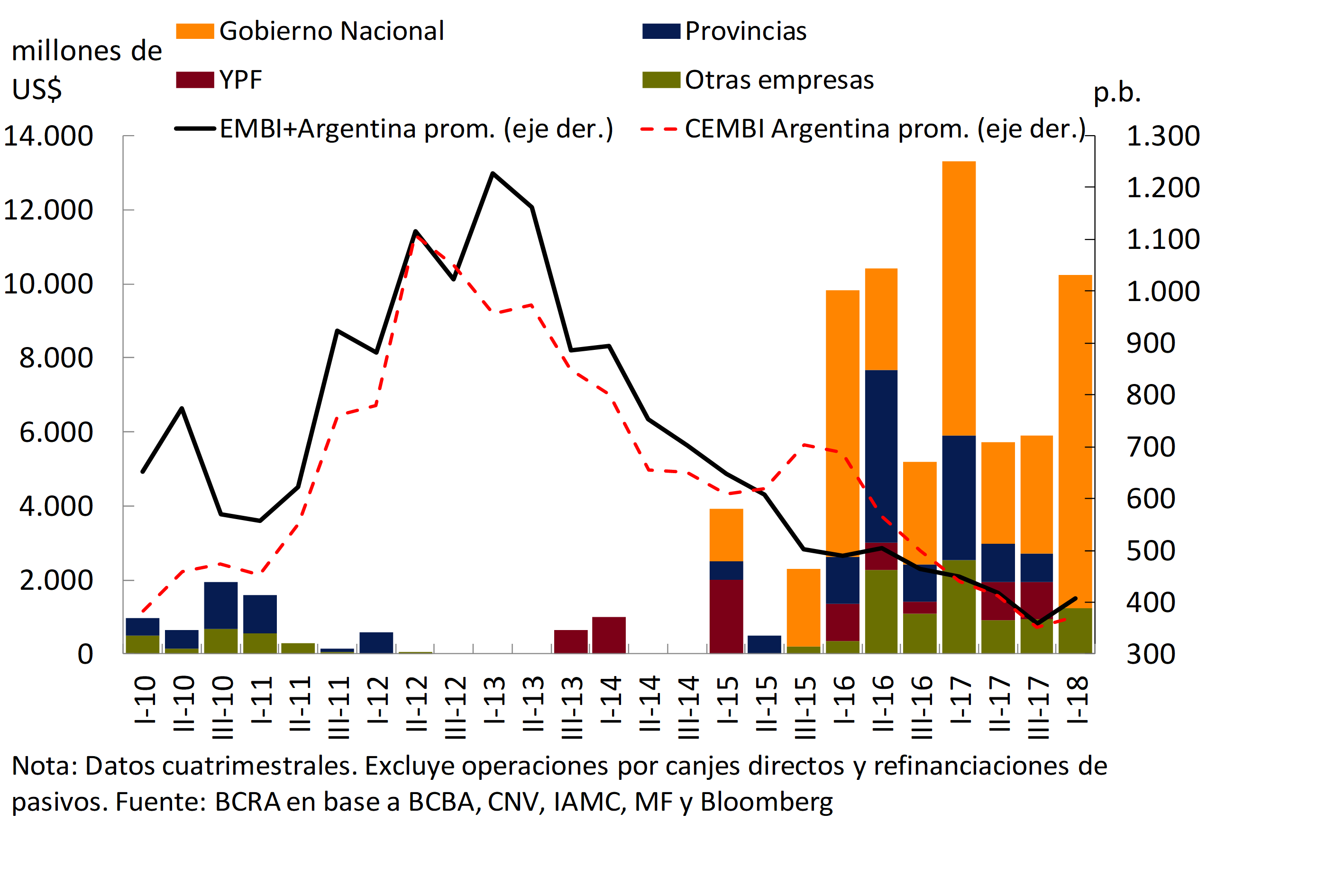
Figure 1.4 | Perceived risk of emerging markets and Argentina
On the other hand, the deterioration in the external context resulted in greater pressure on the foreign exchange market. The BCRA allowed the depreciation of the peso, carrying out foreign exchange operations to avoid disruptive movements in the exchange rate. In addition, it increased the monetary policy interest rate to 40% in order to preserve the disinflation process (see next section). In this context, although so far in 2018 there has been less dynamism in the corporate sector’s foreign debt placement operations, the monitoring of currency mismatches in companies’ balance sheets continues (see Section 1). However, it should be noted that (as for the public sector) so far the debt burden in general (and external debt in particular) is limited compared to the situation observed in other emerging economies, with a low level of corporate leverage in aggregate terms.
Local context
In line with what was mentioned in the last IEF, during the first months of the year the expected base scenario for the local economy remained positive, based on the continuity of growth prospects for the next two years, the gradual progress in the disinflation process (although with a transitory rise in inflation in the first months of 2018, as a result of the advance in the increase in regulated prices), fiscal consolidation, and structural improvements. In this context, financial intermediation maintained its dynamism without affecting the stability of the system (see Chapters 2 and 3). Although the most recent situation has generated challenges, the domestic financial sector presents solid indicators and the situation of the sector as a whole would not be affected in the current scenario.
As anticipated in the last IEF, the Argentine economy consolidated its expansion phase, growing at an annualized quarterly rate of 4% throughout 2017 and continued to rise at the beginning of 20184. The revenues of the main debtors of the financial system recovered. Families, a sector to which the financial system allocates 46% of total credit to the private sector, face a more dynamic labor market, due to the sustained recovery of economic activity and real wages, whose increase in the formal private sector was 3.2% on average in 2017. With respect to employment, considering the public sector, salaried workers, single-payers and self-employed, formal employment (excluding social monotax) increased 0.8% s.e. (1.6% annualized) in the last semester5. The gradual creation of employment and an increase in real wages, in a context of low levels of indebtedness, with more attractive financing conditions (UVA) and unsatisfied demand for housing, made it possible to boost credit (see Chapter 2).
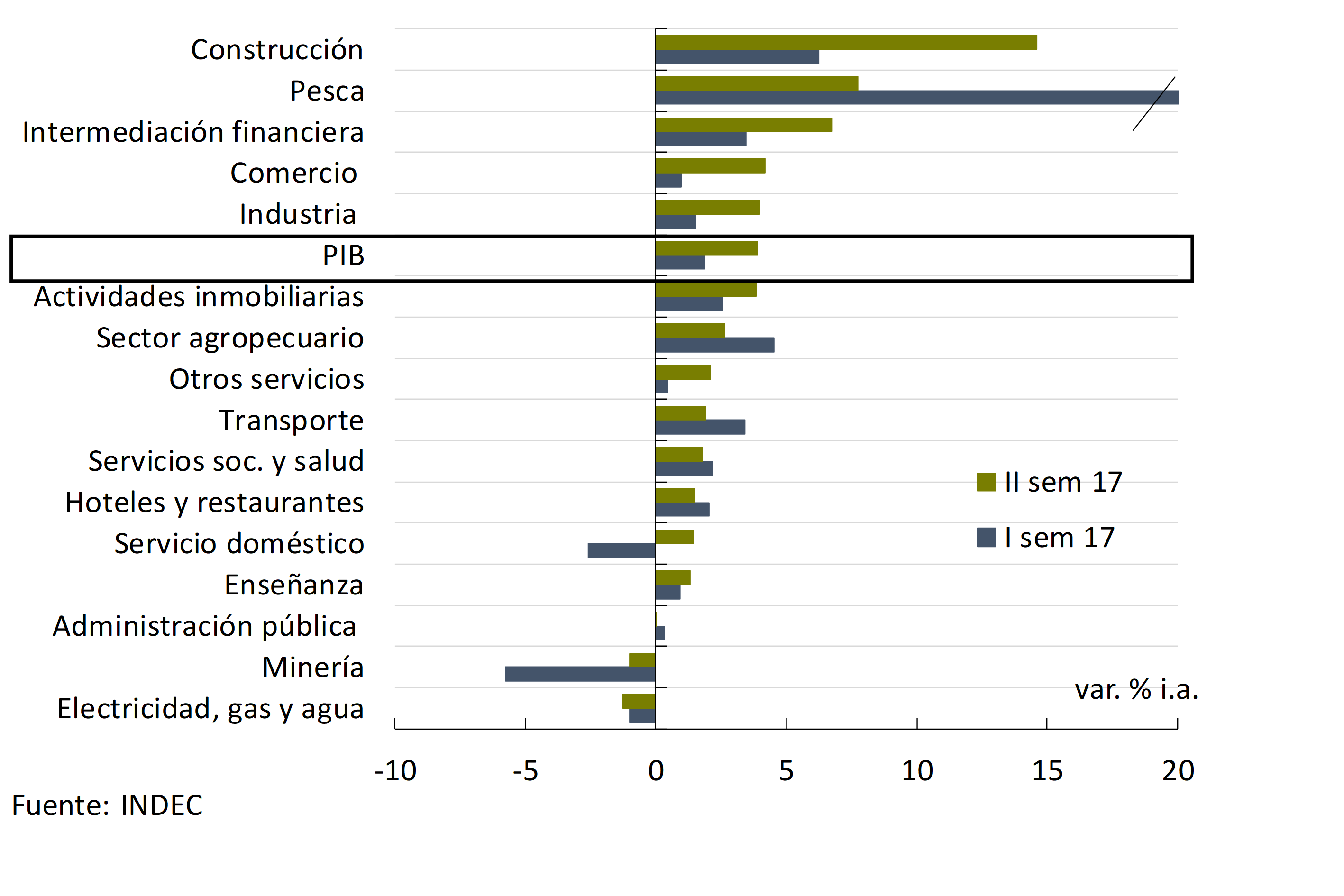
For the rest of 2018, the growth outlook has deteriorated slightly as a result of a transitory adverse factor (drought), the effects of which would be concentrated in the second quarter of the year. The Market Expectations Survey (REM) projects an average GDP increase of 2.5% for 2018, to then grow by 3.2% and 3.0% in 2019 and 2020, sustained by the expansion of investment6 and the higher external demand expected (particularly from Brazil) in a context of reduced inflation and consolidation of fiscal accounts. On the other hand, growth in 2018 would continue to be spread across most sectors of the economy7 (see Figure 1.5). In this context, from the perspective of the financial stability analysis, it is worth mentioning that relatively moderate levels of corporate debt are maintained, so a significant increase in the credit risk faced by the financial system is not expected.
Figure 1.5 | Evolution of activity by productive sector
With regard to the process of consolidating fiscal accounts, towards the end of 2017 the national government began to exhibit a real year-on-year reduction in primary spending, while real revenues began to register increases8. With this evolution of revenues and expenditures, the primary deficit stood at around 3.8% of GDP, having exceeded the planned target (4.2% of GDP in 2017). Faced with a more adverse external scenario than expected, and in order to reduce the financial needs of the national public sector, the government recently announced a more demanding target of reducing the primary deficit of the national non-financial public sector for 2018, from 3.2% of GDP to 2.7%. Towards the end of 2017, a series of important regulatory modifications related to public accounts were made. First, a fiscal consensus was signed between the federal government and the provinces that made it possible to have a new “fiscal responsibility” law that established limits on the growth of public spending and its composition, among other conditions9. Second, in December 2017, a tax reform was approved that included, among other elements, a gradual reduction of taxes, starting to tax the financial income of individuals and modifying certain internal taxes. Finally, a law was approved that modifies the pension mobility formula.
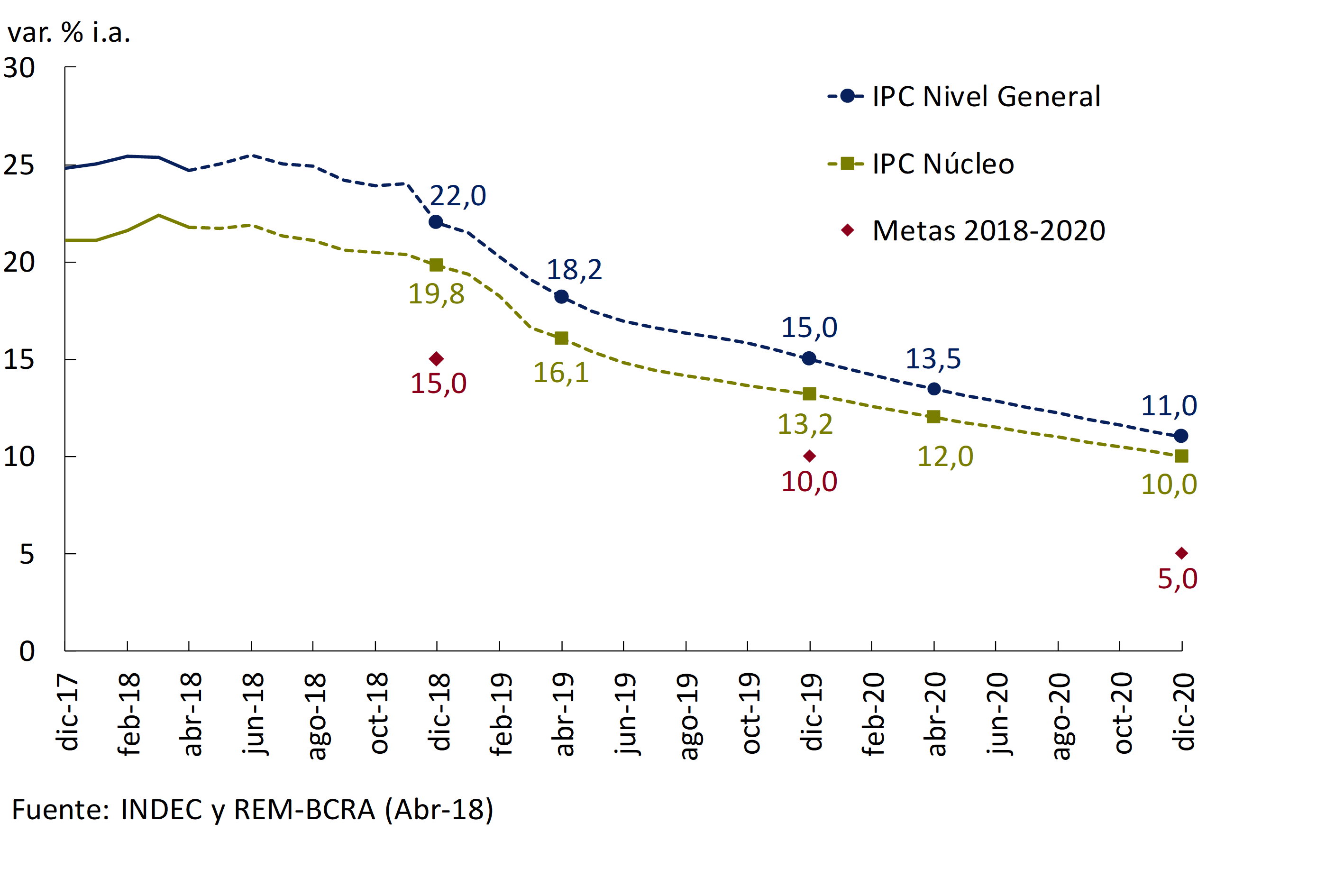
With respect to the price level, since December 2017 there has been a transitory rise in inflation explained by the direct and indirect impact of the increases in public service rates, concentrated between December of the previous year and April 2018, and the depreciation of the peso (see Figure 1.6). However, several factors suggest a marked reduction in inflation from May onwards. From that month onwards, less pressure is expected from regulated services (the largest corrections are being concentrated between Dec-17 and May-18). On the other hand, in order to strengthen the disinflation process, in recent months the BCRA has had a more active participation in the foreign exchange market and sequentially increased the monetary policy rate to 40%. Likewise, the negotiation of salary guidelines was in line with the inflation target. Along the same lines, the analysts who participate in the REM project a reduction in inflation starting in May, maintaining medium-term disinflation expectations, although at a lower pace than that sought by the BCRA10. Although some effect on local prices as a result of the depreciation of the peso against the dollar cannot be ruled out, it should be borne in mind that many of Argentina’s trading partners also depreciated their currencies against the United States, which moderates the impact.
Figure 1.6 | Inflation expectations and targets
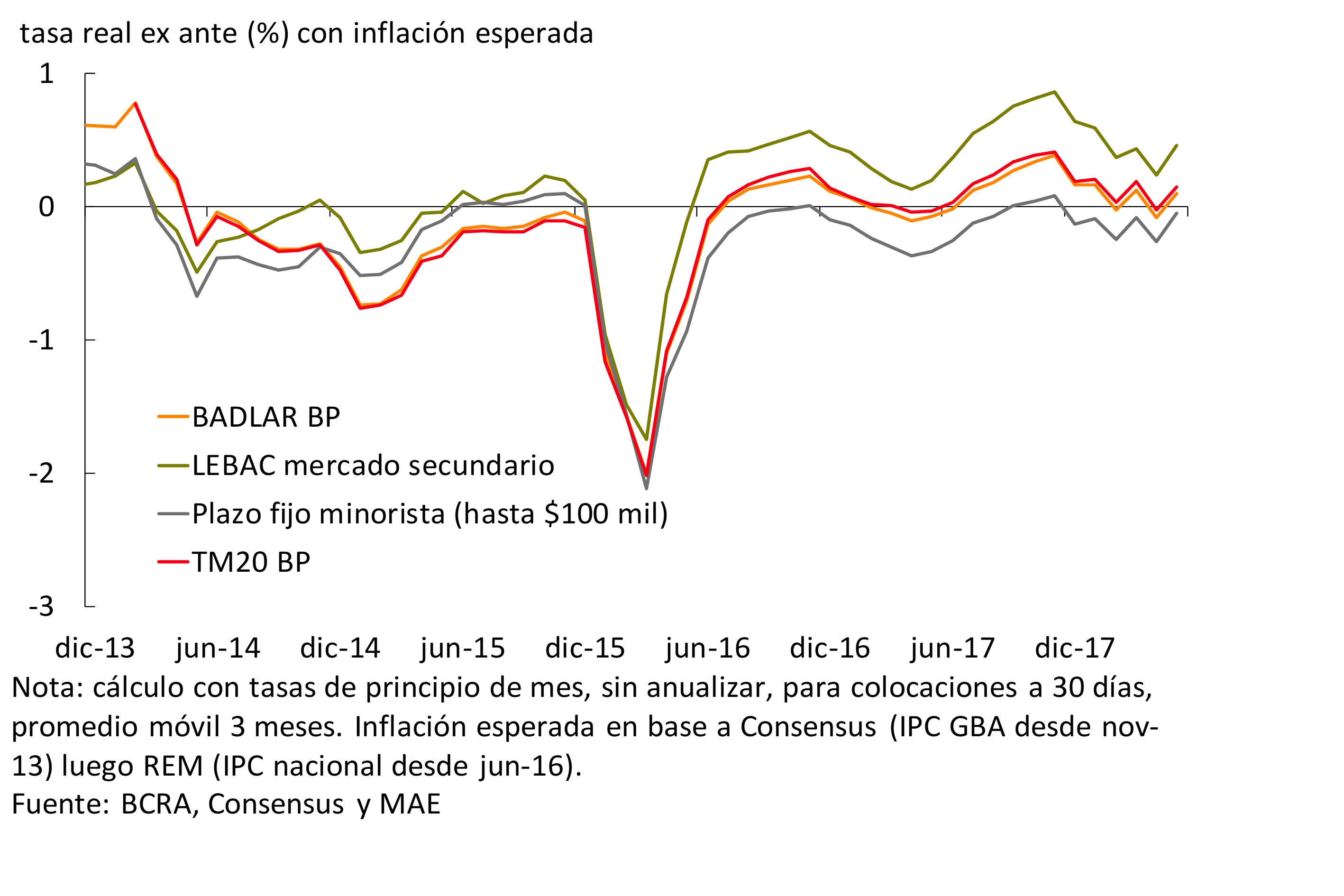
Progress in the disinflation process is important for financial intermediation given its influence on nominal interest rates and, in particular, real interest rates (with an impact on the level of savings)11. Regarding the behavior of interest rates in the domestic market in recent months, after the reduction of the monetary policy rate by 150 bps. to 27.25% during January12 and until the accentuation of international volatility at the end of April, the rest of the rates tended to fall (see Figure 1.7). In this context, a smaller gap between different interest rates in pesos was observed until the end of April13. For example, in a context in which credit showed a more marked dynamism than the traditional funding of banks (see Section 3 and Chapter 2), the BADLAR Private Banks fell less than the Lebac rate in that period. On the other hand, the rates of the different capital market instruments were cut sharply in January and then maintained a mostly downward trend (although less marked) until the end of April, with an understanding of the margin on the BADLAR Private Banks of between 200 and 400 bps between the different instruments. The fall in nominal interest rates, together with a (transitory) increase in inflation expectations, translated into a drop in the expected real rates until the rise in the monetary policy rate at the end of April, when they showed some rebound (see Figure 1.8). For the coming months, the evolution of rates would be conditioned by the duration of the disruptive behaviors in the foreign exchange market that resulted in increases in reference interest rates starting in April. To the extent that market instability moderates, the Central Bank will normalize its operational scheme, returning to a narrower corridor of passes that allows the policy rate to be automatically transmitted to the rest of the interest rates. In any case, with respect to the level of the reference rate, the Central Bank considers that, with inflation above what was projected so far in 2018 and facing a scenario of greater instability in emerging markets, a level of real interest rates significantly higher than that observed before the latest changes is required for the near future.
Figure 1.7 | Domestic market rates in pesos
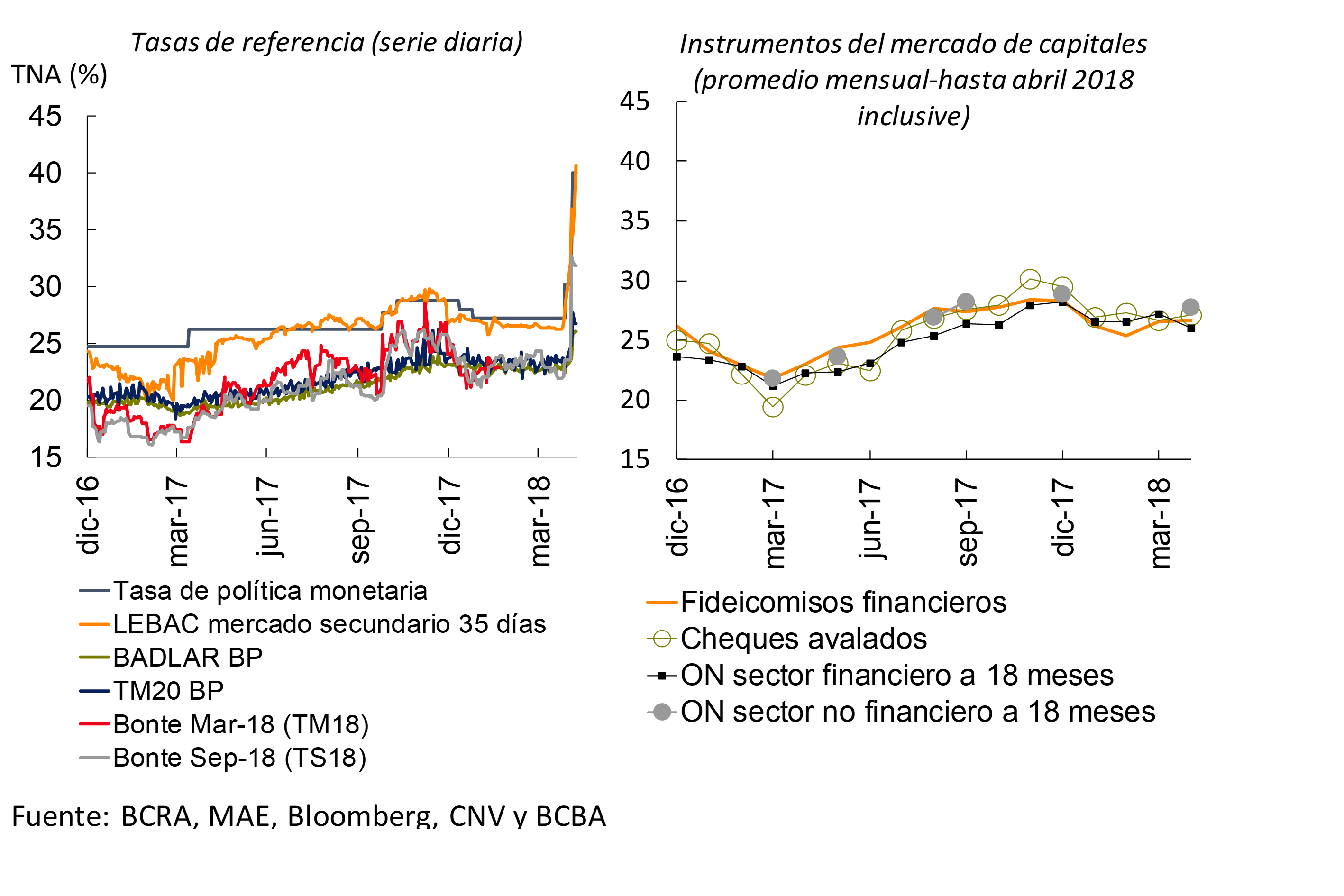
Figure 1.8 | Evolution of real interest rates
With respect to financing through the capital market, in recent months there has been an increase in both public and private sector placements. This dynamic would be enhanced after the enactment of the Productive Financing Law (see Section 2). The increase observed in placements in the domestic market occurred in a context of continuous increase in the portfolios of institutional investors. In recent months, the dynamics of the FCIs (the total portfolio grew 17% in real terms in the first four months of 2018, after rising 35% in real terms in 2017), are mainly explained by the fixed income FCIs14. On the other hand, the data on the foreign exchange balance showed a continuity in the positive flows (albeit smaller) of portfolio investments by non-residents until March, with a negative flow recorded in April.
Since the last IEF, the National Government increased the use of financing in the domestic market (in particular, in pesos), diversifying its instruments. For bonds, the placement of two types with CER adjustment at 5 and 7 years, two placements of hybrids (they will pay the highest amount between a capitalizable nominal rate and an adjustment by CER plus a differential) and, in mid-May, reopening of two fixed-rate bonds in pesos maturing in 5 and 8 years15. In December, bills began to be issued in local currency16. In terms of balances, national public debt represented approximately 57.1% of GDP in 2017 (of which 29.6 p.p. correspond to debt with private, multilateral and bilateral creditors), with an increase of 4.6 p.p. during the 2nd. semester of 2017 (mainly from the placement of bonds in national currency at a variable rate, National Treasury bills and bond sales and future repurchase operations (REPOs) in a context of a greater depreciation of the currency during the last days of the year). The floating debt of the National Treasury at the end of 2017 fell in year-on-year terms by 0.3 p.p. of GDP.
With respect to the private sector, the dynamism in the placements of negotiable obligations by banks (see Figure 1.9) was highlighted, allowing credit growth to be sustained in a context in which deposits show a less dynamic performance. Since the beginning of November last year (publication of the latest IEF) banks placed more than $61,000 million in bonds (while the principal maturities of pre-existing bonds were for about $4,000 million). Thus, the average monthly financing volume via ON from November 2017 to April 2018 was about $10,000 million, which compares to about $3,200 million per month between January and October 2017. Of the amount placed since November, about 94% was in nominal pesos, a segment in which placements did not show substantial changes in the weighted average placement term (30 months, although there were operations for up to 60 months)17. The rest of the total amount was explained by operations in UVA, a segment that, although incipient18, allows funding for longer terms (average term close to 36 months) and limits the mismatches in UVA of the banks.
Figure 1.9 | Private Sector Financing – Local Markets
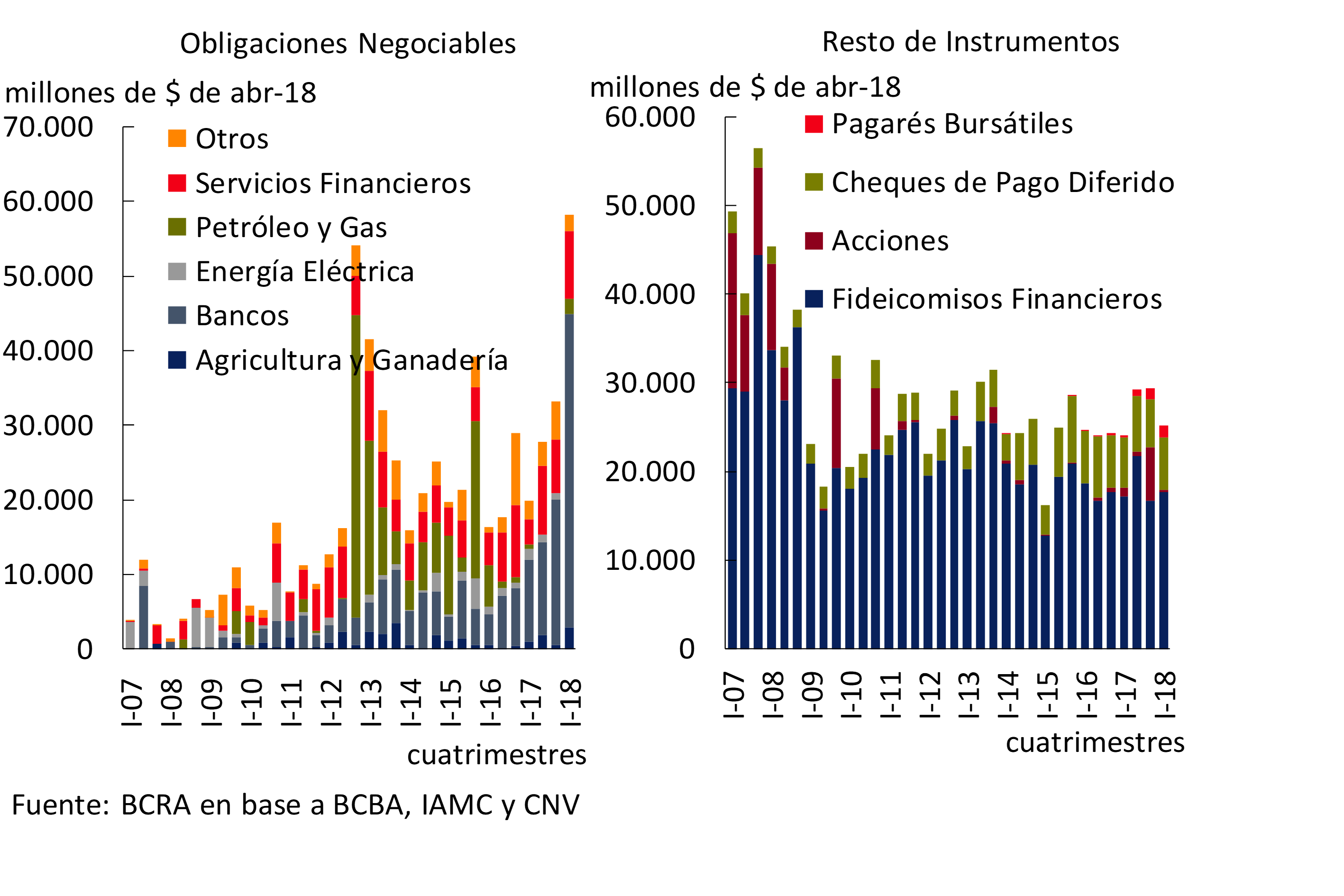
The rest of the funding through debt instruments through the capital market (including negotiable obligations of the non-financial private sector, financial trusts, and shorter-term instruments such as deferred payment checks and stock market promissory notes), did not experience significant changes in terms of amounts since the publication of the last IEF. In this segment, linked to the growth of housing financing from the banking sector, the placement of the first UVA mortgage loan trust (the first securitization of mortgage loans carried out in 7 years) stands out. This type of operation (which could be additionally enhanced with the Productive Financing Law) will allow banks to maintain the dynamism in the granting of longer-term credit, also facilitating the management of risks such as liquidity and credit.
Since the publication of the last IEF, stock prices experienced greater volatility, with increases until mid-January and decreases in prices (and valuation ratios) since then, which deepened in the last19 days. In the case of bank papers, both the initial rises and the subsequent fall were more intense than those of the Merval (so that in mid-May bank papers accumulated a slight increase since the publication of the last IEF). After the declines observed in recent months, the valuation ratios for bank shares returned to levels similar to those of a year ago. In this context, in recent months there were no subscriptions of new shares, a type of operation that was used by banks in 2017 in the face of the increase in the granting of credit and growth expectations in the sector
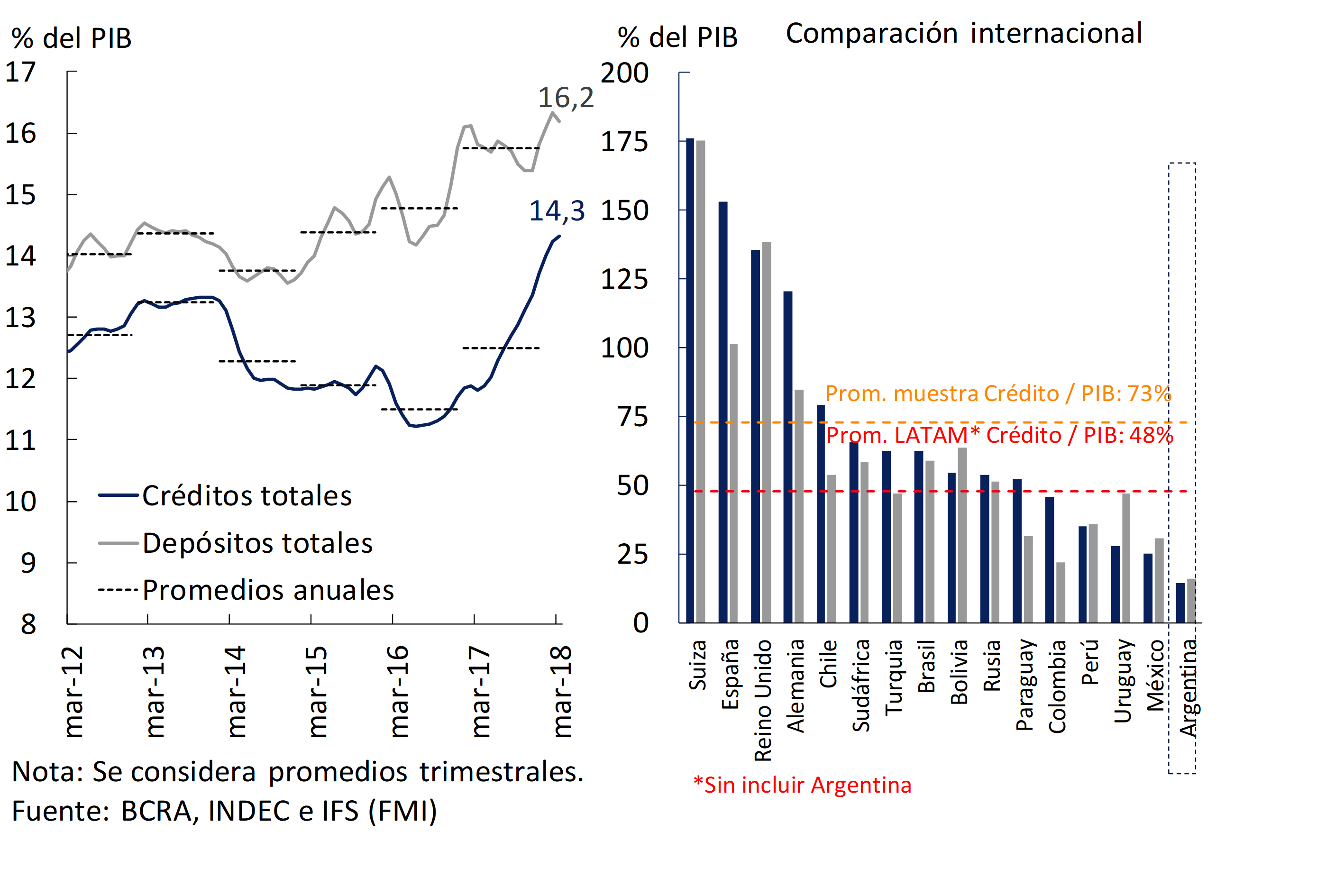
2. Situation of the financial system
The process of expansion of banking intermediation activity has been consolidated in recent months. In particular, credit to the private sector grew 25% year-on-year in real terms as of March, reaching a level of 14.3% of GDP (up 2.5 p.p. in the last 12 months), the highest value in the last 15 years. However, the depth of the sector still remains very low in an international comparison, so the growth potential of the sector is still very significant going forward. Private sector deposits grew relatively less than loans, with additional funding with negotiable obligations. The dynamics of the mortgage segment stood out, with almost 58,600 new debtors in 2017 and 25,500 in the first quarter of 2018, with the UVA segment playing an almost exclusive role. In a regulatory framework in line with the standards recommended globally, the financial system maintains high levels of solvency. Evidence of a greater degree of competition in the sector is beginning to be observed, consistent with the measures implemented in the last two years to this effect. In view of this development and the additional pressure on profitability derived from the disinflation process, the decrease in the relative weight of administrative expenses is positive. This cost reduction, necessary for the development and stability of the sector, results from greater scale and efficiency improvements.
Expansion of credit to the private sector consolidates
In line with the context of economic growth (see Chapter 1), the financial intermediation of banks as a whole continued to increase in the last months of 2017 and the beginning of 2018. During the period, the growth of credit to the private sector was sustained, in which mortgage lines stand out, while the sector’s funding continued to show a more moderate dynamic. In March 2018, it is estimated that financing to companies and households totaled 14.3% of GDP, 1.4 p.p. above the level of September 2017 – the latest publication of the IEF – and 2.5 p.p. more than the value of a year ago (see Figure 2.1). Private sector deposits accounted for 16.2% of GDP20, increasing 0.7 p.p. compared to the end of the third quarter of 2017. Given the change in the macroeconomic scenario of the last two years, there is a growing synchronization at the local level between the financial cycle and the economic cycle.
Figure 2.1 | Brokering with the private sector – As % of GDP
Following the recommendations of international organizations and in line with the process adopted by other countries to ensure that bank accounting more accurately reflects economic reality, at the beginning of 2018 financial institutions began to present their balance sheets in accordance with International Financial Reporting Standards (IFRS)21. In practice, the initial application of IFRS by local banks was reflected in an increase in the net worth of the financial system of 14.8% compared to that accounted for until the end of 201722, mainly explained by the revaluation of real estate23.
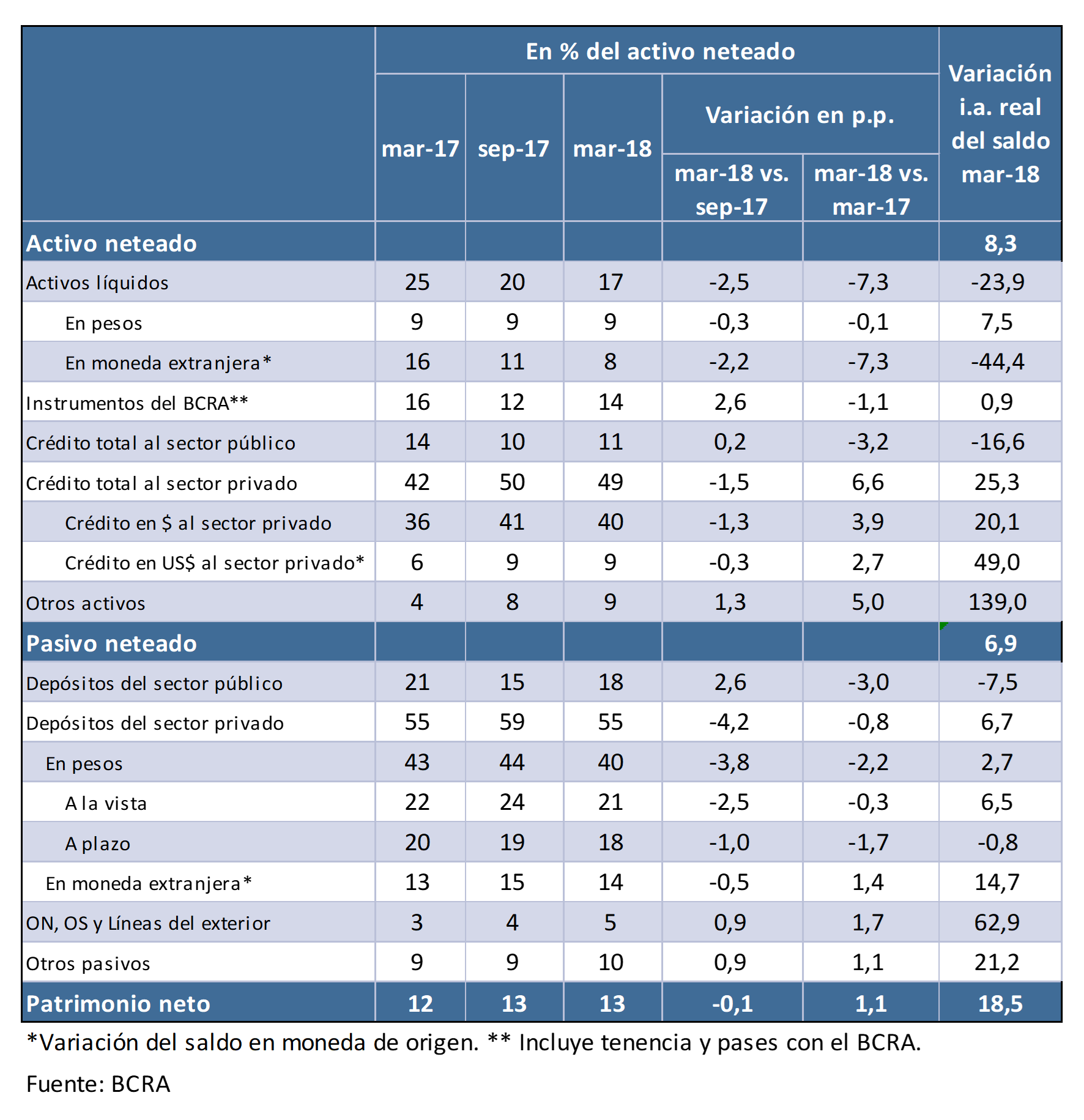
Compared to the last edition of the IEF, within the items that make up the assets of the financial system, the relative importance of monetary regulation instruments (LEBAC and LELIQ) increased (up 2.6 p.p.), while the rest of the liquid assets fell (-2.5 p.p.), mainly in foreign currency (see Table 2.1)24. On the funding side, the weighting of public sector deposits and alternative sources of funding, such as negotiable bonds, increased during the period (see Section 3). On the other hand, the weighting of private sector placements (-4.2 p.p.) – mainly in national currency – in the sector’s funding decreased.
Table 2.1 | Equity situation – Financial system
Total bank credit to firms and households continued to expand: it increased by 25.3% YoY in real terms as of March (see Figure 2.2), leading to a year-on-year increase of 6.6 p.p. in the system’s total assets (although it decreased slightly by 1.5 p.p. compared to last September). The performance of loans to the private sector was generalized in all groups of financial institutions, although there was a greater relative variation in public banks. Disaggregated by lines, loans with real collateral verified the greatest relative year-on-year dynamism, increasing their participation in the total balance.
Figure 2.2 | Total credit balance (domestic and foreign currency) to the private sector
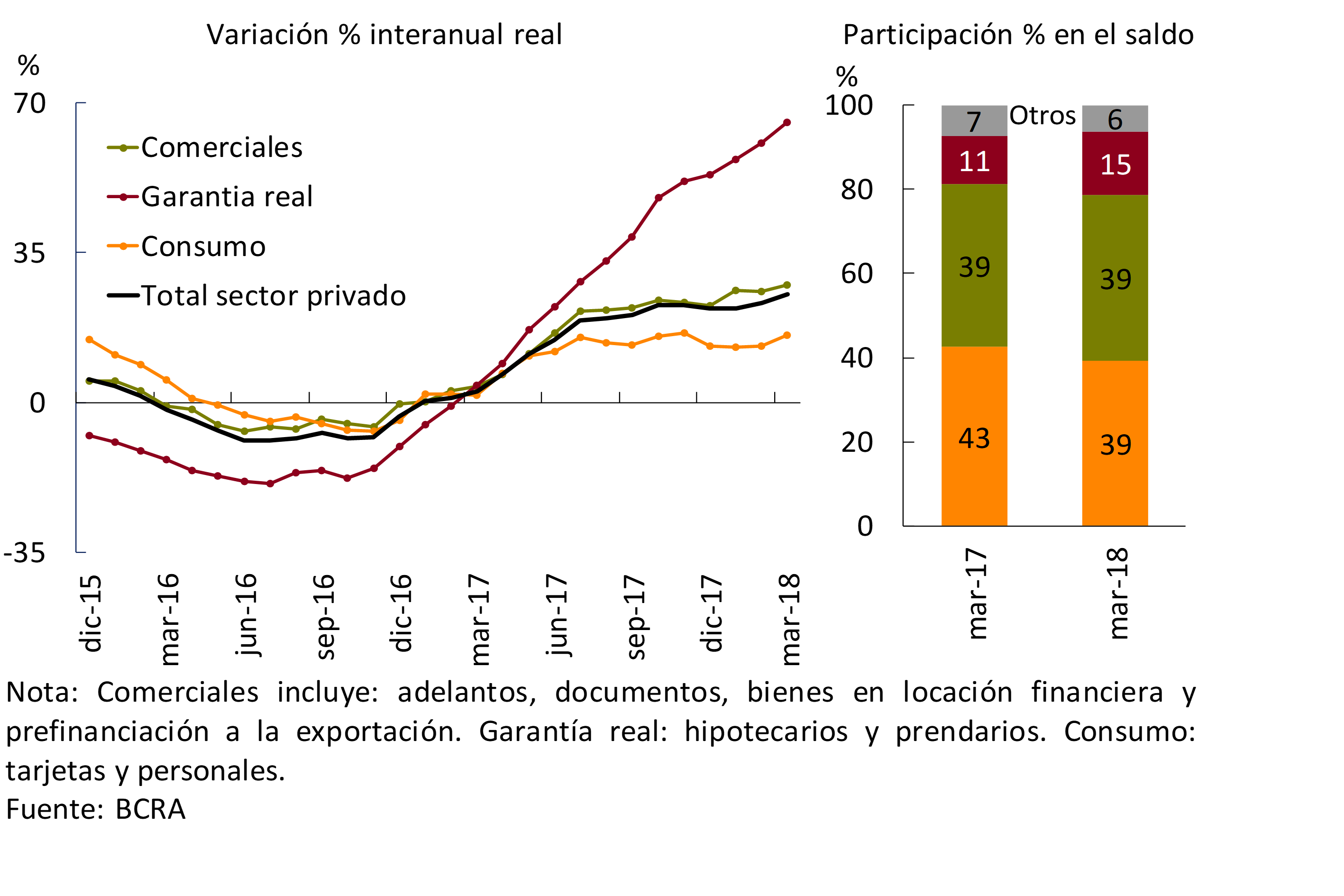
As has been observed since mid-2016, the normalization of the foreign exchange market and the greater opening of the economy, added to the effects of the Fiscal Sincerity Regime and the economic growth scenario, allowed private sector financing in foreign currency to regain dynamism. As of March of this year, credit in foreign currency increased by 49% y.o.y. – in the currency of origin – driven mainly by export financing. It should be noted that the BCRA has taken a wide range of measures to strengthen the productive application of foreign currency funding, without neglecting its macroprudential objective of avoiding potential direct (bank balance sheets) and indirect (debtor balance sheets) excessive currency mismatches in the system (see Box 1).
Box 1. Mitigating the currency mismatch of bank debtors, one of the axes of the BCRA’s macroprudential policy
The local financial crisis of 2001-2002 left a set of lessons that were taken into account when adjusting the regulatory framework of the financial system, highlighting the need to address the risks related to excessive exposure to the public sector —at all levels— and currency mismatch. The BCRA focused part of its macroprudential policy on these risks. With approximately 70 per cent of bank assets denominated in dollars in 2001, the collapse of the fixed exchange rate regime in early 2002 resulted in significant strains on the ability of foreign currency debtors to pay, especially those in the non-tradable sector. Faced with the depreciation of the currency at the beginning of 2002, the Government decided to pesify loans and deposits in an attempt to control systemic risks.
In view of this experience, in May 2002 the Executive Branch established that deposits in foreign currency can only be used by banks to finance debtors with regular income from foreign trade operations and related activities25. The BCRA regulated this restriction in a timely manner in its regulatory framework26. Since the beginning of 2016, this institution has expanded the alternatives for the application of resources in foreign currency available to banks27. Thus, the current prudential framework enables banks to finance economic and infrastructure activities – for example, in the framework of Public-Private Partnership Contracts (see Box 2) – while seeking to mitigate their equity exposure to the risk of currency mismatch of the debtor that has proven to have significant negative effects on the country’s economic history.
On the other hand, financing lines in pesos channeled to the private sector accumulated a real growth of 20.1% in the last twelve months, highlighting the increase in mortgage loans. In this context, almost 82% of loans to the private sector are denominated in national currency (with and without CER adjustment).
Mortgage loans to households accumulated a real year-on-year increase of 199% as of March. This evolution was largely explained by loans in Purchasing Value Units (UVA), which made it possible to boost the credit market for the purchase of housing. At the beginning of 2018, 68% of the total balance of mortgage financing to families – $133,600 million – corresponded to UVA loans (see Figure 2.3), with public banks being the most dynamic in granting these loans. In terms of new mortgage debtors (registrations), while in 2017 almost 58,600 were incorporated into the local financial system (73% were financed in UVA), in the first quarter of 2018 they total 25,500 (94% in UVA). In this sense, the growth observed in the balance of mortgage loans since the end of 2015 has been explained entirely by new debtors in this type of assistance. Notwithstanding this particular performance for the mortgage credit line, at the level of the total portfolio of loans to the private sector, it is observed that the participation of new debtors (for the system) in the increase in the total balance from the end of 2015 to the present is relatively limited (20%) and similar to the weighting verified between the end of 2013 and December 201528.
Figure 2.3 | Mortgage credit to individuals
Box 2. Public-private partnership contracts: new mechanism for developing infrastructure projects
The Law on “Public-Private Partnership Contracts“29 (PPP) of late 2016 established a new framework to promote infrastructure, housing, activities and services projects, productive investment, applied research and technological innovation in the country. At the end of May of this year, the award and signing of contracts for the first tender through a PPP for an initial stage of road corridors will take place. In addition, in the short term, works are planned to improve electricity transmission, expand railway networks, develop irrigation, sanitation, water, housing, hospitals and prison complexes and additional road sections30.
The local financial system is in a position to participate in the channeling of resources to potential contractors31. In addition to the deposits in pesos available to be loaned, the group of local banks manages private sector placements in foreign currency for approximately US$26 billion. Although a large part of these resources is already channeled to productive activities, a portion could be used to finance PPP projects. The aforementioned volume of deposits could even expand in the face of increases in depositors’ remunerations, which are currently at levels of 0.5% nominal per annum for term placements32.
In this way, part of the PPP projects could be financed with resources from the local financial system, both in pesos and in foreign currency. Financing in foreign currency could be channeled in accordance with the current regulatory framework33 to projects in the energy sector, or to those associated with services used in the process of exporting goods, such as freight or irrigation railways in the agricultural sector, among others. To the extent that the contractor’s operation is guaranteed by a letter of credit from a foreign bank or multilateral development banks that have an international investment grade rating, the BCRA34 regulations allow financing all types of projects, whether or not they are linked to export activity. Thus, under this type of guarantee all PPP projects could be eligible for local banks.
Also with the aim of promoting PPP financing, last February the BCRA implemented Communication “A” 6449 establishing that the pledge or assignment by contractors of the aforementioned debt instruments are considered preferred “B” guarantee. Thus, when PPP contractors take out financing that is guaranteed, they will enjoy an increase in the existing limits on credit assistance35, which goes from 15% to 25% of the entity’s regulatory capital36.
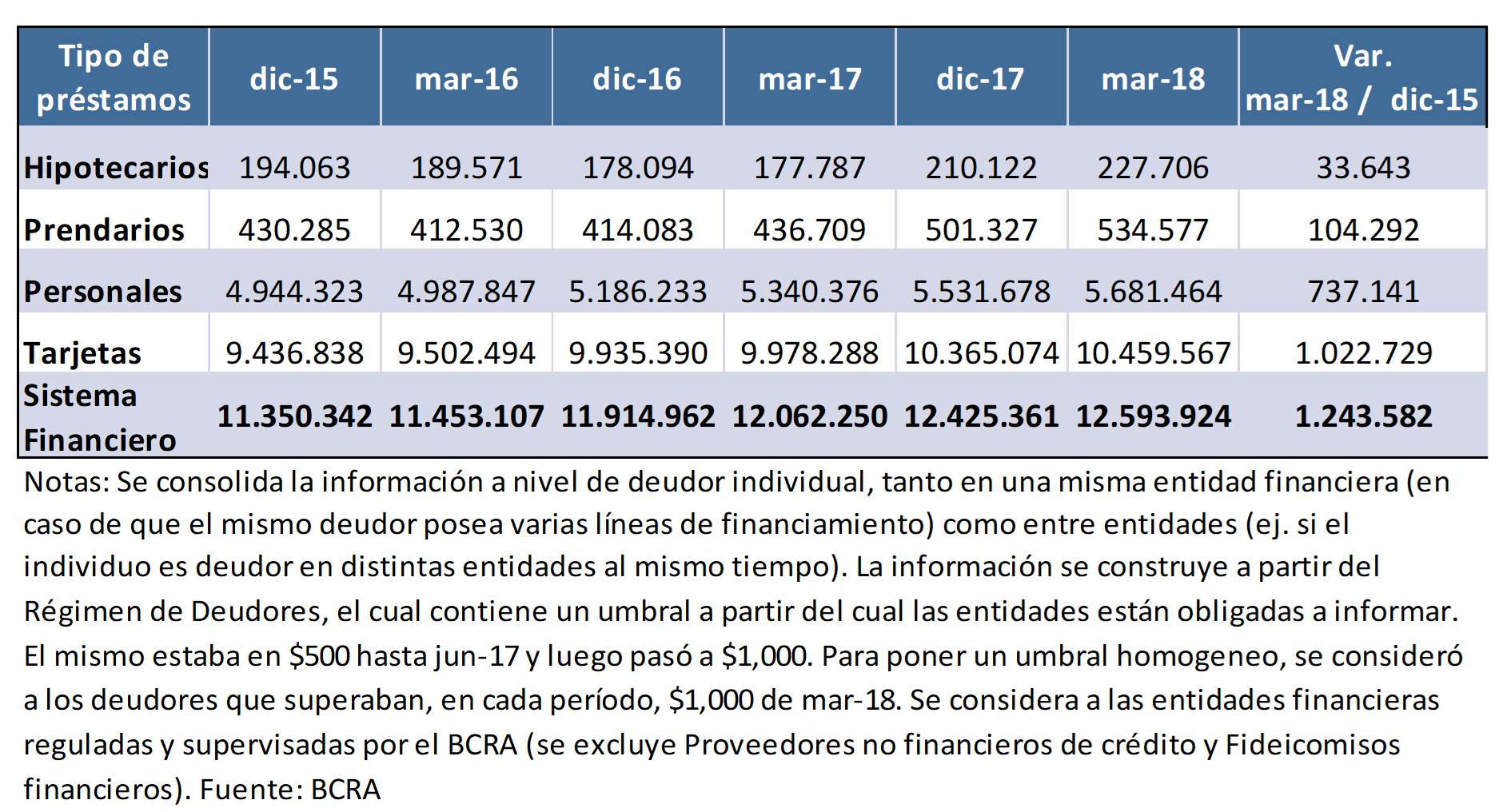
In this context of greater credit dynamism, in the second half of 2017 and at the beginning of 2018 the number of debtors using the different lines of credit increased (see Table 2.2), highlighting not only the performance of mortgages but also of cards and personal loans.
Table 2.2 | Number of debtors in the financial system. Human persons – In units
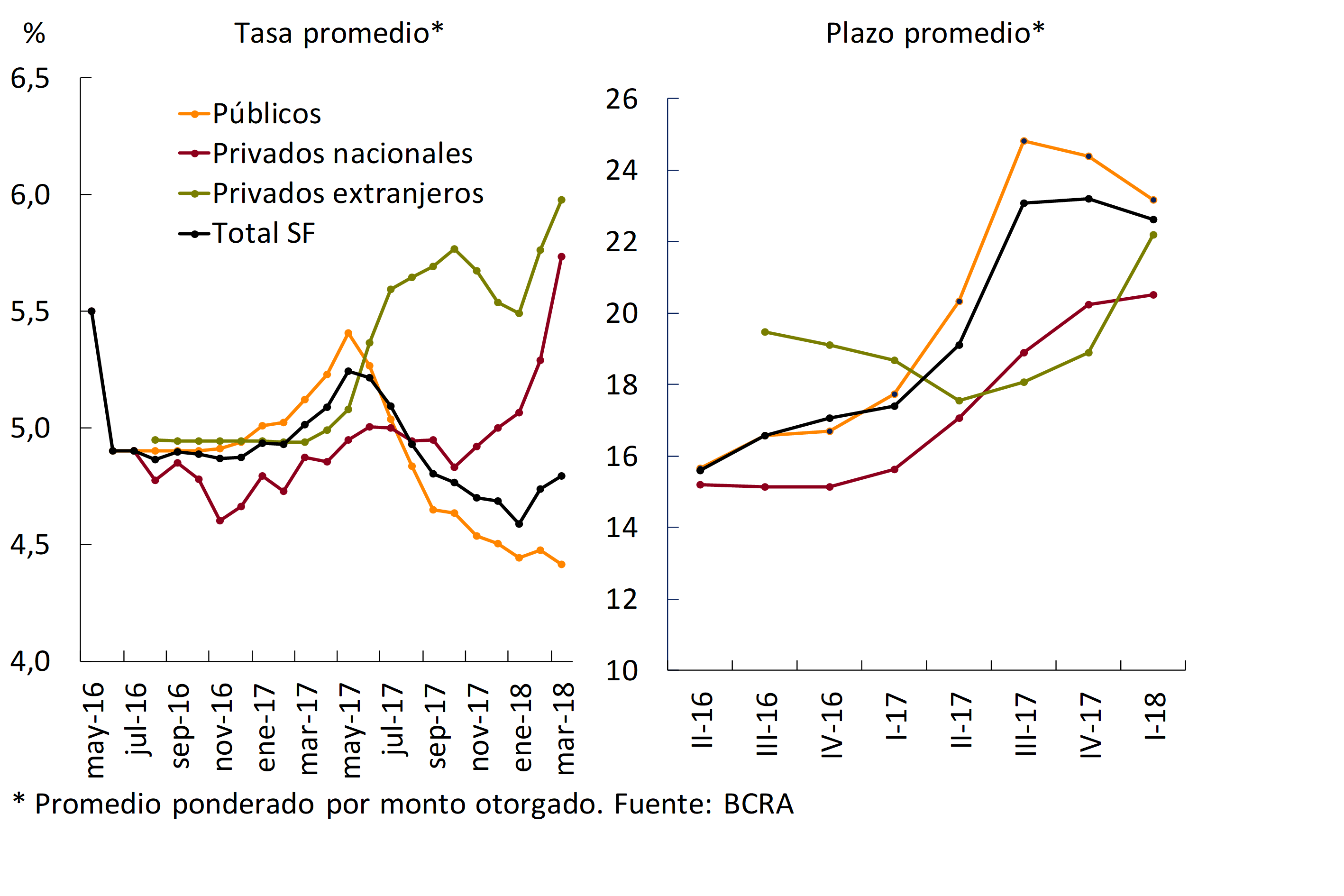
So far this year, the average nominal active interest rate operated in pesos with the private sector37 did not show significant variations (standing at around 33%). On the other hand, the average interest rates operated in UVAs tended to increase during the last months in all lines of credit. In particular, the average interest rate on UVA-adjustable mortgage loans stood at 4.8% in March, above the value of December, reflecting the performance of private banks in the first quarter of the year (see Figure 2.4).
Figure 2.4 | Mortgage financing in UVA
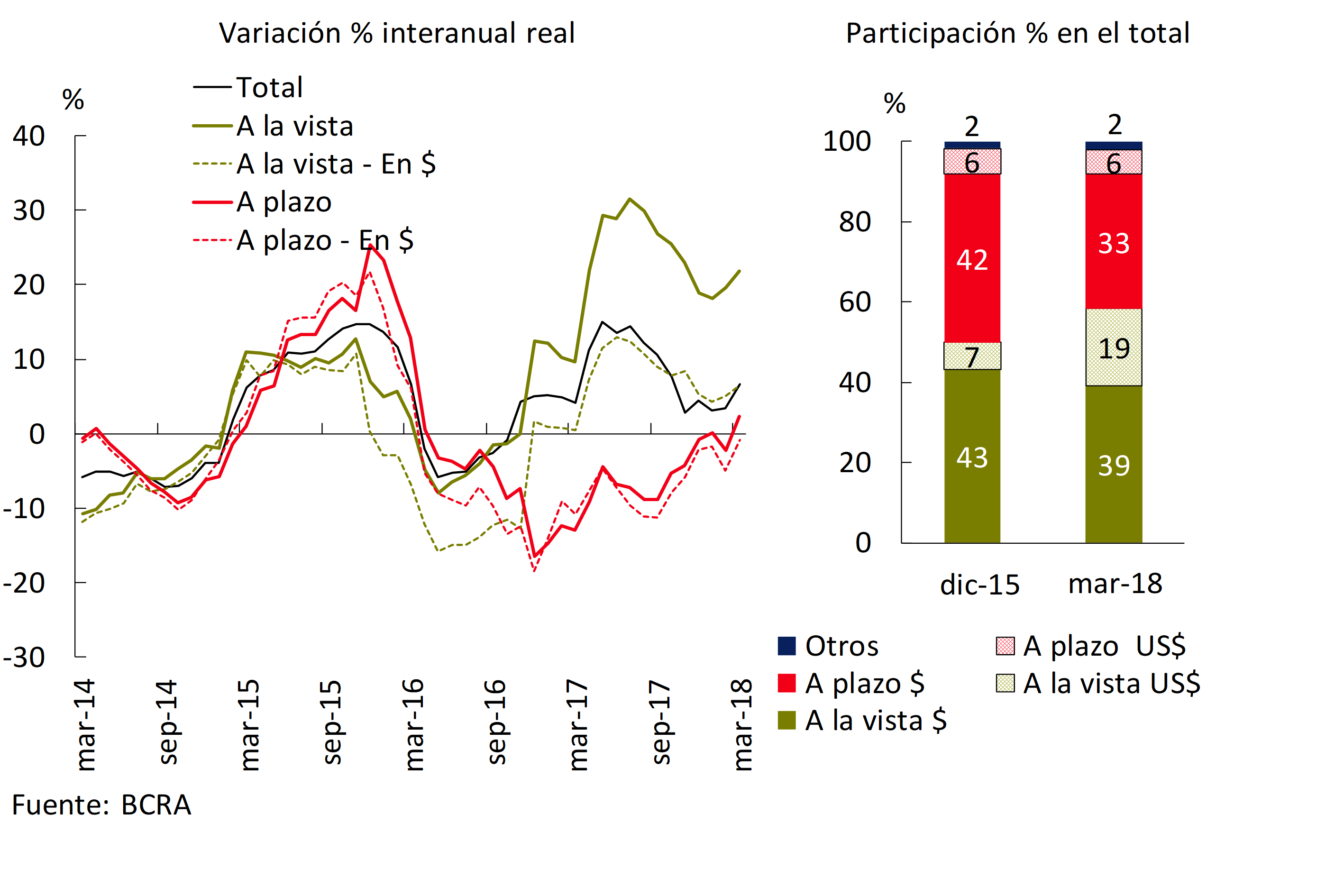
Private sector deposits continued to show a moderate performance at the end of 2017 and the beginning of 2018 (see Figure 2.5), in a context in which liquidity remains at relatively high levels, influenced so far in 2018 by the aforementioned additional flow of funding from the placement of ON. Private sector deposits accumulated growth in March of 6.7% y.o.y. when adjusted for inflation, 3.9 p.p. below the variation to September 2017. The slowdown in the growth rate of these placements was mainly explained by the performance of demand accounts. Despite this evolution, these deposits remain relatively the most dynamic at the margin. For their part, the time deposits of companies and families showed a slight recomposition in the last six months. In this sense, a certain effort to attract by banks would have been observed until April 2018, as had begun to be reflected in the reduction of the gap between deposit rates (especially the BADLAR Private Banks) and the LEBAC rate (see Chapter 1). The BCRA continues to adopt measures to promote a context of deposit expansion, for example, by readjusting the regulatory ceilings on deposit insurance interest rates and thus promoting competition in deposits (see Box 3), as well as reducing the minimum term of fixed-term placements in UVA (from 180 to 90 days).
Figure 2.5 | Balance of total private sector deposits
Going forward, bank credit to the private sector is expected to continue its expansion process at a faster rate than the growth of economic activity. This behavior is based, in particular, on the favorable macroeconomic configuration, with investment (in particular, construction) recovering its role in boosting activity, a process of disinflation that is expected to deepen, while relatively low levels of sectoral debt persist. In this sense, in terms of financing funding, it is estimated that in the short term a general scenario of lower relative growth of private sector deposits compared to loans will persist. The latter would be based mainly on the use of surplus liquidity and the performance of other sources of funding38. The expected evolution, both for credit and for funding sources, will be conditioned by the persistence of the current scenario of greater volatility, which led to action on monetary policy rates in order to avoid a disruptive dynamic in the foreign exchange market and to continue advancing in the process of reducing inflation levels (see Chapter 1).
Since its implementation in Argentina in 199539, deposit insurance has become one of the components of the safety net to protect the savings that families and companies channel to banks. Its design presented a wide range of characteristics, including the exclusion of those placements with interest rates above a certain margin (2 percentage points per year) with respect to a market reference rate40. This sought to limit potentially riskier liquidity management strategies and banks’ business in general.
Given the new context of micro and macroprudential policies, the BCRA evaluated the efficiency of the aforementioned limitation and decided to recalibrate it at the beginning of 201841. In this sense, it was established that only the following will be excluded from the coverage: i. deposits and time investments that exceed 1.3 times the reference rate or the aforementioned rate plus 5 p.p. (of both the greatest) and ii. demand deposits that exceed the reference rate. In both cases, the reference rate remains the same (there were previously different ones, depending on the type of placement42), standing at 20.82% at the beginning of April for deposits in pesos, 0.58% for dollars and 2.96% for those denominated in UVA43. The aim is to stimulate competition in the banking sector without neglecting its prudential objective44, resulting in a possible improvement in the remuneration of savings, as well as in the volume of resources available for intermediation.
In terms of financial inclusion, progress continued to be observed in the latter part of 2017 and at the beginning of 2018, with greater coverage in terms of access points (ADPs) (see Section 4). In addition, since the last IEF, the BCRA has continued to adopt measures aimed at simplifying public access to financial services (see Regulatory Annex).
Profitability levels show a further decline
As detailed in Chapter 1, the disinflation process is expected to resume gradually. In line with what has been developed in the last editions of the IEF, the expected disinflation continues to pose a challenge to institutions in terms of its potential effect on their profitability, particularly given that it would imply lower profits for taking demand deposits and subsequently channeling loans with a higher nominal return. This framework, together with a greater degree of competition, requires banks to make progress in achieving efficiency gains and in reconfiguring their businesses in the short and medium term.
After a certain stabilization in the level of nominal profitability of the aggregate of entities during the first quarters of 2017, at the end of the year the financial system was redirected on a path of gradual decline in its profits45. Thus, the cumulative profitability of the sector during 2017 totaled 2.7% of assets (ROA) ($77.7 billion in the year, 4.3% more than in 2016), 0.9 p.p. and 1.3 p.p. less than in 2016 and 2015, respectively (see Table 2.3) 46. Similar paths were observed by both public and private bank groups, although among the latter the national banks verified a small increase in their ROA between 2016 and 2017.
Table 2.3 | Profitability of the financial system
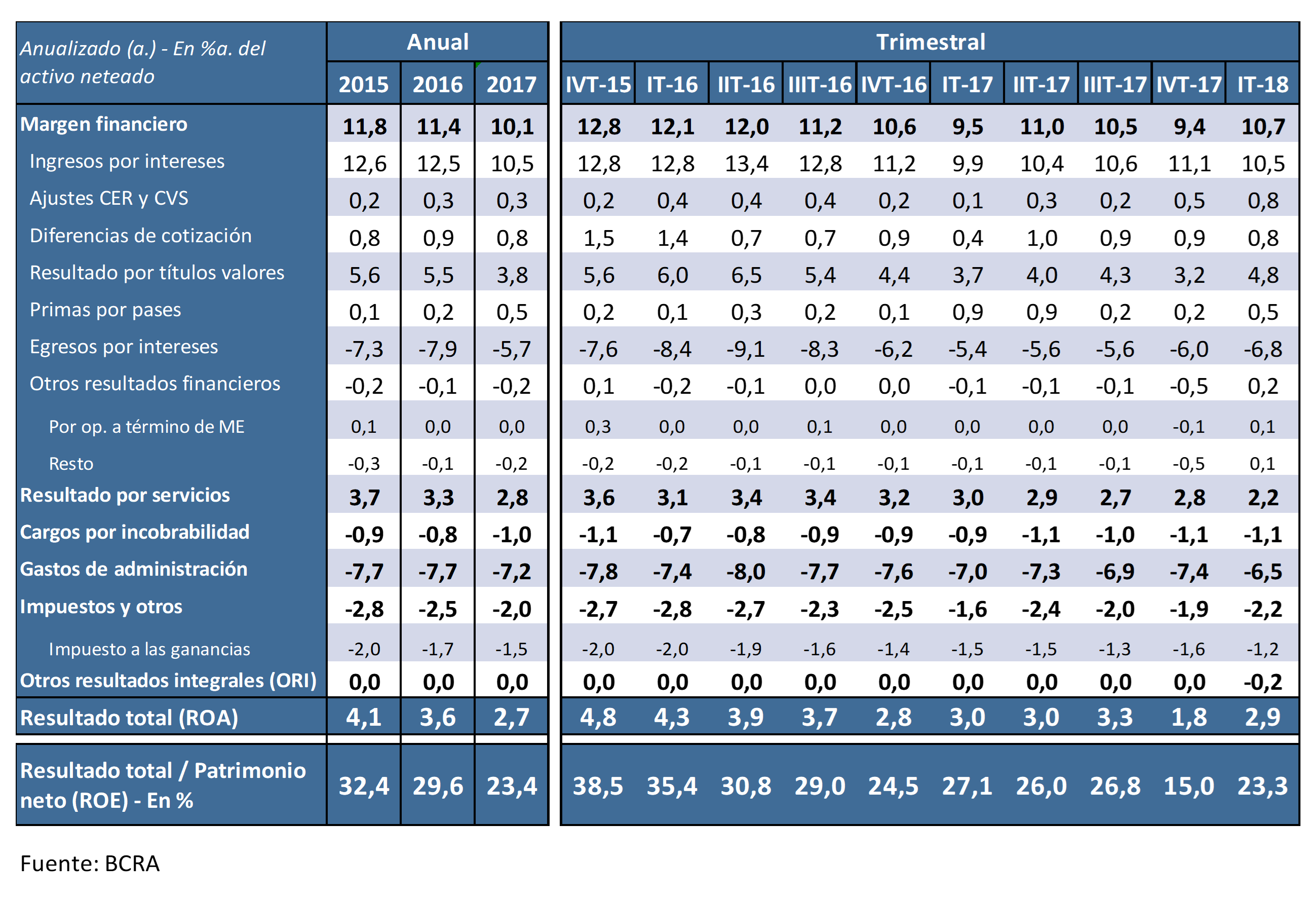
In the first quarter of 2018, the ROA of the financial system stood at 2.9% annualized (y), after closing the last quarter of 2017 at 1.8% y.o.y., these periods being particularly influenced by the performance of public banks. In fact, private banks kept their profitability in terms of assets relatively unchanged from the first quarter of 2017 onwards.
In the last two quarters, at the end of 2017 and the beginning of 2018, the financial margin of the financial system showed certain gradual changes. On the one hand, the pool of interest income and CER adjustments gradually grows. Although interest income remained relatively stable compared to previous quarters, the weighting of CER adjustments grew from low levels as a result of the greater intermediation in UVA. Interest outflows increased, partly driven by a recomposition of public sector placements on term loans (especially in public banks), and a slight reduction in nominal interest rates paid on deposits (see Chapter 1). Equity earnings continue to have an important weight in the financial margin of banks (in particular public entities), representing 4.8%a. at the beginning of this year, presenting some volatility.
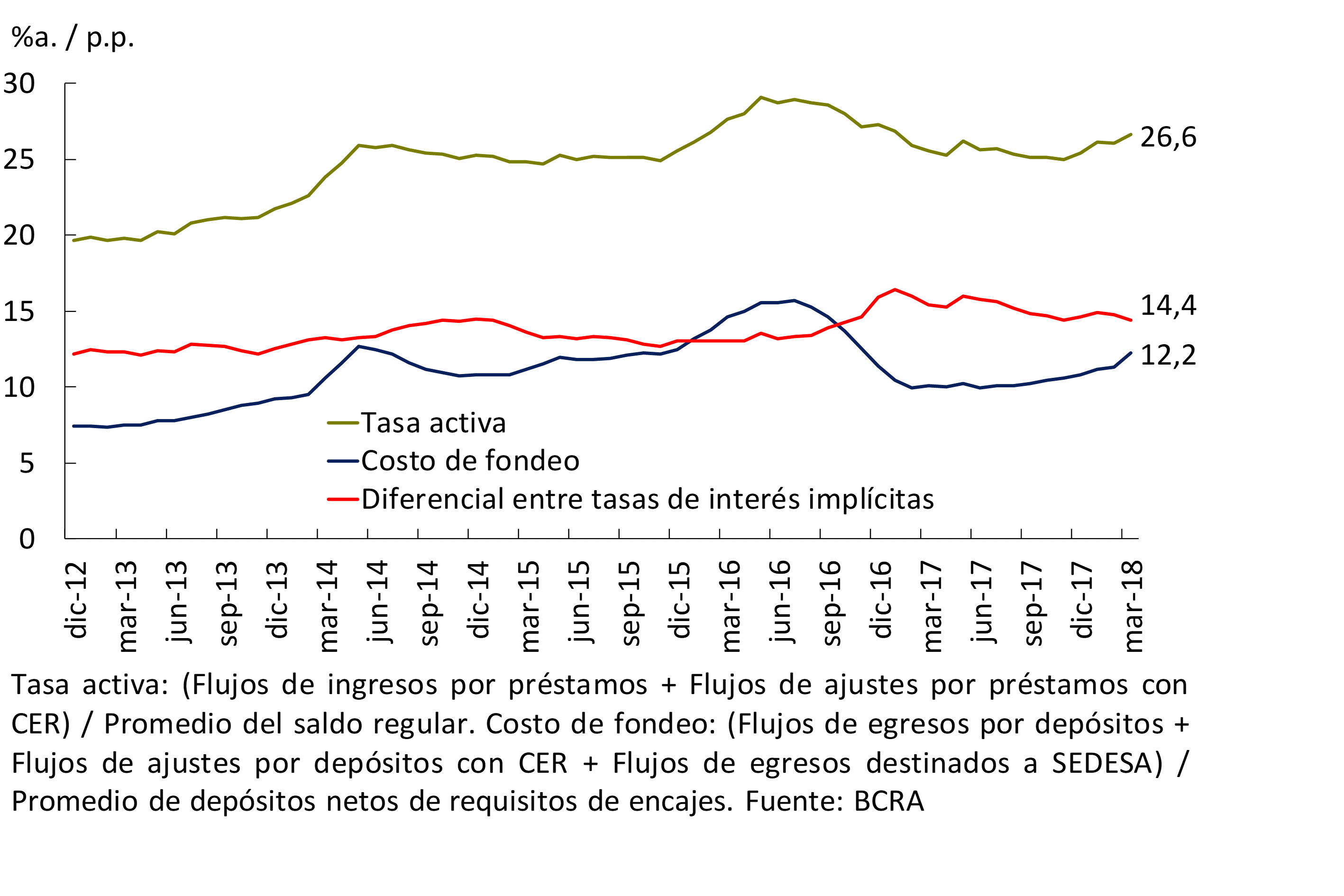
The estimate of the implicit differential between lending rates and the cost of funding deposits, both in national currency, fell in the last six months to a level of around 14.4% (see Figure 2.6).47 From September – the last data published in the previous IEF – until the beginning of 2018, the implied lending rate and the cost of funding for deposits increased, the latter being more significant as a result of changes in the composition of funding for term sight deposits, especially in public sector placements. It should be considered that the value of this differential is below those observed at the end of 2016 and the beginning of 2017.
Figure 2.6 | Estimation of the implicit interest rate* and the implicit funding cost for deposits* – Items in National Currency – Financial System – Cumulative 3 months mobile
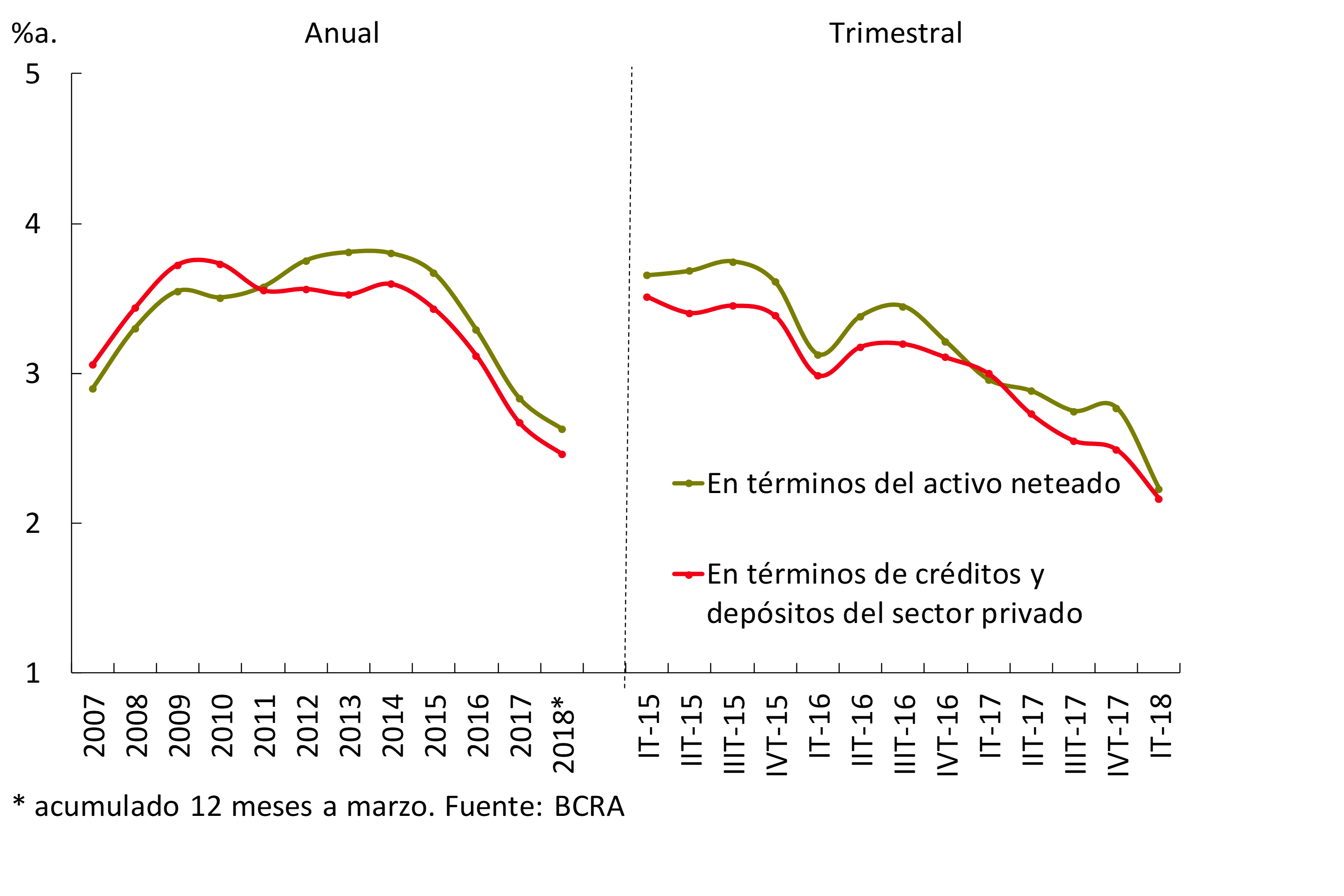
The results obtained by services obtained by banks maintained their downward trend in recent quarters, totaling 2.2%a. in the first quarter of 2018 (see Figure 2.7), or 2.6% in the accumulated of the last 12 months (lowest value in recent years)48. Here it is worth mentioning that this downward trajectory of this line of the results table is consistent with a set of policies implemented by the BCRA that, in more general terms, have sought to stimulate an environment of greater competition in the financial system (see Section 5)49. This should be reflected in benefits for customers and a readjustment of revenue streams for banks. In terms of competition in the provision of financial services in general (considering banking and non-banking entities), Fintechs are gradually becoming more relevant, although still at reduced levels (see Box 4).
Figure 2.7 | Results by services – Financial system
Box 4 – Developments in the local fintech ecosystem
In the previous IEF, an initial analysis was carried out on the innovations that Fintechs are offering in the provision of financial services, a situation that improves competition and favors financial inclusion. Digging deeper into this ecosystem50 we observe:
• Significant growth in the sector, from 60 companies in 2016 to 135 in 201851. The segments with the highest growth were Loans, Payments and Remittances and Business Technology for Financial Institutions;
• Employment grew at an annualized rate of 18% between 2015 and 201752. Jobs in December 2015 were around 850, 1,000 at the end of 2016 and 1,180 in December 2017;
• Bank financing to Fintechs grew, although they are still relatively low. From the beginning of 2015 to the end of 2017, a total of 68 Fintechs have had financing from the financial system. Based on balances owed of an average of $5 million during 2015, $28 million at the end of 2016 and $128 million at the end of 201753;
• At the end of 2017, the first interrelations between Fintech and the capital market began to be observed. Some Fintechs have securitized part of their loan portfolio or are in the process of doing so. The programs reached about $210 million, allowing them to have funds to originate new loans and expand their market share;
• The profitability of Loans companies funded with equity capital exceeded those of Collective Financing (“Crowdlending”). This could be due to the market’s lack of maturity to operate on innovative platforms and its direct dependence on a large number of savers54.
• The profitability of Fintechs is lower than that of banks. Several reasons can explain this phenomenon, including lower leverage, relatively high expenditures on advertising and technology for each peso granted in loans, and a general portfolio of customers with a lower average credit rating (in some cases delinquency reaches almost 16% of the portfolio).
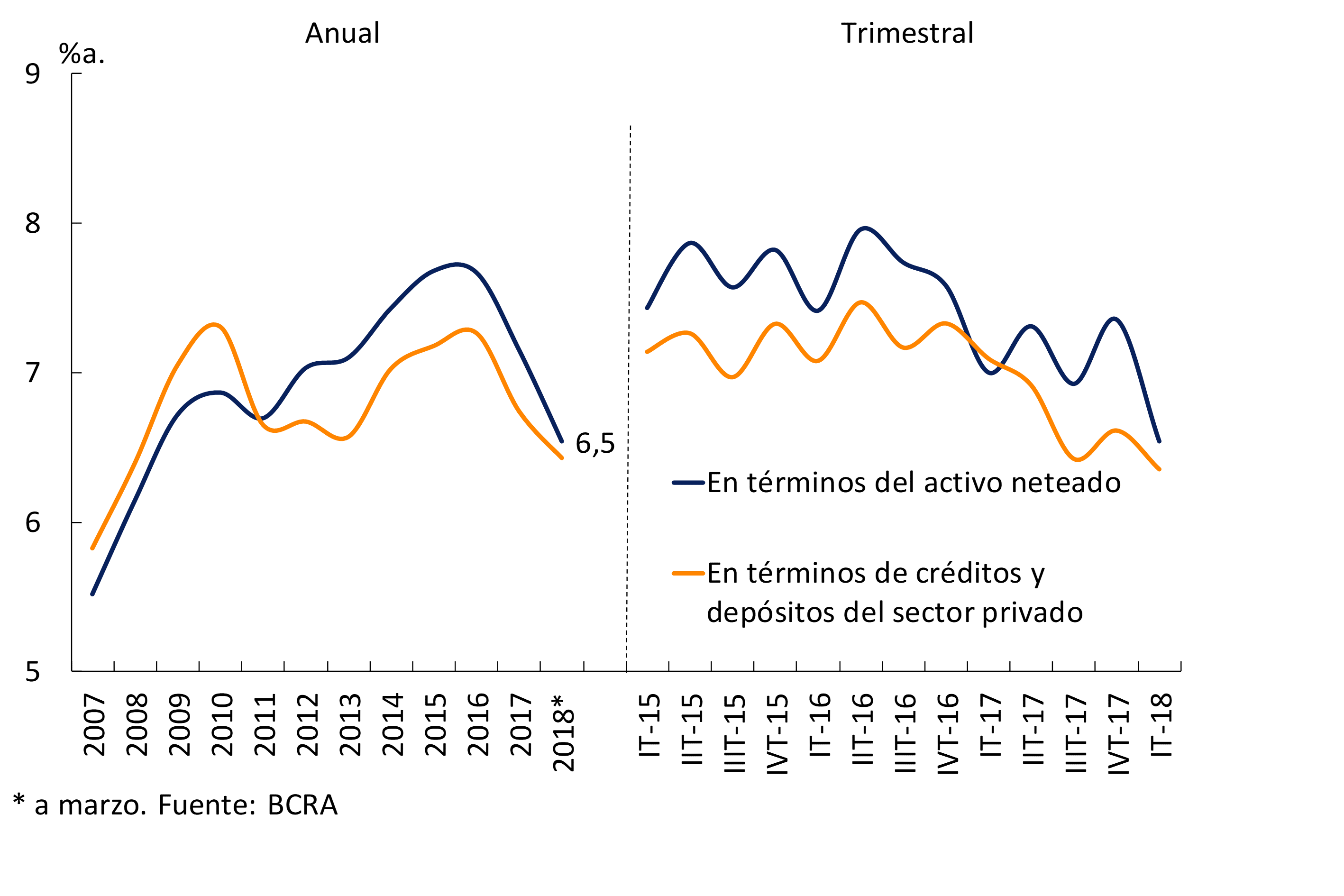
In a context of higher levels of intermediation, the administrative expenses of the financial system continued to decline in 2017 and at the beginning of 2018 (see Figure 2.8). These expenses stood at 6.5% y.a. in the first quarter of 2018. Although it exceeds the records of other emerging and developed economies, it is the lowest value observed locally in the last 6 years. This evolution is accompanied by both public and private banks. It should be considered that this institution accompanies entities in this process of reducing operating costs, promoting the use of new technologies that are reflected in efficiency improvements in the financial intermediation process, among other initiatives55.
Figure 2.8 | Administrative expenses – Financial system
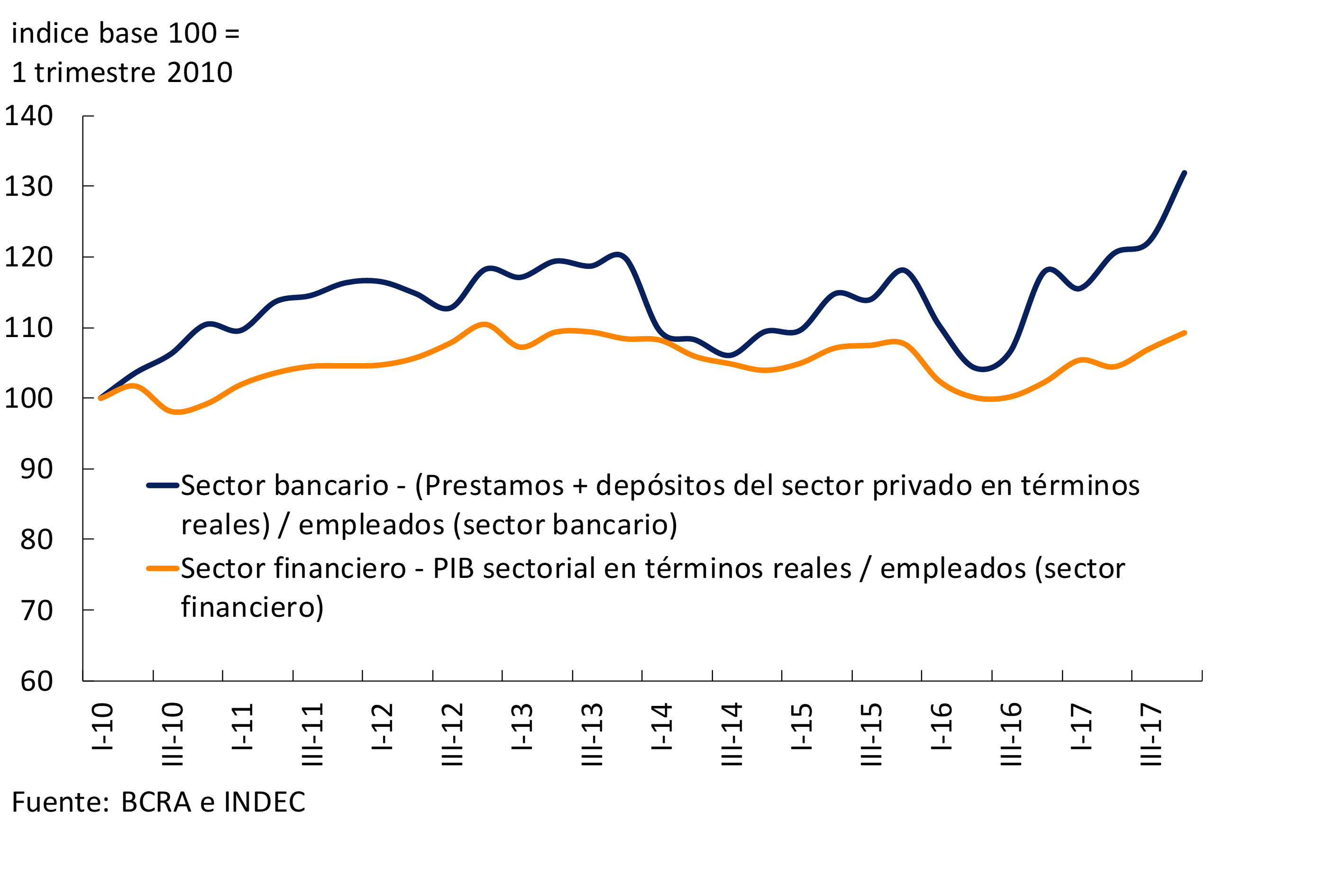
The recent drop in administrative expenses in the sector was accompanied by some improvement in productivity and greater use of banking infrastructure. Driven by higher levels of financial intermediation, the ratio between the total number of loans and deposits (at constant prices) in this sector and the number of bank employees increased throughout 201756 (see Figure 2.9), a performance that was generalized among all groups of financial institutions. The value reached at the end of last year is the highest in the last 16 years. This positive trend boosts the growth in productivity per employee in the aggregate financial sector of the economy, which is one of the largest expansions among the different sectors of economic activity57.
Figure 2.9 | Productivity
The financial sector maintains high levels of solvency
In the last months of 2017 and so far in 2018, the solvency ratios of the aggregate financial system remained at high levels. This situation is reflected in a significant degree of resistance of the sector to possible extreme events of materialization of credit risks (see Chapter 3). The capital integration of the entities represented 15.3% of risk-weighted assets (RWA) in March, slightly below the 6-month ago (-0.9 p.p. compared to September) and the value of a year ago (-1.6 p.p.). (see Figure 2.10). This was caused both by the growth of the system’s RWAs in the face of the performance of credit to the private sector, and by the reduction in the capital of a public entity of magnitude58 that, in part, caused a decrease in the capital integration of the group of public banks.
Figure 2.10 | Integration and excess regulatory capital (Position)
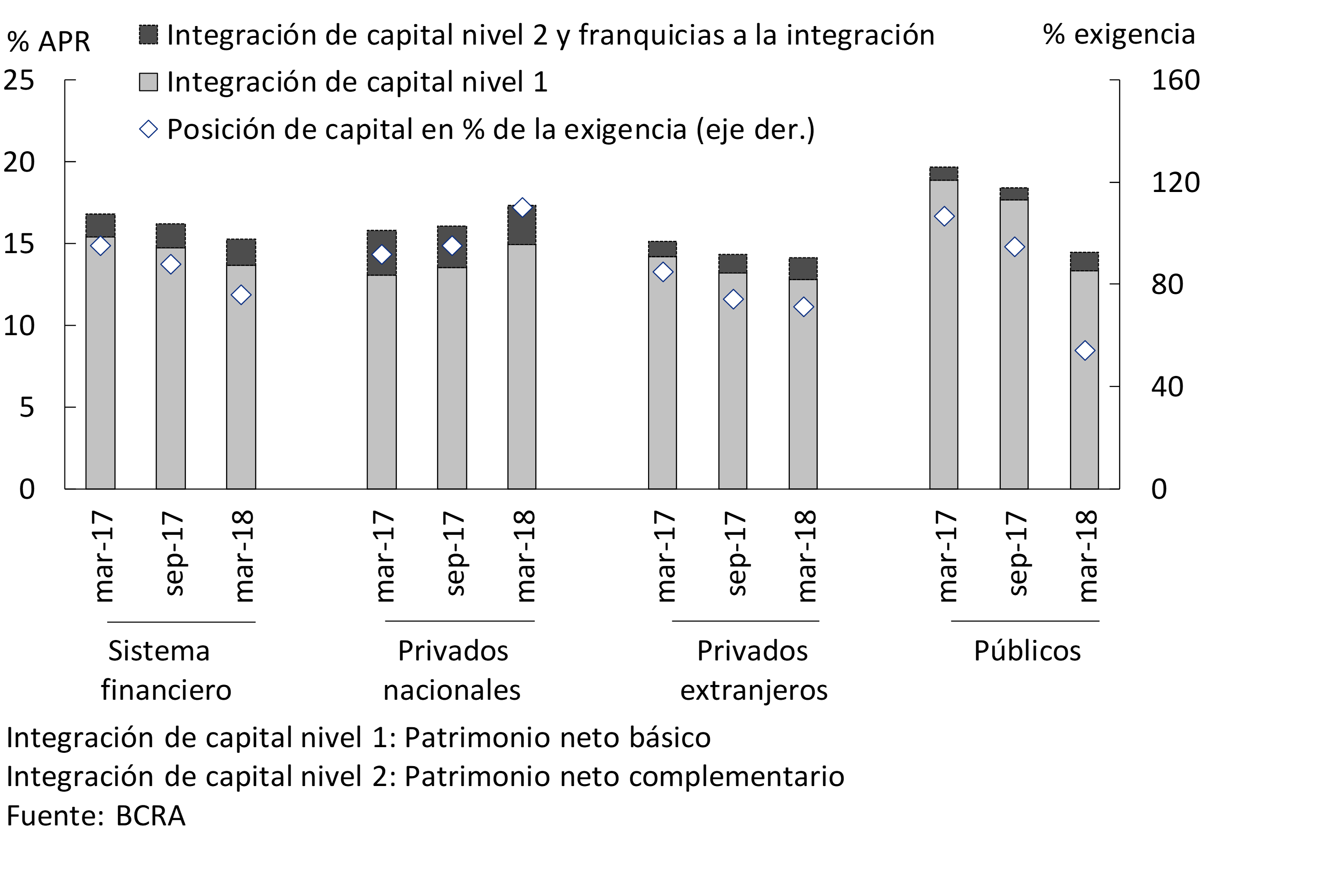
In the period, Tier 1 capital59 in the financial system accounted for 90% of total capital, remaining at values similar to those observed in the last IEF and well above other emerging and developed economies60. Within the framework of current prudential regulations, the excess integration of regulatory capital in relation to regulatory requirements stood at almost 76% for the financial system, an indicator that is also comfortable when analyzing the different groups of financial institutions61.
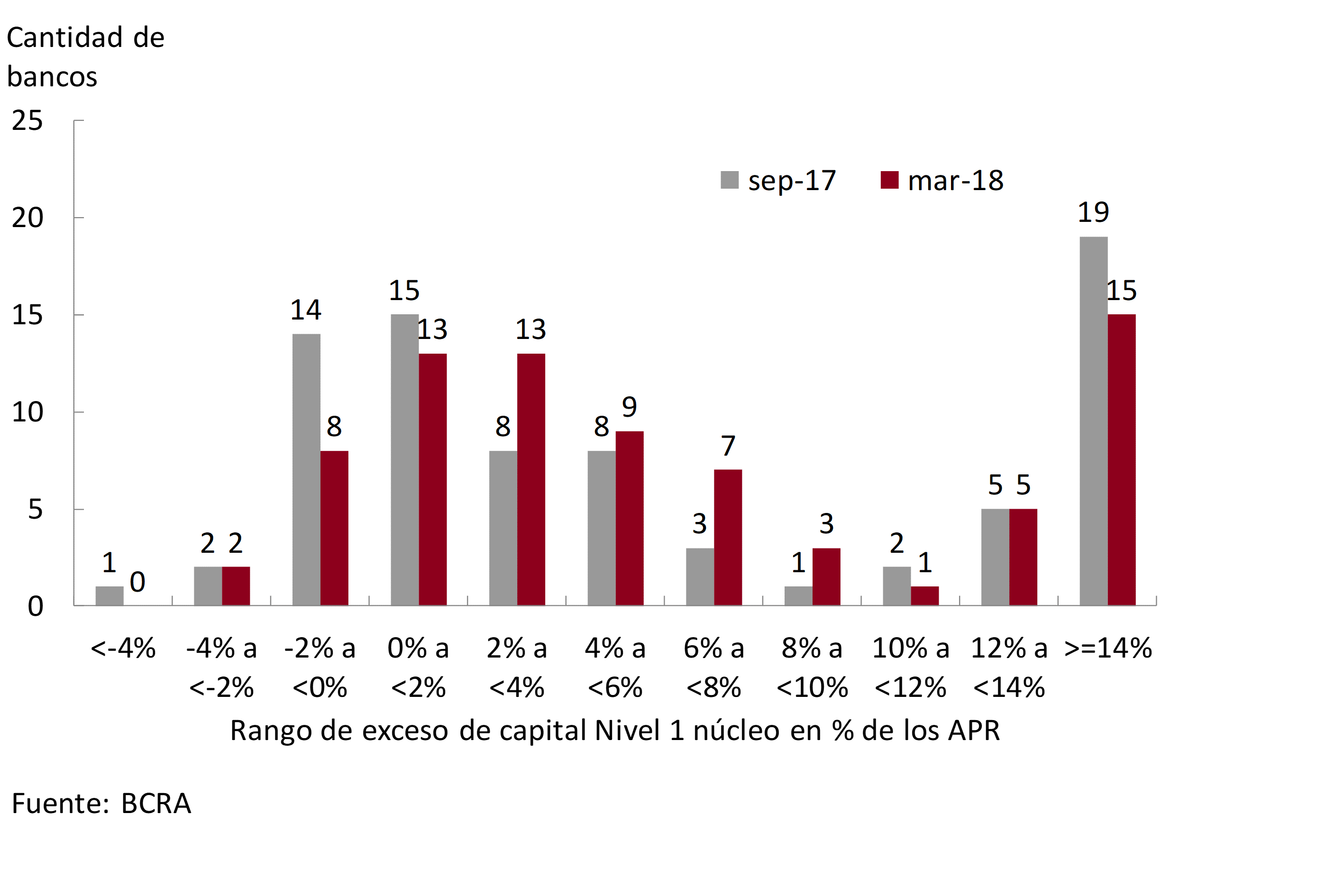
Considering the current regulatory capital buffers or margins62, the aggregate of the financial system registers an excess of capital integration Level 1 core63 equivalent to 3.6% of the RWAs as of March, slightly below the level evidenced in the last IEF and the value of a year ago. In particular, ten (10) financial institutions of the77,64 that are currently active did not fully cover all margins at the end of the first quarter of 2018 (see Figure 2.11) —seven (7) less than at the end of the third quarter of the previous year—, equivalent to 15% of the total assets of the system —18 p.p. less than last September—.
Figure 2.11 | Tier 1 (Core) Excess Capital Estimation Exercise, Including Capital Margins
At the end of 2017, theLeverage Ratio of 65 for all financial institutions stood at 10.1%, slightly higher than the value of a year ago (9.8%) and just below the figure at the end of 2015. In this way, this indicator continues to far exceed the Basel recommendations (which establishes a minimum ratio of 3%).
3. Stability analysis
In general, the financial system maintains the features of soundness identified in previous editions of the IEF, combining high levels of liquidity, forecasts and capital, with low to moderate exposures to risks (individual and systemic in nature). In particular, in the context of the risk factors identified in the context assessment (Chapter 1) and the changes in the system’s balance sheet that define their vulnerabilities (Chapter 2), institutions as a whole would retain a significant degree of resilience to extreme adverse changes in economic conditions. It should be considered that, in the current phase of the financial cycle, banks are increasing their exposure to risks. In this sense, in a favorable economic context, various estimators of the probability of default continued to show behaviors consistent with a scenario of low credit risk. In view of the sustained growth of UVA loans (particularly mortgages), equity mismatches continued to increase, mainly in that denomination and interest rates. In the medium term, there is room for the process of deepening the financial system to continue and, with it, increase risk exposures, which will continue to be monitored.
Exposure to systemic risks remains at low levels, although with an increase bias
The exposure of financial institutions to sources of systemic risk remains low, without showing significant changes with respect to what was mentioned in the IEF of the previous semester. In a general framework of very low sector depth and preponderance of transactional activities, vulnerabilities related to the level of concentration, interconnection and situation of systemically important institutions remain relatively limited. On the other hand, in the current phase of the financial cycle, the system’s exposure to credit risk is increasing at the margin, with the flip side being slight increases in sectoral leverage levels (households and companies). However, it is considered that the current dynamics of credit to the private sector do not yet show clear and convincing signs that lead to characterizing it as a process of “excessive” growth in the level of financing (which remains low in terms of GDP), that is, a situation that leaves the system and the economy very vulnerable to the occurrence of adverse external events (see Chapter 2).
In particular, given the results of the most frequently addressed scenario-based stress exercises (see Box 5) and the most frequently addressed credit risk sensitivity exercises (see below), it is estimated that the financial system would be highly resilient to extreme (and unlikely) risk materialization events. This evaluation remains similar to that carried out in the previous IEF. A combination of low levels of risk exposure and high coverage margins (liquid assets, forecasts and capital), in an environment of appropriate regulation and supervision, combine to generate the aforementioned results.
Box 5. About the BCRA’s stress tests. Latest overall results and progress for 2018
The BCRA annually conducts top-down stress exercises for all financial institutions that operate locally. They are carried out by evaluating the solvency (capital adequacy ratios (RAC) and liquidity (cases of shortages and assistance needs) of each bank over a 2-year horizon, based on extreme adverse scenarios, and with assumptions and models defined and calibrated by this institution. In the last years ended with data from 2017, two different scenarios were used, originating from external shocks with different degrees of persistence. While in the first scenario there was a short-term shock followed by a recovery, in the second the financial tension was persistent throughout the horizon analyzed. Although active management measures by the entities (responses to the stress scenario raised) were not included, specific mitigation measures were considered, such as the existence of excessive forecasting. In addition, the effect of the validity of International Financial Reporting Standards (IFRS) as of 2018 was incorporated.
In terms of the impact on the RAC of the occurrence of the assumed extreme scenarios (low probability), the main results obtained in the last year show a significant degree of system resilience. A limited group of relatively small entities would have had a RAC of less than 8% in one of the two years of each scenario: 14 entities (out of 77) for the first short-term shock scenario and subsequent recovery; only 9 for the second scenario of persistent tension. The lack of capital needed to bring it up to 8% of RWAs would have been, in the year of greatest impact, less than $1,400 million (0.7% of the system’s excess RPC).
The stress exercise that is beginning to be carried out in 2018 will be adapted to the new IFRS accounting framework. Additionally, as in previous periods, improvements will continue to be incorporated in the calibration of the models used, as well as in the assumptions. For example, a greater degree of detail for some recurring income and expenditure for specific entities that were currently given a general treatment for the entire system.
Likewise, for the first time at the local level, in 2018 a bottom-up stress test exercise is being carried out with the participation of 4 private entities classified as locally systemic (they represented 31% of the system’s assets at the end of 2017). With this objective, the participating entities were provided with two scenarios (one base and one stress) and a guide detailing the methodological framework of the exercise. Entities are expected to use their own risk assessment and measurement models. Once this exercise is over and the results have been analyzed, the BCRA will consider extending it to a greater number of entities (to all large entities or even to the entire financial system).
Given the current phase of the financial cycle, the outlook is for a moderate relative increase in systemic risk. This would result from greater exposures to risk (particularly credit and term) and leverage and lower liquidity margins, as a result of the growth in intermediation levels, with an important role for mortgages and term financing to companies. Thus, the loan balance is expected to increase due to the granting of new funds not only to current debtors but also to new customers (for whom relevant credit information is needed). This will require adequate monitoring, with a focus on the credit practices and standards that the entities are applying. At this point, it is necessary to highlight the importance of the latter in determining the quality of the loans generated at any given time, given that they condition the evolution of their probability of payment in the event of possible changes in macroeconomic conditions (see Section 6). In line with the assessments mentioned above, the BCRA has maintained the rate for the Countercyclical Capital Margin67 at 0%.
Exposure to credit risk increases, while default probability indicators remain at low levels
The financial system’s gross exposure to the private sector increased markedly in early 2018, accompanying the economy’s performance (see Chapter 2 and Figure 3.1). The year-on-year increase was mainly explained by the performance of national public and private banks, and was reflected in both financing to households (which came to represent 23% of assets, with an increase of 3.3 p.p. y.o.y.) and to companies (26.2%, variation of 3.6 p.p. y.o.y.). Despite this, these values are lower than the maximum reached after the 2001-2002 crisis – in mid-2013 – giving room for the current dynamism of credit demand and supply to be maintained.
Figure 3.1| Gross exposure to the non-financial private sector – Financing to the private sector as % of net assets – By group of banks
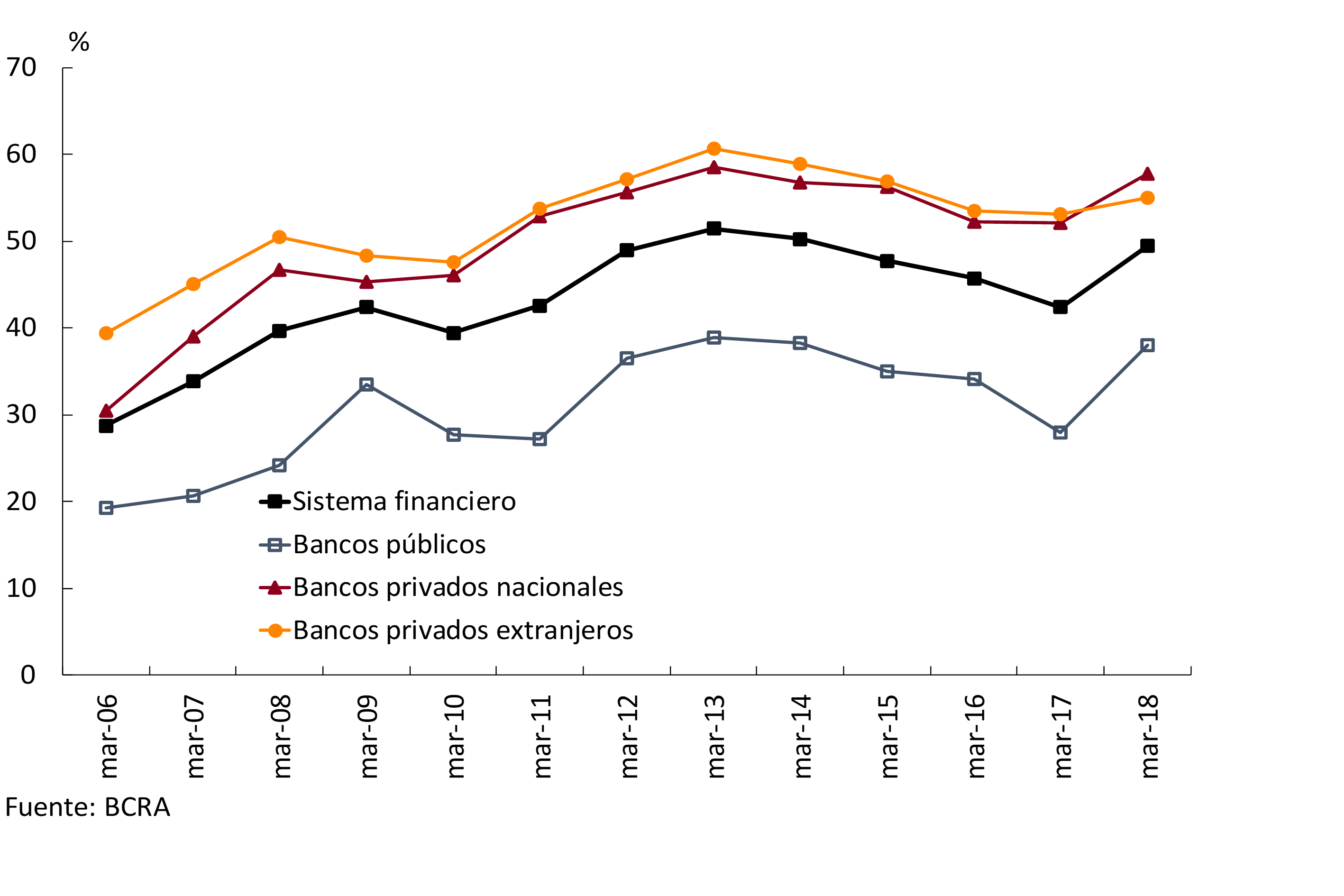
This increase in banks’ exposure to the private sector was accompanied by a reduction in the level of credit concentration among debtors68, tempering the accumulation of systemic risk.
In the current positive phase of the financial cycle, the probability of default of the private sector would be kept at low and limited levels. The irregularity of the portfolio was around 2% of the credit in this sector at the beginning of 2018, remaining close to the value observed at the time of the publication of the previous IEF and to the average of the last 7 years (see Figure 3.2)69. For its part, the forecast accounted for the entities exceeds the amount of the portfolio in an irregular situation70. These numbers would be showing, in part, the prudence of banks when managing credit risk.
Figure 3.2 | Irregularity of credit to the private sector – Irregular portfolio / Financing (%) – By group of banks
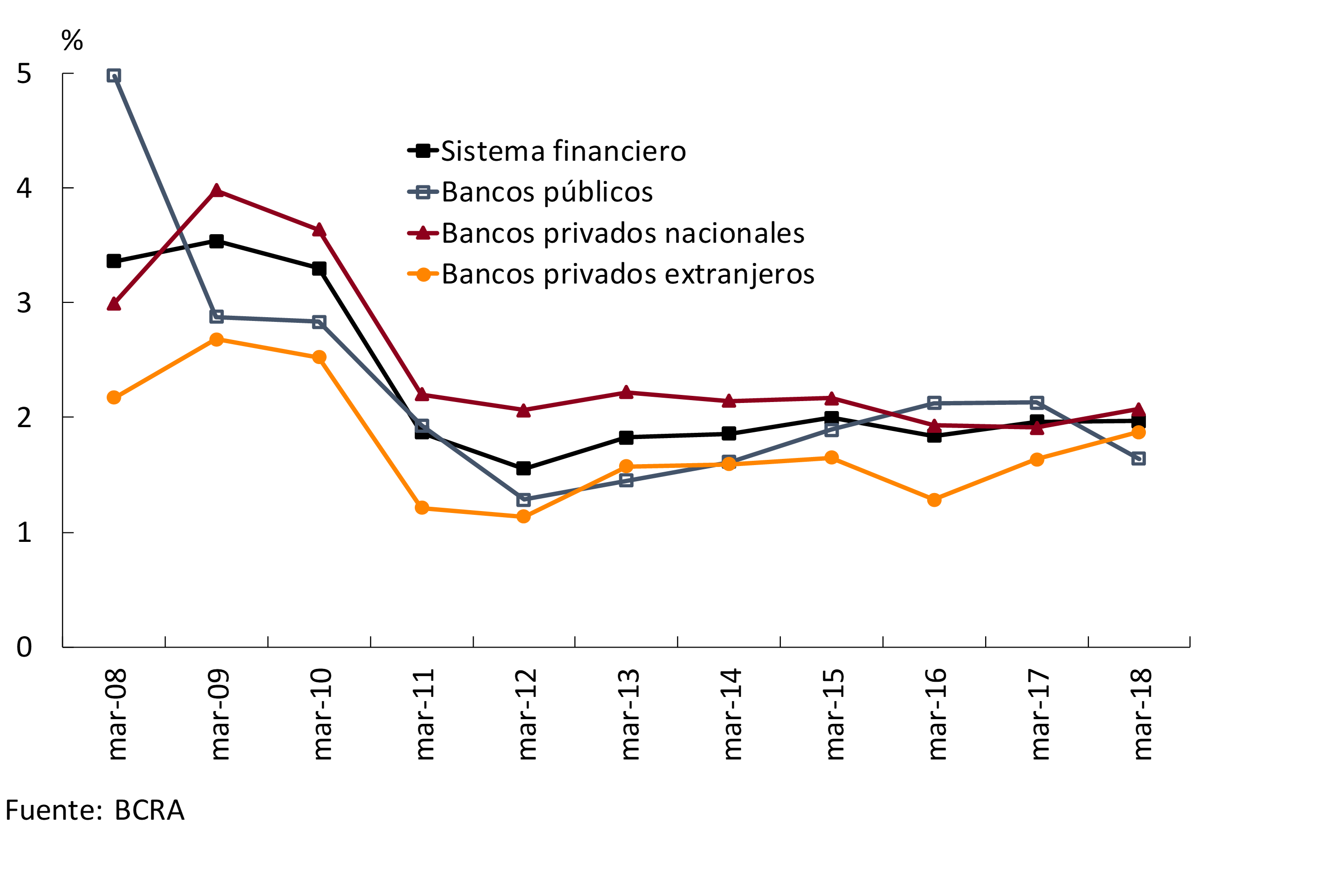
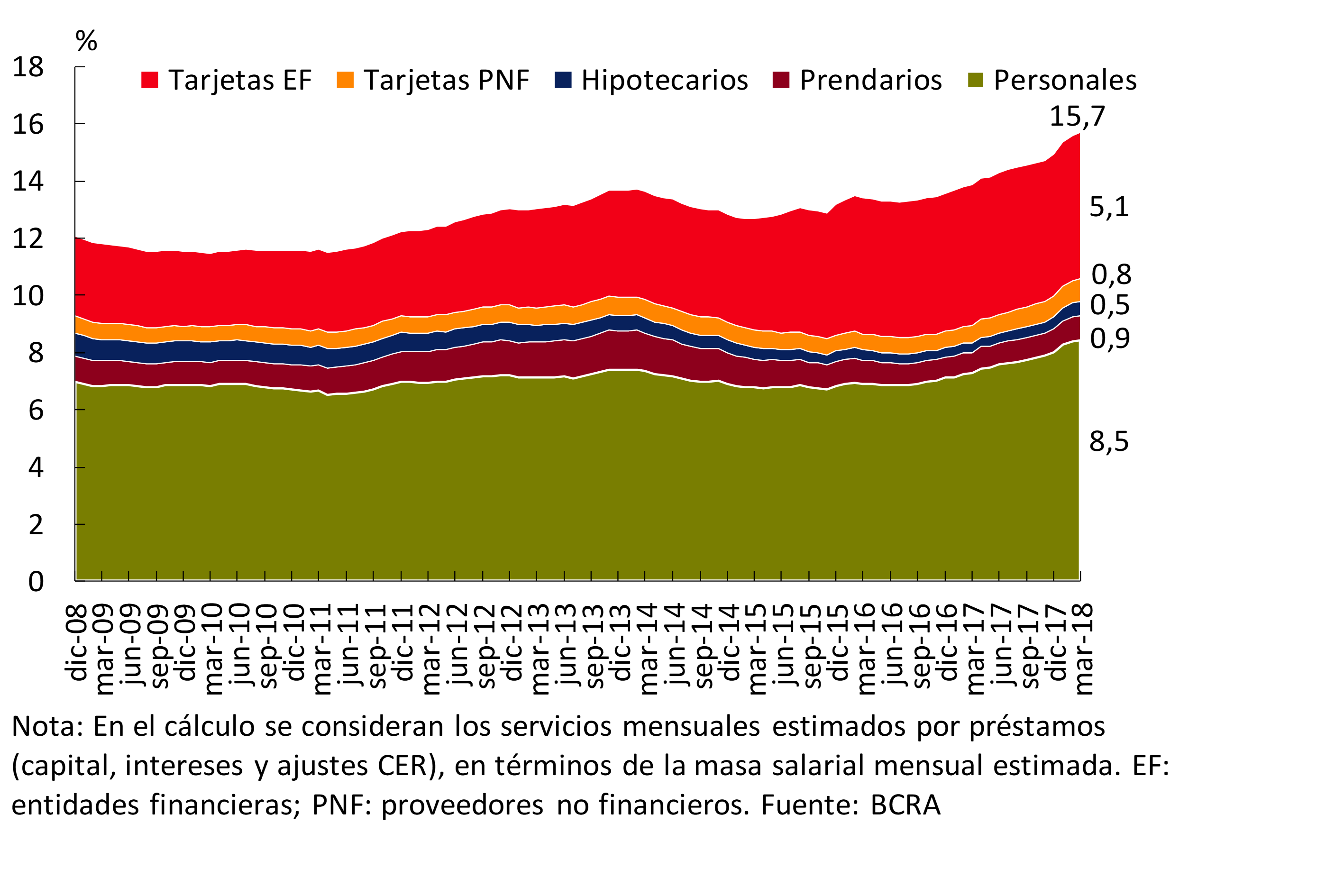
A more detailed analysis highlights some differences between the family and business segments. On the one hand, the greater indebtedness of households is reflected in a greater financial burden (see Figure 3.3). The aggregate relative weight of debt servicing for this sector is currently estimated to be at its highest level since the end of 2008 (indicator available period). In this context, there was a slight increase in non-performing loans (+0.1 p.p. compared to the value of a year ago), reaching a level of 3%71. Disaggregated by segment, while non-performing loans in consumer loans increased (+0.5 p.p. y.o.y.), there was a decrease in the non-performing loan ratio of mortgage loans (-0.3 p.p. y.o.y., reaching a level of 0.2%), mainly due to the dynamism of the UVA segment (see Chapter 2). UVA mortgage loans have a regulatory clause that allows, under certain conditions, the extension of their term. This enables better management of risks assumed by the parties (see Box 6).
Figure 3.3 | Indicator of the financial burden of families – As a percentage of the wage bill
Box 6. UVA Loans: Possibility of Term Extension
Since its implementation in April 2016, UVA-denominated loans have seen a significant and sustained expansion. This performance is mainly driven by mortgage loans to acquire family homes, which have reached contractual terms close to 25 years, a situation that was practically non-existent at the local level until the end of 2015.
UVA loans have a set of characteristics that respond to the regulatory framework of the BCRA. These types of lines:
a. has a minimum term of 1 year;
b. its interest rate is freely agreed between the parties;
c. its repayment installments are monthly, and different types of repayment may be adopted;
d. they have a clause that obliges banks to give customers the option of extending the number of installments originally planned. The clause is triggered if the installment to be paid exceeds by 10% the value of the installment that would result from having applied a capital adjustment by the Wage Variation Coefficient (“CVS”), from the disbursement of the UVA credit.
This last prudential regulatory requirement (point d.) seeks to mitigate the effects of potential situations in which the evolution of inflation exceeds the performance of debtors’ incomes and generates tensions on their ability to pay. The aforementioned clause present in UVA contracts includes the following characteristics:
• it is up to the client – borrower – to choose whether or not to exercise it;
• If you choose to exercise it, the bank must extend the term originally foreseen for the loan by up to 25%;
The BCRA’s prudential regulations go a step further, establishing that when granting financing to individuals, banks must pay special attention to the quota/income ratio, so that the debtor can face possible increases in the amount of the installments without affecting their ability to pay. This is because the customer’s income may not follow the evolution of the economy’s inflation, nor that of the CVS, that is, the average salary variation.
On the other hand, non-performing loans for financing to companies stood at around 1%, falling slightly compared to the first quarter of 2017 (-0.1 p.p. y.o.y.)72, in a context in which their levels of indebtedness did not change much either. In this context, it should be considered that the BCRA recently promoted a greater use of climate change hedges, contributing to making the credit rating of debtors in the agricultural sector more solid (Box 7).
Box 7. Agricultural loans and climate risk coverage
In recent years, different mechanisms for covering climate risks have been developed internationally, which go beyond traditional agricultural insurance. This is how parametric hedging emerged, the payment of which depends on quantifiable objective variables that have a high correlation with the risk to be covered, such as rainfall levels (floods) or droughts in a given region73. In April, the BCRA decided to encourage the use of climate hedges, recognizing in the current solvency regulations the mitigation of the risk involved in contracting this type of hedging. Through Communication “A” 6489 , the requirements for provisions for uncollectibility risk for financing that contemplates such coverage were reduced, while in terms of minimum capital, the credit risk requirement for lines of up to the equivalent in pesos of €1 million granted to covered agricultural MSMEs was reduced by almost 25%. In this way, tools are established that strengthen the management of credit risk by financial institutions, in the event of extreme climatic or meteorological situations, such as droughts or floods, while allowing producers in the agricultural sector to access loans with more favorable financial conditions by contracting this type of coverage.
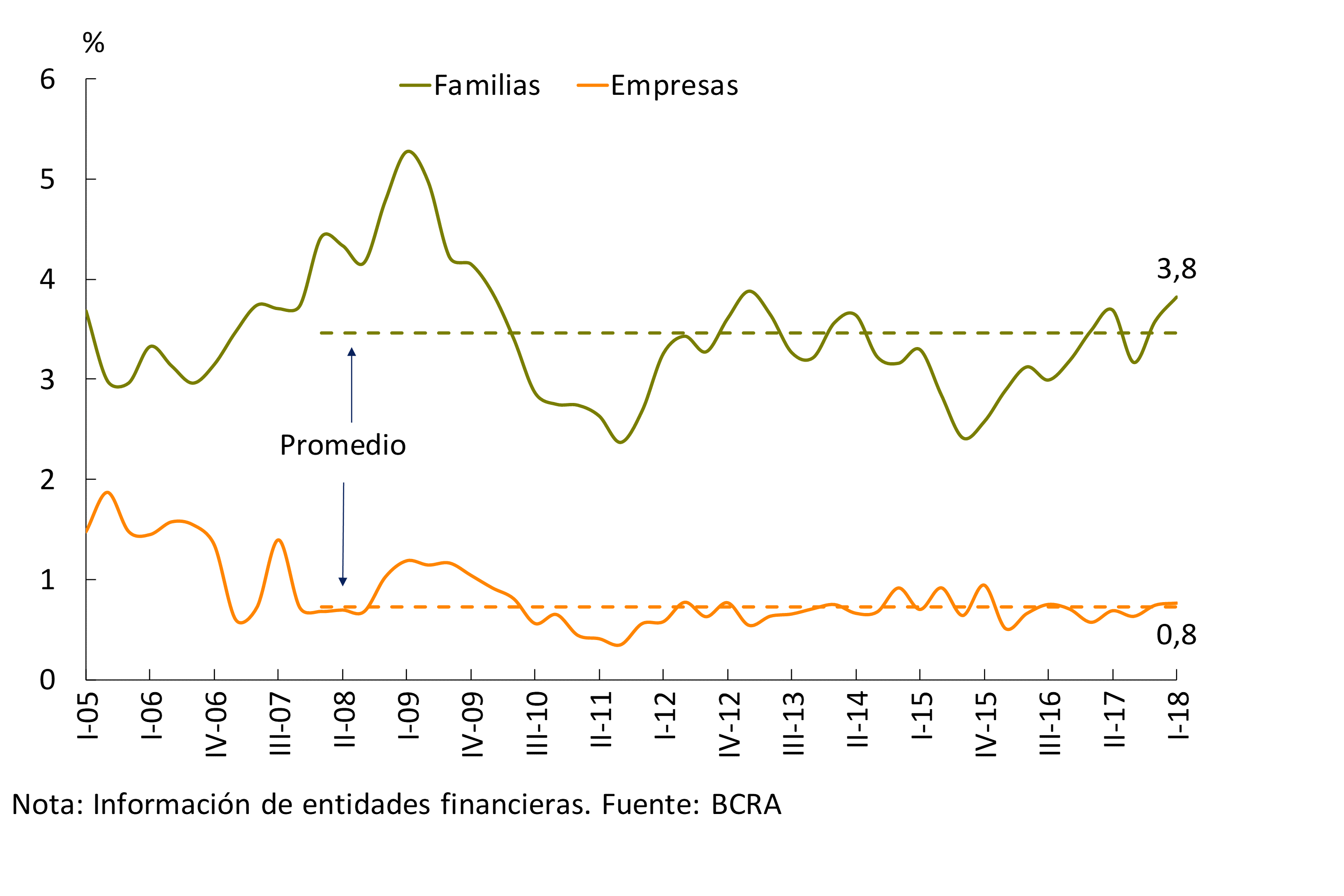
Indicators that try to approximate the probability of default based on micro data also show behaviors consistent with a context of limited credit risk. The MPI74 (estimate of the probability that a debtor will migrate from one credit situation to a worse one in a period of time – in this case three months), both in the household and business segments, registered a slight increase in the first quarter of 2018 and in a year-on-year comparison. MPI levels do not differ substantially from the average of recent years for their respective segments (see Figure 3.4). The MPI for households, with a certain upward trend since 2016, continues to exceed that of the corporate sector.
Figure 3.4 | Quarterly frequency of deterioration (MPI) of the debt situation
Sensitivity exercises show significant system resilience to extreme credit risk materialization events
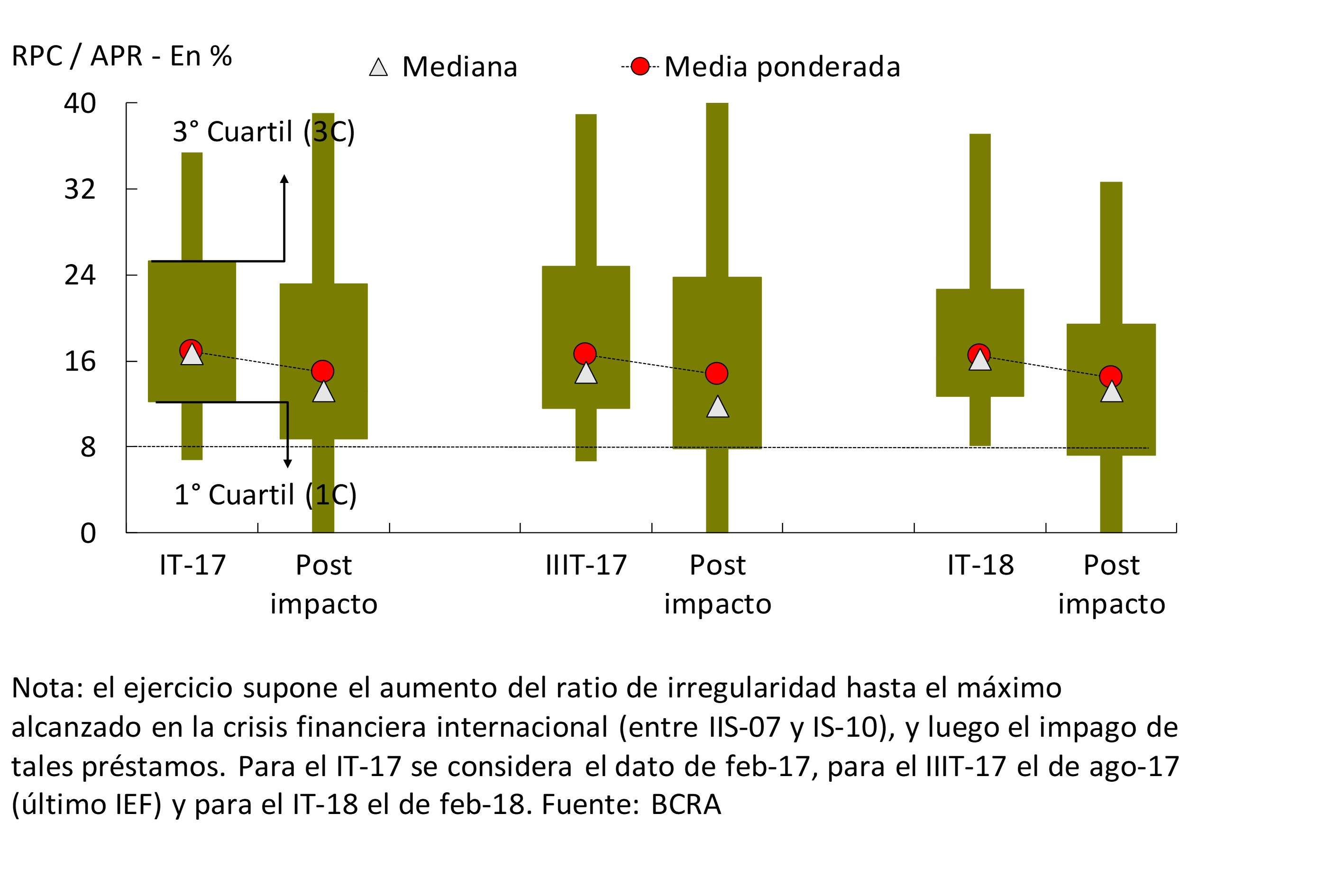
The sensitivity exercises carried out by the BCRA show that the banks as a whole would retain a high degree of resistance in the face of severe adverse scenarios75 of materialization of credit risk (with a low probability of occurrence). These exercises involve the non-payment of a certain set of debtors and their impact on the capital of each financial institution is estimated. The purpose of these exercises is to provide an additional approach to the analysis of the sector’s strengths and vulnerabilities, which is why the BCRA conducts them periodically (semi-annually), complementing the stress tests carried out once a year in which different macroeconomic scenarios are used (see Box 5).
In general, the sensitivity exercises carried out with data up to February 2018 yield results similar to those of the previous edition of the IEF. The most extreme severe exercise76 generates losses of close to 2 p.p. (-1.8 p.p. in the previous IEF) in the capital integration ratio in terms of risk-weighted assets (RWA) of the financial system, bringing this indicator to 14.4% (see Figure 3.5). This loss at the aggregate level is somewhat lower than the requirements of the capital conservation margin (2.5%). However, under the extreme conditions imposed in this year, 20 entities (19 in the previous IEF), representing only 14% of the system’s regulatory capital (11% in the previous IEF), would go from showing an excess of regulatory capital77 to having a capital position less than or equal to 0%.
Figure 3.5 | Regulatory Capital Sensitivity Exercise
The interest rate mismatch remains limited
The estimated duration of the investment portfolio (assets net of liabilities in pesos—with and without CER adjustment) of the financial system increased in relation to what was commented in the last IEF, standing at around 2.2 years at the end of 2017 (increase of 56%). This duration tripled in year-on-year terms, mainly due to the sustained growth of UVA financing. Despite the recent increase in long-term credit, banks as a whole continue to focus mainly on activities that involve a limited transformation of maturities. It should be noted that banks began to resort to alternative funding sources with a longer relative term, such as ON (see Section 3), which are instruments that could temper the mismatch of terms.
As of mid-2018, the regulations for the assessment of this risk will be modified and with this it is expected that the capital needs will be more associated with the risk profile of each institution. In this regard, at the end of 2017 the BCRA ordered modifications to the guidelines for risk management in financial institutions78 that will be operational as of the second half of this year. The Internal Capital Adequacy and Assessment Process (ICAAP) should specifically incorporate the interest rate risk of the investment book (ICAAP), according to its own risk appetite. As with other aspects considered in the ICAAP, the BCRA may require a capital increase or a reduction in its exposure if it deems it necessary.
Increased mismatch in UVA, although it remains at a relatively low level
Since the creation of the UVA in 2016, the granting of financing in this denomination has been characterized by being long-term and with a fixed interest rate – like mortgages. On the other hand, the resources to fund these lines turn out to be, in general, of a shorter relative term, in national currency and at a fixed interest rate —such as the one used mainly by banks—. This combination means that entities assume, in addition to the risk of term or interest rate mismatch, a risk of currency mismatch (UVA loans with funding in79 pesos).
To date, this mismatch of UVA/peso currency is incipient and moderate when compared to the values evidenced 10 years ago80 or with those currently registered in other Latin American economies81. This mismatch is based on a substantially higher growth in bank loans in UVA compared to the expansion of funding in that denomination. As detailed in Chapter 2, among the UVA loans, mortgage lines stood out, characterized by a term of more than 15 years.
In this context, the mismatch of the aggregate financial system in items denominated in UVA totaled 31.3% of the PRC as of April 2018, a level that amounts to 42.1% of the PRC if the total of items whose capital adjusts by CER82 is considered. These records were 20.5 p.p. and 26.7 p.p. of the PRC, counting only UVA or all the instruments adjustable by CER respectively, above what was evidenced in the last IEF. This evolution was mainly explained by public banks (see Figure 3.6).
Figure 3.6 | Estimated CER mismatch and its components by bank group – Latest information available*
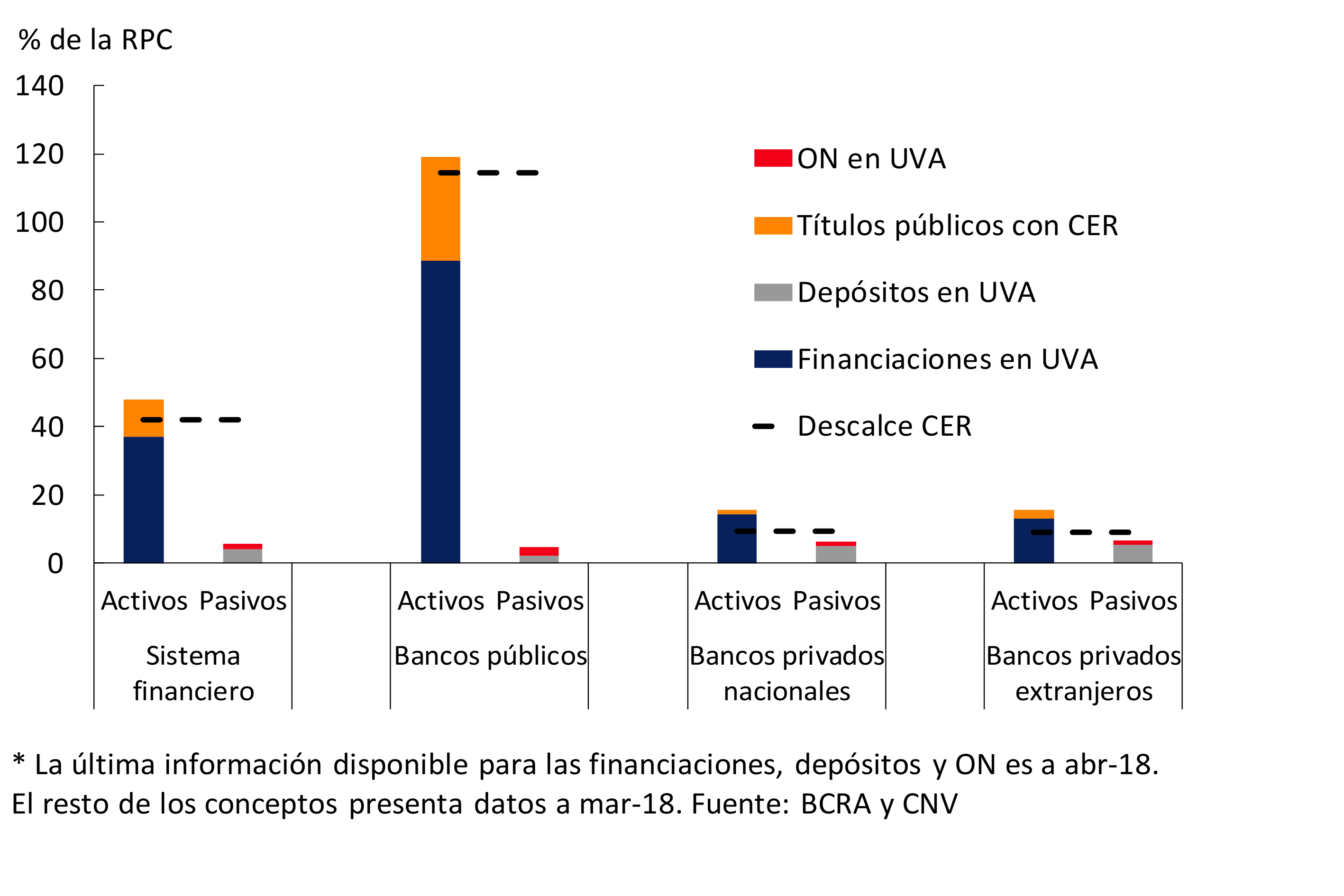
Since the end of 2017, entities have gradually begun to increase their funding in UVA, but at a relatively more moderate pace than loans. UVA deposits have increased since the last quarter of last year, reaching a balance of close to $17,000 million as of April (0.5% of total funding). In recent months, 5 financial institutions issued debt in this currency for an aggregate nominal value equivalent to $3,900 million (see Chapter 1), which were added to the 2 debt issuances made during the first part of 2017. Thus, the nominal value of all negotiable UVA obligations issued by banks amounted to $6,300 million at the end of the first quarter of 2018 (0.2% of total funding – for more details of ON placements, see Section 3). These values represent a marginal part of the $150,000 million of financing in that currency (4% of assets).
With respect to the expected dynamics for this mismatch, it should be considered that there are currently mechanisms that would collaborate with the management of the associated risks. On the one hand, the BCRA authorized financial institutions to offer fixed terms in UVA for a shorter term (the minimum goes from 180 to 90 days), as well as funds deposited in the Algarcía UVA (savings account in UVA). For their part, there are entities that are analysing the possibility of securitising part of their portfolio in UVA83.
The active mismatch of foreign currency remains in a moderate environment
The foreign currency mismatch was reduced compared to the level of the previous IEF release, representing a purchased position equivalent to 7.4% of the PRC as of March 2018 (see Figure 3.7). This variable is in a range of minimum levels since the end of the 2001-2002 crisis. In a floating exchange rate regime such as the one in force in Argentina since the end of 2015, banks incorporate the possibility of exchange rate volatility when defining their exposures.
Figure 3.7 | Foreign currency mismatch by bank group – Balance sheet position plus net forward purchases
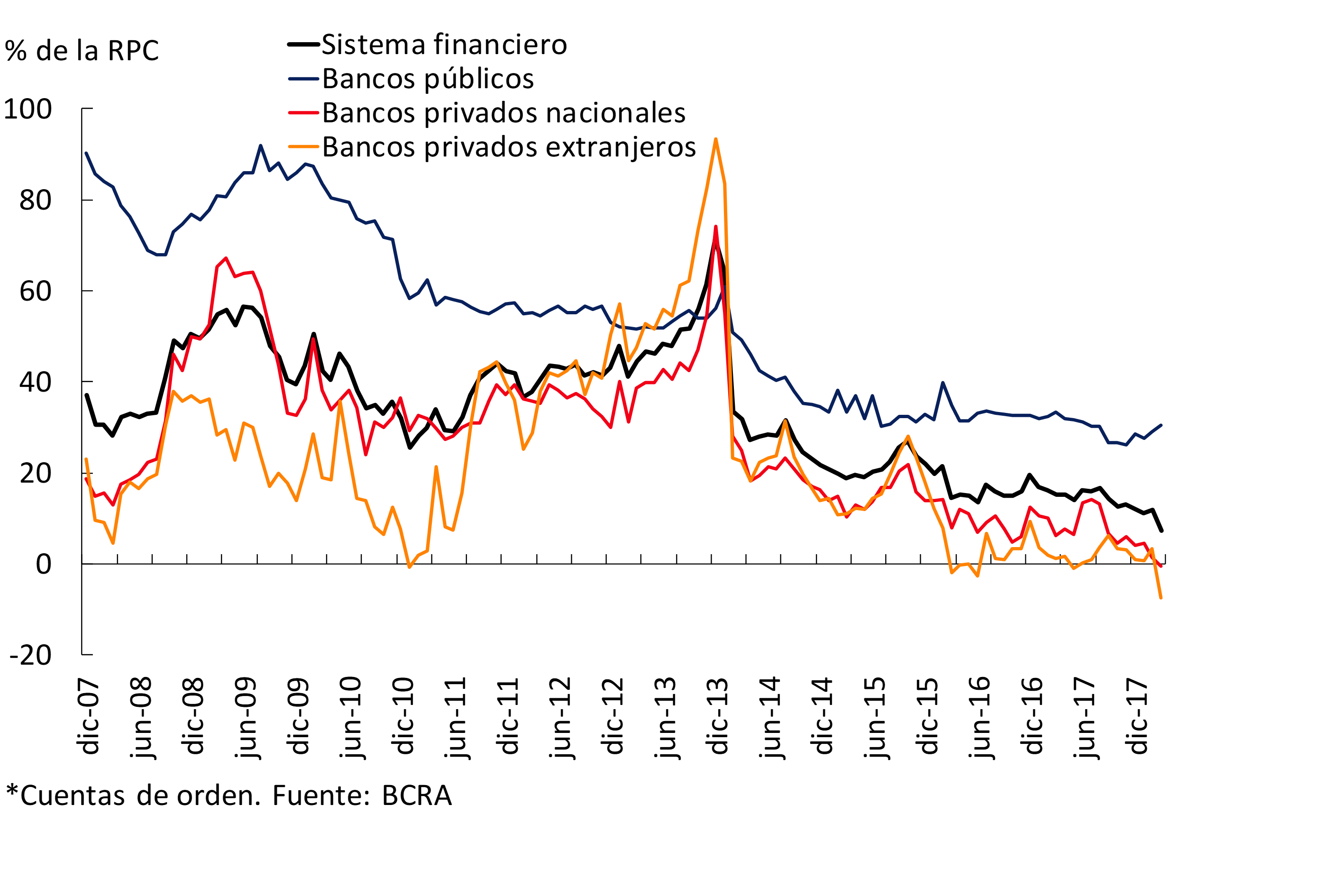
In the context of the increase in the nominal exchange rate in the period, and given the limited mismatch of foreign currency, the regulatory capital requirement for this concept represented only 2.5% of the total capital requirement (1.5% of the PRC) as of March, slightly below the levels observed in the last IEF.
Global liquidity conditions in the system continue to be loose
The indicators of the financial system’s exposure to liquidity risk did not register significant changes in recent months. At the end of 2017, the level of concentration of deposits as well as the relative importance of short-term liabilities in total funding remained at levels similar to those verified at the time of the publication of the last IEF.
In terms of liquidity risk coverage, the available indicators show improvements compared to the values of the last IEF. The ratio between liquid assets in the broad sense – considering items in domestic and foreign currency, including the banks’ current account at the BCRA, availabilities, passes with the BCRA, LEBAC and LELIQ – and total deposits represented 43.6% as of March 2018, increasing in the last six months84 (see Chart 3.8). The level of this indicator was slightly above the average of the last 10 years, a situation that was also verified in the group of public and private banks. For its part, the so-called Liquidity Coverage Ratio85 (LCR) – which attempts to measure the availability of high-quality liquid funds to face a scenario of individual and systemic stress in a period of 30 days – reached 2.1 in December 2017. This level is similar to that observed in the last edition of IEF86 and higher than the internationally recommended minimum and local requirements.
Figure 3.8 | Ample liquidity of the financial system – Cta cte in BCRA + Availabilities + Passes + LEBAC + NOBAC + LELIQ / Deposits
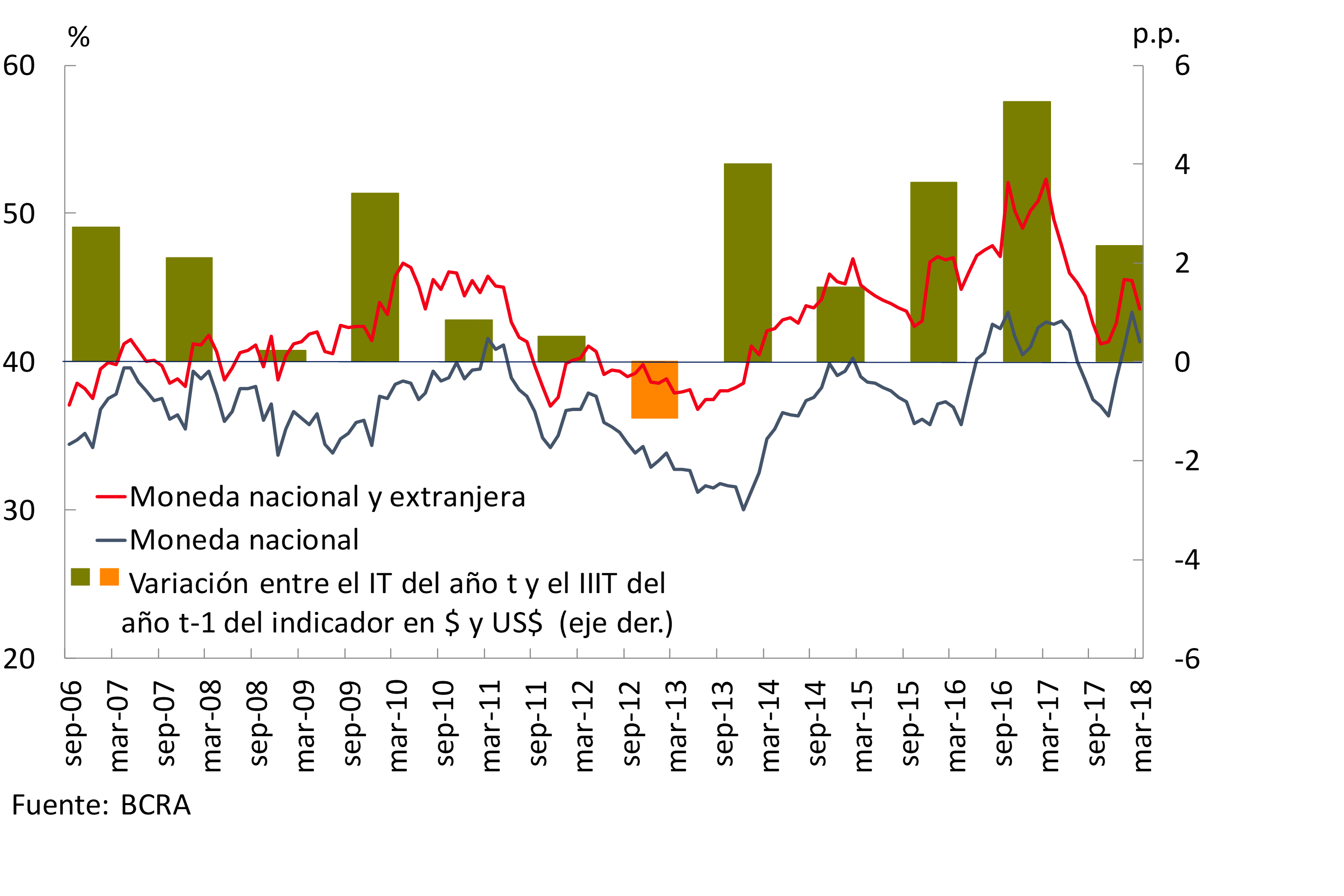
The increase in liquidity at the margin, in a context of credit growth, is mainly explained by the strong expansion of public sector deposits and by the dynamics of the NO (see Section 3). This leads to a more significant impact on liquidity indicators in public banking.
4. Payment system
In recent months, the BCRA has continued to promote measures aimed at encouraging greater use and dissemination of electronic means of payment. The aim is to contribute to the achievement of a framework of safer, faster and less costly transactions for all agents of the economy, while promoting a context to achieve higher levels of financial inclusion. The achievement of results of this strategy is gradually consolidated. Various indicators show that since the last IEF the trend towards greater use of electronic means has been sustained, in particular, of immediate transfers and the different types of cards. In fact, electronic means of payment – immediate transfers, direct debits and credit and debit cards – registered a year-on-year increase of almost 3.9 p.p. in terms of GDP in the first quarter of 2018 (real y.a. variation of 15.9%), reaching a level of 32.4%. Despite this recent performance, there is still a long way to go to achieve a significant expansion and integration of the use of these alternative means of payment to cash. It will be important to continue improving their efficiency and promoting competition among bidders, together with higher levels of financial education in all regions of the country.
Modernization of the National Payment System
At the beginning of 2018, the BCRA made a set of improvements in the operation of the DEBIN system, a tool introduced throughout 2017. It should be remembered that DEBIN is based on the exchange of messaging from a “collector” to a “payer”, sending a debit request. Once the order is accepted, the debit or transfer (free of charge) of funds between your accounts is made immediately87. It was recently established that the companies88 originating from DEBINes may apply for authorization in advance and, once obtained, it will not expire89. In this way, periodic payments can be systematized without the need to make an authorization at each opportunity. In addition, new responsibilities were incorporated into the Low Value Electronic Camera (system administrator), such as carrying out systemic controls and transaction scoring, among other proposed modifications. In this context, and seeking to promote a greater boost to operations carried out through the DEBIN mechanism as well as through Immediate Electronic Payments (PEI), this institution provided that in certain cases the debited financial institutions (origin of the funds) may charge the borrowers (recipients of the funds) an interchange fee of up to 0.3% of the total amount involved90. To carry out transactions, the operation with both PEI and DEBIN has certain advantages over the direct use of the debit card (see Table 4.1).
Table 4.1 | PEI, DEBIN and Debit Card Comparison
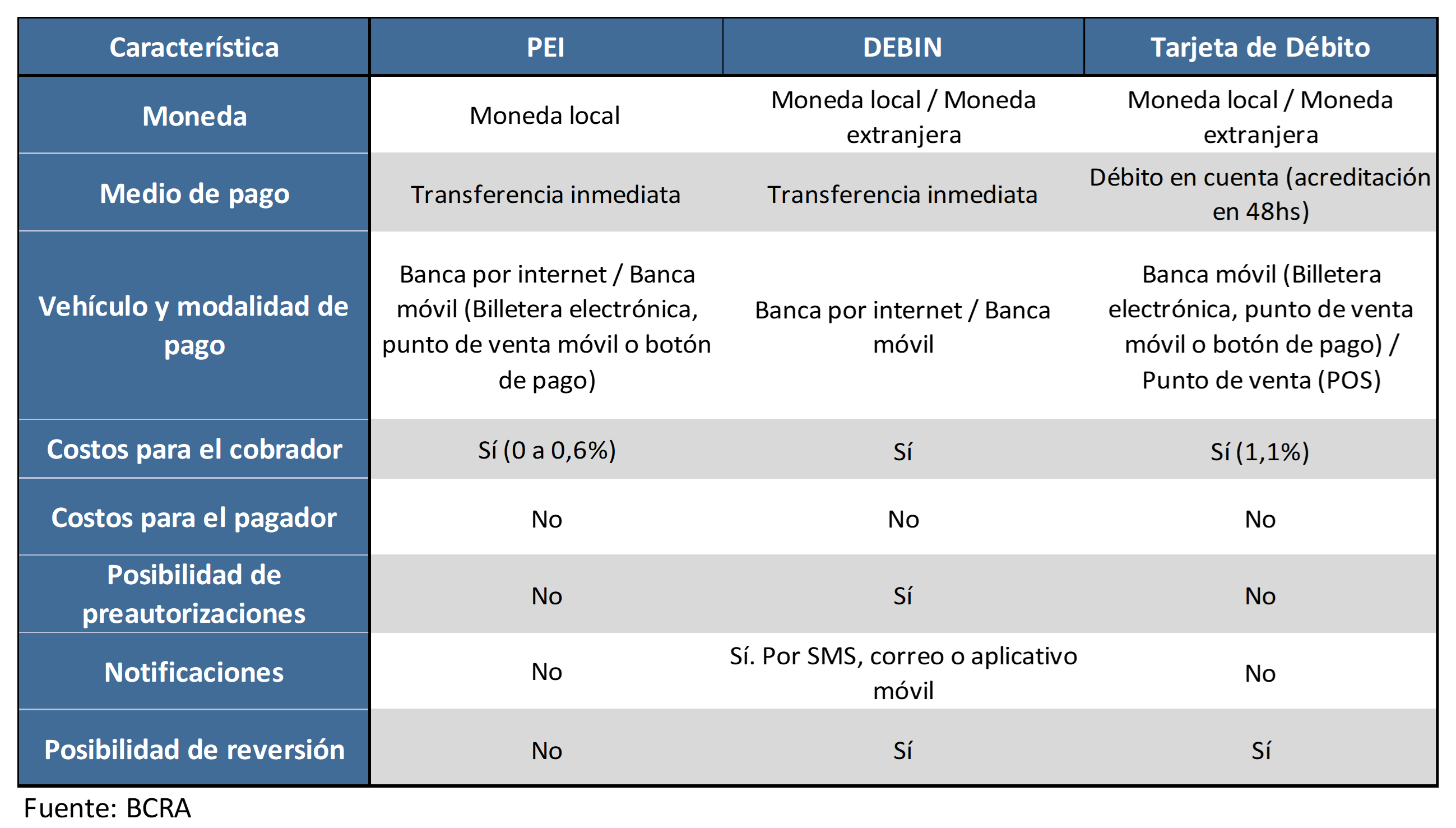
In recent months, the BCRA has taken an important step towards the interoperability of wallets and platforms, with the aim that users are not forced to install and use different mobile applications for payments made in different businesses. In this regard, this institution determined the technical specifications that must be used by local systems that operate under the “Quick Response Code” (QR) modality91. This instrument, which is widely used in both developed and emerging economies for electronic payments, efficiently stores data on the products intended to be marketed and specifically, on the account receiving the funds. To operate, the user who wants to make a payment uses the electronic wallet application that they have on their cell phone (in which they already have their bank accounts and cards associated), chooses one of the92 payment methods and then scans the QR code of the product. In line with the prominence that the use of mobile telephony is acquiring in access to financial services in general, and payments in particular, at the beginning of 2018 institutions were authorized to use mobile phone devices to promote, install and/or explain to their customers how to use the mobile banking applications and/or mobile payment platform that are availableto them 93.
Considering the importance of the expansion of the ATM network within the framework of the financial inclusion policies promoted by the BCRA, certain roles of ATM market participants operated by non-financial companies were recently clarified, in order to promote a more competitive and transparent operation. In addition to detailing the minimum responsibilities of the managing financial institution in the event that a non-financial company reaches an agreement with it, it was established that the non-financial company must participate in the ATM networks on an equal footing with the rest of the participants94.
On the other hand, in the context proposed by the BCRA to promote competition, the market for payment service providers has recently intensified both the proposals and the bidders. These payment services are not linked directly to a nominated bank account in the name of customers, but operate through wholesale bank accounts in the name of the payment service provider. Prepaid cards and digital wallets are examples of such payment services.
Within the framework of the process of modernization of the national payment system, the diffusion of these payment services is gradually acquiring a greater scope, since they present benefits of access and use, especially for the segment of the population that is not yet banked. These services facilitate the accreditation of social benefits in some cases, while gradually including new functions and tools that lead them to compete with traditional electronic means of payment. Among the aforementioned payment services are prepaid cards, which gradually reach a greater depth in the population (see Box 8).
Box 8. The boost of fintechs to the local prepaid card market
With prepaid cards, purchases can be made at point-of-sale terminals and withdrawals of funds through ATMs, extra-bank collection networks95, among other operations. Although this type of card has similar functionalities to those of a debit card, with prepaid cards the user does not need to have a bank account (see Table 4.2).
Table 4.2 | Comparison of Prepaid, Credit and Debit Cards
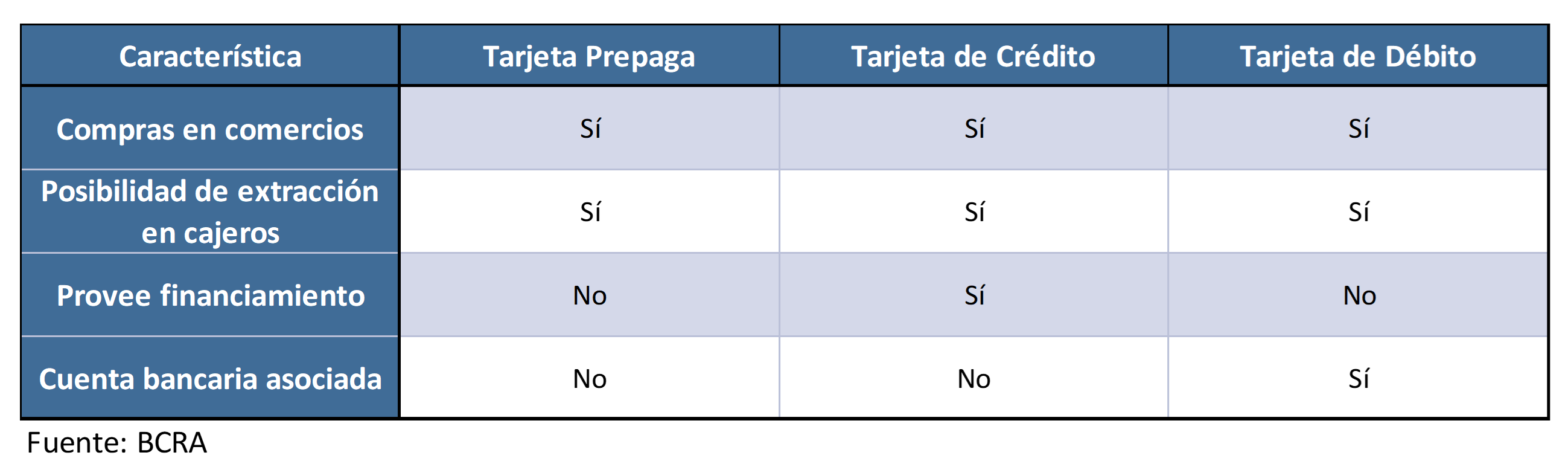
The emergence of new market entrants, the expansion of operations on e-commerce platforms and the growing penetration of smartphones are factors that are driving Fintechs to energize this class of “non-bank” cards, providing innovative functionalities. Among the latter, the following stand out: i. new tools for the administration of funds, ii. integration with other user profiles and thus use the available balances that, for example, were originated in sales96 and III. apply for loans through the mobile apps or websites linked to the card. Another advantage of prepaid cards is that extensive facilities have been introduced to obtain them (processing via the web or through a mobile application).
Another element that makes this type of payment instrument more attractive is that they have lower costs (they do not have, for example, maintenance costs of the funds). Likewise, these prepaid cards are “open”97, which allows purchases or cash withdrawals to be made at terminals that accept the brand of cards with which they are associated. Moreover, in addition to being able to be used to make payments in person in stores and efficiently transport valuables to different geographical locations, they can be used to acquire certain services virtually (such as streaming services) in which it is essential to have a card to make the payment. In this way, the Fintechs that offer this prepaid card service are contributing to improving the usability dimension in terms of financial inclusion. The recharge of these cards can be done by bank transfer or in cash at extra-bank collection points.
Regarding the level of adoption, in a context where the number of debit cards grew by 4 million units in 2017 (reaching 45 million at the end of that year), prepaid cards reached approximately 3,050,000 units as of March 2018, increasing 17.4% YoY. Specifically, prepaid cards issued by payment service providers, which represent 22.1% of the total, have increased by 54.8% between July 2017 and March 2018, a trend that accelerated during the last quarter (see Figure 4.1). Meanwhile, prepaid cards issued by financial institutions show a growth of 5% in the same period. Although the adaptation of this type of card presents a favorable scenario, the average use in the last 12 months was less than one operation per card per month, indicating that the conditions of usability should continue to deepen.
Figure 4.1 | Prepaid cards issued by payment service providers
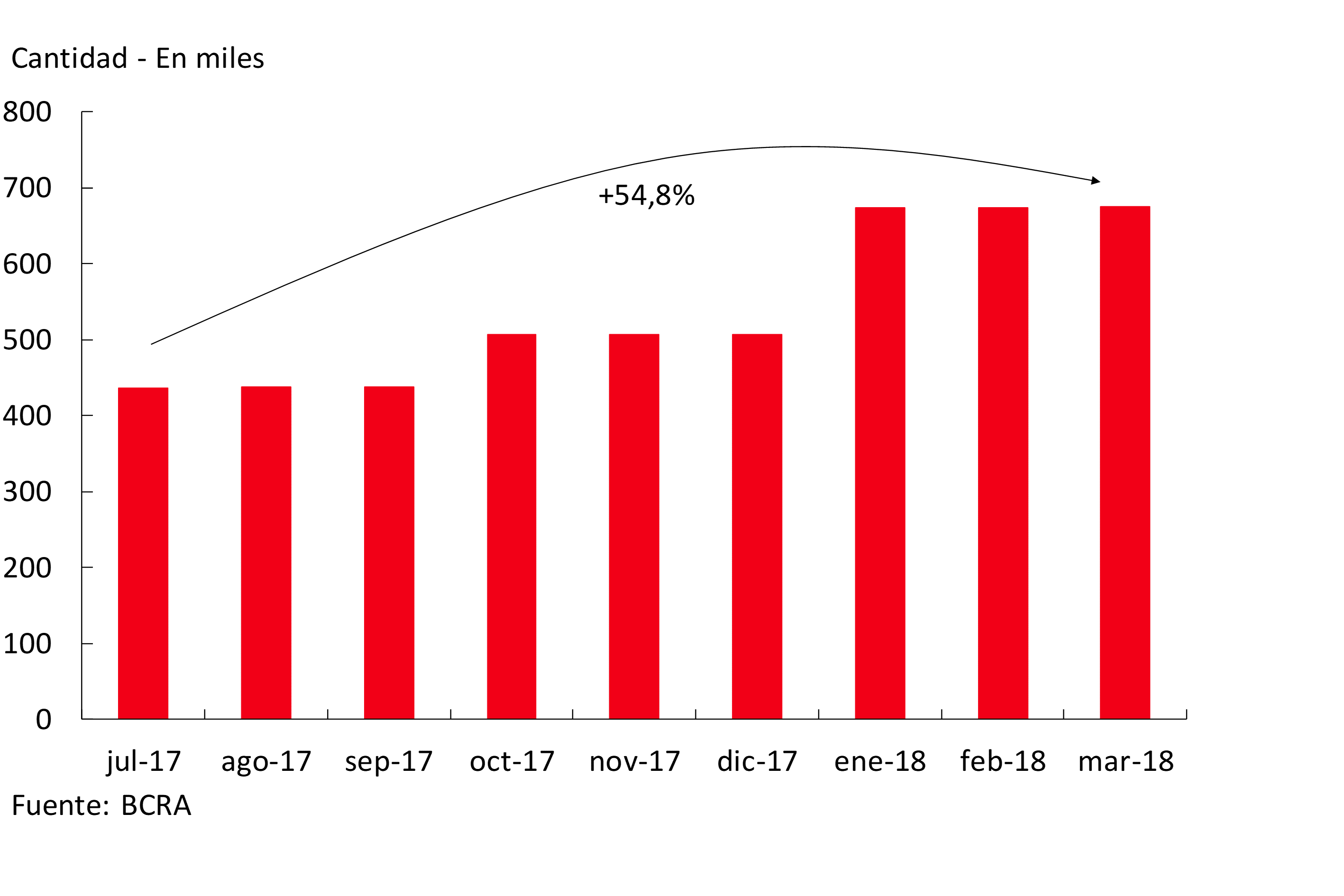
In terms of improvements in the organization of the national payment system, the BCRA has been making progress not only in its technological modernization but also in achieving a more adequate management of banknotes in circulation in the economy98. This is important given the need to more efficiently carry out the usual transactions of the private sector, reducing the operating expenses faced by society. In this context, the BCRA continues to improve the composition of the economy’s working capital (see Box 9).
Box 9. Improvements in the cash composition of the economy
By the end of 2015, the maximum denomination of banknotes was $100, representing 70% of the amount in circulation and almost all of its value (93% in December 2015, compared to 80% in 2005). This meant a problem for carrying out transactions, imposing significant costs on society. It is worth mentioning that the increase in the general price level observed between 2005 and 2015 reduced the purchasing power of the $100 bill to almost a tenth of what it had at the beginning of the period.
Faced with this scenario, since 2016 the BCRA has made progress in the reconfiguration of the currency, beginning the issuance of a new family of banknotes that included larger denominations – $200, $500 and $1,000 – as well as a renewed design, incorporating the lines “Native Animals of the Argentine Republic” for banknotes and “Trees of the Argentine Republic” for coins. Soon $10 coins will be launched, with $5 being the highest denomination so far. This reconfiguration of the working capital has implied a significant reduction in costs for the BCRA. It is estimated that the savings for this Institution – by satisfying the need for cash with the issuance of higher denomination bills, instead of supplying only with $100 bills – would have reached almost $1,500 million in all of 2017, and about $200 million in the first four months of 201899.
At the end of the first quarter of 2018, the new $200, $500 and $1,000 bills reached a share of almost 11% in the number of bills in circulation, a figure that extends to almost 42% when considering their weighting in the total value of the cash in circulation. The BCRA seeks to bring the proportion of the highest denomination banknotes close to two-thirds of the total value by the end of 2018, thus optimizing logistics and adapting to the needs of the public and banks.
Recent developments in the National Payment System
In line with the regulatory changes promoted by this Institution and by the Executive Branch, in recent months a trend towards greater use of electronic means of payment in the economy continued to be observed. In year-on-year terms, the amount of immediate transfers in terms of GDP grew by 2.2 p.p. in the first quarter of 2018 (to a level of 16%), although a set of seasonal and operational factors influenced the observation of a slight decrease (-1.9 p.p.) compared to the immediately previous quarter (see Figure 4.2). Both the volume of debit and credit card purchases100 gradually increased in recent quarters, to 4.7% and 9.4% of GDP respectively, a positive trend also shared by direct debits. Moreover, in recent months there has been an increase in the proportion of purchases with debit cards in relation to ATM withdrawals, this being an indicator of a trend towards the substitution of cash by electronic means of payment. For its part, and in line with what has been observed in recent years, the value of check clearing in terms of GDP continues to fall, although it still shows a relatively high level (almost 31.9% of GDP at the beginning of 2018), a pattern that is also observed in cash withdrawals from ATMs (15.8% of GDP in the first quarter of 2018, with a year-on-year drop of 0.4 p.p.). As a result, electronic means of payment (immediate transfers, direct debits and credit and debit cards) registered a year-on-year increase of almost 3.9 p.p. of GDP (real y.a. variation of 15.9%) to a level of 32.4%. This increase in the use of electronic means of payment would be even greater if transactions through prepaid cards were included, in view of the increase observed in the number of cards issued101.
Figure 4.2 | Alternative means of payment to cash – Annualized quarterly as % of GDP
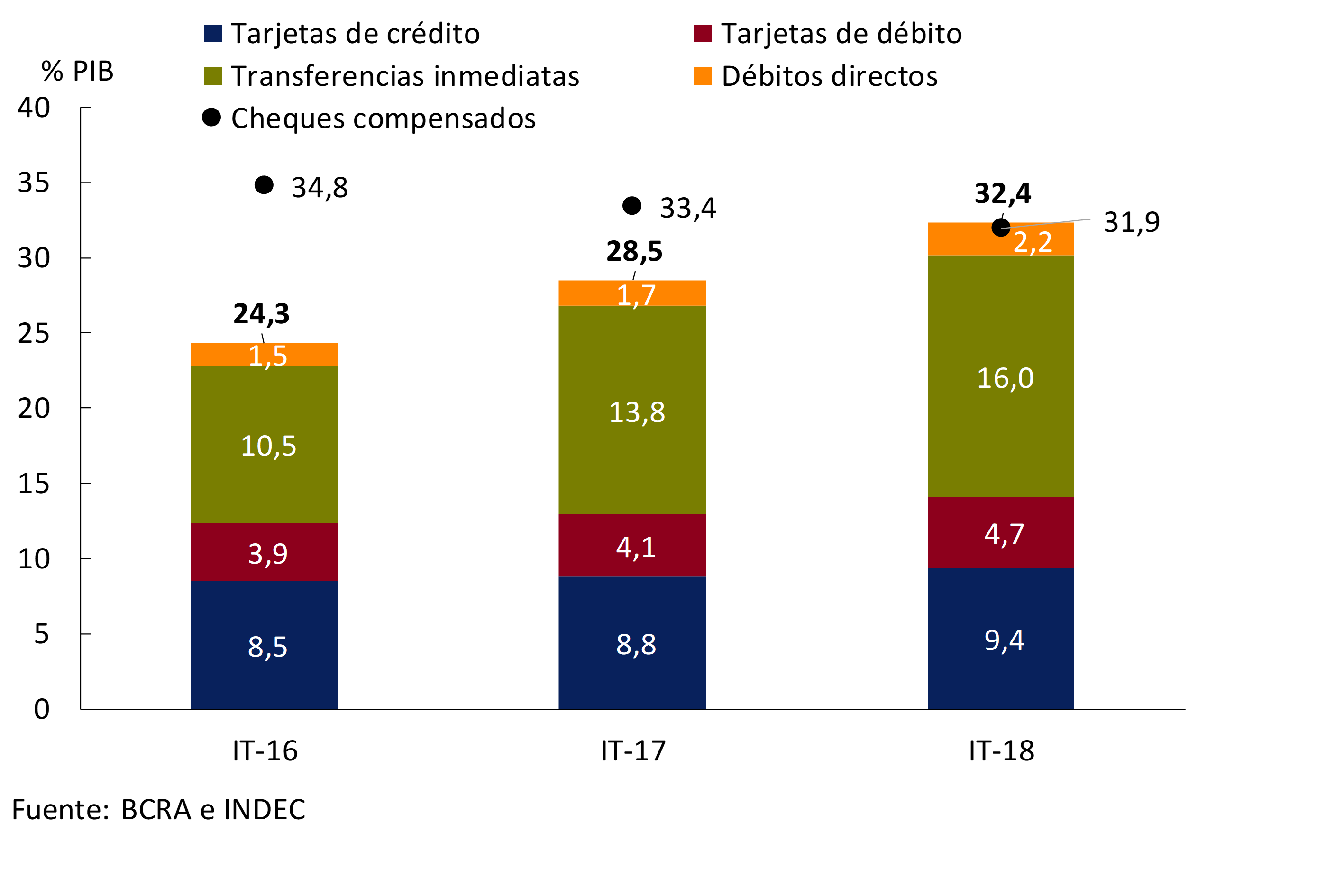
In the last 12 months, the relative weight of immediate transfers among the main means of payment has increased (see Figure 4.3), in terms of the number of transactions (from 2.7% to 3.4% of the total) and, especially, in value (from 16.2% to 20.1% of the total). The share of debit and credit cards remained relatively stable in value (5.4% and 11.5% of the total, respectively), although there was a slight decrease in their share in amounts. Direct debits continued to grow, while the value of check clearing and ATM withdrawals fell to 39.9% (almost -4 p.p. YoY) and 20.5% (-0.8% YoY), respectively.
Figure 4.3 | Utilization of different means of payment – Participation
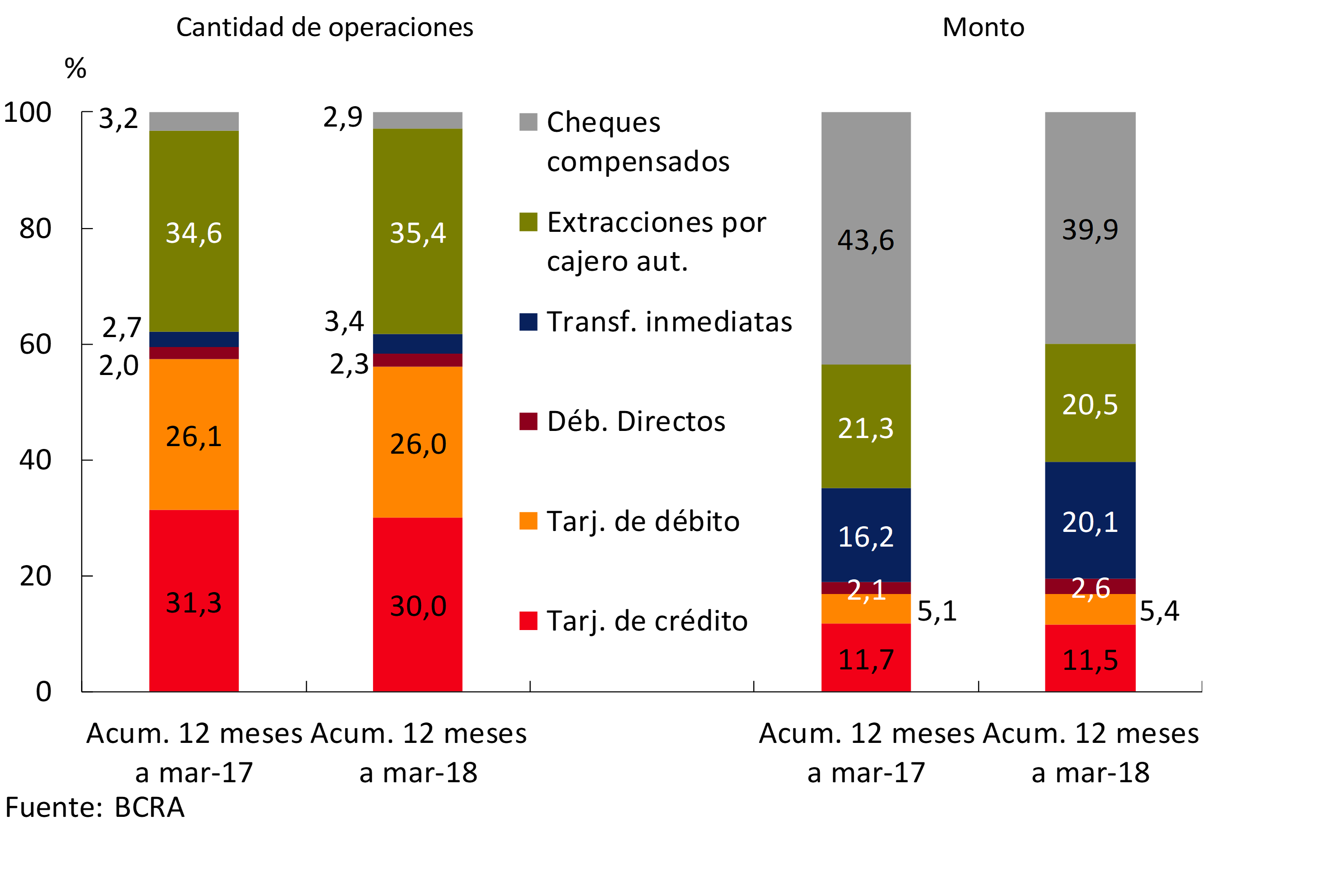
The number of transactions through immediate transfers saw a notable increase of 40.1% year-on-year (cumulative), driven mainly by mobile banking channels (93.8% YoY, which increased its share to 8.8% of total transfers) and business electronic banking (56.8% YoY, to cover 4.2% of the total). ATM channels and internet banking evolved at a slower pace, resulting in a slight reduction in their weighting, although they still account for 19% and 67.9% of transactions respectively (see Figure 4.4).
Figure 4.4 | Immediate transfers by channel
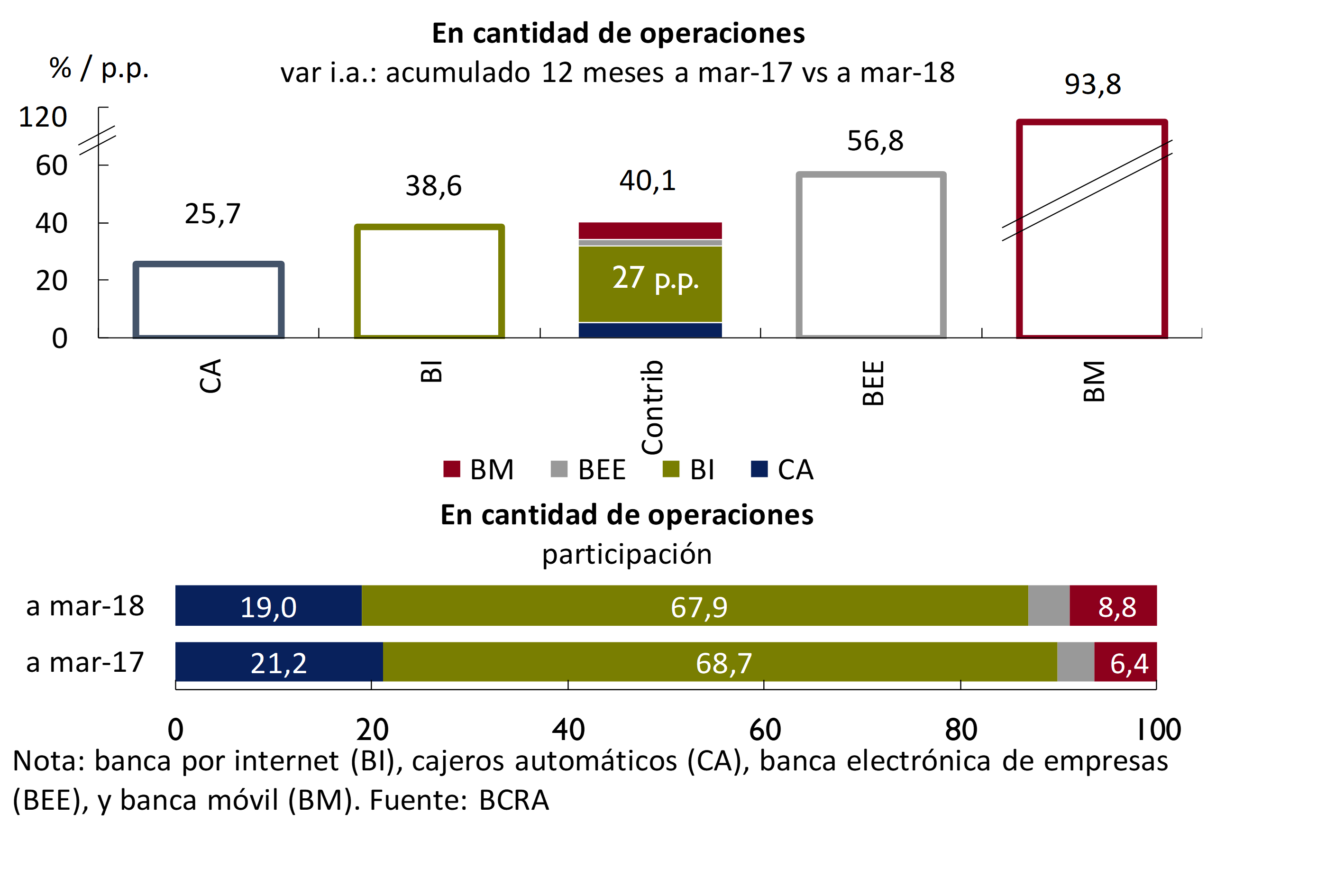
As mentioned, the BCRA continues to promote the PEI mobile payment platform. In this framework, as of February of this year, 364 thousand transactions had been made, divided between PEI mobile POS (59%), PEI Electronic Wallet (40%) and PEI Payment Button (1%). It should be noted that the PEI’s mobile POS option has a wide range of benefits, including its lower costs for all parties carrying out transactions, as well as the fact that its use makes it possible to comply with the rules on the mandatory receipt of electronic means of payment in transactions (see Box 10).
Box 10. Obligation to accept electronic means of payment. Advantages of using PEI
With the main objective of continuing to advance in the formalization of payments, in February 2017 the AFIP issued General Resolution No. 3997/17, regulating the obligation for sellers of goods or services to accept electronic means of payment for their transactions with customers introduced by Law No. 27,253 of mid-2016102. Sellers must accept as means of payment transfers instrumented through debit cards, non-bank prepaid cards for the exclusive accreditation of welfare or social security benefits, and other equivalent means103.
Within the framework of this greater boost to the use of electronic means of payment, it is appropriate to highlight the Immediate Electronic Payment (PEI) modality introduced in a timely manner by the BCRA104, based on immediate transfers of funds. Among the PEI instruments is the possibility of using the modality called Mobile Point of Sale or Mobile POS. This, when connected to a cell phone or tablet, allows payments to be made with the same debit cards through the use of a security device to validate transactions (“dongle”)105. This type of PEI allows compliance with the obligation established in the aforementioned regulations.
While it is indifferent to the consumer to use either of these alternatives, for commerce, PEI trading has several advantages over traditional trading, including lower cost and faster availability of funds. These operations have a commission that varies from 0% (for low-amount operations) to approximately 0.6% (according to market sources), practically half of the commission charged for traditional debit operations (1.1%106). Additionally, the only cost of the “dongle” is that of its initial acquisition, which is cheaper than the rental of the traditional POS. Moreover, the PEI originates an immediate credit transfer and allows the seller to quickly obtain liquidity, while in traditional debit card operations the merchant must wait between one and two business days for its collection. Finally, PEI transactions in some jurisdictions are not subject to withholding tax, unlike traditional ones.
For their part, digital wallets show a marked growing trend in their access. In fact, the number of digital wallets grew by a little more than 73% between March 2017 and March 2018, reaching a total of 3,385,896 units (see Figure 4.5). With regard to their use, a situation similar to that described for prepaid cards can be seen, however, the figures for these are slightly more favorable, averaging 1.7 operations per wallet on a monthly basis.
Figure 4.5 | Digital wallets
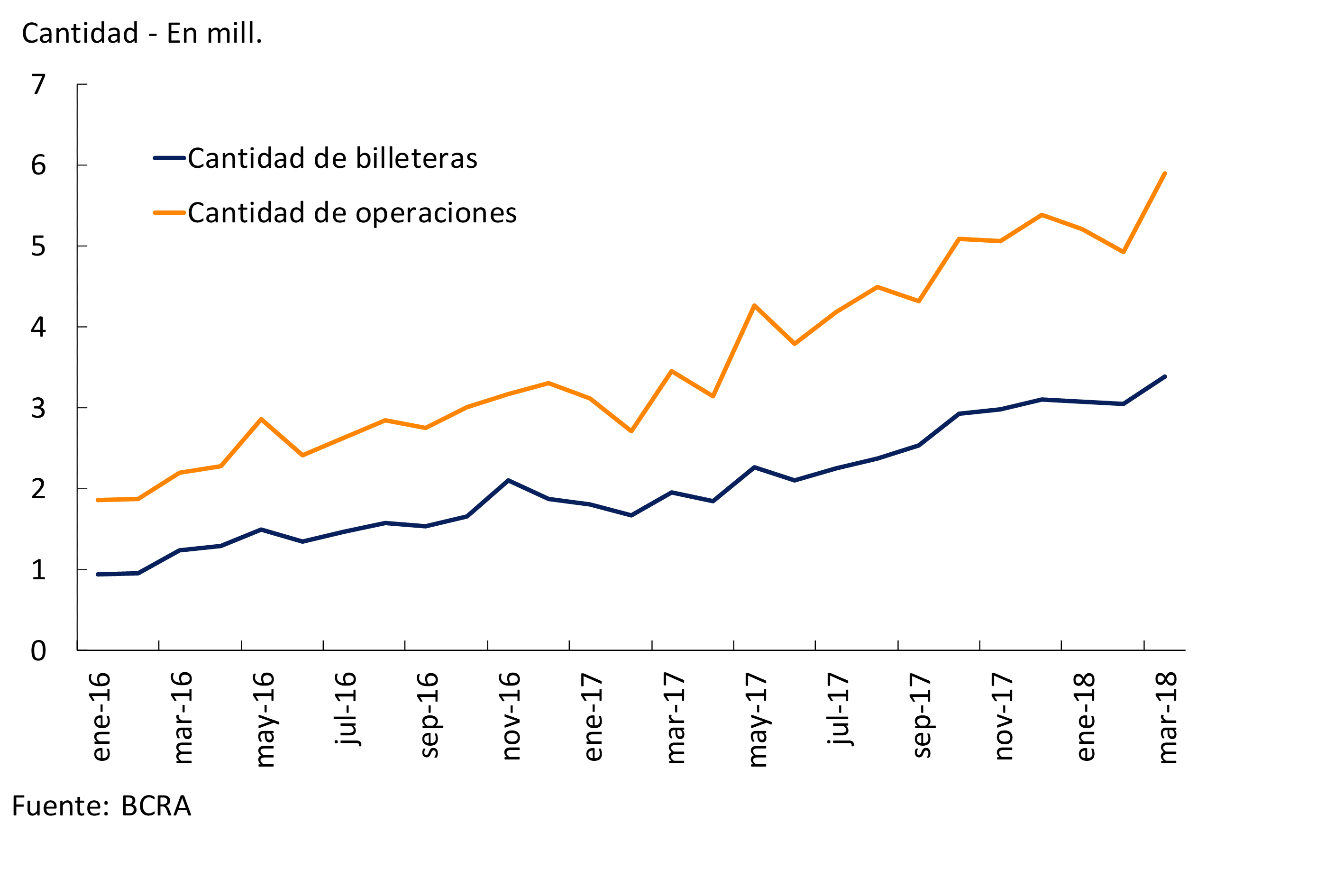
Section 1 / Companies with a public offering and mismatch of coins
Monitoring corporate sector balance sheets is one of the components of financial stability analysis. After Argentina’s re-entry into international markets, the dynamics of bond placements in foreign markets led to an intensification of the monitoring of this sector, based on a situation of low corporate debt burden compared to other emerging markets107. This type of analysis is gaining relevance in the current situation, with growing concern among emerging countries regarding the possibility of deepening a more challenging external context, which implies the dismantling of positions in financial instruments of these economies, with an impact on their prices and on the price of their currencies (due to the potential effect on companies in general and with exchange rate mismatch in particular)108. In the event of a situation of tension in international markets, the negative effect on the corporate sector could affect the financial system through different channels. Given that the corporate sector is indebted to the local financial system, a deterioration in its situation can impact the quality of the loan portfolio and the solvency of banks. On the other hand, if the financial situation of the corporate sector worsens, this could affect deposits in the banking sector. Likewise, financial problems in the corporate sector could condition the evolution of economic activity (with an impact, for example, on the labour market), generating second-round effects on the quality of banks’ portfolios.
In order to understand the situation in Argentina of companies in the non-financial private sector in terms of currency mismatch, this section will analyze firms with public offerings (of shares or bonds), given that they publish balance sheets discriminating balances in domestic and foreign currency109. For these companies, it is observed that the aggregate currency mismatch (liabilities) in terms of balance sheet balances (foreign currency liability accounts minus foreign currency asset accounts) amounted to about US$22,500 million at the end of 2017, which represents a low level in terms of output (3.7% of GDP110). A large part of the mismatch measured in this way is explained by the companies that have issued bonds in international markets111. For this group of companies, the currency mismatch amounted to almost US$19,000 million at the end of 2017, which represents 25% of its total assets for the group’s median. However, the companies analyzed show a not insignificant heterogeneity112. Although this mismatch tended to grow in absolute terms in recent years, measured in terms of total assets it shows a fall in 2017 (based on the increase observed in the assets of these companies).
It should be taken into account that this measure of currency mismatch has certain limitations that imply an over-estimation of its size, so for this sample of companies it would be even lower than the one mentioned. For example, due to limitations in the data, this measure focuses on balances, without taking into account the generation of income in dollars (or that are linked to the evolution of the exchange rate) that would serve as a natural hedge against movements in the exchange rate. Although the balance sheets do not include information from the income statement broken down by currency, more than 2/3 of the companies with international bonds in foreign currency indicate in the notes to the financial statements (with qualitative information) that they have income linked to the evolution of the exchange rate that contributes to reducing exchange rate risk. This is consistent with the fact that several of these firms belong to the tradable sector113. Another limitation of this measure is that it does not incorporate the effect of hedging transactions carried out with derivatives, although the use in the Argentine case would be marginal114.
On the other hand, the analysis of the financial ratios of publicly offered companies in general terms shows that although companies with bonds placed abroad in foreign currency (group 1) have less solid indicators than the rest (group 2), in 2017 some improvement in the margin was observed in several cases (see Table A.1.1). For example, for group 1 firms, the medianleverage 115 showed a slight upward trend until 2016 and then registered some decline in 2017, although it remained slightly above what was observed for group 2116 companies. On the other hand, while in recent years group 1 companies showed liquidity ratios consistently below the rest, by the end of 2017 this indicator showed a similar level in both cases. The difference between the two groups is more marked when analyzing indebtedness in terms of revenue streams: for group 1 companies this level is more than double that for the rest. However, it is noteworthy that for Group 1 companies, interest and principal payments on foreign currency debt for the next 12 months represent less than one-third of the estimated operating income for these companies117. Likewise, considering the complete payment schedule associated with the debt placed abroad, flows for the coming years are relatively lower, largely due to the liability management operations (debt issuances to buy back pre-existing bonds, swaps) that took place after the exit from the default of sovereign debt in 2016.
Table A.1.1 | Financial indicators of publicly traded companies
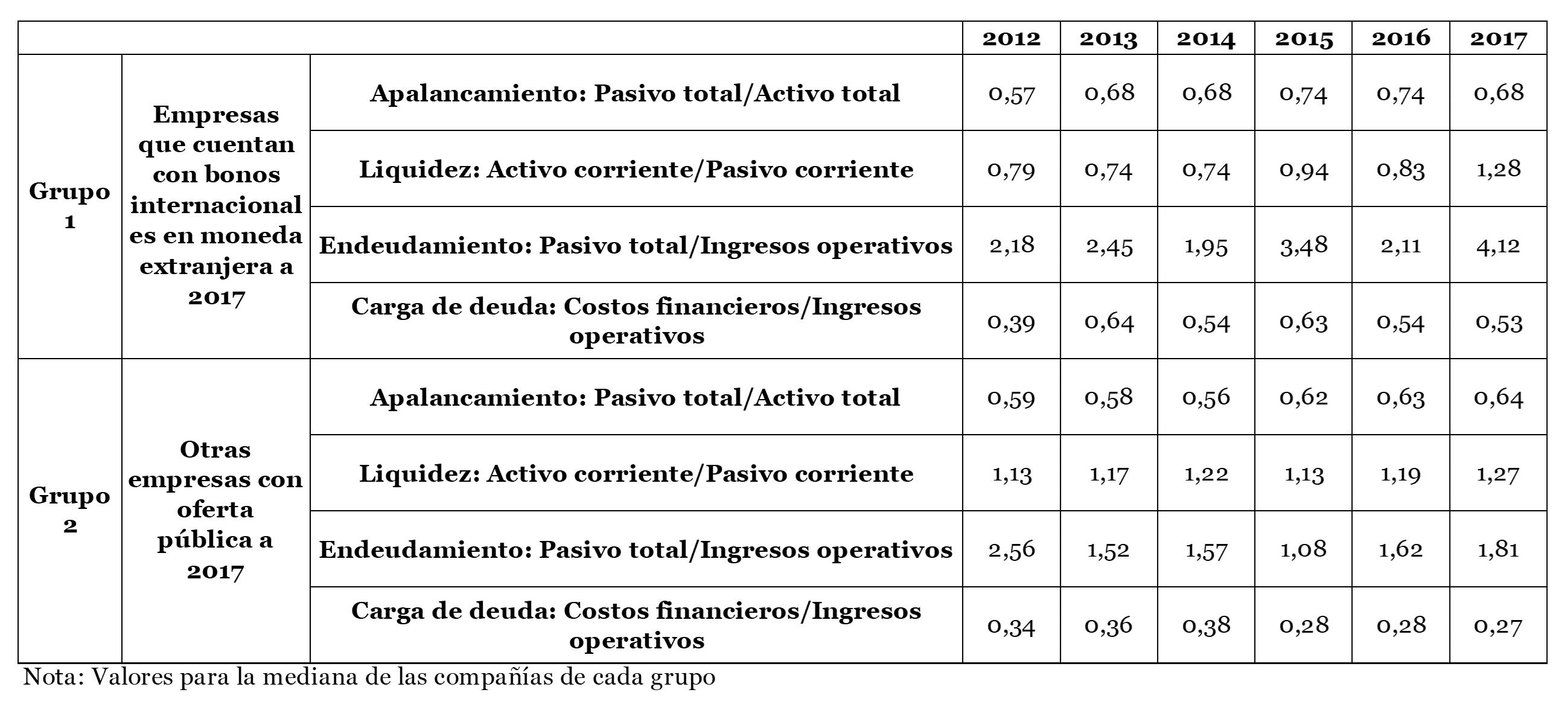
In summary, although the currency debt mismatches of the corporate sector at the aggregate level would be limited (although with considerable heterogeneity between companies), the potential risks associated with this sector will be monitored. To improve the analysis carried out, it will seek, among other things, to broaden the base of monitored companies and improve monitoring indicators (for example, to take into account existing coverage through net income in foreign currency, incorporating more information or making estimates based on existing data).
Section 2 / Law on Productive Financing, Development of Capital Markets and Financial Stability
In May, Law No. 27,440 on Productive Financing (LFP) was enacted, which, among other objectives, seeks to contribute to the development of capital markets through the adaptation and modernization of its regulatory framework, incorporating a systemic risk mitigation approach for the CNV, in addition to reforms to promote mortgage financing and savings. Here is a brief description of the main changes established in the law.
In relation to the modifications that seek to streamline the operation of different pre-existing figures (instruments and agents), the following are included:
• Securitization or securitization of assets: the mechanism for assigning loans instrumented using the legal figure of mortgage bills is streamlined, to facilitate the securitization process and give a greater boost to the growth observed in the mortgage market118. Additionally, an exemption from income tax is established for trusts with a public offering, so that only profits distributed among investors are taxed.
• Insurance companies: credit risk coverage is allowed as long as it is linked to mortgage loans119.
• Negotiable obligations (ON): greater flexibility is provided for issuing instruments (for example, the decision can be taken by the administrative body if it is provided for in the company’s bylaws, although the entry into the public offering must be resolved by the meeting). Changes are introduced in the guarantees with which the NOTES can be issued and the issuance is allowed with limited and exclusive recourse to certain assets of the issuer120. Law 23,576 is updated, making it explicit that issues in foreign currency can be subscribed in local, foreign currency or in kind.
• Derivatives: a regulatory framework is established that incorporates provisions related to the execution of this type of contract following international standards. In the event of bankruptcy or bankruptcy of one of the counterparties, early termination, net trading of positions and automatic and extrajudicial enforcement of collateral are permitted. Bilateral transactions with derivatives (outside authorised markets) will be registered (the figure of derivatives transaction registration entities is introduced).
• Mutual funds: new figures are introduced, such as Exchange-Traded Funds (to constitute open-ended mutual funds, assets that replicate financial indices or baskets of assets are admitted)121 or funds (open or closed) to invest voluntary savings for the retirement of shareholders (which could serve to channel savings and increase the demand for long-term instruments). More details are given on the figure of closed-end investment funds122. The National Securities Commission (CNV) is granted the power to set various values of the asset diversification guidelines (previously established in the law itself). It is allowed to set up mutual funds intended exclusively for qualified investors, with less restrictive investment limits. The LFP also allows management companies to manage investments123.
• Promissory notes / stock market promissory notes: amendments are made to Law 27,264 to promote the negotiation of promissory notes. It is established that promissory notes enjoy a public offering and may be traded on markets registered with the CNV as long as they meet the requirements dictated by that institution.
• Central depository agent for negotiable securities: this figure replaces the figure of the collective depository agent. In addition to receiving collective deposits of negotiable securities, these agents may provide custody services and the collection and settlement of debts and payment of negotiable securities on deposit, among others. They will be able to open accounts abroad for the fulfillment of their functions and provide escrow agent services.
On the other hand, the LFP is working on new instruments and figures. For example:
• Electronic credit invoice for MSMEs (mandatory for commercial operations in which an MSME must issue an invoice or receipt to large companies), with a registration in the scope of the AFIP. These securities may be traded on authorised markets or through computer systems that facilitate the negotiation of invoices in which financial institutions and non-financial credit providers participate.
• Guarantee agent for collective financing: in financing contracts with two or more creditors (generally associated with project financing), the parties may constitute guarantees in favor of this type of agent, who will act for the benefit of the creditors.
• Collective financing system: the CNV is allowed to regulate, for these agents, business modalities other than those mentioned in Law 27,349 of 2017.
• Electronic check: the Executive Branch must take the necessary measures to make a system for these instruments operational within a period of no more than 90 days from the promulgation of the LFP.
• Public works certificates: they may be traded in markets authorized by the CNV according to the regulations issued by that institution.
The law also contemplates reforms regarding the public offering of shares (in particular, on the right of pre-emption), the private offering of assets and the public takeover offer. On the other hand, it deals with issues related to transparency and financial inclusion.
Another series of changes are linked to the role of the CNV. Of particular relevance in terms of financial stability is the establishment of the evaluation and issuance of regulations aimed at mitigating situations of systemic risk as one of the functions of the regulatory body. On the other hand:
• the possibility of requiring markets and clearing houses to exercise supervision, inspection and inspection functions over their participating members is reintroduced, without this implying a delegation of powers124;
• To avoid conflicts of interest, fines are eliminated as one of the own resources of CNV125;
• Certain discretionary powers are eliminated, such as the possibility of acting without prior summary proceedings with regard to the function of declaring irregular and ineffective the acts submitted to its inspection when they are contrary to Law126. Also eliminated, among the correlative powers, was both the possibility of appointing overseers with veto power in the administrative bodies and that of separating the administrative bodies in entities in which irregularities were detected;
• the CNV is given the power to create new categories of registered agents and modify or eliminate existing ones (enabling greater dynamism), in addition to giving the regulator the power to set the maximum tariffs that may be received by different market agents;
• The CNV becomes the exclusive authority in matters of public offering (the possibility that the BCRA, in the exercise of its functions, may limit the public offering of new issues is eliminated).
In summary, this new law, which addresses various issues related to capital markets (with several practical aspects that will be determined in the future regulation of the law), will facilitate progress towards a deeper financial sector. In effect, this will allow greater dynamism in the capital market, complementing banking activity, for example, in terms of boosting mortgage credit. In addition, as of the entry into force of this law, the evolution of the capital markets will be monitored by a regulator that explicitly incorporates a financial stability approach.
Section 3 / Negotiable obligations (ON) as a source of funds for banks
On-note placements by banks began to accelerate from mid-2016127 (see Figure A.3.1). In the first half of 2017, several operations were in foreign markets, while since the second half of last year most of them were placements in the domestic market and in pesos. This occurred in a context in which deposits in local currency of the private sector grew to a lesser extent than loans in pesos to the sector, given greater alternatives for channeling private savings and a greater demand for credit, including lines in UVA.
Figure A.3.1 | Placements of negotiable obligations of financial institutions
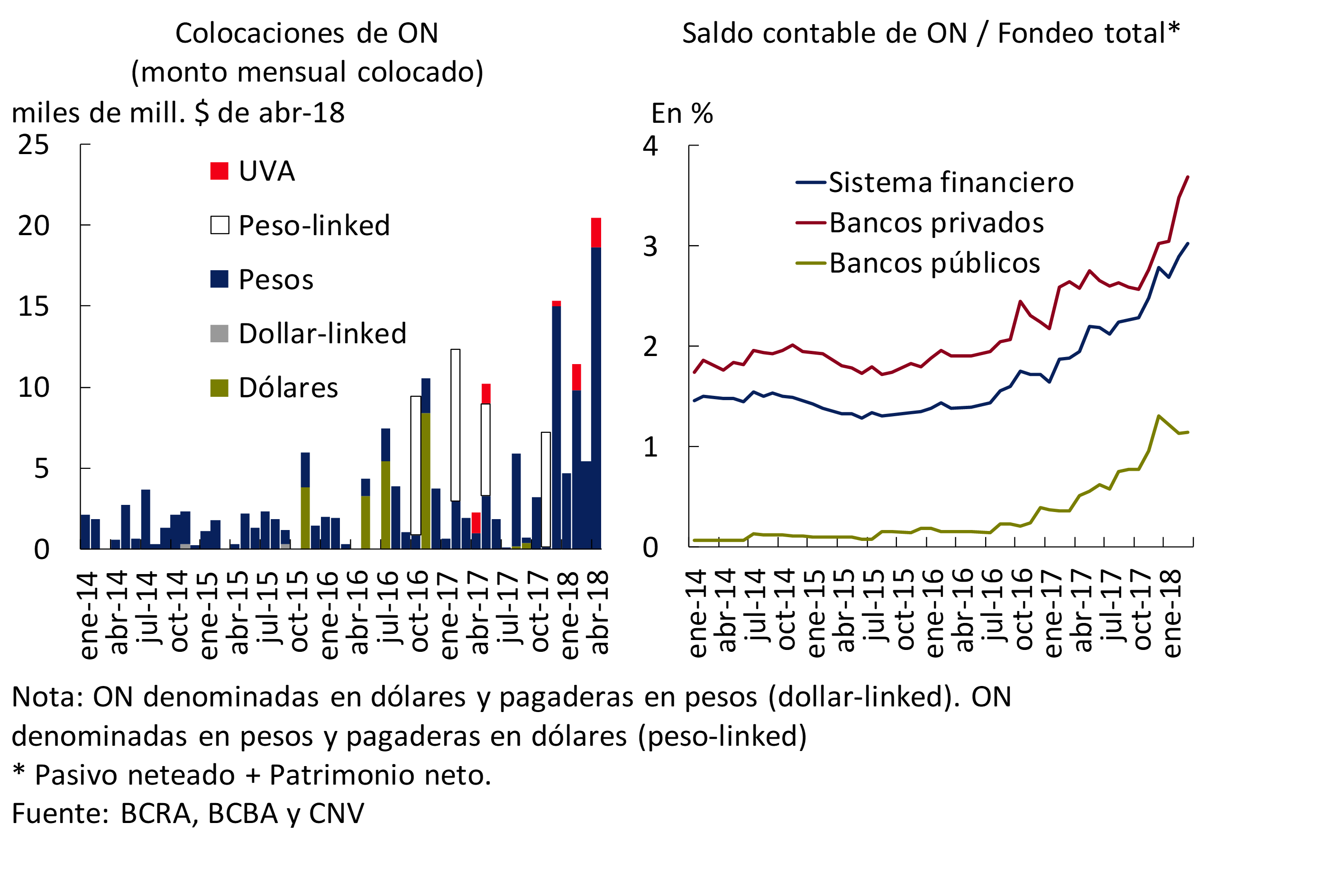
Considering the aggregate financial system, as of March 2018 the balance of NO represented 3% of total funding (liabilities plus equity)128, increasing 1.1 p.p. in a year-on-year comparison. In addition to representing a source of resources capable of being channeled towards the granting of loans, the placement of ON by financial institutions is relevant in terms of diversification of funding instruments and management of some equity mismatches derived from intermediation activity, such as the mismatch of terms, interest rates and UVA.
Considering only the129 banks that record ON in their balance sheets, at the end of the first quarter of the year the balance of this type of liability totaled about $94,500 million130, equivalent to 4.5% of the total funding of this group or 5.1% of its liabilities. Most of the banks that registered ON on their balance sheets have made placements since October last year. Of the top 15 banks that lend to the private sector in local currency (they account for more than 82% of the segment), 11 placed debt in ON in the period. This group of placement banks have a higher proportion of mortgage and pledge loans with respect to the total balance of loans to the private sector.
Working with accounting information, between the end of September 2017 and March 2018, it can be seen that the group of underwriters of ON increased their liquidity further (see Graph A.3.2) as a result, in part, of the funds received from the placements. On the other hand, the group of underwriters and non-underwriters did not differ, in a relevant way, according to the rate of granting loans (on the application side) and the collection of deposits (on the origins side). The banks that did not place ON supplemented proportionally, and in part, the origin of funding with accounting results and other movements between assets and liabilities. The evolution of the rates of taking out time deposits also did not show significant differences between the groups.
Figure A.3.2 | Estimation of fund origins and applications by group of banks. Last six months to Mar-18
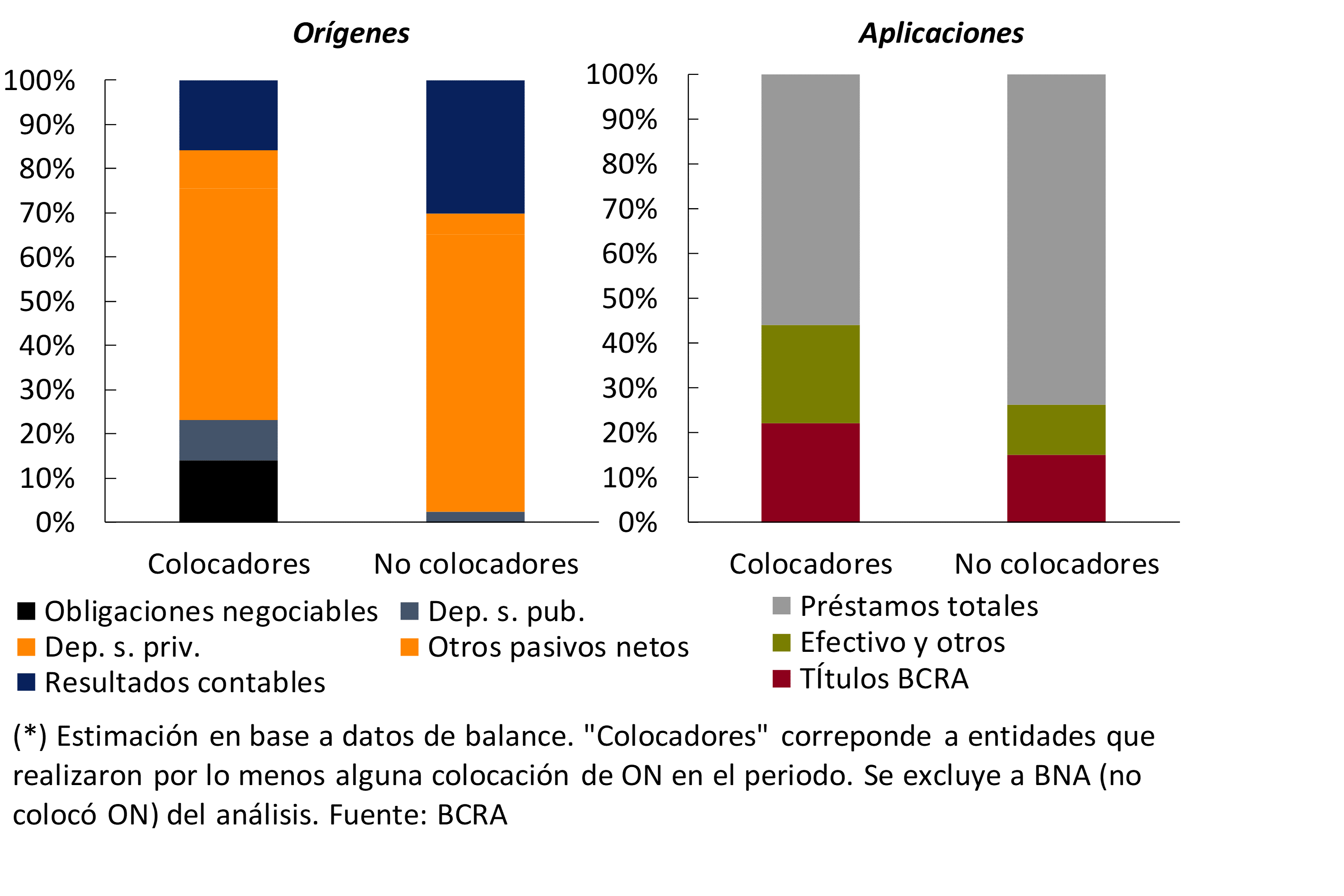
Section 4 / Access to Financial Services
Access to financial services is presented as a key dimension in terms of financial inclusion, given that the coverage of access points131 (PDAs) defines the possibilities for users to make use of these services. In December 2017, the Argentine financial system had 26,452 FLW at the national level, showing an increasing evolution in the last two years: in 2016 the total of FLW grew 5.4% (1,298 units) and in 2017 it increased 4.8% (1,203)132 (See Chart A.4.1).
Figure A.4.1 | PDA by Type
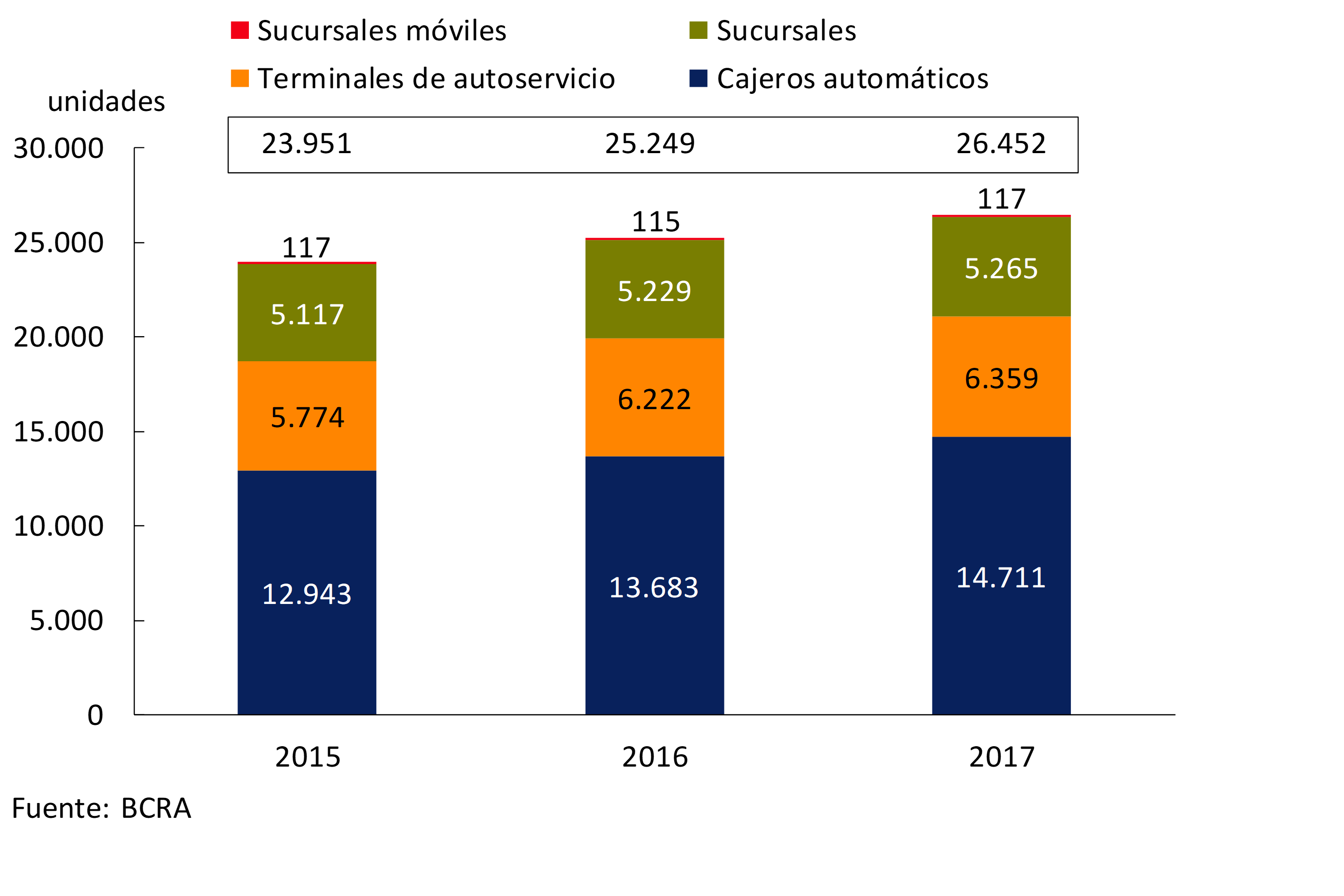
At the end of 2017, approximately 56% of the total number of PDAs corresponded to ATMs, while self-service terminals accounted for 24% of the total133. On the other hand, traditional branches accounted for 20%, while those that are mobile accounted for only 0.4% of the total. A similar composition is observed in the previous two years. The evolution by type of PDA shows that in 2016 self-service terminals were the ones that showed the greatest expansion (7.8%), growth that slowed down in 2017 (increase of 2.2%). In this last period, the expansion of ATMs (+7.5%) stood out.
Based on the information provided by financial institutions and INDEC, Argentina has 8 PDAs per 10,000 adult inhabitants, of which 4.5 are ATMs, 1.9 self-service terminals and 1.6 branches. The increase in FLW at a rate higher than population growth was reflected in improvements in this indicator, which stood at 7.3 and 7.7 in 2015 and 2016, respectively.
According to the Alliance for Financial Inclusion, Argentina has similar values to other countries in the region in terms of the number of branches and ATMs per 10,000 adults. However, our country’s performance in terms of total FLW lags behind. This is mainly explained by the presence of banking correspondents in the countries analyzed. In this sense, although there is no local figure of correspondents, there are cash withdrawal points located in shops (supermarkets, service stations and pharmacies, among others) and branches of non-bank collection networks (such as RapiPago)134, which provide the cash withdrawal service. Non-bank collection networks also have the alternative of receiving cash deposits from the public, making the credit to customers’ bank accounts.
According to the data surveyed, as of April 2018 there were about 5,300 cash withdrawal points, of which 67% were in the Central region and Buenos Aires, 11.8% in Patagonia, 10.8% in the Northwest, 7.1% in Nuevo Cuyo and 3.2% in the Northeast. The main providers are Visa’s ExtraCash (45.7% of the total), RapiPago (28.6%), Cabal’s Más Efectivo (18.3%) and Maestro’s Cash Back (7.3%)135. The BCRA’s regulation also promotes the installation of ATMs not operated by financial institutions. These points generate new alternatives to withdraw money from bank accounts, thus improving access in our country, tending to reduce the gap with other countries in the region. However, it should be noted that banking correspondents present in other economies are authorized to carry out more financial operations than the withdrawal and deposit of cash.
It should be considered that the 26,452 PDAs existing in 2017 were located in 1,440 localities (40.7%) where 91.3% of the country’s adult population lives136, leaving a total of 2,098 localities (59.3%) without access points (see Graph A.4.2)137, where the remaining 8.7% reside. 97% of localities without FLW have a population of less than 2,000 adults. The evolution of the number of ADPs shows that only 68 localities that in 2015 did not have any access point (out of 2,163 localities), began to have a PDA in December 2017. Thus, although there is an increase in the number of PDAs, new ones tend to be concentrated in more populated localities where there is already at least one other, compared to those localities that do not yet have any access point to financial services.
Figure A.4.2 | Localities with at least one PDA
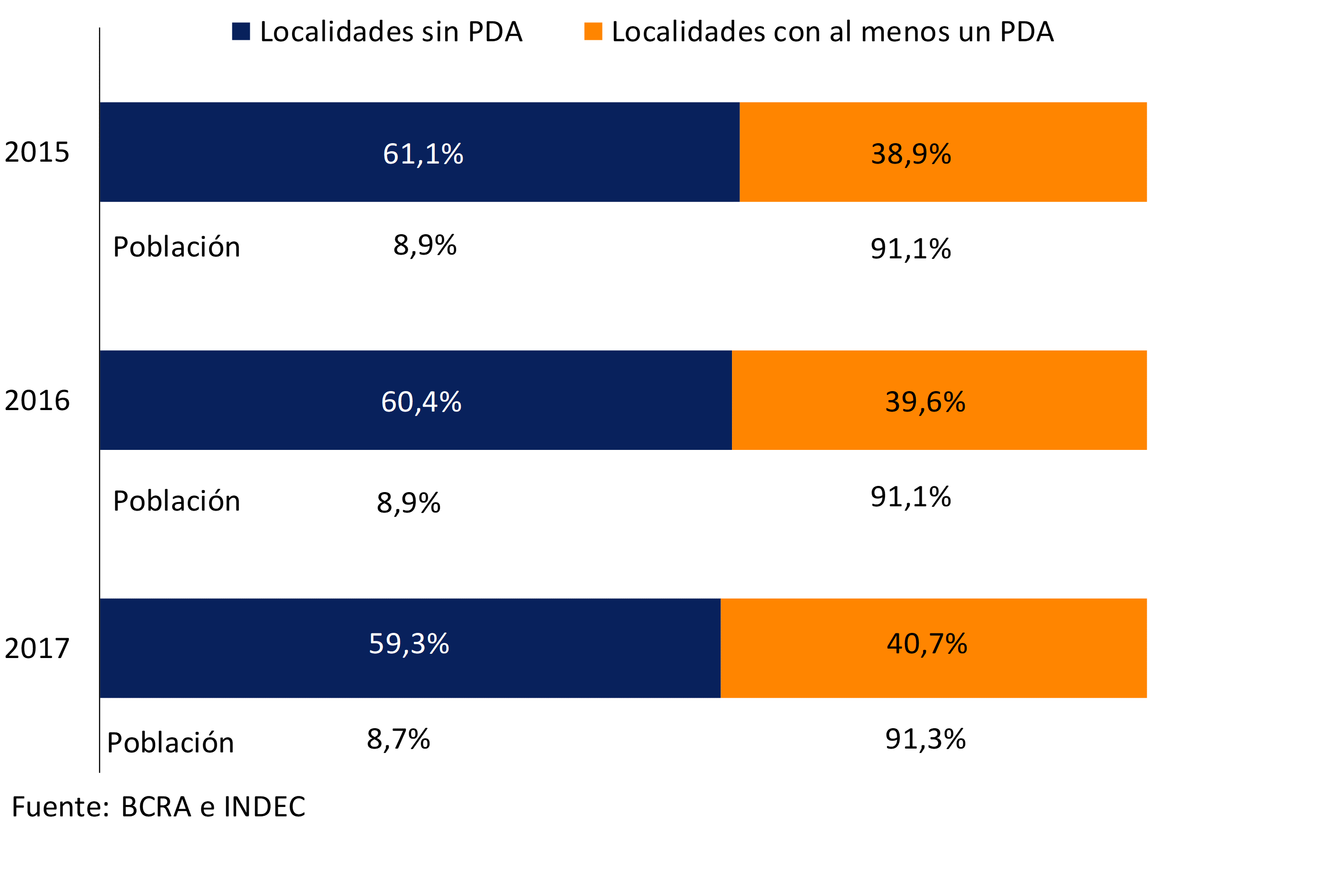
Section 5 / Competition in the Argentine Financial System
Although there is some debate in more developed and in-depth financial systems about the interaction of conditions of competition, efficiency and stability138, in principle greater competition allows consumers to generate better conditions of access to and use of financial services. Therefore, generating a more competitive environment should be a policy objective. Following this principle, as of December 2015, and within the framework of a process of more general changes in the economic organization, the BCRA has taken measures to stimulate competition in the Argentine financial system139. The purpose of this section is to measure the degree of competition in the sector and, in particular, to provide some general assessment of the effectiveness of the above-mentioned measures.
There is no single way to measure the degree of competition in the banking sector140. Here we will evaluate the degree of competition prevailing in the banking industry in Argentina using the Panzar-Rosse index (1987). The results indicate that the degree of competition in the Argentine banking system increased in the last biennium. At the end of the Section, a roadmap is provided for possible future lines of improvement in this type of analysis.
The Panzar-Rosse methodology allows a quantitative estimate of the degree of competition in the system, assuming that the market is in a long-term equilibrium. In this approach, market power is measured by the degree to which a change in factor prices is reflected in (equilibrium) incomes. The measure of competition is defined as “Statistic H”, being the sum of the elasticities of income with respect to factor prices. Based on the work of Bikker and Haaf (2002), the following income equation is estimated:

Where the dependent variable II is (real) interest income, TPF is the average funding interest rate (quotient between the amount of interest paid and the sum of total deposits and other miscellaneous obligations), PMO is the price of labor (quotient between remuneration and staffing) and PCA is the price of physical capital (quotient between operating expenses and fixed assets). A set of bank-specific factors (FEB) is also incorporated as control variables, reflecting differences in behavior, risk, and costs. From here, Statistic H is defined as:

A value of H less than or equal to 0 indicates monopoly, between 0 and 1 monopolistic competition, and if it is equal to 1 it would indicate conditions of perfect competition141.
For their part, Nathan and Neave (1989) propose an empirical test to verify the long-run equilibrium condition, based on the assumption that in this state risk-adjusted rates of return are equal among banks and are not correlated with factor prices. To this end, the same specifications as in the income equation were additionally estimated, but replacing the dependent variable with ROE142 of each entity. The long-run equilibrium test consists of verifying that the “E statistic”, defined as the sum of the elasticities, is equal to 0.
To estimate equation (1) for Argentina’s financial system, monthly data from the balance sheet and income statements of the entities for the period 2005-2017 are used. In order to work with a homogeneous group of institutions, a sample of 45 universal banks was selected, i.e., those with specific niches such as wholesalers and non-bank financial institutionswere eliminated 143. The particular interest of the section lies in identifying whether any impact of the measures adopted by the BCRA during 2016 on the degree of competition in the Argentine banking system is observed. Therefore, the estimation strategy consists of dividing the total period into 2 sub-periods: i) 2005-2015 and ii) 2016-2017, and comparing whether the value of Statistic H144 is increased in a statistically significant way.
The results of the estimates, differentiated by period, are presented in Table A.5.1145. In the first column of each segment, it is observed that the income equation allows us to reject both null hypotheses (H0: H = 0 and H0: H = 1), implying that the value of the H Statistic is indeed located in the interval (0, 1). As mentioned, this result indicates that the Argentine banking system would operate with a market structure consistent with monopolistic competition. Additionally, to verify the validity of the previous result, the second column shows the estimation of the equilibrium conditions. In the 2 sub-periods, the result of the test does not allow us to reject the null hypothesis that rates of return are not correlated with the price of factors (H0: E = 0), pointing out that there would be no evidence in this framework that the Argentine banking industry would depart from equilibrium conditions.
Table A.5.1 | Estimation Results
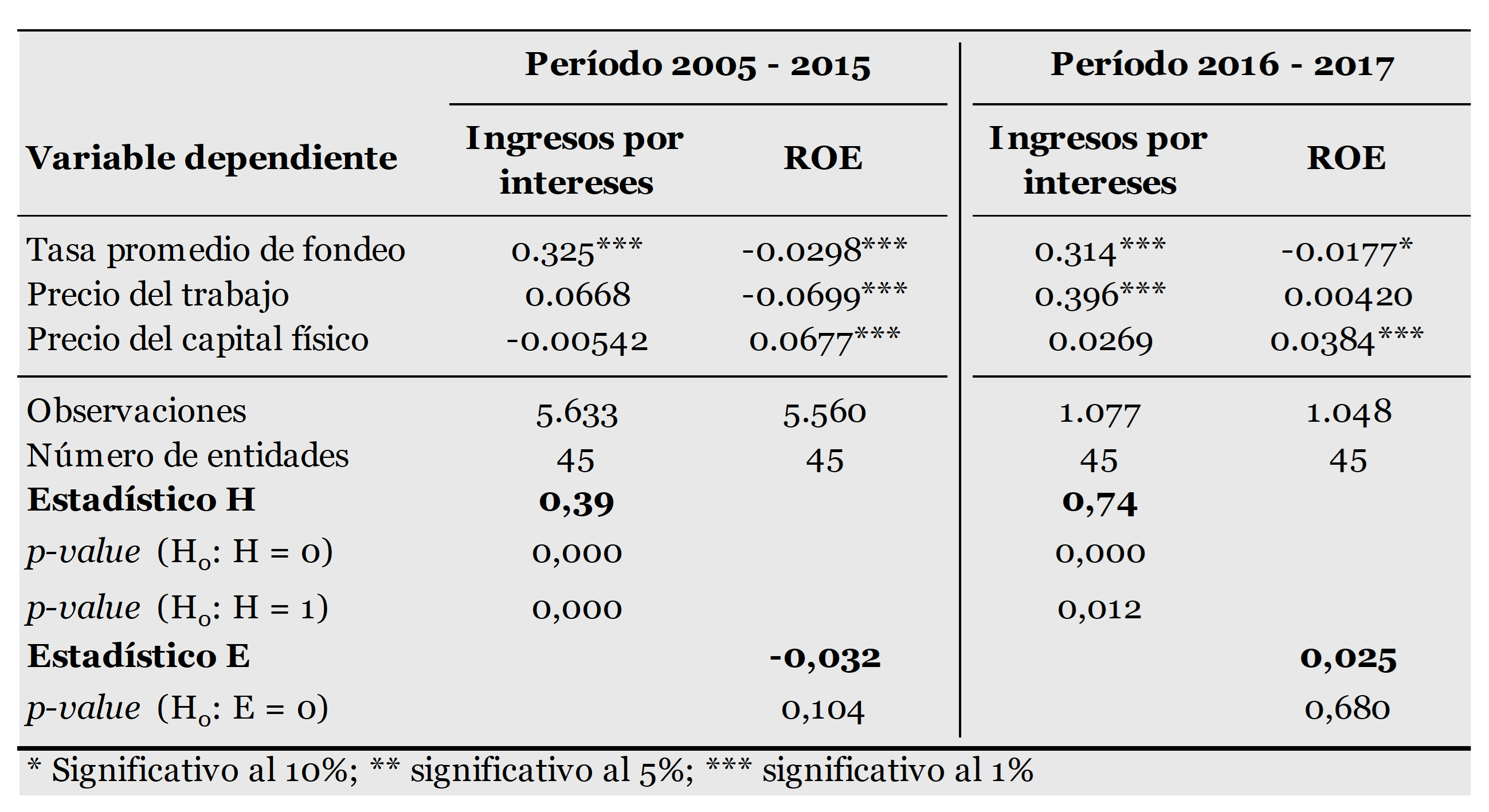
In terms of the differences in the conditions of competition between the last biennium and the previous 10 years, there is an increase in Statistic H from 0.39 to 0.74 (a variation of 90%). This provides some evidence that the degree of competition in the Argentine banking system has increased in the last two years, possibly in part as a result of the measures adopted to that end by the BCRA.
Finally, it is necessary to point out some limitations of the analysis presented here and, consequently, possible lines of future work on this topic. In the application of this analysis methodology, the financial system was taken as a whole, assuming that the definition of the market corresponds to the entire country. Going forward, depending on the availability of relevant information, the analysis could be deepened, defining the credit market, for example, in terms of provinces or localities. On the other hand, here it is being assumed that the industry operates with a single product. In this sense, it should be evaluated whether it is possible to expand the analysis by distinguishing more than one line of business.
Section 6 / An Analysis of Harvests of Mortgage Loans Intended for Families
In recent years, the BCRA has developed a set of tools to monitor and analyze different risks faced by the financial system and that, if they materialize, could impact the normal functioning of the financial system and the economy as a whole. In the particular case of credit risk, there are currently indicators that assess the financial situation of households and companies, the probability of defaulting on their debts, the exposures assumed by institutions, and the system’s resilience to shocks from this source of risk. Part of the results of this monitoring is published through different channels, including the Financial Stability Report. Moreover, since the end of 2009 this institution has been carrying out the Credit Conditions Survey (ECC), which provides information on changes in banks’ credit risk exposure policies. However, in a scenario of sustained credit expansion such as the current one, it is necessary to continue improving the capacity to monitor (prospectively) the quality of assets and the equity exposure they generate. In this context, the first estimates for the local financial system of the so-called “vintage analysis” are presented here.
The “harvest analysis” makes it possible to monitor the evolution of the quality of the loans, disaggregating them according to the period of granting them146. As will be seen, this tool is complemented by the information produced within the framework of the CCP. The importance of this tool lies in the fact that the evolution of credit delinquencies in general is linked not only to the evolution of general factors that influence the payment capacity of debtors (economic activity, income, employment, etc.), but also to the way in which institutions generated them at each moment of time. That is, how flexible or strict the entities were in each period of time in selecting debtors and evaluating their financial situation. Thus, knowing how the credits were generated allows, for example, to evaluate in advance whether the system is accumulating any vulnerability, which would only manifest itself in terms of equity if there were a reversal in macro or sectoral economic conditions.
Given the marked growth in mortgage credit to households in the last two years147 – driven by a more favorable macroeconomic scenario and the launch of the UVA instrument – the analysis of harvests will focus in this instance on this type of line. For this estimate, the Financial System Debtors Regime was used, which provides information on the credits that each individual maintains with financial institutions. From it, a process was built to individualize and codify each financing through different attributes, and to monitor its performance over time148. Through this methodology, groups of credits or harvests were formed by quarters. Then, in the following quarters, an indicator of delinquency was calculated, considering in the numerator those cases in which it is more than 90 days in arrears and in the denominator the total balance of the financing of each harvest149. For example, if we take the mortgage loans generated in the last two years, we observe a moderate to low default performance (see Graph A.6.1). These loans were granted in a context of falling GDP in 2016 (-2.2% in real terms) and recovery in 2017 (2.9% in real terms), to which was added a bias on the part of banks to make their criteria and conditions for granting these loans more flexible in both periods150.
Figure A.6.1 | Evolution of the irregularity of mortgage credit to individuals. 2016 and 2017 harvests
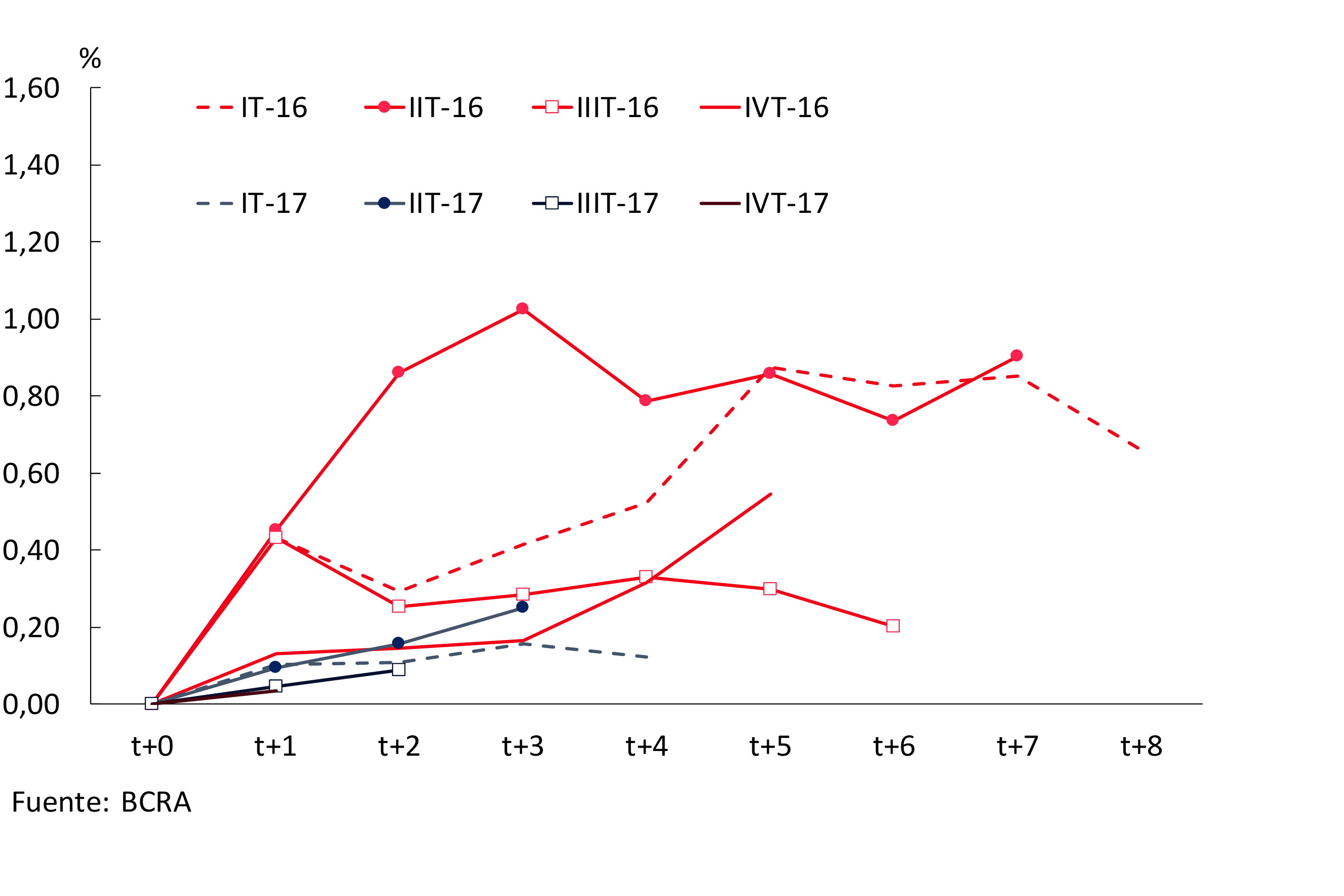
If a longer period of time is considered, taking into account the irregularity accumulated by harvests (see Graph A.6.2), it can be seen that the delinquency of loans in the 2017 harvest during their first quarters of life (6-9 months) presents historically low levels, even lower than those observed in other periods of growth in economic activity (see Chapter 1). Going forward, this new tool implemented by the BCRA will make it possible to monitor the performance of the loans generated in recent periods, especially in the case of UVA lines that, in general, have been generated with a lower installment/income ratio of the debtor compared to traditional lines.
Figure A.6.2 | Evolution of the accumulated irregularity of mortgage credit to individuals. Harvests 2011 and 2017
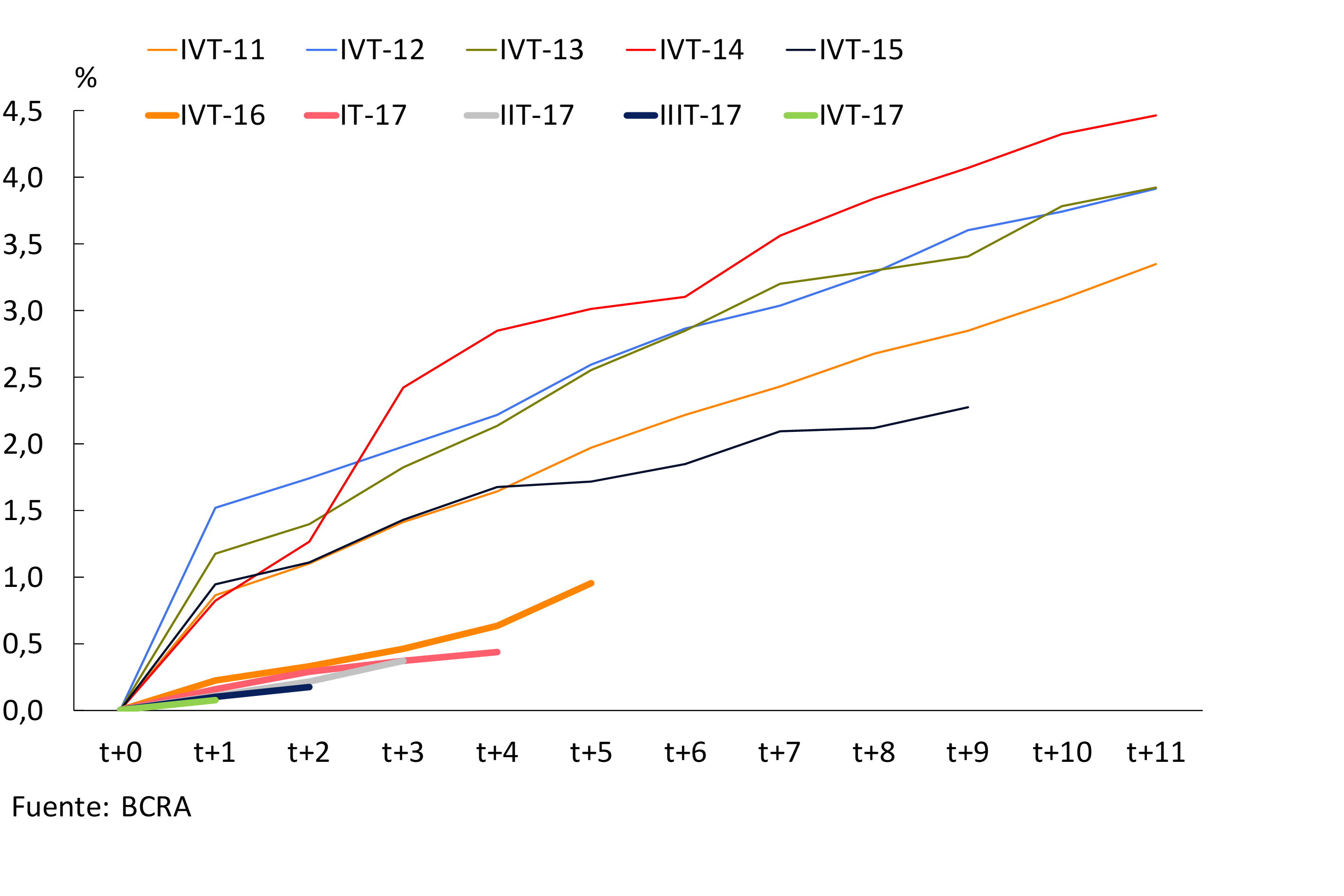
References
1 Futures markets went on to anticipate three fed fund rate hikes in 2018, aligning with FOMC members’ forecasts. At the March meeting, the FOMC decided on a 25 bps Fed Fund rate hike and raised its rate forecasts for 2019 and 2020 (the market maintains expectations for that period below the path expected by the members of the Federal Reserve). Added to this is the possibility of more concrete indications linked to a moderation in the asset purchase policies of the central banks of Europe and Japan.
2 The VIX index (expected volatility for the U.S. stock market) had been showing very low levels in a sustained manner. The jump observed in this index would have been partly explained by technical issues (for example, investment fund hedging operations).
3 On this occasion, US$9,000 million in instruments in dollars of 5, 10 and 30 years was raised, with a reduction in the placement cost of 100 bps compared to the interest rates of similar bond issuances in January 2017. In addition, REPOs operations were carried out with foreign banks for approximately US$2,000 million.
4 According to the latest contemporary BCRA GDP prediction (PCP-BCRA), output increased 0.7% s.e. in the first quarter of 2018, completing seven consecutive quarters of growth.
5 From July 2017 to January 2018 (latest available information) formal salaried employment in the private sector grew 0.6% s.e. (1.2% annualized), continuing the recovery that began in June 2016.
6 Investment was the component of demand with the greatest impact on growth in the second half of 2017, expanding by 16.8% y.o.y. (9.3% s.e. compared to the first half of the year) with a strong increase in durable production equipment of imported origin and a great boost from public works. The investment rate stood at 21.8% in the last quarter of 2017, very close to the maximum of 2011 (22.1%) and with a greater share of spending on durable equipment, which reached an all-time high (13.9% of GDP). The dynamism of investment is largely due to the upturn in the market value of the assets invested with respect to their “real” replacement cost (“Q ratio”), a positive trend that was sustained at the beginning of 2018.
7 Growth was more widespread in the second half of 2017, with an increase in construction (14.6% YoY), financial intermediation (6.7% YoY), industry (4% YoY) and real estate activity (3.8% YoY).
8 This is without accounting for extraordinary resources. Between the end of 2016 and the beginning of 2017, revenues corresponding to tax disclosure (laundering) were recorded, while in March 2018 income from profits of the Banco de la Nación Argentina was recorded for $15,000 million.
9 Federal Regime of Fiscal Responsibility and Good Government Practices (Law 27428). Fiscal Consensus (Law 27429).
10 Although in recent months the market has moderated its expectation of a relaxation of monetary policy, it still anticipates a less restrictive bias than the one that the monetary authority foresees for the coming months. See press releases on the latest monetary policy decisions of the BCRA.
11 Lower inflation favors intermediation but generates challenges for banks in terms of profitability and solvency (due to the lower inflationary tax). See Chapter 2 of this November 2017 edition of the IEF and IEF
12 The slower disinflation process than desired by the BCRA led to the recalibration of the targets at the end of last year.
13 Regarding rates in dollars, in the domestic market the sovereign bond curve showed at the end of the second week of May a steepening with respect to the levels in force at the publication of the previous IEF (the yields of the shorter bonds – the most liquid in the local market – and those of the long part fell). On the other hand, there was an increase of about 60 bps in the placement yields of the National Government Treasury Bills in dollars to 1 year from December to April.
14 On the other hand, based on the latest available information, it is observed that in 2017 the portfolio of the FGS (the main institutional investor in the local market) grew 10% in real terms, a performance led by public securities and, to a lesser extent, shares. In the case of insurance companies, their portfolios grew 7% in real terms in 2017, with 41% of this variation explained by holdings of public securities, 23% by FCI and 14% by ON.
15 Repo operations were also carried out with financial institutions.
16 There were 4 operations, the first two being in December with discounted instruments and terms of approximately 3 to 9 months. More recently, 180-day bills with a capitalizable coupon were placed.
17 For operations in nominal pesos, the average amount per operation was almost $1,400 million (compared to less than $500 million in the first half of 2017). With regard to the type of issuance, in general, fixed-rate operations are observed for shorter maturities, and with variable rates (following the Badlar or TM 20) for longer maturities. With respect to the cost of funding, considering the placement of 18-month bonds from different banks, in the first quarter there was a cut of more than 200 bps, while the cost of funding with fixed terms (Badlar Private Banks) fell 44 bps between peaks.
18 With the 5 operations registered since the last IEF, 7 operations are accumulated since the creation of the instrument (including a transaction of a non-bank financial institution).
19 In recent days, different companies (from various sectors) announced their intention to buy back shares in the market.
20 If the holding of LEBACs held by the non-financial private sector is included, this ratio would amount to 20.7% of output as of March 2018, increasing 1.5 p.p. compared to the level of a year ago.
21 In 2014, the BCRA established a roadmap for convergence towards IFRS (Communication “A” 5541). In order to facilitate the standardization of accounting allocations resulting from the application of IFRS, at the beginning of this year this Institution prepared a Complementary Guide to the Chart of Accounts – Convergence to IFRS. For more details on IFRS, see IEF 1-17.
22 Net worth increased 21.2% in public banks and 11.6% in private banks.
23 Real estate until now was considered at historical values and, from IFRS, values that are more in line with the market price are taken. In terms of the additional expository modifications generated by the application of IFRS, it should be considered that transactions that implied a double accounting recording – such as passes, forward and spot to be settled – were already taken into account in previous IEF publications when purging assets and liabilities using the net concept. In particular, assets and liabilities were net of accounting duplications for pass-through, forward and spot transactions to be settled.
24 See Chapter 3 for further discussion on the evolution of liquidity in the financial system.
25 Decree 905/02, text according to art. 63 of Law 26.546
26 See “Credit Policy.”
27 It allowed the entities to channel them to suppliers of exporting companies, to investment projects that allow the increase of production in the energy sector, to the financing of cattle investment projects and to finance importers of products or services exported by Argentines, among others. Moreover, it was established that to the extent that there is a guarantee from a private bank abroad (with an investment grade rating), it is allowed to finance all types of projects, whether or not they are linked to export activity. For a detailed development of all the regulatory changes introduced in this regard in the last 2 years, see Chapters and Regulatory Annexes of the IEFs of 2016 and 2017.
28 Estimation considering those debtors who, in the periods considered, are not present in the initial month (in any credit line) and are present in the final month (in any credit line).
29 Law 27.328. Through this tool, the local and international private sector, in its role as contractor, carries out projects that are tendered by the public sector, which is responsible for obtaining the necessary financing (For a detailed description of the PPP regulatory framework, see Law 27,328 as well as decrees and other regulatory standards that are available to the public in the Undersecretariat of Public-Private Partnership of the Ministry of Finance of the Nation).
30 According to the Ministry of Finance of the Nation, a total of 15 bidding programs with 60 individual projects are estimated, for an approximate amount of US$26 billion.
31 To the extent that the private contractor requires bank loans without the use of guarantees, bonds or sovereign guarantees, from the point of view of the BCRA’s regulations, these financings are considered exposures to the private sector.
32 At the end of 2015, for example, the aforementioned remuneration was at annual levels close to 3%.
33 For more detail, see Section 2. of the BCRA’s Harmonized Text on “Credit Policy”, within the framework of the provisions of Article 23 of Decree 905/02 (text according to Article 63 of Law 26,546).
35 Consolidated Text of the BCRA “Fractionation of credit risk”.
36 It was also established that, in the event that contractors sell the instruments to banks, they must not comply with the usual process of prior authorization before the Central Bank “Consolidated Text of the BCRA “Financing the non-financial public sector”, thus facilitating investment in infrastructure projects launched through the PPP.
37 It includes a fixed and repacable interest rate.
38 In line with Box 5 of IEF II-17, the exercise that seeks to evaluate the role of current surplus liquidity in sustaining the expected growth of credit was updated, trying to identify the possible moment of exhaustion of the same and the consequent need for the system to strengthen existing sources of funding. In this regard, a projection of the balance sheet of the financial system for the next three years was made, using a base scenario for the sector that is regularly prepared by the BCRA. In addition, projections were made with alternative assumptions on real growth for loans and deposits.
39 Law 24.485 and Regulatory Decree 540/1995.
40 Based on BCRA calculations based on daily averages.
41 Through Decree No. 30/2018 and its subsequent regulation through Communications “A” 6435 and 6460 of the BCRA.
42 For example, until the end of 2017, the reference rates were 2.25% for demand placements in pesos, 22.50% for 60-day loans in pesos and 22.75% for terms of more than 60 days, also in pesos. In all the cases mentioned, the additional 2 percentage points allowed by the regulation in force until then are included in the calculation.
43 Communication “B” 11.685.
44 In fact, the deposit coverage ratio with the Deposit Guarantee Fund (DGF) remained at around 2.5% at the end of 2017, the highest value in recent years.
45 This decrease in earnings is also observed when considering the profitability in terms of equity, adjusting it for the evolution of the CPI. This evolution is verified both at the system level and in private banks.
46 The return in terms of net worth stood at 23.4% in 2017, 6.3 p.p. and 9 p.p. less than in 2016 and 2015.
47 As mentioned in the previous IEF, it is of interest to explore the evolution of this rate differential in order to better interpret the results generated in the traditional financial intermediation process. The implied lending rate is defined as the ratio of the annualized quarterly flow of accrued interest to the average loan balance for the period. The implicit funding cost for deposits is defined as the ratio between the annualized quarterly flow of interest paid and the average balance of deposits adjusted for reserve requirements. The data correspond to the non-financial sector. Implicit interest rates (ex post) are related to flows that originate in operations agreed in the past and incorporate information that was not known at the time of the transaction, such as the level of compliance of the debtors or possible cancellations of credits, among other dimensions. On the other hand, the interest rates operated (ex ante) reflect more efficiently the conditions of the environment at the time of the transaction, such as market competition, changes in macroeconomic variables, expectations, etc.
48 From this publication, a regrouping of items is made between the items results by services and tax burdens, readjusting the historical series. Although this regrouping modifies the levels of results by services, the direction of the changes observed in the margin is maintained.
49 Recently, for example, the BCRA encouraged customers to cancel their financial products both electronically and by going to any bank branch, and no longer, necessarily, to the one where the products were contracted.
50 In order not to distort the analysis of employment and funding data with the financial system, certain companies whose main activity is not focused on the Fintech segment were not considered, such as e-commerce platforms that, in addition, provide payment or credit services; or the case of extra-bank collection companies that provide payment services through electronic wallets.
51 Data according to Finnovista (2016 and 2018), a Fintech startup accelerator in the region, and own surveys.
52 Made on the payroll of 59 Fintech employees. The source is the Monthly Accounting Information Regime for the Payment of Remunerations by Crediting to a Bank Account (BCRA).
53 Source: Informative Regime for Debtors of the Financial System (BCRA).
54 Information prepared from balance sheets, risk ratings and supplements for the issuance of prospectuses for the issuance of financial trusts available on the website of the National Securities and Electronic Open Market Commission.
55 For more detail, see Regulatory Annex and Chapter 4 of the Payment System.
56 These results occur in a scenario of growth, in recent years, of the amount of credit assistance in terms of the total number of employees in the financial system.
57 For further development, see Chapter 3 of the April 2018 Monetary Policy Report.
59 Tier 1 capital defined as basic equity (common and additional capital, net of deductible accounts). Com. “A” 5369.
60 See Chapter 2 of IEF II-17.
61 In recent months, a set of capitalizations of both private and public banks was registered. For further discussion on the change in banks’ capitalization strategies in recent years, see Box 9 of IEF II-17.
62 Capital retention of 2.5% of assets in risk weight (RWA), which is increased to 1 p.p. in the case of banks defined as systemically important. It should be considered that, in accordance with the prudential regulations of the BCRA, the aforementioned margins do not constitute a minimum regulatory requirement, but rather that their non-compliance imposes restrictions when distributing dividends of the entities (for more details, see Consolidated Text of Distribution of Profits). In the theoretical exercise presented here, the aforementioned margins are assimilated to traditional regulatory requirements.
63 Common stock and retained earnings.
64 As of February 2018, the financial system had 77 financial institutions, which are reduced to 76 as of March due to the revocation of Banco Finansur’s authorization to operate (Com. “B” 11675).
65 Ratio between capital with the greatest capacity to absorb losses and a broad measure of exposures.
66 Computable Patrimonial Liability (RPC) / Risk-Weighted Assets (RWA).
67 On this point, see Box 10 of the IEF of the previous semester where the decision on the rate for the Countercyclical Capital Margin is communicated. The local methodology weights the evolution of the credit/GDP ratio gap with respect to its long-term trend (within the framework of the international standard), GDP growth and its cycle, and quantitative and qualitative indicators referring to the relative strength of credit providers and demanders.
68 At the beginning of 2018, financing to the 100 largest private sector debtors in the financial system was equivalent to 14.6% of credit to this sector, falling slightly compared to what was evidenced in mid-2017.
69 Even if the “lagging” denominator for this indicator is considered, in order to moderate the effect of the significant growth in financing in recent months, the new ratio continues to show a relatively low increase in a year-on-year comparison (with lags of 3, 6 and 12 months, the value of the indicator only increases by 0.1 p.p., 0.2 p.p. and 0.5 p.p. compared to March 2017).
70 If the minimum regulatory forecasts for lending to the private sector in a regular situation are excluded, the level of provision reaches 83% of financing to the private sector in an irregular situation.
71 Taking into account the indicator with the denominator “lagging”, the year-on-year increase would be slightly higher (if it lags 3, 6 and 12 months, the value of the indicator increases by 0.3 p.p., 0.4 p.p. and 0.8 p.p.).
72 Except for the indicator with the denominator lagging 12 months (+0.1 p.p. in a year-on-year comparison of the indicator), considering lags of 3 or 6 months, slight reductions in the indicator are evident.
73 Technology has made it possible to generate indices on these climatic phenomena, which are defined by geographical area, campaign, type of crop, among others, and are quantified by satellite observation of the regions.
74 For more details on the construction of the MPI, see page 38 of the Financial Stability Report for the First Half of 2017. The behavior of the MPI was similar to that of the Estimated Probability of Default (PDE) and that of the indicator computed as the balance in an irregular situation in terms of the total balance of a quarter ago (expressed all in pesos of the same purchasing power). On the other hand, the EDP is the ratio between the credits that go from credit situation 1 and 2 (regular) to situation 3, 4, 5 and 6 (irregular), in terms of the initial credits in situation 1 and 2 (regular).
75 For more details on the sensitivity exercises, see Financial Stability Report for the First Half of 2016.
76 In this version of the exercise, it is added that the irregularity ratio of the loan portfolio of each entity increases from the current level to the maximum level reached during the peak of the international financial crisis of 2008-2009, and then proceeds to deregister those assets not covered by forecasts from the balance sheet.
77 Excluding Additional Capital Margins (conservation, systemic importance, or countercyclical).
79 For more conceptual detail on this type of risk, see chapter 3 of IEF I-17 and IEF II-17.
80 See page 64 of BEF II-07. It should be recalled that the CER mismatch that was evident in the exit from the 2001-2002 crisis was mainly explained by exposure to the public sector.
81 See Section 5 of IEF II-17.
82 Mainly because of the holding of public securities with CER.
83 For example, in April a national private bank issued a financial trust for $440 million with a mortgage portfolio in UVA as the underlying asset.
84 A similar behavior was presented by the ratio that considers only items in national currency.
85 For more details, see Liquidity Coverage Ratio. Only entities belonging to Group “A”, whose assets are greater than or equal to 1% of the total system, are obliged to comply with this minimum requirement. Communication “A” 6475.
86 In relation to the distribution of this indicator among banks in this group, the first decile reaches 1.5 and the ninth decile 3.3.
87 For more details on the characteristics of this instrument introduced by the BCRA, see Box 12 of IEF II-17.
88 Called non-users of financial services in the respective regulations.
91 Communication “A” 6425. It is worth mentioning that currently some individual enterprises allow you to use this payment system. For example, YPF with Todo Pago, Axion with Mercado Pago, and in the Government of the City of Buenos Aires with Yacaré.
92 Debit cards, credit cards, virtual wallets or transfers.
93 Communication “A” 6432 and Communication “A” 6488.
95 Such as Rapipago or Pago Fácil.
96 For example, a seller of an e-commerce platform could use the funds from their sales through a prepaid card. In the same sense, if the e-commerce platform grants loans, the user could have them through this type of card.
97 In general, even when cards are issued under the brand of the company that markets them (Ualá, Pago24 or MercadoPago, among others), they are associated with the brands of means of payment (such as Cabal, Mastercard or Visa) and a known network of processors (Prisma, First Data, among others).
98 See IEF I-17 Section 5 for an initial discussion of cash management.
99 It should be noted that this is only the savings from direct production. A more global account should also include the reduction in logistics costs and general handling of smaller physical amounts of paper money.
100 Taking these in their function as a means of payment.
101 Complete statistics on the volume of transactions associated with these cards are not yet available.
102 The schedule to comply with this obligation, which covered from April of that year to March 2018, was based on the specific item of economic activity, as well as the annual turnover amount of the seller of goods or services, including the case of monotributistas.
104 Communications “A” 5982 and 6043. For more information, see the 2016 and 2017 editions of this Report.
105 Mobile POS are not exclusive for use within the framework of the PEI (immediate transfers using debit cards as access cards), as some can also work as a traditional POS to receive card payments. Considering the suppliers of the different companies, there would already be around 321,000 devices of these characteristics.
106 At the beginning of 2017, the National Executive Branch promoted a gradual reduction of the maximum tariffs on debit and credit card operations. An agreement was signed between the representatives of the credit cards and the chambers that bring together the merchants, with the aim of reducing commissions (see Press Release of March 2017 of the Ministry of Production of the Nation). Since April 2017, the commission charged to businesses for each transaction has decreased, from 1.5% to 1.2% in the case of debit and from 3% to 2.5% for credit card payments, and at the beginning of 2018 they stood at 1.1% and 2.35% respectively. According to the established schedule, both rates will go to 0.8% and 1.8% respectively from 2021.
107 See the section “Equity situation of the corporate sector” in IEF for the first half of 2017 and “Leverage and debt burden of companies with access to bank credit” in IEF for the second half of 2017.
108 This concern among emerging countries must be understood in a context of several years of growing trend in the leverage of companies in these countries. This evolution partly reflects a boom in debt placements in international markets, linked both to improvements in the situation of emerging economies and to the international context (ample liquidity, low interest rates and greater appetite for financial instruments from emerging economies). See, for example, “Corporate Funding Structures and Incentives” (FSB, 2015).
109 We work with a sample of companies whose assets represent, at the end of 2017, more than 95% of the total assets of publicly offered companies (this sample includes all publicly offered companies that have bonds issued in foreign markets). Other sources of information on the corporate sector that are usually monitored do not present data discriminated by currency.
110 This ratio (measured at the end of 2017) would rise to 4.8% if calculated with the exchange rate at the end of May 14 and the latest GDP data published (end of 2017). This level is consistent with the limited ratio of corporate sector debt burden to GDP in Argentina, both in aggregate terms and considering exclusively the external debt of the private sector.
111 These companies account for 92% of the balance of corporate bonds in foreign currency of Argentine companies. For their part, for these companies, liabilities in foreign currency (largely explained by the balance of bonds) represent about two-thirds of total liabilities.
112 This ratio in terms of assets averages close to 30% for the group analysed and, although there are cases in which the ratio is above this value, for 75% of the companies the mismatch does not exceed 45% of total assets.
113 In some cases, the existence of diversification in the lines of business faced makes it difficult to classify companies as producers of tradables or non-tradables.
114 In this case, although in the balance sheets the companies highlight that they have the alternative of entering into financial contracts derived from the exchange rate (and in some cases it is mentioned that financial derivatives have been used as a hedge during some point of the year), only on rare occasions were these tools being used at the end of 2017 (and for a limited amount compared to the aggregate mismatch).
115 The data are reported in median terms, although these trends are generally also observed in other percentiles of the distribution for almost all the indicators mentioned in this paragraph (except liquidity). However, it should be borne in mind that the data show considerable heterogeneity between companies.
116 It is noteworthy that the levels of leverage observed are slightly above the values recorded for other listed companies in Latin America. The median leverage ratio by country is in a range of 0.45-0.65 for Brazil, Chile, Colombia, Mexico and Peru.
117 Data not presented in the attached table. Revenues for the next 12 months are projected based on those observed in the last year, updated by the inflation expected for the current year according to the REM.
118 The LFP also proposes an exemption from the maximum term (30 years) for publicly offered financial trusts that are used to securitize mortgage loans.
119 In addition, for life and retirement insurance, updating according to the CER is allowed.
120 And not to all of his assets. In the event of default by the issuer, creditors will have recourse only on those assets. This modification would facilitate project finance operations.
121 The possibility is left open for the CNV to admit other financial assets not explicitly mentioned in Law 24,083.
122 Closed-end common funds may be constituted with the same assets as an open-ended fund, in addition: movable or immovable property, securities without public offering, credit rights and other assets authorized by CNV. The assets in which only closed-end funds can invest must be located in the country. On the other hand, to promote the development of real estate and infrastructure projects, tax benefits are granted for closed-end mutual funds and financial trusts that meet certain guidelines.
123 In addition to modernizing different aspects related to the work of the management company and the depositary company.
124 In addition, the functions of markets and clearing houses are modified. Other changes linked to these agents (e.g. linked to the legal form of markets and guarantee funds) are also incorporated.
125 The resources from the fines applied by the CNV will be transferred to the National Treasury. Various modifications related to administrative and decision-making issues in the CNV are also introduced.
126 Thus, the possibility of initiating investigations by the CNV is reintroduced.
127 Especially those made in dollars in international markets, aimed at improving the profile of ON maturities.
128 Notes accounted for 3.5% of the total liabilities of banks as of March 2018, increasing by 1.3 p.p. YoY.
129 They are not considered Non-Banking Financial Entities.
130 The total balance including subordinated negotiable obligations is close to $115,000 million, of which 74% corresponds to debt in pesos, 23% in dollars and the rest in UVA.
131 This definition includes, in aggregate, branches, mobile branches, ATMs, and self-service terminals.
132 The growth represents the number of new PDAs enabled net of those PDAs that were eliminated.
133 In the case of ATMs, 74% of the devices are located inside bank branches, while only 26% are located outside these establishments (for example, in supermarkets or service stations). This phenomenon is deepened in the case of self-service terminals: 99% of enabled devices are located inside branches and only 1% outside.
135 This non-exhaustive survey counts the shops and branches of collection networks as a unit, regardless of whether they may contain multiple extraction points. Without considering this effect, and taking into account that the same business could operate with more than one network, a conservative calculation would show that there are at least around 4,000 additional non-bank access points, 15% of the total number of PDAs.
136 The number of adults per locality was calculated by applying to the results of population by locality of the 2010 census, the growth rate implicit in the projections and estimates of population by department of INDEC.
137The calculation was made taking into account the number of localities identified by INDEC in the 2010 census. The results of the last census indicate the existence of a total of 3,538 localities and 490 rural areas.
138 One approach points out that greater banking competition increases the fragility of the system since it decreases the market power, profit margins and, with it, the value of the banking “franchise”, encouraging risk-taking by banks (Berger et al. 2008). Alternatively, increased banking competition would increase the stability of the system by preventing greater market power from increasing bank risk as higher interest rates charged to loan customers make it more difficult to repay loans and exacerbate problems of adverse selection and moral hazard (Akins et al. 2014).
139 For more details, see the Regulatory Annex of this edition and the previous edition of the IEF. Also see Chapter 5 of IEF I-16, IEF II-16. It is worth highlighting here, among other measures: (i) elimination of maximum limits on lending interest rates and the minimum limit for the interest rate of fixed-term deposits in pesos; (ii) release of commission prices, with the obligation to report the values to its clients together with those of the competition each time they are modified; (iii) transparency in the information of the Total Financial Cost of credits (in advertisements and contracts); (iv) mobility of customers between entities (transfer of the salary account, free savings banks and immediate transfers, facilities for opening and closing accounts remotely).
140 For example, see Demirguc-and Martinez Pería (2010) where a multifaceted approach is proposed to analyze competition in the financial system applied to a particular country. On the other hand, the World Bank (2013) and de-Ramon and Straughan (2017) review the different measures used in the literature.
141 Intuitively, under certain assumptions, in the case of a monopoly an increase in the price of factors increases the marginal cost, to return to equilibrium the marginal revenue must rise by reducing the quantities (increasing the price), if the elasticity of demand is greater than 1 the total revenue falls. In the case of competition, an increase in the price of factors increases marginal cost and revenues in the same proportion to ensure the profit condition equal to 0.
142 Strictly speaking: ln(1+ROE).
143 In addition, banks that were not active during the entire 2016-2017 biennium and those with extreme values in the price of factors were eliminated.
144 The estimation methodology is of fixed individual and temporal effects (two way fixed effects) with standard errors corrected by the Driscoll-Kraay method that uses a nonparametric covariance matrix estimator that produces consistent standard errors against heteroskedasticity and are robust to general forms of spatial and temporal dependence.
145 For reasons of space availability, only the coefficients related to the prices of the factors are shown, but all specifications have complete controls. The results are available to the interested reader.
146 That is, for example, for financing originated in a certain period “t”, the progress of its irregularity or default is evaluated in “t+1”, “t+2” and so on, successively, until the moment of completion of the same is reached. It should be considered that until the full maturity of the financing, different situations can be observed, such as delays or defaults by debtors (with even subsequent normalization of commitments), early payments or cancellations of capital, sales to financial trusts, or even their transfer to another financial institution due to mergers or portfolio sales. among other circumstances.
147 See Chapter 2 for further analysis.
148 It should be noted that the aforementioned Debtors’ Regime (which feeds the so-called “Debtors’ Central”) is not specifically prepared to carry out this type of analysis. Therefore, it is necessary to make some assumptions and implement certain statistical processes to address some information limitations.
149 The balance is net of the amortizations that are made.
150 See Chapter 2 and results of the CCP published on the BCRA website.
Glossary of abbreviations and acronyms
€: Euro
to.: Annualized
AFIP: Federal Administration of Public Revenues
ANSeS: National Social Security Administration
RWA: risk-weighted assets
ATM: Automated Teller Machine
BADLAR: Buenos Aires Deposits of Large Amount Rate (interest rate paid for 30 to 35-day fixed-term deposits, more than $1 million, average of entities)
ECB: European Central Bank
BCBA: Buenos Aires Stock Exchange
BCBS: Basel Committee on Banking Supervision
BCRA: Central Bank of the Argentine Republic
IDB: Inter-American Development Bank
BIS: Bank for International Settlements
BoE: Bank of England
BONAD: Argentine Nation Bond linked to the Dollar
BONUS: Argentine Nation Bond
BONCER: Treasury bonds in pesos adjusted for CER
BONUSES: Fixed-rate Treasury bonds in pesos
CABA: Autonomous City of Buenos Aires
CAFCI: Argentine Chamber of FCI
Call: Interest rate on unsecured financial market operations
CCP: Central Counterparty (Contraparte Central)
CDS: Credit Default Swaps
CEMBI+: Corporate Emerging Market Bond Index Plus
CER: Reference Stabilization Coefficient
NVC: National Securities Commission
MUST: Immediate Debit Payment Method
DPN: National Public Debt
DSIB: Domestic Systemically Important Banks
ECAI: External Credit Assessment Institution
ECB: European Central Bank
ECC: Credit Conditions Survey
USA: United States
EFNB: Non-Banking Financial Institutions
EMAE: Monthly Estimator of Economic Activity
EMBI+: Emerging Markets Bond Index
EPH: Permanent Household Survey
FCI: Mutual Funds
Fed: US Federal Reserve
Fed Founds: US Federal Reserve Benchmark Interest Rate
FGS: Sustainability Guarantee Fund
IMF: International Monetary Fund
FSB: Financial Stability Board
GBA: Greater Buenos Aires (includes all 24 matches)
A.I.: Year-on-year
IAMC: Argentine Institute of Capital Markets
IBIF: Gross Domestic Fixed Investment
IEF: Financial Stability Report
INDEC: National Index of Statistics and Censuses
CPI: Consumer Price Index
IPIM: Domestic Wholesale Price Index
IPMP: Commodity Price Index
IPOM: Monetary Policy Report
VAT: Value Added Tax
CSF: Liquidity Coverage Ratio
LEBAC: Central Bank Bills (Argentina)
LETES: U.S. dollar treasury bills
LFPIF: Financing line for production and financial inclusion
LR: Leverage Ratio
MAE: Electronic Open Market
MERCOSUR: Southern Common Market
Merval: Buenos Aires Stock Market (benchmark stock market index)
MF: Ministry of Finance
MH: Ministry of Finance
MSCI: Morgan Stanley Capital International
MULC: Single and Free Exchange Market
OECD: Organization for Cooperation and Development Ec.
ON: Negotiable obligations
OPEC: Organization of the Petroleum Exporting Countries
P.B.: The Basics
P.P.: Percentage points
PEN: National Executive Branch
PGNME: Global Net Foreign Exchange Position
GDP: Gross Domestic Product
PN: Net Worth
PPM: Mobile Payment Platform
SMEs: Small and Medium Enterprises
REM: Market Expectations Survey
ROA: Return on assets
SWEE: Return in terms of equity
ROFEX: Rosario Futures Exchange (Mercado a término de Rosario)
RPC: Computable Patrimonial Liability
S&P: Standard and Poor’s (Index of the main stocks in the US by market capitalization)
s.e.: Series without seasonality
SEFyC: Superintendence of Financial and Exchange Institutions
NFPS: National Non-Financial Public Sector
TCR: Real exchange rate
TN: National Treasure
TNA: Annual Nominal Rate
Trim.: Quarterly / Quarter
ICU: Utilization of Installed Capacity
EU: European Union
US$: US Dollars
UVA: Unit of Purchasing Value
ICU: Housing Unit
UVP: GDP-Linked Units
Var.: Variation
VIX: S&P 500 volatility
WTI: West Texas Intermediate
Share on


