The BCRA has an active credit policy in place to address the effects of the crisis brought about by COVID-19. The measures adopted seek to provide financial aid to households and MSMEs, against the backdrop of the pandemic. The BCRA has mainly fostered loans at a maximum 24% annual interest rate for MSMEs, and 0% loans for self-employed workers whether or not under a simplified tax scheme.
The MSME credit line reached 136,970 companies for ARS223 billion in total, with an average of ARS1.6 million. The total amount under the MSME credit line represents a third of the total stock of business loans provided to the private sector.
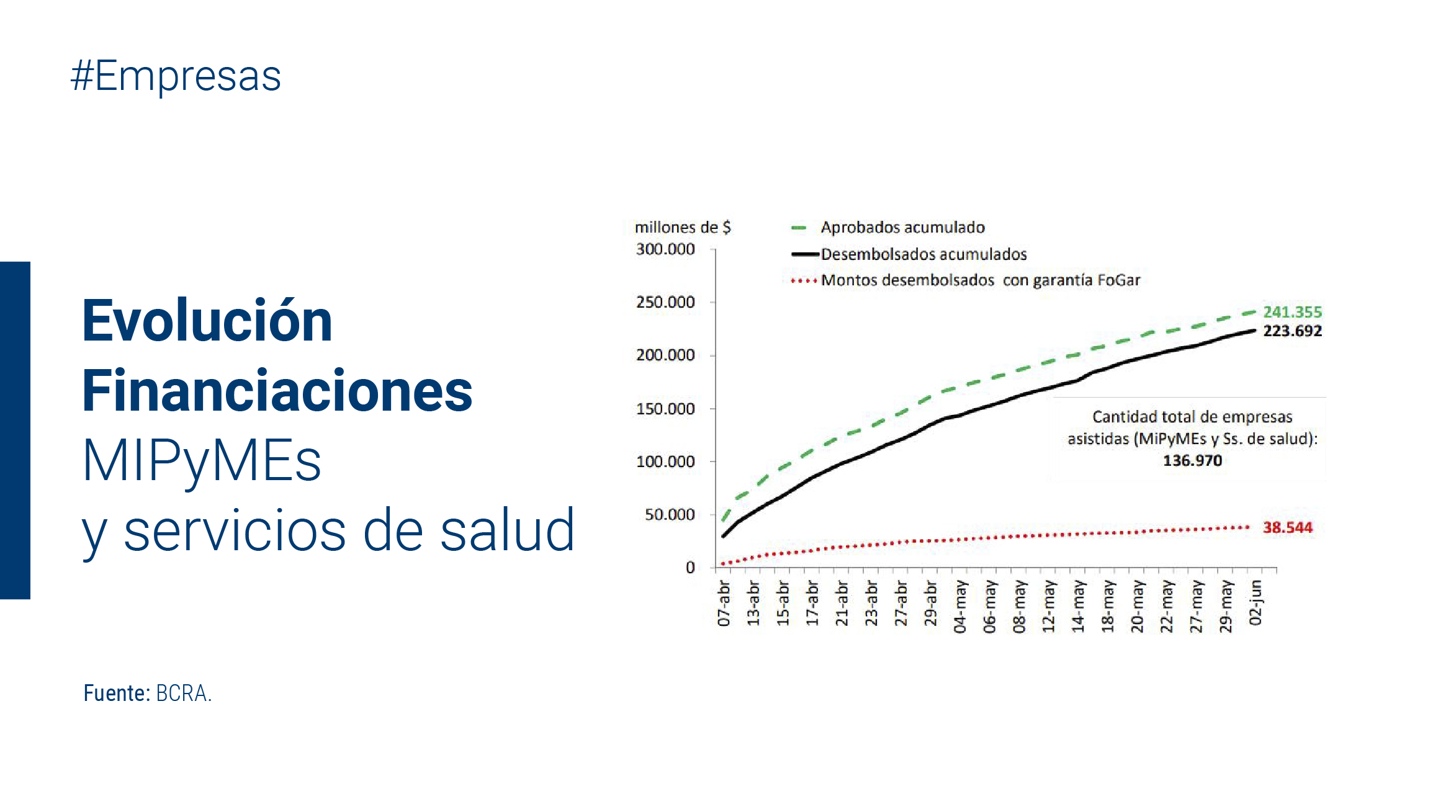
The 136,970 companies, which account for 1 out of 4 MSMEs in Argentina, channeled the funds to payment of salaries (23%), purchase of other capital goods (48%), payment of checks (22%), and hiring of healthcare services (3%). The remaining 4% falls within headings not included in the working capital lines.
These loans have been implemented gradually from its launch in April, gaining momentum ever since. The goal—to cross the ARS223 billion line—was reached in two months.
SME PLUS, AN OPERATIONAL CREDIT LINE FOR 200,000 SMEs
The BCRA further implemented a loan called SME Plus credit line, which addresses the needs of SMEs without outstanding bank loans. Indeed, they may access the SME PLUS line with minimum requirements upon the submission of the guarantee from the Argentine Guarantee Fund (Fondo de Garantías Argentino, FoGAr). This is a credit line of ARS22 billion for about 200,000 SMEs.
In turn, the 0% credit line sought to help those whose income has significantly been reduced as a result of the pandemic: self-employed workers whether or not under a simplified tax scheme. The number of loans granted as of June 2 was 311,000, for a total amount of ARS38 billion. These loans were implemented by way of credit card advances.
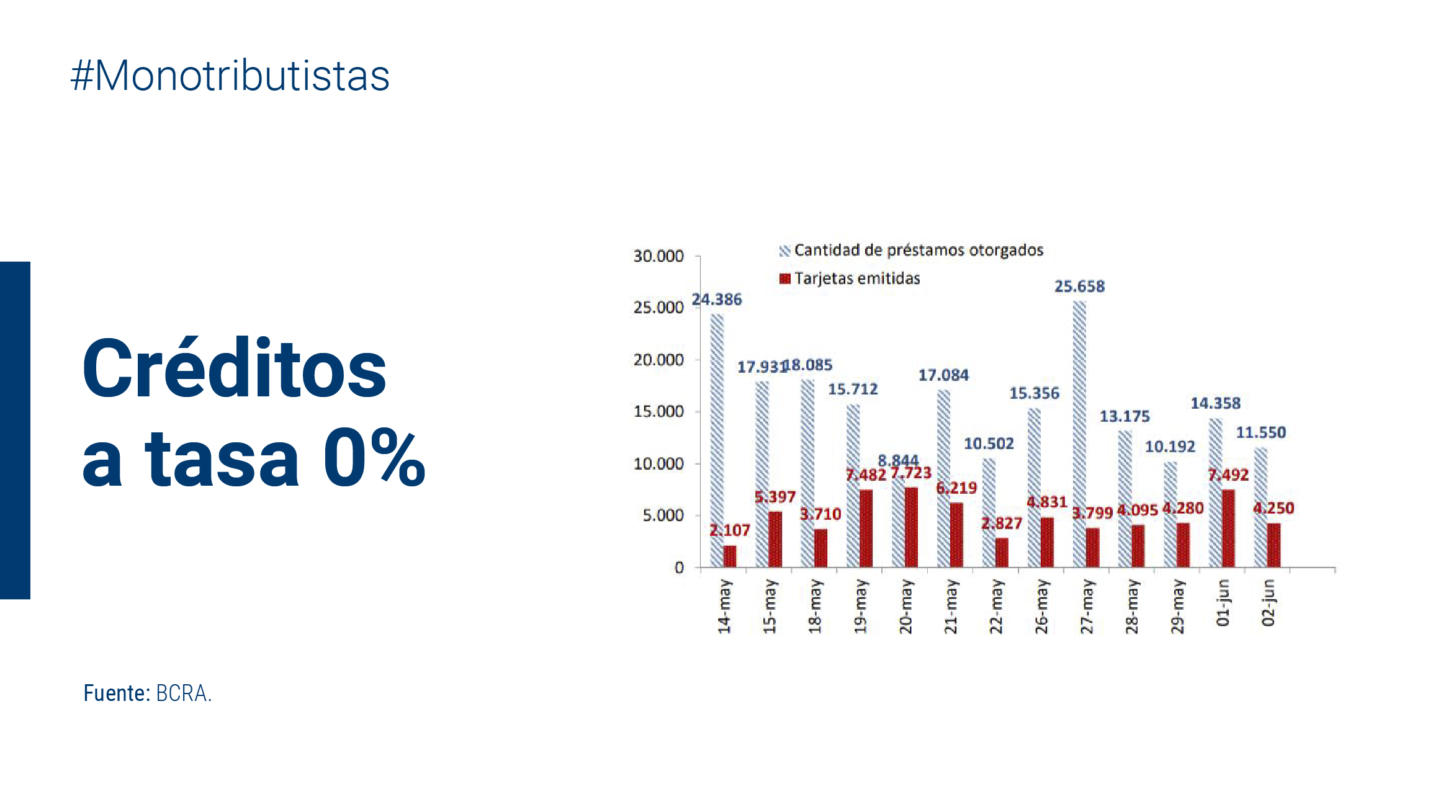
This tool has gained momentum in the past ten business days: on average, 15,000 loans for ARS1.7 billion were granted on a daily basis.


