MONETARY AND BANKING CONFERENCE 2021
Cycle of online seminars
Macroeconomic conditions, growth and distribution. Underlying problems of the global economy and lessons from the pandemic
SPEAKERS
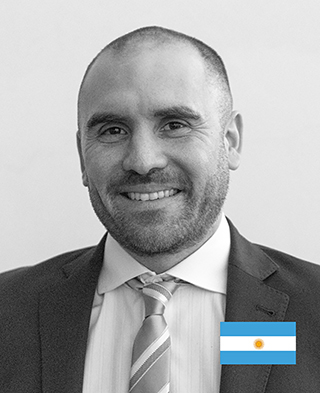
Martín Guzmán
Martín Guzmán has served as Argentina’s Minister of Economy since December 2019. He was born in La Plata on October 12, 1982.
He is a researcher at Columbia University’s School of Economics and Director of the Public Debt Restructuring Program of the Columbia University’s Policy Dialogue Initiative. Together with Nobel laureate Joseph Stiglitz, he has led the academic training program of Columbia University’s Policy Dialogue Initiative.
He is editor-in-chief of the Journal of Globalization and Development and has published numerous scholarly articles in journals and journals.
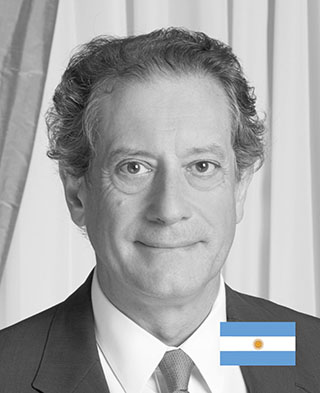
Miguel Ángel Pesce
Miguel Ángel Pesce has served as president of the Central Bank of the Argentine Republic since December 2019. He has a degree in Economics, graduated from the Faculty of Economic Sciences of the University of Buenos Aires (1981-1987).
Pesce was president of the Bank of the Province of Tierra del Fuego (between 2015 and 2019), director at YPF S.A. (2019) and vice president of the Central Bank of the Argentine Republic (BCRA), between 2004 and 2015. He was also president of the Trust Fund for the Reconstruction of Companies, representative of the Ministry of Economy and Production at the BCRA (between 2003 and 2004) and Minister of Economy, of the Federal Intervention, in Santiago del Estero, in 2004. In that same year he was general syndic of the Nation. In the City of Buenos Aires, he was Secretary of Treasury and Finance (between 2001 and 2003) and Undersecretary of Financial Management and Administration (from 1998 to 2001). In the Chamber of Deputies of the Nation, he was an advisor in the Finance and Budget and Finance Commissions (1984-1989).
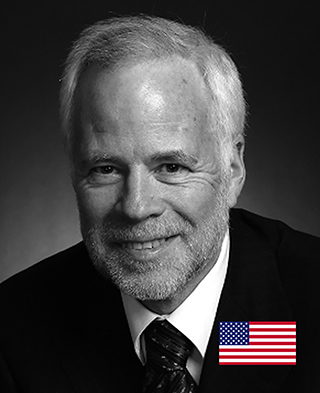
Barry Eichengreen
Barry Eichengreen has been the George C. Pardee and Helen N. Pardee Professor of Economics and Political Science at the University of California, Berkeley since 1987. He is a research associate at the National Bureau of Economic Research (Cambridge, Massachusetts) and a researcher at the Centre for Economic Policy Research (London, England). From 1997 to 1998, he was a Senior Policy Advisor at the International Monetary Fund. He is a member of the American Academy of Arts and Sciences (class of 1997).
Professor Eichengreen is a recipient of Guggenheim and Fulbright fellowships and has been a member of the Center for Advanced Study in the Behavioral Sciences (Palo Alto) and the Institute for Advanced Study (Berlin). From 2004 to 2020 he served as convener of the Bellagio Group of academics and officials. He is a regular monthly columnist for Project Syndicate.
Recent published books include In Defense of Public Debt with Asmaa El-Ganainy, Rui Esteves, and Kris Mitchener (2021), How to Achieve Inclusive Growth, edited with Valerie Serra, Asmaa El-Ganainy, and Martin Schindler (2021), The Populist Temptation: Economic Grievance and Political Reaction in the Modern Era (2018), How Global Currencies Work: Past, Present, and Future with Livia Chitu and Arnaud Mehl (2017), The Korean Economy: From a Miraculous Past to a Sustainable Future with Wonhyuk Lim, Yung Chul Park, and Dwight H. Perkins (2015), Renminbi Internationalization: Achievements, Prospects, and Challenges, with Masahiro Kawai (2015), Hall of Mirrors: The Great Depression, The Great Recession, and the Uses–and Misuses–of History (2015), From Miracle to Maturity: The Growth of the Korean Economy with Dwight H. Perkins and Kwanho Shin (2012), and Exorbitant Privilege: The Rise and Fall of the Dollar and the Future of the International Monetary System (2011), shortlisted for the “Financial Times and Goldman Sachs Business Book of the Year” award.
He received the Jonathan R.T. Hugues Price for Excellence Teaching Award from the Economic History Association in 2002 and the Distinguished Teaching Award from the Department of Social Sciences at the University of California, Berkeley, in 2004. He was awarded an honorary doctorate by the American University of Paris and was awarded the Schumpeter Prize of the International Schumpeter Society. He has been named one of the top 100 global thinkers by Foreign Policy magazine. He was president of the Economic History Association (academic year 2010-2011).
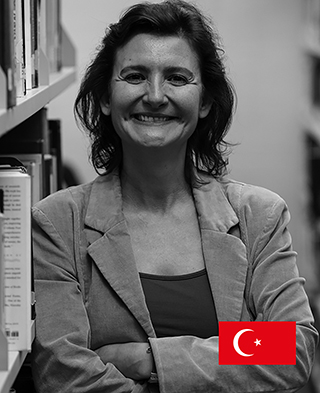
Özlem Onaran
Özlem Onaran is Professor of Economics at the University of Greenwich and Co-Director of the Institute for Political Economy, Governance, Finance and Transparency. She has conducted extensive research on issues of inequality, wage-led growth, employment, fiscal policy, and gender. He has led research projects for the United Nations International Labour Organization, UNCTAD, ESRC Rebuilding Macroeconomics, Institute for New Economic Thinking, Foundation of European Progressive Studies, Vienna Chamber of Labour, Austrian Science Foundation, and Unions21. She is a member of the Policy Advisory Group of the Women’s Budget Group, the Scientific Committee of the Foundation of European Progressive Studies, the Scientific Advisory Board of the Hans Boeckler Foundation, and a member of the Coordinating Committee of the Research Network Macroeconomics and Macroeconomic Policies, and a research associate at the Political Economy Research Institute of the University of Massachusetts. Amherst. She has more than eighty articles in peer-reviewed books and journals such as the Cambridge Journal of Economics, Feminist Economics, World Development, Environment and Planning A, Socio-Economic Review, Development and Change, Public Choice, Economic Inquiry, European Journal of Industrial Relations, International Review of Applied Economics, Structural Change and Economic Dynamics, Eastern European Economics and Review of Political Economy. Prior to joining the University of Greenwich in 2012, Özlem worked at several universities, including the University of Westminster, the University of Applied Sciences-Berlin, the Vienna University of Economics and Business, the Istanbul Technical University, and the Yapi Kredi Bank, Istanbul.

Mark Setterfield
Mark Setterfield is Professor of Economics in the Department of Economics at The New School for Social Research. Previously, he was recognized as a “Maloney Family Distinguished Professor of Economics” by Trinity College, Hartford, Connecticut, and has been a visiting professor at the University of Massachusetts, Lowell, CEPREMAP (Paris, France), Downing College (Cambridge, United Kingdom), Dalhousie University (Halifax, Canada), Université Sorbonne Paris Nord (Paris, France), University of Sao Paulo (São Paulo, Brazil) and Ruhr-Universität Bochum (Bochum, Germany). He is an associate member of the Cambridge Centre for Economic and Public Policy at the University of Cambridge in the United Kingdom, a research associate at the International Economic Policy Institute, Laurentian University, Canada, a member of the Centre de Recherche en Économie de l’Université Sorbonne Paris Nord (CEPN) at the Université Sorbonne Paris Nord, France, and a member of the Forum for Macroeconomics and Macroeconomic Policies (FMM) at the Macroeconomic Policy Institute (IMK) of the Hans-Böckler Foundation, Germany.
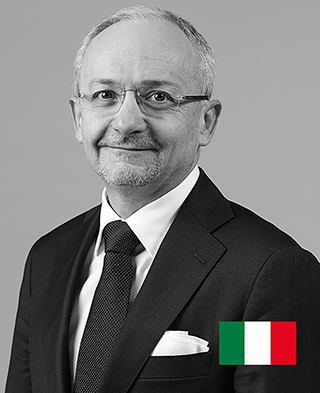
Claudio Borio
Claudio Borio was appointed head of the Monetary and Economic Department of the BIS on November 18, 2013. Since 1987, at the BIS, Borio has held various positions in the Monetary and Economic Department (MED), including head of the Department and Director of Research and Statistics, as well as head of the Secretariat of the Committee on the World Financial System and the Committee on Gold and Foreign Exchange (now the Committee on Markets). Between 1985 and 1987, he worked as an economist at the OECD, where he worked in the Department of Economics and Statistics. Previously, he was a professor and researcher at Brasenose College, University of Oxford. He holds a PhD, a Master’s degree in Economics, and a Bachelor’s degree in Politics, Philosophy, and Economics from the same university. Claudio is the author of numerous publications in the areas of monetary policy, banking, finance, and financial stability-related topics.
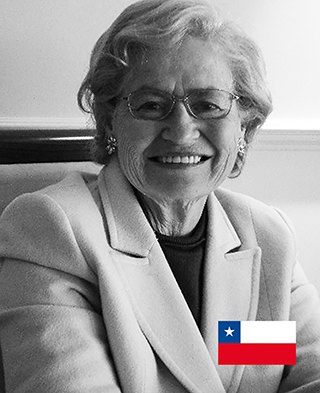
Stephany Griffith-Jones
Stephany Griffith-Jones is Professor Emerita at the Institute of Development Studies at the University of Sussex; Director of the Financial Markets Program of the Initiative for Policy Dialogue at Columbia University; Non-resident member of the Centre for Global Development, Washington DC; Senior Research Associate at the Overseas Development Institute; Distinguished Fellow of the Climate Works Foundation, San Francisco.
Professor Griffith-Jones researches and advises on policies for the reform of the national and international financial architecture, with recent interest in national, regional and multilateral development banks, where she co-directs research conferences and programmes on development banks globally. He has advised and currently advises numerous international organizations, as well as various governments and central banks.
Professor Griffith-Jones leads numerous research projects on international financial and macroeconomic issues, together with senior academics and policymakers from developed and developing countries. He has published extensively, written or edited twenty-five books and numerous magazine and newspaper articles. His Oxford University Press book Time for a Visible Hand, published in 2010 and co-edited with Joseph Stiglitz and José Antonio Ocampo, mainly addresses issues of financial regulation. His latest book The Future of National Development Banks, also published by Oxford University Press in 2018, and co-edited with José Antonio Ocampo, was very well received.
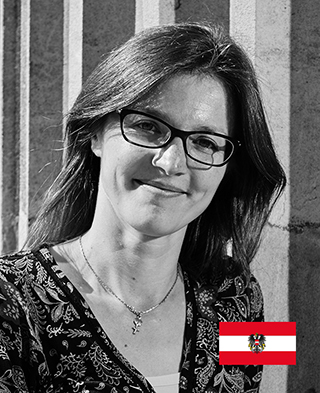
Annina Kaltenbrunner
Annina Kaltenbrunner is an Associate Professor of Globalisation Economics and International Economics at the University of Leeds Business School. His areas of research are: economic development, international finance, monetary economics, international economic policy, heterodox economics and methodology. He has published several papers on topics related to exchange rate theory, currency internationalization in emerging markets, financial integration and financialization, external vulnerability, and the euro area crisis in journals such as Environment and Planning A, The Cambridge Journal of Economics, Development and Change, New Political Economy, and Journal of Post Keynesian Economics.
Annina has collaborated on work for the United Nations University, several European FP7 projects, a 2-year project on Finance and Inequality with the Foundation for European Progressive Studies, the Austrian Chamber of Labour, the Central Bank of Brazil and the European Investment Bank. He is an active member of several academic organizations, including the International Initiative for the Promotion of Political Economy, the Post Keynesian Study Group, and the Reteaching Economics network.

Alejandro Díaz de León Carrillo
Alejandro Díaz de León Carrillo is the current president of the Bank of Mexico. He is an economist and began his professional career at the bank in 1991, where he held different positions, including director of Macroeconomic Analysis and director of Economic Studies. In October 2007 he was appointed Executive Member of the National Pension Fund for Workers in the Service of the State, later he was appointed head of the Debt Administration Office in the Ministry of Finance and Public Credit of Mexico, a position he held between January 2011 and November 2015 and was responsible for executing internal and external public financing. as well as the oil hedging strategy. He was then appointed general director of the National Bank of Foreign Trade (BANCOMEXT). After being proposed by the President of Mexico and ratified by the Senate, in January 2017 he held the position of Deputy Governor, member of the Board of Governors of the Bank of Mexico. He was appointed governor of the Bank of Mexico by the President of Mexico, a position he will hold from December 2017 to December 2021.
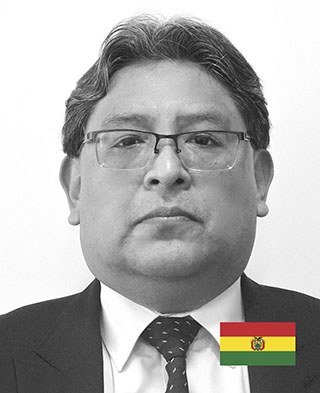
Edwin Rojas Ulo
Edwin Rojas Ulo is the Chairman of the Board of Directors of the Central Bank of Bolivia. He holds a PhD in Development Sciences from the Universidad Mayor de San Andrés, Bolivia, and a master’s degree in Economics specializing in Public Policy and a master’s degree in Natural Resources and the Environment, among others.
Previously, he has held the position of Deputy Minister of the Treasury and Public Credit of the Plurinational State of Bolivia, was an advisor to the Board of Directors of the International Monetary Fund and director of the Productive Development Bank.
He has taught in public and private universities in Bolivia, both in undergraduate and postgraduate courses, and has made various academic productions, in addition to leading studies on topics of his specialty, of which the following stand out: “Bolivia Report on the Evaluation of Public Finances”; “Medium-Term Macrofiscal Framework and Improvement of Hydrocarbon Revenue Projections”, “Treasury Management and Control of the Indebtedness of Territorial Entities” and “Evaluation of Fiscal Transparency”.

Julio Velarde
Julio Velarde has been the president of the Central Reserve Bank of Peru since October 2006. He has held various positions in the public and private sectors and has collaborated in publications and research works related to monetary and financial issues. Velarde served as executive president of the Latin American Reserve Fund from 2004 to 2006, was director of the Central Reserve Bank of Peru on two occasions, from 1990 to 1992 and, later, from 2001 to 2003. In addition to directing several companies, Velarde has been dean of the Faculty of Economics at the Universidad del Pacífico, an institution in which he served as head of the Department of Economics and professor and researcher. Additionally, Velarde was a consultant for international organizations. He holds a master’s degree and doctoral studies in Economics from Brown University, United States.